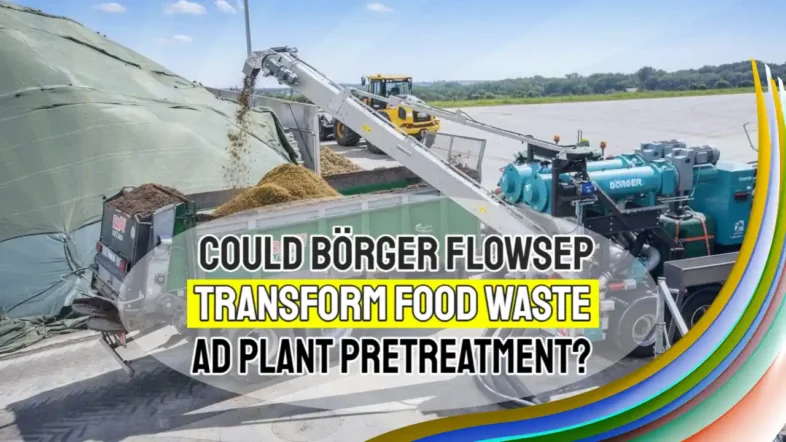
The Hidden Cost of Grit and Inerts in AD Plants
Removing sand, grit, glass, and other inert material has long been recognised as important in anaerobic digestion plant operation, but it is often still underestimated in practice. In many food waste anaerobic digestion facilities, especially, these unwanted materials enter with the incoming feedstock and then gradually accumulate inside the digester, pipework, and associated plant. The result can be increased wear, reduced effective digester volume, more difficult mixing, and eventually expensive cleanouts and maintenance shutdowns.
“Looking back in a few years’ time the release of the Börger FlowSep may well be seen as a turning point for the AD industry that now for the first time the industry has a truly simple and reliable machine to remove grit and other abrasive inerts, BEFORE the digester”.
Steve Last, Biogas Expert, www.anaerobic-digestion.com
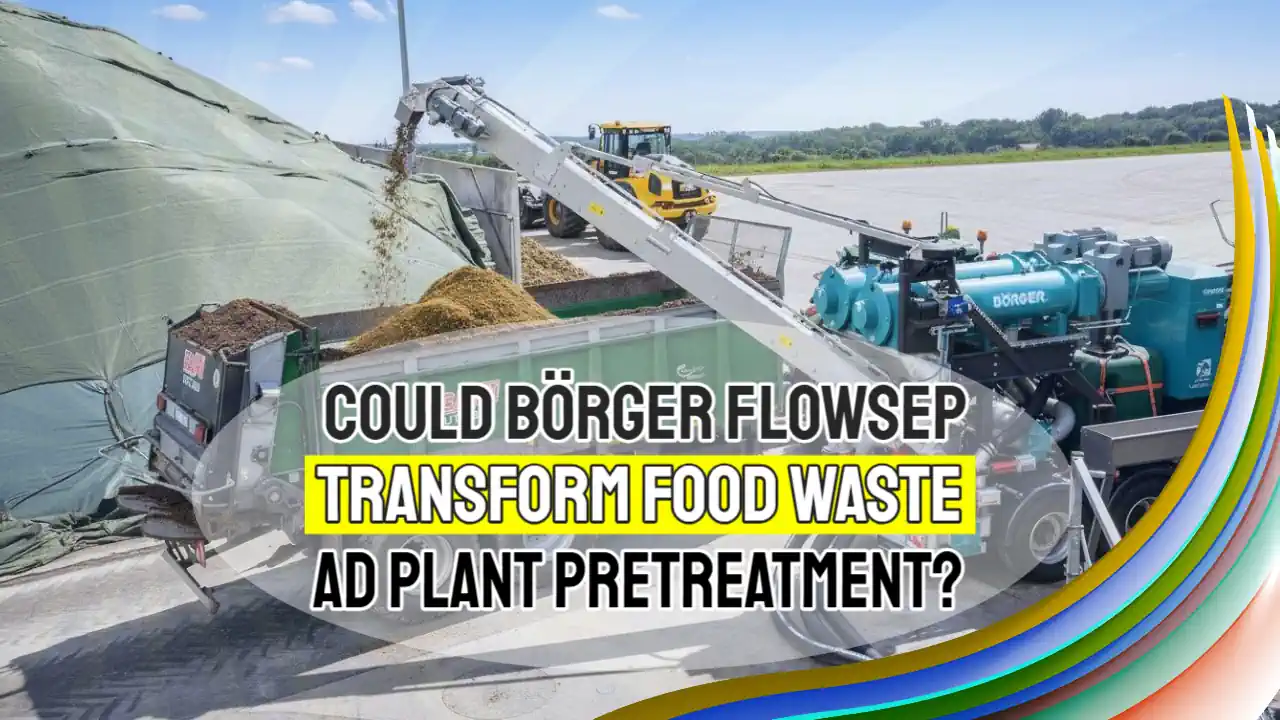
Why Pre-Digester Separation Matters More Than Ever
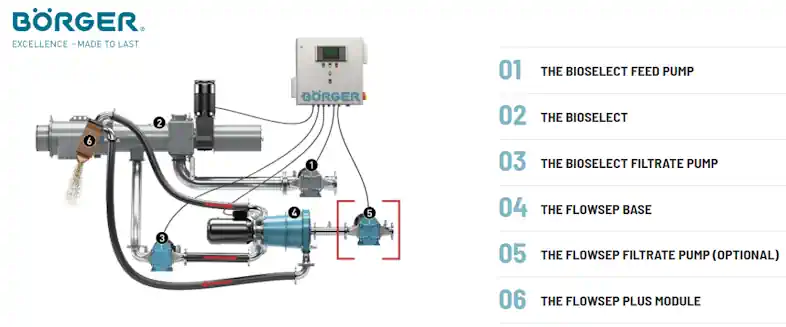
That is why equipment such as the Börger FlowSep in combination with the Börger BioSelect separator may prove invaluable not only in its more established role alongside digestate separation, but also at the front end of the anaerobic digestion process. Used before the digester, grit and fine inert removal can help improve feedstock preparation, reduce abrasive damage to pumps and valves, and cut the build-up of heavy sediments inside the digester tank. For operators of food waste AD plants, this can bring a double benefit: better control of feedstock quality and a potentially dramatic reduction in the frequency of digester cleanouts.
Pre-Digester Separation Like Never Before
Pre-digester separation can also support better process optimisation. By removing unwanted inert fractions and improving the consistency of the feed mix, operators may be better able to manage the balance of biodegradable material entering the plant. In some cases, this can assist with achieving a more suitable feedstock blend and a more consistent carbon to nitrogen ratio, while at the same time protecting the plant from unnecessary wear.
Why the Launch of FlowSep Matters
The following press release announces the launch of Börger’s new FlowSep system, which now in its 3rd generation is designed and proven to extract fine abrasive particles from slurry and similar streams.
Although its application in anaerobic digestion plants is still new and likely to develop further as experience grows, the potential benefits for biogas operators are already clear. Public reports about the launch describe FlowSep as a new Börger system introduced in March 2026, designed to work with the company’s BioSelect separator and extract up to 90% of unwanted fine particles, while industry case studies on digester pretreatment continue to support the value of removing grit before it reaches the digester.
Key Takeaways:
What Plant Operators Should Notice
- Food waste AD plants are especially vulnerable to the build-up of sand, grit, glass, eggshell fragments, and other inerts.
- Pre-digester grit removal can reduce abrasive wear on pumps, valves, and pipework.
- Removing inerts before digestion helps preserve active digester volume and may reduce the need for costly cleanouts.
- Better feedstock preparation can improve process consistency and support more stable digestion.
- FlowSep appears to have potential both as a protective retrofit and as part of a better-designed AD pretreatment train.
Börger Press Release April 2026:
New Börger FlowSep Protects Against Wear from Sand, Grit and Glass
To protect against the costly wear caused by sand, grit and tiny glass particles in the handling of slurry, Börger has introduced FlowSep.
Working in unison with its proven BioSelect Separator, Börger’s new FlowSep, which is part of a closed and odourless system, greatly decreases the accumulation of sediment, extracting up to 90 per cent of unwanted fine particles.
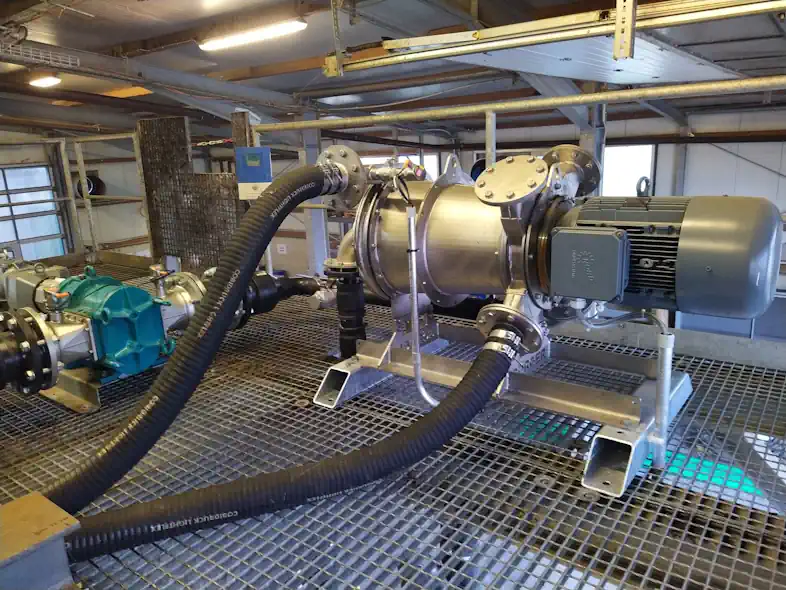
Suitable for removing damaging deposits that are found in liquid manure tanks, biogas digesters, pipes and tankers, FlowSep successfully protects valuable pumps, valves and system components from the heavy wear caused by the corrosiveness of sand, grit and glass.
FlowSep’s synergy of working with the Börger BioSelect Separator also means that the resulting solid material is stackable and easy to transport, while it also helps reduce the volume of storage required.
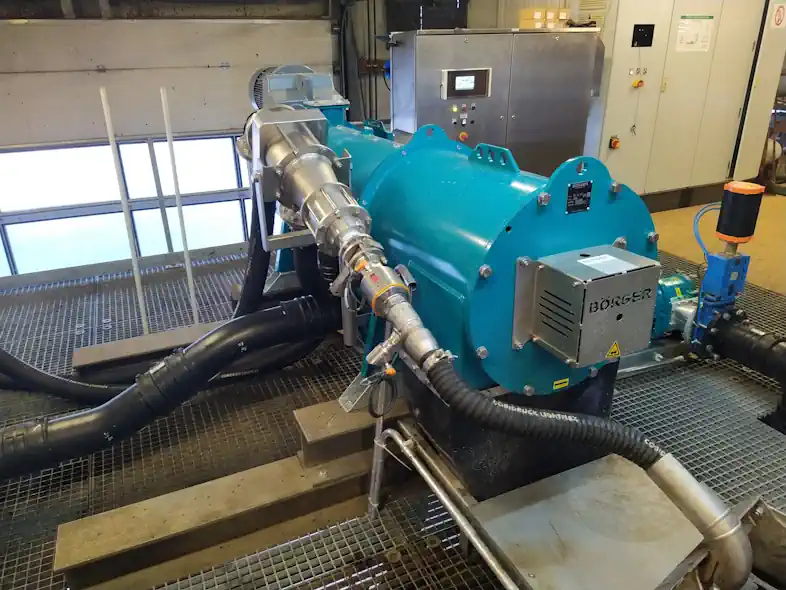
Achieving throughput rates of up to 150 m3/h, the compactly designed FlowSep requires only a simple retrofit, including a control system.
Borger UK – 01902 798 977
www.boerger.com
uk@boerger.com
- PR ends –
More Information:
Why the FlowSep with BioSelect Combination May Become Standard Equipment Upstream of Large Digesters
For anaerobic digestion operators, the significance of FlowSep extends well beyond routine solids handling. In food waste plants, especially, one of the biggest hidden operational problems is the steady build-up of grit, sand, eggshell fragments, glass fines, and other dense inert material.
These do not contribute to biogas production, yet they occupy digester volume, interfere with mixing, and create wear throughout the plant. This reduces the all-important biogas output and has an immediate effect on reducing digester profitability.
The Operational Damage Caused by Inert Build-Up
When these materials are allowed to enter the digester unchecked, the long-term effects can be serious. Sediment accumulation reduces the active treatment volume available for digestion and can eventually force costly tank emptying and cleanout operations.
At the same time, abrasive particles passing through pumps, valves, and pipework can shorten equipment life and increase maintenance costs. Independent case studies and operator guidance similarly emphasise that removing grit before it enters the digester helps avoid tank entry for cleanout and reduces wear on mixers and other equipment. :contentReference[oaicite:1]{index=1}
“One day the Börger FlowSep will be the grit separator of choice for all biogas plant contractors just as their BioSelect is now”.
Steve Last, Biogas Expert, www.anaerobic-digestion.com
Why Upstream Installation May Deliver the Greatest Value
In practical terms, a system such as FlowSep may offer the greatest strategic value when installed upstream of the digester on suitable feed streams. There, it can remove almost all of the heavy inert fraction before it becomes a plant-wide problem. This may be particularly beneficial at food waste AD sites where contamination levels are often higher than in agricultural digestion plants.
The grit itself may also hold potential as a product with saleable value.
Better Pretreatment Can Support Better Digestion
There is also a process benefit. Better feedstock preparation can help create a more uniform biodegradable feed to the digester with a more controlled C:N ratio, closer to optimum for biogas output yield.
While separation is not a substitute for proper feedstock selection and blending, it can support more effective process control by removing material that contributes no methane yield and can upset stable operation. In mixed food waste plants, that can make it easier to manage the quality of what is actually being digested.
Why This Matters for Future AD Plant Design
The combination of reduced wear, fewer sediment-related problems, easier downstream handling, and lower cleanout frequency could make grit removal technology increasingly important in modern AD plant design. As operators look for ways to improve uptime, protect equipment, and lower whole-life operating costs, front-end separation of abrasive inert material is likely to receive growing attention.
Recent industry coverage of FlowSep specifically positions it as a compact retrofit for slurry and digestate systems, while broader pretreatment sources continue to support the principle of removing grit before digestion. Existing feed hopper and feed pumping systems may still be needed and continue in use.
The Big Strategic Question
For biogas plant owners, designers, and retrofit decision-makers, the key question may not be whether grit removal is useful, but where in the process it delivers the greatest value. In many cases, the answer may well be before digestion begins.
Nevertheless, the strong financial case for post-digestion (digestate separation) remains. Therefore, AD facilities will be likely to operate two Börger systems with a combined BioSelect / FlowSep system before the digester and a BioSelect after to process the digestate before storage and subsequent land application.
FAQs
What is the Börger FlowSep?
The Börger FlowSep is a newly launched separation system designed to remove sand, grit, and tiny glass particles from slurry-type streams, helping protect pumps, valves, and other plant components from abrasive wear. Public launch reports say it works with the company’s established BioSelect separator and can extract up to 90% of unwanted fine particles.
Can FlowSep be used before an anaerobic digester?
Yes, and that may prove to be one of its most valuable uses. Removing grit and inert material before digestion can help reduce sediment build-up, protect plant equipment, and preserve effective digester volume. That conclusion is also consistent with other pretreatment guidance and case studies on grit removal ahead of digesters.
Why is grit such a problem in food waste anaerobic digestion plants?
Because food waste feedstocks often contain contamination such as sand, glass fines, eggshell, stones, and other non-biodegradable matter. These materials do not produce biogas, but they do accumulate, reduce active volume, and increase mechanical wear.
How could pre-digester separation reduce digester cleanouts?
By stopping heavy inert particles from entering the tank in the first place. Once inside a digester, dense particles tend to settle and gradually build a sediment layer that may eventually require costly emptying and manual or mechanical removal. Pretreatment case studies specifically note that removing grit before digestion helps avoid this problem.
Does removing grit improve biogas yield?
Not directly. Grit removal does not add methane potential. Its value lies in preventing non-productive material from taking up digester space, reducing wear, and helping maintain better process conditions for the biodegradable fraction of the feedstock.
Is FlowSep only relevant for digestate separation?
No. Although Börger’s established BioSelect technology is well known for digestate separation, the launch coverage around FlowSep indicates a wider protective role against abrasive fine particles in slurry and digestate handling, including around biogas digesters.
Who should be most interested in this technology?
Food waste AD operators, agricultural biogas plants, dairy farm manure biogas plants, biogas plant designers, Biogas Plant EPC contractors, and those planning retrofits to reduce wear, sediment accumulation, and cleanout frequency are likely to be the groups with the strongest interest.