
Liquid digester additives are scientifically identified, nutrient-rich, or microbial-based liquids used to optimize anaerobic digestion (AD) by increasing methane yield, accelerating waste breakdown, and reducing sludge viscosity. Typically these additives provide a balance of essential trace elements—cobalt, nickel, selenium, and molybdenum—and hydrolytic enzymes to support healthy bacterial growth.
A Quick Intro to the Liquid Digester Additives Best Used to Optimise Anaerobic Digestion
The following are some of the ways to optimise the production of biogas:
- Most anaerobic digesters are not performing at their best — not due to equipment breakdowns, but due to nutritional and chemical imbalances in the tank that can be corrected.
- Liquid digester additives can help address the root causes of underperformance, from deficiencies in trace elements to poor pH balance and slow rates of hydrolysis.
- Products that contain chelated trace elements, like MethaneMaxx™, are designed to correct deficiencies in feedstock and increase methane yields without interfering with active digestion.
- Not all additives are effective for all systems — the composition of the feedstock, the type of digester, and the operating temperature all determine which product will be effective.
- Additives based on biochar, like CreChar, offer two benefits — keep reading to find out why solutions based on carbon are performing better than traditional supplements in some digester configurations.

Your digester is currently producing biogas, but it's almost certainly not producing as much as it could.
The anaerobic digestion process relies on biology, which is sensitive by nature. The microorganisms that do the majority of the work inside your digester require the correct nutrients, pH, and environment to function optimally.
If even one of these factors is not optimal, methane yields decrease, process stability is compromised, and your potential for profit diminishes. Interra Global specialises in precision digester inputs, including trace element solutions designed to close exactly these kinds of performance gaps.
Luckily, liquid digester additives provide a quick and specific solution to these imbalances. Regardless of whether your system is processing dairy manure, food waste, agricultural residue, or a mixed feedstock, there's an additive category designed to tackle your unique problem. This guide will explain the five main types, their functions, and how to select the most suitable one.
Understanding the Function of Liquid Digester Additives
Liquid digester additives are not some sort of magical potion — they are carefully engineered tools. Each type is designed to address a specific issue in the anaerobic digestion process, and understanding these issues is the key to using additives effectively.
Understanding the Role of Microbes in Biogas Production
Microbial communities are the heart of biogas production, working together in several stages to create methane. The process starts with hydrolytic bacteria breaking down complex organics such as proteins, fats, and carbohydrates. These are then converted into volatile fatty acids by acidogenic bacteria. Finally, acetogenic and methanogenic microorganisms take over, producing methane. Each stage has its own nutritional needs, and if these are not met, the entire process slows down.
Why Digesters Often Don’t Reach Their Full Potential
The most common reason is an imbalance in the feedstock. Dairy manure, for example, is rich in organic matter but often lacks sufficient concentrations of cobalt, nickel, selenium, and other trace metals that methanogens need as enzyme cofactors. Without these, even a well-designed digester with optimal temperature and retention time will not perform as well as it could.
A comprehensive study published in the Journal of Cleaner Production titled “Improving biogas production using additives in anaerobic digestion,” confirmed that using additives consistently improved both biogas yield and process stability across multiple types of feedstock.
How Additives Improve Efficiency
Liquid additives are added straight into the digester, where they dissolve rapidly and blend into the active microbial environment. Unlike dry supplements, liquid formulas spread evenly throughout the tank, reducing the chance of localised concentration imbalances. This leads to quicker absorption, more uniform microbial activity, and noticeable improvements in both gas volume and methane concentration.
1. Trace Element Additives
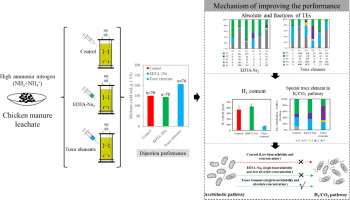
Trace element additives are the most commonly used type in commercial anaerobic digestion. They're popular because micronutrient deficiency is one of the most frequent and underdiagnosed causes of poor digester performance. Elements such as iron (Fe), cobalt (Co), nickel (Ni), selenium (Se), molybdenum (Mo), and tungsten (W) serve as enzyme cofactors for methanogenic archaea. Without these elements, key enzymatic pathways stop working and methane production noticeably decreases.
The challenge here is that a lack of trace elements doesn't always result in a catastrophic system failure. More frequently, it manifests as a gradual, consistent underperformance that operators ascribe to changes in feedstock or the seasons. Conducting a comprehensive nutritional analysis of your feedstock is the only surefire way to determine if trace elements are hampering your production.
Twelve Trace Elements Crucial to Anaerobic Digestion
Although every system has its own unique characteristics, the trace elements that are most commonly found to be limiting in anaerobic digesters are iron, cobalt, nickel, selenium, molybdenum, tungsten, zinc, copper, manganese, boron, iodine, and vanadium. Methanogens are particularly sensitive to cobalt and nickel, both of which are needed for the production of coenzyme F430 and other vital methanogenic enzymes. Even concentrations that are less than optimal – measured in micrograms per liter – can significantly reduce methane production.
“bioavailability of trace elements …” from www.sciencedirect.com and used with no modifications.
Understanding the Role of Chelation in Enhancing the Efficacy of Trace Elements
Trace metals in their unprocessed ionic state can attach to sulfides and other compounds within the digester, rendering them biologically inaccessible for microbial use.
Chelation is a process that encapsulates each metal ion with an organic ligand, ensuring its solubility and stability until it reaches the microbial cell. It has been observed that chelated trace element products consistently outdo non-chelated alternatives. This is because bioavailability, rather than just concentration, is the key determinant of results.
MethaneMaxx™: A Top-Notch Trace Element Solution
MethaneMaxx™ is a specially formulated liquid digester additive that provides chelated trace elements in a balanced, all-in-one formulation. It is engineered to address the nutritional shortfalls typical of livestock and agricultural feedstocks, aiming to maximize microorganism activity to boost biogas yields and steady plant operation.
It is added directly to the digester in liquid form, making it easy to incorporate into existing systems without necessitating process downtime.

“BIOIMPEC | LinkedIn” from ar.linkedin.com and used with no modifications.
2. Liquid Additives Based on Biochar
Biochar, a material rich in carbon, is created by pyrolyzing organic matter. Over the past few years, its use in anaerobic digestion has been the focus of a lot of research.
When it's made into a liquid additive or slurry, biochar brings a highly porous carbon matrix into the digester environment. This changes the basic way in which microbial communities are structured and operate.
Why Biochar is the Perfect Microbial Home
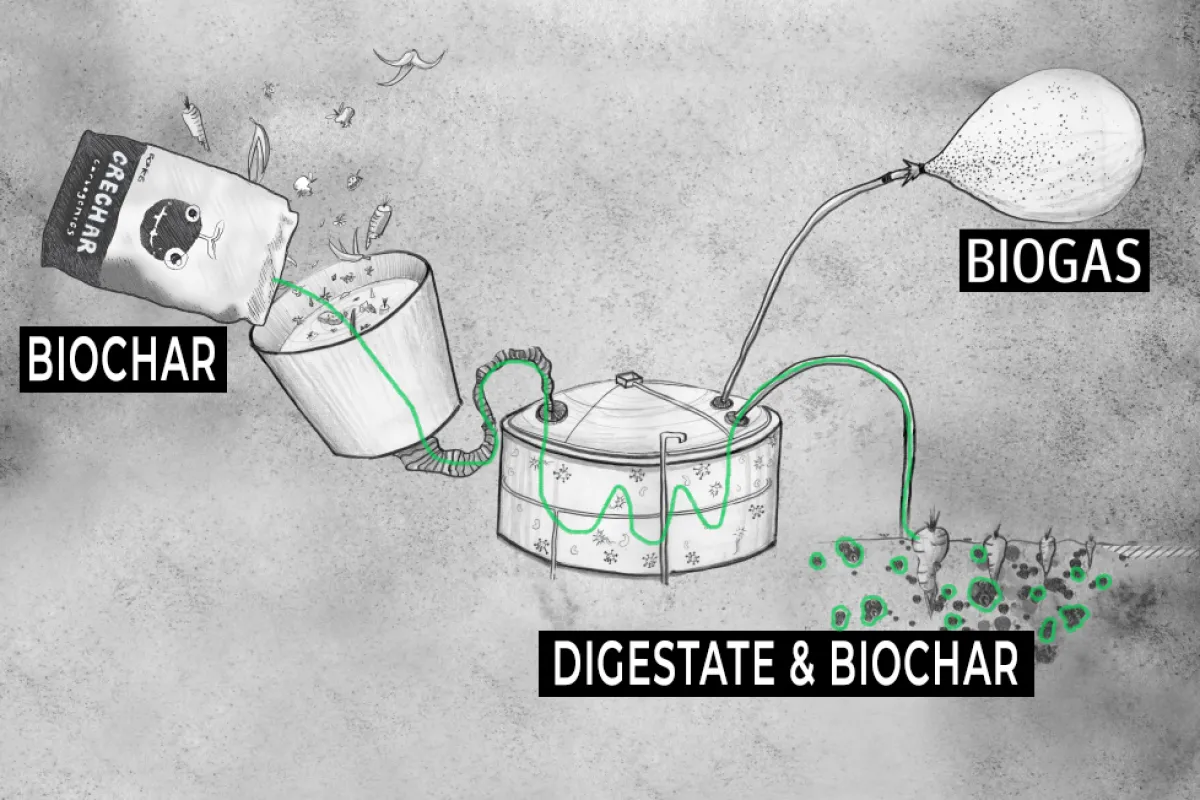
Thanks to its porous surface, biochar is the perfect home for syntrophic microorganisms. These are the bacteria and archaea that work together to transfer electrons and hydrogen during digestion. This process is known as direct interspecies electron transfer (DIET).
This accelerates the methanogenesis stage, which is usually the slowest step in biogas production. Biochar gives these microbes a stable home to live on, effectively increasing the active microbial population density inside the digester without needing to change the feeding rate or retention time.
The Proven Effectiveness of CreChar on Biogas Production
CreChar, produced by Carbogenics, is one of the most researched digester additives made from biochar currently on the market. It was designed specifically for anaerobic digestion and has shown that it can increase both the amount of biogas and the concentration of methane in working digesters.
CreChar say that it does more than just increase yield, it also stabilises the process by buffering pH changes and reducing the harmful effects of ammonia. This is especially useful for high-nitrogen feedstocks like poultry litter or food processing waste. Its carbon-rich matrix also enhances the digestate, increasing its value as a farm amendment.
“Biochar in Anaerobic Digestion …” from www.carbogenics.com and used with no modifications.
3. Enzyme Additives
Enzyme additives are designed to tackle one of the most difficult issues in anaerobic digestion: the hydrolysis stage. Before microbes can ferment organic material into biogas precursors, complex molecules such as cellulose, hemicellulose, lignin, and proteins must first be broken down into simpler soluble compounds.
When feedstocks are rich in these complex structures, hydrolysis becomes the slowest step in the entire process — and everything downstream backs up as a result.
The Role of Enzymes in Accelerating Hydrolysis
Enzyme additives, also known as exogenous enzymes, function by boosting the enzyme activity naturally present in the digester with a potent dose of specific enzymes. Cellulases, for example, break down cellulose into sugars that can be fermented. Hemicellulases are responsible for breaking down the hemicellulose fraction.
Proteases speed up the degradation of proteins, while lipases deal with feedstocks rich in fat. Each enzyme is designed to work on a specific substrate, which is why knowing your feedstock's molecular composition is crucial when choosing the right blend of enzymes.
The effect is most noticeable in the initial stages of digestion. Quicker hydrolysis results in volatile fatty acids being produced more rapidly, which provides a more consistent, richer substrate supply to the acetogenic and methanogenic stages. The practical outcome is a shorter delay before peak gas production and a greater total yield from the same amount of feedstock.
Enzyme additive performance is heavily influenced by temperature. Most commercial enzyme formulations are designed to work best in mesophilic conditions, which are typically between 35°C and 40°C.
Digesters that operate at thermophilic temperatures above 50°C need thermostable enzyme products that are specifically designed to stay active at these temperatures. If you use a standard enzyme product in a thermophilic system, you won't see much, if any, benefit. For more insights on biogas production, check out our guide on food waste to energy.
Optimal Substrates for Enzyme Additive Use
Enzyme additives are most cost-effective when used with feedstocks that are high in lignocellulosic content. Energy crops such as maize silage, wheat straw, and switchgrass, and agricultural residues like corn stover and sugarcane bagasse, are ideal.
Food processing waste with high starch or protein content also benefits from specific enzyme supplementation. On the other hand, feedstocks that are already easily hydrolyzable — like fresh food waste or liquid manure with short fiber content — show less significant results from enzyme addition. For more information on transforming food waste into energy, check out our article on food waste to energy.
4. Alkali Additives
Managing pH levels is a must in anaerobic digestion. Methanogens, which are the microorganisms that carry out the final step of methane production, are extremely sensitive to acidic conditions. They function best between pH 6.8 and 7.4, and even a slight drop below this range can greatly reduce methanogenic activity. When a digester becomes acidic, often due to the build-up of volatile fatty acids, alkali additives are the go-to solution.
When the hydrolysis and acidogenesis stages occur faster than methanogenesis, acid accumulation can occur. This imbalance, often referred to as “souring,” is common when feedstock loading rates increase too quickly, when there is a sudden shift in feedstock composition, or when trace element deficiencies are already limiting methanogenic performance.
Adding alkali can increase the pH back into the productive range, giving the microbial community time to rebalance.
Comparing Sodium Hydroxide, Lime, and Potassium Hydroxide
Each of the three most frequently used alkali additives has its own unique properties.
Sodium hydroxide (NaOH) is quick to react and highly soluble, making it ideal for quick pH adjustments, but if the sodium concentration becomes too high, it can inhibit microbes.
Lime (calcium oxide, CaO) is readily available and cost-effective, but it must be dosed carefully to avoid calcium precipitation, which can cause scaling problems inside the digester.
Potassium hydroxide (KOH) is typically the most compatible with microbes — potassium is a necessary macronutrient for microbial metabolism — but it is more expensive per unit of alkalinity provided.
Understanding When pH Correction is the Main Issue
Before you decide to use an alkali additive, you need to determine whether a low pH is the main cause of underperformance or if it’s just a symptom of a larger issue. If you’re experiencing persistent acidification that comes back soon after alkali treatment, you most likely have an issue upstream.
This is typically a deficiency in trace elements that is limiting methanogen activity, or it could be that your system is overloaded and the feeding rate is exceeding the capacity of the microbial community. If you’re seeing the following signs, it means that pH correction alone is not enough:
- Repeated pH drops within days of alkali dosing
- Rising volatile fatty acid concentrations despite stable pH
- Declining methane percentage in biogas output
- Foam formation on the digester surface
- Hydrogen sulfide odour stronger than baseline
In these situations, alkali addition should be combined with a trace element audit and possible feeding rate adjustment rather than used as a standalone fix. Alkali additives are highly effective when pH imbalance is the primary issue, but they do not address nutritional deficiencies or organic overload on their own. For more information on ensuring energy security through biomethane production, you can explore UK biomethane energy security.
Getting the right dose is crucial when it comes to alkali additives. Both underdosing and overdosing can be problematic — underdosing won’t restore the conditions you need, while overdosing can push the pH too high and suppress the acetogenic bacteria that feed the methanogenic stage.
The best way to manage alkali addition in larger commercial digesters is with automated pH monitoring with feedback-controlled dosing systems.
5. Regulators of Carbon-to-Nitrogen Ratios
Feedstock Typical C:N Ratio Required Adjustment Dairy Manure 10:1 – 20:1 Add high-carbon co-substrate Poultry Litter 5:1 – 10:1 Significant carbon supplementation required Food Waste 15:1 – 25:1 Often near optimal; minor adjustment Maize Silage 30:1 – 40:1 Blend with nitrogen-rich feedstock Wheat Straw 80:1 – 100:1 Significant nitrogen supplementation required Optimal Range 20:1 – 30:1 Target for all blended feedstocks
The carbon-to-nitrogen (C:N) ratio of your feedstock is a crucial factor that determines the performance of your digester. However, it is often ignored by operators who are more concerned with volume and temperature. Microorganisms use carbon for energy and nitrogen for cell synthesis, and they do so at a relatively fixed ratio.
If you feed them too much nitrogen relative to carbon, free ammonia builds up and becomes toxic. If you feed them too much carbon, nitrogen becomes the limiting nutrient, which slows down growth and methane production.
For anaerobic digestion, the ideal C:N ratio is between 20:1 and 30:1. Single-feedstock systems, especially those that use nitrogen-rich materials like poultry litter or food processing waste, often do not meet this range. Liquid carbon supplements, such as glycerin-based additives and liquid molasses derivatives, can be added directly to the digester to increase the C:N ratio without having to change the physical feedstock supply chain.
For nitrogen-deficient digesters that run primarily on high-carbon agricultural residues like wheat straw or corn stover, it may be beneficial to supplement with liquid nitrogen or to use co-digestion blending strategies. In these cases, urea-based liquid additives are sometimes used, but they must be dosed carefully due to the risk of creating free ammonia from urea hydrolysis at higher pH levels.
Correcting the C:N ratio is especially effective when combined with trace element supplementation because both simultaneously address microbial nutrition. A digester that has been corrected to the optimal C:N ratio and is supplied with enough trace elements is operating with all the biological inputs required for the best methanogenic performance.
This combination often produces bigger yield improvements than either intervention by itself. Learn more about how to eliminate CO2 from biogas for enhanced efficiency.
How to Select the Best Liquid Digester Additive
Selecting an inappropriate additive can lead to wasted resources and, in some instances, can exacerbate an already problematic digester. The selection process should always be based on data, specifically, a thorough examination of your feedstock's chemical makeup, your digestate's nutrient profile, and your current biogas production in relation to your system's potential maximum yield.
The type of system you have and how you run it are just as important as what you put into it. A mesophilic digester running at 37°C will react differently to enzyme additives than a thermophilic system at 55°C.
A plug-flow reactor mixes differently from a continuous stirred tank reactor, which affects how quickly liquid additives distribute and start working. How long your digester retains water also affects how often and how much you should dose.
Lastly, make sure you're getting your money's worth. First, figure out how much biogas you're currently getting per tonne of volatile solids processed.
Then, compare that to the maximum amount of methane your system could theoretically produce with your specific feedstock. The difference between these two numbers is how much room you have to improve.
A good liquid digester additive should help you make up a significant portion of this difference. If the increase in yield you're projected to get doesn't more than cover the cost of the additive, you may need to adjust your dosing strategy or consider a different type of additive.
Choose the Additive that Matches Your Feedstock Composition
The most important factor in selecting an additive is your feedstock. A dairy manure digester with a C:N ratio of 12:1 will have completely different nutritional needs than a food waste system that processes high-fat restaurant grease trap material.
You should start by fully characterising your feedstock — total solids, volatile solids, ammonia-nitrogen, trace element concentrations, and if your budget allows, biochemical methane potential (BMP) testing. These figures will tell you exactly what biological inputs are lacking before you spend any money on additives.
- High animal waste content: Consider using chelated trace element additives like MethaneMaxx™ to fix common deficiencies in cobalt, nickel, and selenium in systems that only use manure
- Agricultural residues high in lignocellulose (straw, stover, silage): Enzyme additives that target cellulase and hemicellulase activity can unlock significantly more fermentable substrate
- Feedstocks high in nitrogen (poultry litter, food processing waste): Carbon-based additives and C:N correctors are the priority to avoid free ammonia toxicity
- Mixed or variable feedstocks: Biochar-based products like CreChar offer broad-spectrum stability benefits that buffer against fluctuations in composition
- Digesters with a pH below 6.8 that are acidifying: Alkali additives are the immediate intervention, followed by a trace element audit to address the underlying cause
Choosing the right additive for your feedstock is not a one-time decision. As the seasons change, as the sources of feed shift, and as the microbial population in your digester evolves, the nutritional demand inside the tank changes too. Operators who perform quarterly feedstock analyses and adjust their additive program accordingly consistently outperform those who set a dosing rate and leave it unchanged for months. For more insights, explore how food waste can be converted to energy effectively.
Here's a tip to keep in mind: if you're operating a co-digestion system that blends several feedstocks, it's crucial to analyse the blend, not the individual components. The interaction between the feedstocks can result in nutrient profiles that are significantly different from what you'd expect if you just averaged the individual analyses. For instance, a blend of dairy manure and food waste might naturally have sufficient trace element concentrations, which would make enzyme supplementation your top priority for additives.
Consider the Type of Digester and Its Operating Conditions
The type of digester you have and its operating conditions will determine which additives you can use and how you should dose them. Continuously stirred tank reactors (CSTRs) are great for distributing liquid additives because they mix mechanically. This makes them compatible with almost every type of additive. Plug-flow digesters, which are common in dairy applications, don't mix as well, so you have to introduce additives at the inlet and give them enough time to disperse. Fixed-film and anaerobic sequencing batch reactors each have their own unique mixing profiles, which will affect where you should dose and what your target concentration should be.
Temperature is also a crucial factor. Enzyme additives designed for mesophilic systems (35°C–40°C) will quickly break down in thermophilic digesters running above 50°C, making them essentially ineffective. Trace element additives are generally not affected by temperature, making them the most versatile option across various digester types and temperature ranges. Alkali additives behave similarly across temperature ranges, but require more frequent pH monitoring in thermophilic systems, where microbial activity — and thus acid production — is more intense.
Estimating Costs Against Predicted Biogas Profits
One simple method to determine the economic viability of additives is to start from your energy production and work backwards. Calculate the specific methane yield you currently achieve in normal cubic meters per kilogram of volatile solids added (Nm³/kg VS). Compare this to the published BMP values for the type of feedstock you use. For example, if your dairy manure digester is producing 0.18 Nm³/kg VS and the theoretical BMP for dairy manure is roughly 0.25–0.30 Nm³/kg VS, you have a performance gap of 30–40% that the right additives could realistically begin to fill.
Even a modest 10% increase in methane yield from a medium-sized commercial digester processing 10,000 tonnes of feedstock annually can result in significant additional revenue at current biomethane prices. Before committing to any additive product, run this calculation and request verified yield improvement data — not just projections — from your supplier for similar operational digesters. Products like MethaneMaxx™ with documented field performance data make this comparison easy.
The Most Effective Additive for Biogas Yield
There isn't a one-size-fits-all answer, but the data does show a trend. Chelated trace element additives like MethaneMaxx™ consistently increase yields across a variety of feedstock types, especially in livestock-based systems that are typically lacking in micronutrients. Biochar-based products like CreChar are more effective in systems that struggle with process stability or feedstocks high in ammonia, as they provide buffering and microbial habitat benefits in addition to increasing yield. Enzyme additives are the clear winner when the feedstock is primarily lignocellulosic and hydrolysis is the main limiting factor. The most successful operations usually use a layered approach, supplementing a base trace element program with targeted enzyme or carbon correction as dictated by the feedstock.
Common Queries
These are the usual queries operators have when they first consider liquid digester additives.
Is it possible to use more than one liquid digester additive at once?
Yes, it is. In fact, this is common practice in many well-optimized commercial digesters. Trace element additives, enzyme additives, and biochar-based products each target different biological mechanisms and do not interfere with each other. For example, a system that uses MethaneMaxx™ for trace element correction and an enzyme blend to speed up hydrolysis is addressing two different bottlenecks at the same time. This is why using a combination of additives often results in greater yield improvements than using just one product.
Alkali additives can be a bit tricky to manage, especially when used with pH-sensitive substances. Enzymes, for example, are highly dependent on pH, and if you use too much alkali, it can push the pH above the range that's optimal for the enzymes you're using. So if you're using alkali to correct pH in conjunction with enzyme additives, it's highly recommended that you use automated pH monitoring to keep the system within the operating window where both products are effective. For more information on optimizing your system, you might find this article on boosting your anaerobic digester's performance helpful.
How fast do liquid digester additives increase biogas production?
The time it takes for an additive to show results varies depending on the type of additive and the severity of the problem it is addressing. Alkali additives can cause noticeable changes in pH levels within hours of being added. Trace element additives usually start to show an increase in biogas production within one to three hydraulic retention times as the microbes in the digester start to benefit from the improved nutrition. So, for a digester with a 20-day retention time, you would start to see results within three to eight weeks of regular dosing.
Enzyme additives are known to work faster in terms of substrate availability, often showing increased volatile fatty acid concentrations within days. However, the downstream methane response takes longer as the methanogenic population scales up to process the additional substrate. On the other hand, biochar-based additives like CreChar show a more gradual response curve as microbial colonization of the carbon matrix builds over several weeks. However, the stability benefits — reduced pH fluctuation, lower ammonia toxicity — often become apparent before the full yield improvement is realized. For more insights into biogas production, check out this guide on how to eliminate CO2 from biogas.
Can I add liquid digester additives to a digester that's currently in use?
Commercial liquid digester additives that have been on the market for a while are made to be put into digesters that are currently in use without causing harm to the microbial community. Products such as MethaneMaxx™ are meant to be put directly into systems that are currently in use, and their chelated formulation means there's no risk of localized metal toxicity from concentration spikes. The main safety concern is the dosing rate — any additive that's put in too quickly or at too high a concentration can cause the microbial population to become stressed, even if the product itself is beneficial at the right dose.
Those using a new additive in an active digester for the first time should take a cautious approach. Start with 50% of the suggested dosage for the initial two weeks, then gradually increase to the full dose. Keep an eye on your biogas production, methane percentage, and volatile fatty acid levels during this time. A good additive, when used at the right dose, will yield steady or improving results. If these figures worsen during the introduction phase, you should reconsider the dosage before proceeding.
Can liquid digester additives enhance the quality of digestate?
Many types of additives have been shown to positively impact the quality of digestate. For instance, biochar-based products such as CreChar enrich the digestate with stable carbon. This increases its value as a soil amendment and can decrease losses of ammonia-nitrogen during storage and application to land. Trace element additives, by enhancing the thoroughness of digestion, typically result in a digestate with a lower residual organic content. This means that more of the organic matter has been transformed into biogas instead of remaining as partially digested material in the effluent. This also tends to decrease the smell of stored digestate, which is extremely useful for farms located close to residential areas. Learn more about how additives can boost anaerobic digesters' performance.
What is the most common reason a digester underperforms without additives?
Lack of trace elements is the most common reason a digester underperforms in livestock-based systems. It is also one of the most undiagnosed reasons because the symptoms — a slow decrease in methane yield, mild process instability, slightly increased volatile fatty acids — can easily be attributed to other factors like changes in feedstock due to the season or temperature changes.
The process is simple. Methanogenic archaea need cobalt, nickel, and selenium as enzyme cofactors for the main biochemical pathways that create methane. When the feedstocks do not provide enough of these elements, which is often the case with dairy and swine manure systems, methanogenesis becomes enzyme-limited, no matter how well everything else is managed. For more information on enhancing anaerobic digester performance, you can explore additives and supplements.
It only takes a few hundred dollars to conduct a basic feedstock trace element analysis, which can determine whether or not there is a deficiency in just a few days. If a deficiency is found, a chelated liquid trace element product like MethaneMaxx™ can directly fix the issue. You may even see measurable yield improvements within a single retention time cycle, contributing to food waste to energy initiatives.
You didn't provide any content to rewrite. Please provide the content you want me to rewrite.