
How the Drycake Seditank and Plastifloat Keep Grit and Plastics Out of Your Biogas System
When packaged food waste exits a depackager, it's far from ready for the biogas reactor. Mixed into that organic “soup” are sand grains, glass shards, metal fragments, and bits of plastic (microplastic)—contaminants that can grind pumps to a halt, clog digesters, and turn valuable digestate into unsellable waste. That's where the Seditank with Plastifloat steps in.
The Hidden Cost of Grit
Picture this: thousands of tons of food waste flowing through your plant each month, and buried in that stream are tiny particles of sand, glass, and metal—what operators call the “heavy inert fraction.” These particles are denser than the organic material around them, so they settle to the bottom of tanks and equipment. Left unchecked, they're a maintenance nightmare.
The damage adds up fast:
- Pump impellers wear down from constant abrasion
- Screw conveyors develop hot spots and seize up
- Mixers in digesters lose efficiency as grit accumulates
- Desludging crews work overtime to clear settled solids
- The final digestate—potentially a marketable soil amendment—gets contaminated with inerts
Some plants see just a few grams of grit per cubic meter. Others, especially those processing highly contaminated feedstock, report concentrations reaching several percent by dry weight. Either way, the result is the same: higher costs, more downtime, and poorer treatment performance.

How Seditank Solves the Problem
Installed immediately downstream of the depackager, the Seditank provides a dedicated separation zone where physics does the heavy lifting. As the organic slurry slows down inside the tank, two things happen simultaneously:
At the bottom: Heavy particles—sand, glass fragments, stones, metal chips—settle out and collect in a capture zone where they're removed from the process stream.
At the surface: Light materials, especially plastic films and fragments, float to the top and are skimmed away.
This simple, controlled separation protects everything downstream. Pumps last longer. Digesters run cleaner. Maintenance intervals stretch out. And the digestate that emerges from the biogas system is actually suitable for land application or sale.
The Plastifloat Advantage
While Seditank handles the heavy fraction, many plants still struggle with plastics—the lightweight films, fragments, and particles that contaminate organic streams. Enter Seditank-Plastifloat, Drycake's solution to the plastic problem.
Plastifloat works at the surface of the Seditank, actively skimming floating plastics and diverting them to a TWISTER separator for further processing. This isn't just about removing visible plastic bags—Plastifloat captures a substantial proportion of microplastic particles too, depending on feedstock characteristics and particle sizes.
Why this matters:
- Regulatory compliance: Composting and land-application standards increasingly restrict plastic contamination in outputs
- Product quality: Cleaner digestate fetches better prices and opens more end markets
- Environmental responsibility: Keeping plastics out of soils and beneficial reuse streams
Recovered plastics can be routed to recycling operations, after mechanical reprocessing through the Drycake TWISTER unit, or appropriate disposal channels—whichever makes sense for contamination levels and local regulations. The Twister unit consistently produces a recyclate output that exceeds the minimum requirements for municipal incineration fuel (SRF).
Real-World Benefits
Operators who've installed Seditank and Plastifloat systems report tangible improvements:
- Lower parts replacement costs: Pumps and screws last longer when grit is removed early
- Extended maintenance cycles: Less frequent desludging means more uptime
- Better treatment performance: Digesters run more efficiently without inert buildup
- Marketable digestate: Reduced contamination makes the final product viable for beneficial reuse
The exact gains vary by site—feedstock composition, depackager performance, and processing volumes all play a role. That's why Drycake recommends site-specific sampling and testing to estimate removal rates and calculate maintenance savings for your particular operation.
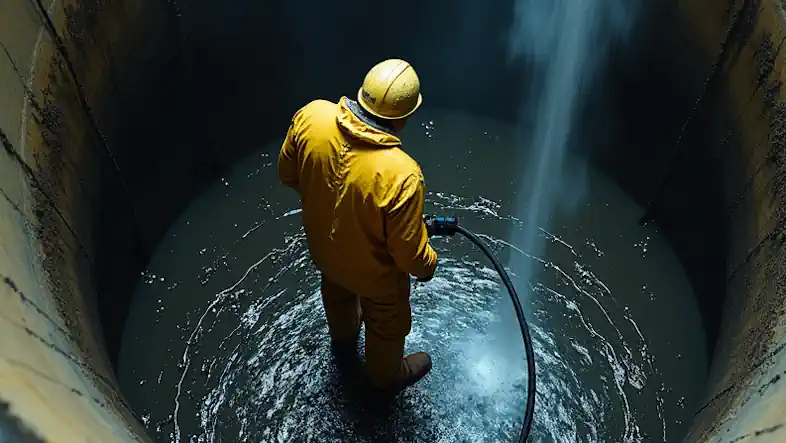
Optional Modules Extend Capability
Beyond the core separation function, Seditank offers add-on modules:
Sediwash: Washes captured grit, producing a cleaner separated fraction that's easier to handle or dispose of.
TWISTER integration: Processes recovered plastics from Plastifloat, enabling recycling or mechanical reprocessing depending on quality.
These modules let operators tailor the system to their specific needs—whether that's maximizing material recovery, meeting stricter contamination limits, or simply making disposal more cost-effective.
Getting Started
If you're running a food waste or organics processing facility and using the organic pulp as a feed for your anaerobic digester, consider whether these questions sound familiar:
- Are you replacing pump seals and impellers more often than you'd like?
- Is your digester maintenance schedule driven by grit accumulation?
- Are you struggling to meet quality specs for digestate end markets?
- Do visible plastics show up in your final digestate outputs?
If the answer is yes to any of these, it's worth exploring what Seditank and Plastifloat can do for your plant.
Next steps:
- Request a datasheet with typical removal rates and equipment specs
- Schedule site-specific sampling to quantify your grit and plastic loads
- Get a TWISTER integration quote if plastic recovery is a priority
- Review expected ROI based on reduced maintenance and improved digestate quality
The goal isn't just cleaner organics—it's a more reliable, cost-effective, and sustainable operation from end to end.
For more information on Seditank, Plastifloat, and TWISTER systems, contact Drycake or request a site assessment to see how these technologies fit your specific processing needs.