The UK biomethane sector is sitting on one of the fastest deployable energy security solutions available today. So, we ask about the UK's biomethane production: Can It Replace Imported Gas?
Unlike new nuclear or offshore wind, anaerobic digestion (AD) infrastructure already exists across the country — and much of it has untapped capacity. With the right policy adjustments, domestic biomethane production could increase within months, not years.
This matters now more than ever. Global gas markets remain volatile, and supply disruptions — particularly in the Gulf — continue to expose UK households and businesses to price shocks. The question is no longer whether biomethane can contribute, but how quickly it can scale.
This latest industry statement from the Anaerobic Digestion and Bioresources Association (ADBA) highlights a critical reality: biomethane is not a future technology — it is an underutilised national asset.
Key Takeaways: UK Biomethane and Energy Security
- UK biomethane production could increase by nearly 30% within months
- Output could rise from 7 TWh to 9 TWh before next winter
- This increase could replace gas imports such as LNG from Qatar
- There are already 750+ anaerobic digestion plants operating in the UK
- Long-term potential exceeds 100–120 TWh per year
- The main constraint is policy and regulation — not technology

Why Biomethane Is Critical for UK Energy Security
Biomethane is a purified form of biogas produced through anaerobic digestion, where organic waste such as food waste, agricultural residues, and sewage sludge is broken down in the absence of oxygen.
The resulting gas is upgraded to grid-quality biomethane, which is chemically identical to natural gas and can be injected directly into the UK gas network.
This gives biomethane a unique advantage among renewable energy sources:
- It integrates with existing infrastructure
- It provides dispatchable, on-demand energy
- It reduces reliance on imported LNG
At present, the UK produces around 7 TWh of biomethane annually, enough to heat roughly two-thirds of a million homes. However, much of the existing infrastructure is operating below its potential capacity.
Expert Insight: The Real Constraint Is Not Technology
From an engineering and operational standpoint, the UK’s anaerobic digestion sector is already mature.
The real bottlenecks lie elsewhere:
- Production caps within the Green Gas Support Scheme
- Gas grid injection constraints limiting plant throughput
- Outdated requirements such as propane addition before grid injection
- Lack of prioritisation for domestic green gas over imports
Many AD plants could increase throughput rapidly if these constraints were removed. This means that significant additional gas supply could be unlocked without major new capital investment.
How the UK Compares to Europe
Other European countries have already demonstrated what is possible when policy aligns with capability.
- Denmark now meets around 40% of its gas demand from biomethane
- France has rapidly scaled up grid injection capacity
These examples highlight the scale of the opportunity available to the UK if similar policy support is implemented.
Full Press Release (ADBA – March 2026)
Press Release – 15 March 2026
British Biogas could shield households from Gulf energy shock
Industry says taking the brakes off domestic biomethane production could cut imports and insulate consumers from supply and cost shocks.
Britain could reduce the impact of rising global gas prices and supply concerns caused by the conflict in the Gulf by rapidly increasing domestic green gas production, according to the UK’s anaerobic digestion industry.
The Anaerobic Digestion and Bioresources Association (ADBA) says existing biomethane plants could increase production by almost a third within months if the government removes several regulatory barriers, boosting UK gas supply before next winter.
Biomethane – a purified form of biogas produced from domestic food waste, farm residues and other organic materials – is chemically identical to natural gas and can be injected directly into the UK gas grid. Additionally, biomethane is a net-zero energy source – meaning our clean energy ambitions will not be sacrificed for the sake of energy security.
Currently, the UK produces around 7 TWh of biomethane each year, enough to heat roughly two-thirds of a million homes. Industry estimates suggest output could rise to around 9 TWh by next winter.
The sector says that an increase alone would be enough to replace the entire volume of gas Britain imported from Qatar in 2024.
Disruption in the Gulf has pushed up prices worldwide as shipments are redirected to the highest bidders.
That means British households and businesses ultimately pay the global price for gas.
ADBA Chair and Former Energy Secretary Chris Huhne said:
“Britain cannot control global gas markets, but it can control how much of its energy it produces at home.
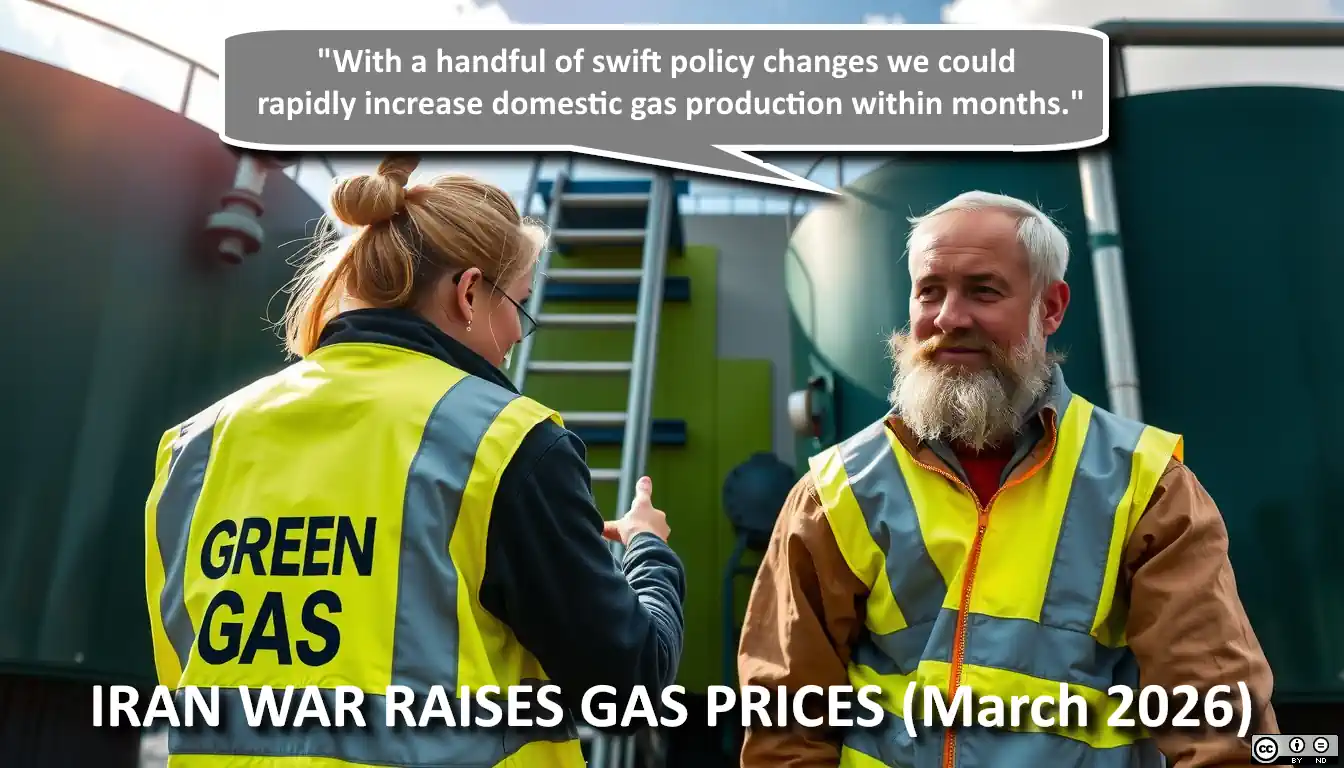
Biomethane is ready to go today. With a handful of swift policy changes we could rapidly increase domestic gas production within months, cutting imports and helping protect households from the worst of global price and supply shocks.”
Gas demand will fall during spring and summer, but the industry says decisions taken now will determine how resilient the UK energy system is next winter.
The UK currently has far less gas storage than comparable European countries and remains heavily exposed to volatility in global markets.
During the 2022 energy crisis, following Russia’s invasion of Ukraine, the European Union made biogas and biomethane a central part of its energy security response.
Countries such as Denmark now meet around 40% of their gas demand from biomethane, while France has rapidly expanded production.
Industry leaders say the UK has the resources to go much further. Studies suggest biomethane could eventually produce around 120 TWh of gas annually, potentially supplying between 20 and 50% of long-term UK gas demand.
The sector says several targeted policy changes could unlock additional production quickly.
- Removing production caps within the Green Gas Support Scheme
- Reforming gas grid injection limits
- Prioritising domestic green gas over imports
- Investing in gas network flexibility
- Removing outdated propane blending requirements
There are currently over 750 biogas plants operating across the UK, processing around 36 million tonnes of organic waste each year.
Fully developed, the sector could produce enough renewable gas to heat nearly seven million homes while supporting tens of thousands of jobs.
– ENDS –
What Happens Next for the UK Biogas Sector?
The UK is at a strategic crossroads.
With relatively modest policy changes, biomethane could provide one of the fastest and most cost-effective ways to:
- Improve energy security
- Reduce exposure to global gas price volatility
- Cut greenhouse gas emissions
- Support rural and waste management economies
Failing to act, however, would mean continued reliance on imported LNG and exposure to global market shocks.
Frequently Asked Questions
What is biomethane?
Biomethane is a renewable gas produced by upgrading biogas from anaerobic digestion to grid-quality standards, making it interchangeable with natural gas.
How much biomethane does the UK currently produce?
The UK produces approximately 7 TWh of biomethane annually, with potential to increase to 9 TWh in the short term.
Can biomethane reduce energy bills?
By increasing domestic gas supply and reducing reliance on imports, biomethane can help stabilise energy prices and reduce exposure to global price spikes.
Why is biomethane not used more widely in the UK?
The main barriers are regulatory and infrastructure constraints rather than technological limitations.
How quickly can biomethane production increase?
Industry estimates suggest production could rise significantly within months if policy barriers are removed.
Learn More About Anaerobic Digestion
To explore how anaerobic digestion systems work and how biomethane is produced, visit: