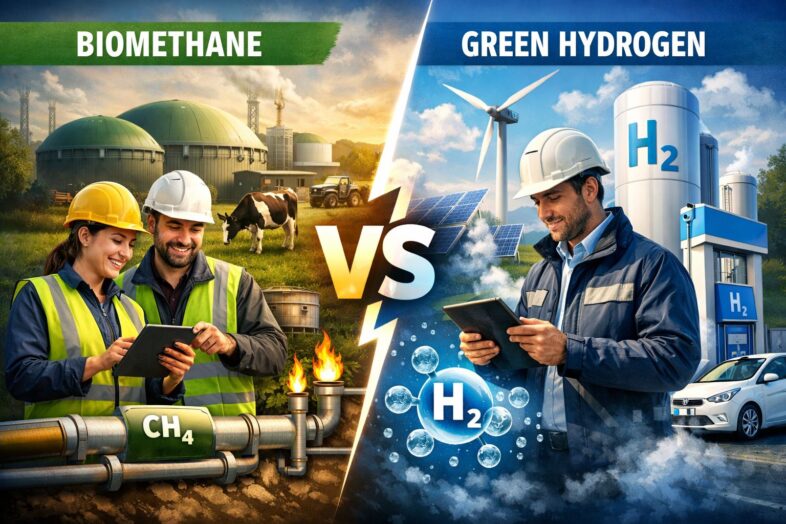
Comparing biomethane vs. green hydrogen isn’t quite like comparing chalk and cheese, but it has its difficulties because there are significant differences that any reader will need to understand from the start. Biomethane is a renewable methane gas that’s interchangeable with natural gas. It’s made from organic waste via anaerobic digestion and gas upgrading, while green hydrogen is a zero-carbon gas made by splitting water with renewable electricity via electrolysis. Biomethane works when injected into existing natural gas pipelines and appliances, whereas green hydrogen would require new or upgraded infrastructure and higher energy inputs. However, hydrogen can be scaled up better where renewable electricity is abundant, and waste feedstocks will always reach a ceiling once they use all available biomass.
Key Takeaways
- Biomethane and green hydrogen both cut carbon emissions, but they work in very different ways and suit different industrial needs.
- Biomethane can be used in existing gas infrastructure right now, while green hydrogen will require new equipment and distribution networks before it can replace the natural gas grid.
- Heavy industries like cement, steel, and chemicals may need both fuels working together rather than picking just one.
- Companies like Trimplex are helping businesses figure out which renewable gas fits their specific operations and budget.
- The right choice between biomethane and green hydrogen depends on factors like temperature requirements, existing infrastructure, and feedstock availability that we’ll break down below.
Choosing between biomethane and green hydrogen isn’t just a technical decision anymore, it’s a business-critical one that affects costs, compliance, and competitive advantage.
Manufacturers across Europe are racing to hit 2030 climate targets, and the gas that powers their furnaces matters just as much as the electricity running their lights. Natural gas has powered industrial heating for decades because it burns hot and reliably. Now two renewable alternatives are competing to replace it, and the choice isn’t always obvious. Organisations such as industrial companies will soon need to navigate this exact decision, weighing feedstock availability against equipment costs and delivery timelines.
Biomethane and green hydrogen both promise lower emissions, but they get there through completely different processes, and that difference shapes everything from installation costs to how quickly a factory can switch over. For instance, the production of biomethane involves processes like anaerobic digestion, which is pivotal in reducing greenhouse gases.
What Is Biomethane?
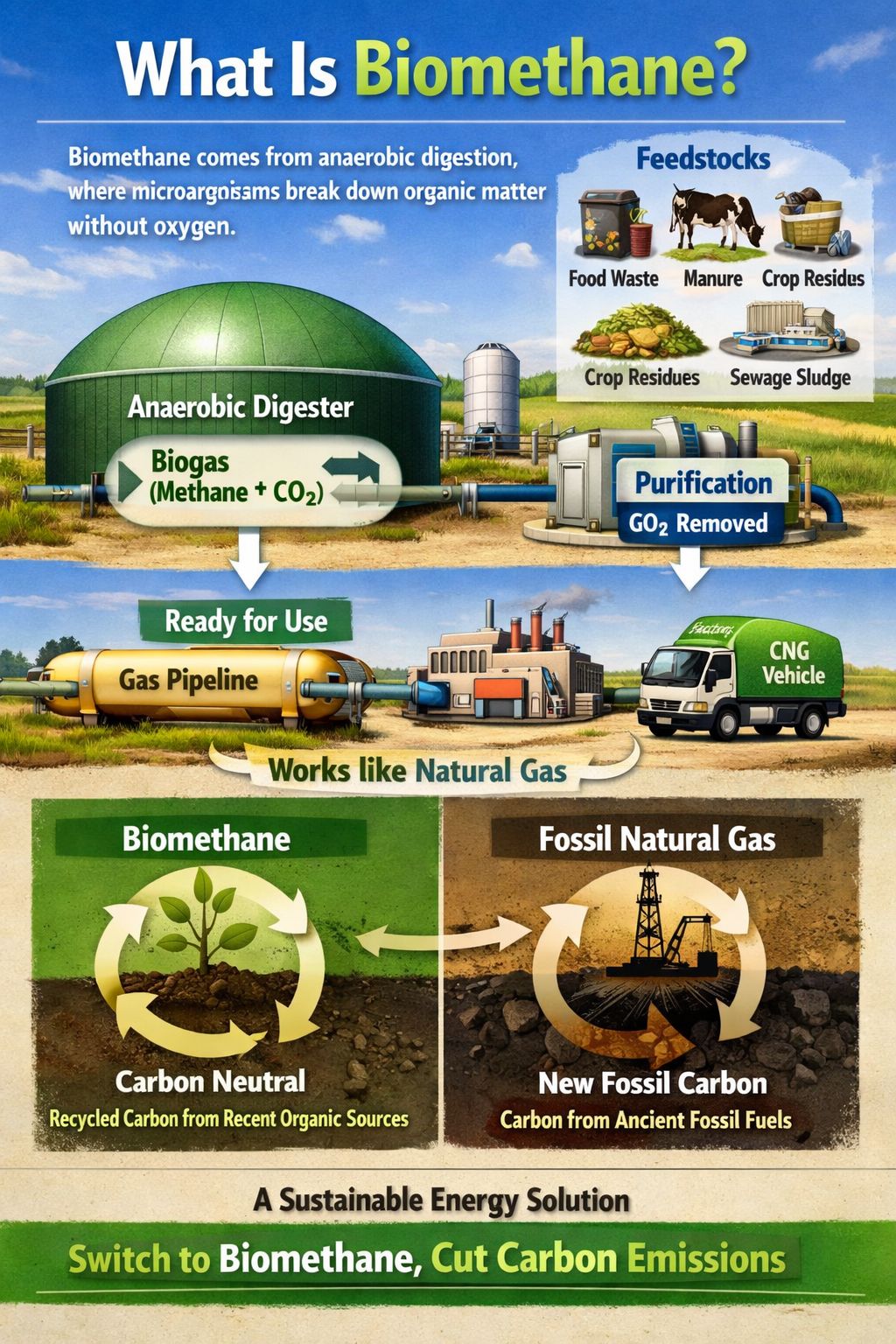
Biomethane comes from anaerobic digestion, a process where microorganisms break down organic matter without any oxygen present. Feedstocks include sewage sludge, food scraps, agricultural waste, and livestock manure, materials that would otherwise rot in landfills and release methane directly into the atmosphere. That digestion process produces biogas, a mix of methane and carbon dioxide, which then goes through purification to strip out the CO2 and other unwanted components.
Once purified, biomethane reaches a methane content above 95%, essentially matching the chemical makeup and calorific value of fossil natural gas. This similarity is what makes biomethane so practical: it slots into existing pipelines, furnaces, and boilers without requiring new machinery. A factory running on natural gas today can often switch to biomethane with zero equipment changes. Learn more about how biogas is utilized in the UK for sustainable energy solutions.
The climate math works in biomethane’s favour too. Because the carbon released when burning biomethane was recently absorbed by plants or trapped in waste, it’s considered carbon neutral. Fossil natural gas, by contrast, releases carbon that’s been locked underground for millions of years, adding new carbon to the atmosphere rather than recycling what was already there.
What Is Green Hydrogen?
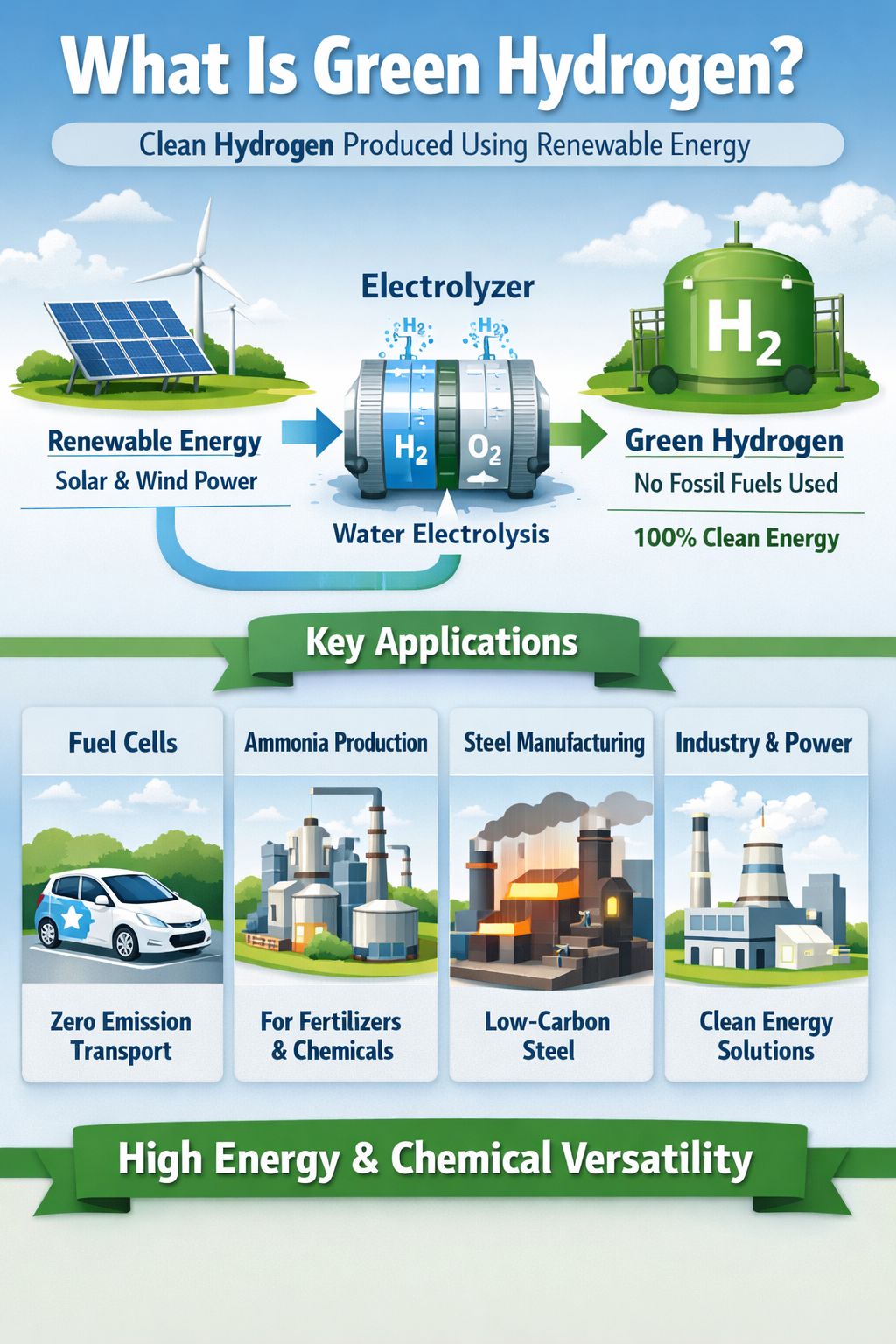
Green hydrogen takes a different path entirely. It’s produced through electrolysis, splitting water molecules into hydrogen and oxygen using electricity generated from renewable sources like wind or solar. No fossil fuels touch the process at any stage, which is why it’s labelled “green” as opposed to “grey” hydrogen made from natural gas or “blue” hydrogen made with carbon capture. Learn more about renewable gases such as biogas, biomethane, or hydrogen.
Unlike biomethane, green hydrogen doesn’t drop neatly into existing natural gas infrastructure. Hydrogen molecules are smaller than methane molecules, which means pipelines, storage tanks, and burner tips often need modification or complete replacement to handle it safely. Industrial facilities looking to adopt hydrogen typically face higher upfront capital costs tied to this infrastructure overhaul.
Where green hydrogen shines is in applications demanding extremely high energy density or chemical versatility. It’s not just a heating fuel, it’s a feedstock for ammonia production, steel manufacturing processes like direct reduction, and fuel cells for transport. That versatility makes it attractive for industries where biomethane’s chemical profile simply won’t do the job.
Biomethane vs. Green Hydrogen: Side-by-Side Comparison
Numbers tell the story faster than paragraphs ever could, so here’s how these two renewable gases stack up across the factors that matter most to industrial decision-makers.
| Factor | Biomethane | Green Hydrogen |
|---|---|---|
| Production Method | Anaerobic digestion of organic waste | Electrolysis powered by renewable electricity |
| Infrastructure Compatibility | Drops into existing natural gas pipelines and equipment | Requires modified or new pipelines, storage, and burners |
| Methane Content / Purity | Over 95% methane after purification | Near 100% hydrogen, zero carbon content |
| Byproducts | Digestate (fertilizer), bio-CO2 for food industry use | Oxygen (often vented or sold separately) |
| Best Suited Industries | Furnaces, boilers, heavy transport (Bio-CNG/LNG) | Steel direct reduction, ammonia production, fuel cells |
| Feedstock Dependency | Depends on waste and agricultural byproduct availability | Depends on renewable electricity capacity and water access |
Which One Fits Your Industry?
The honest answer is that most heavy industries won’t have to choose just one. Cement, steel, and chemical plants often run processes that need both the reliable, drop-in heating biomethane provides and the chemical versatility hydrogen offers for specific high-temperature or reduction processes. Biomethane vs. Green Hydrogen is a topic you can expect to see more of in the years to come. For more insights on how biomethane can contribute to reducing emissions, consider reading about its role in biogas and climate change.
Food and beverage manufacturers sit in an interesting position here. Many already generate organic waste as part of their operations, meaning they can produce their own biomethane on-site and use it to fuel their own furnaces, closing the loop entirely without buying external fuel.
Heavy transport operators, think trucking fleets, shipping companies, face a similar fork. Bio-CNG and Bio-LNG give trucks and ships a fuel that performs almost identically to fossil gas but with a dramatically smaller footprint, using the same fuelling infrastructure already in place. Hydrogen fuel cells, meanwhile, are gaining ground in specific transport niches where battery weight becomes a dealbreaker.
Quick Reference: Questions Industrial Buyers Ask
- Can I switch to biomethane without new equipment? Yes, in most cases, since it matches natural gas properties closely enough to use existing furnaces and boilers.
- Does green hydrogen require new infrastructure? Usually yes, because hydrogen molecules are smaller and need different pipeline and storage materials. It may be possible to add a percentage of hydrogen to natural gas while still using the current gas grid, but that is not a currently accepted delivery method.
- Which fuel is cheaper right now? Biomethane generally costs less today due to established production and existing infrastructure compatibility.
- Can both fuels be used together? Absolutely, many industrial facilities blend strategies depending on process-specific temperature and chemical needs.
Deciding between biomethane and green hydrogen isn’t about picking a winner, it’s about matching the right fuel to the right process, and that’s exactly the kind of strategic assessment Trimplex helps industrial businesses work through.
Biomethane vs. Green Hydrogen: Side-by-Side Comparison
Numbers tell the story faster than paragraphs ever could, so here’s how these two renewable gases stack up across the factors that matter most to industrial decision-makers. To understand more about the role of these gases in renewable energy, explore further details.
| Factor | Biomethane | Green Hydrogen |
|---|---|---|
| Production Method | Anaerobic digestion of organic waste | Electrolysis powered by renewable electricity |
| Infrastructure Compatibility | Drops into existing natural gas pipelines and equipment | Requires modified or new pipelines, storage, and burners |
| Methane Content / Purity | Over 95% methane after purification | Near 100% hydrogen, zero carbon content |
| By-products | Digestate (fertiliser), bio-CO2 for food industry use | Oxygen (often vented or sold separately) |
| Best Suited Industries | Furnaces, boilers, heavy transport (Bio-CNG/LNG) | Steel direct reduction, ammonia production, fuel cells |
| Feedstock Dependency | Depends on waste and agricultural by-product availability | Depends on renewable electricity capacity and water access |
Which One Fits Your Industry?
The honest answer is that most heavy industries won’t have to choose just one. Cement, steel, and chemical plants often run processes that need both the reliable, drop-in heating biomethane provides and the chemical versatility hydrogen offers for specific high-temperature or reduction processes.
Food and beverage manufacturers sit in an interesting position here. Many already generate organic waste as part of their operations, meaning they can produce their own biomethane on-site and use it to fuel their own furnaces, closing the loop entirely without buying external fuel.
Heavy transport operators, think trucking fleets, shipping companies, face a similar fork. Bio-CNG and Bio-LNG give trucks and ships a fuel that performs almost identically to fossil gas but with a dramatically smaller footprint, using the same fueling infrastructure already in place. Hydrogen fuel cells, meanwhile, are gaining ground in specific transport niches where battery weight becomes a dealbreaker.
What’s Holding Each Technology Back?
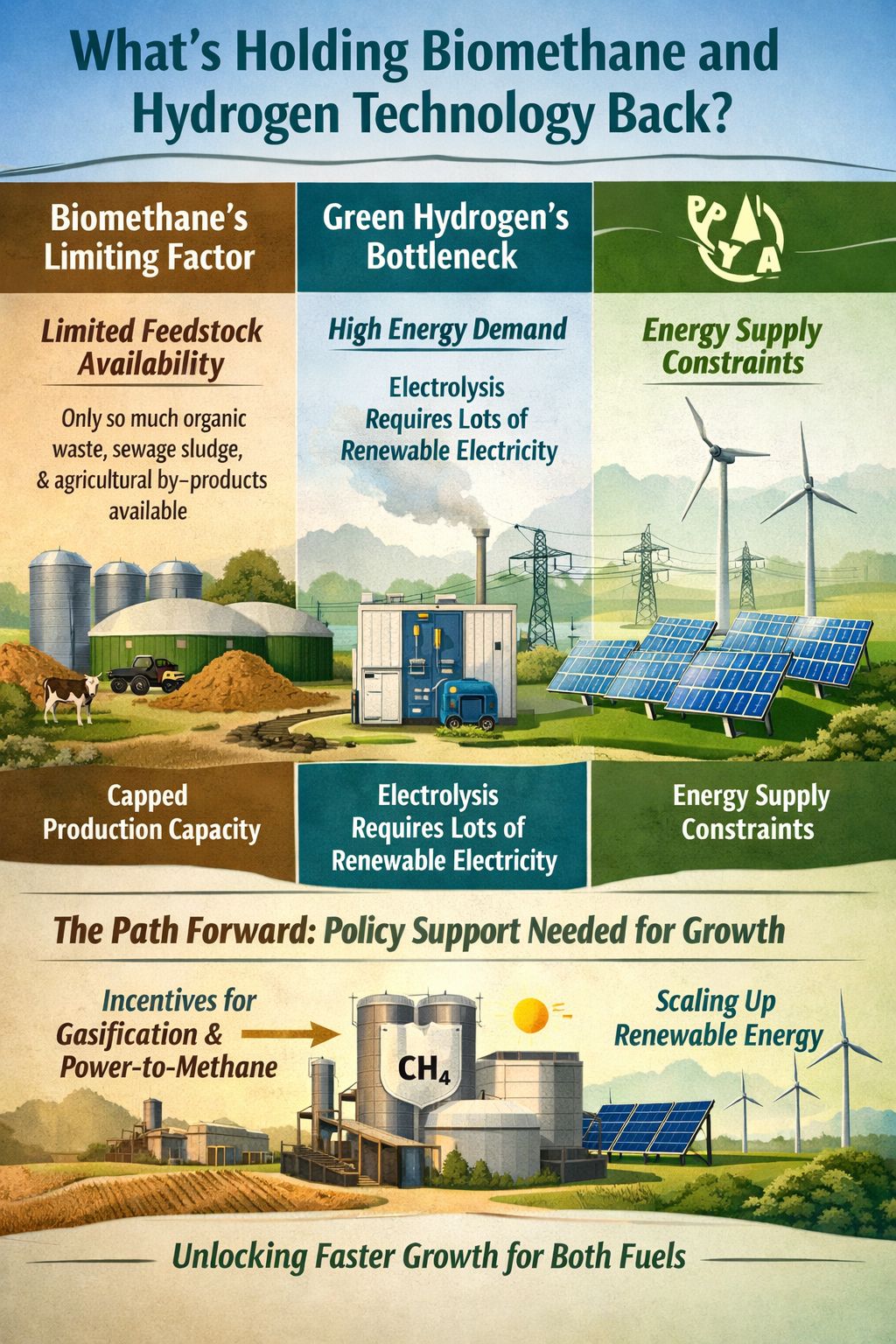
Biomethane’s limiting factor is feedstock. There’s only so much organic waste, sewage sludge, and agricultural by-product available in any given region, which caps how much biomethane a country can realistically produce. Spain, for example, has just 11 biomethane plants currently operating, though estimates suggest that number could climb past 50 by 2025, with production capacity potentially covering 40% to 50% of national natural gas demand.
Green hydrogen’s bottleneck is different; it’s an energy math problem. Electrolysis consumes significant amounts of renewable electricity, and that electricity has to come from somewhere that isn’t already needed for the grid. Until renewable electricity generation scales up dramatically, green hydrogen production will stay constrained and relatively expensive compared to biomethane.
Both technologies also need supportive policy to scale. A regulatory framework that incentivises investment in technologies like gasification or Power-to-Methane, where excess renewable electricity gets converted and stored as gas, could unlock faster growth for both fuels simultaneously.
Quick Reference: Questions Industrial Buyers Ask
- Can I switch to biomethane without new equipment? Yes, in most cases, since it matches natural gas properties closely enough to use existing furnaces and boilers.
- Does green hydrogen require new infrastructure? Usually yes, because hydrogen molecules are smaller and need different pipeline and storage materials.
- Which fuel is cheaper right now? Biomethane generally costs less today due to simpler production and existing infrastructure compatibility.
- Can both fuels be used together? Absolutely, many industrial facilities blend strategies depending on process-specific temperature and chemical needs.
Deciding between biomethane and green hydrogen isn’t about picking a winner; it’s about matching the right fuel to the right process.
Renewable gases such as biogas, biomethane or hydrogen offer another avenue for reducing emissions in industrial processes. As industries seek to decarbonize, these renewable gases provide a sustainable alternative to fossil fuels, helping to meet environmental targets and reduce the carbon footprint.