
Biogas chillers are specialised industrial cooling systems designed to remove moisture and contaminants (water vapour) from raw biogas, usually cooling it to around 5°C. They improve efficiency in cogeneration engines by preventing corrosion and condensation, typically used in landfills and anaerobic digestion plants to optimise gas treatment.
Summary of the Article – Best Biogas Chillers Technology
- Biogas needs to be cooled to about 5°C (41°F) to effectively eliminate moisture and harmful impurities that can damage equipment and lower gas quality.
- Modern biogas treatment plants primarily use two technologies, glycol-based and propane-based chillers, each with its own efficiency benefits.
- Corrosion-resistant coatings and A2L refrigerants are revolutionizing long-term chiller performance in harsh biogas conditions — the difference in lifespan is noteworthy.
- Top manufacturers such as G&D Chillers, Cold Shot Chillers, and Frigel provide custom-engineered systems designed specifically for biogas and biomethane applications.
- Selecting the wrong chiller technology can result in equipment contamination, expensive downtime, and decreased biogas production — the stakes are higher than most operators understand.

Proper biogas production boils down to one factor: temperature control at every crucial step of the treatment process.
Biogas is a renewable energy source that has a lot of potential. It is produced from organic waste from landfills, dairy farms, municipal systems, and industrial facilities and can be used as fuel.
However, raw biogas is not clean. It contains water vapour, hydrogen sulfide, siloxanes, and other contaminants that can corrode pipelines, damage engines, and destroy downstream equipment if not removed. Chilling is the first line of defence against these contaminants, and the technology used to do this has improved greatly in recent years.
For plants that want to optimise their systems, G&D Chillers has been engineering glycol and propane-based cooling systems specifically for the needs of biogas production — a niche that requires precision, durability, and a deep understanding of the process.
Biogas Chillers: The Key to Effective Renewable Energy Production
Biogas can't be safely transported, stored, or burned without efficient chilling. The cooling stage isn't a choice—it's where the raw, contaminated gas is transformed into a practical, usable energy source. Every major biogas treatment train, from small farm digesters to large municipal waste facilities, relies on a dependable chiller system to achieve the exact temperature targets that enable gas cleaning.
The worldwide shift towards renewable energy has intensified the need for biogas plant operators to increase production, reduce emissions, and cut operational expenses. Chiller technology is crucial in this endeavour.
A properly engineered system doesn't just dry the gas – it safeguards all downstream equipment, prolongs system lifespan, and directly influences the amount of usable energy a facility can supply to the grid or end user.
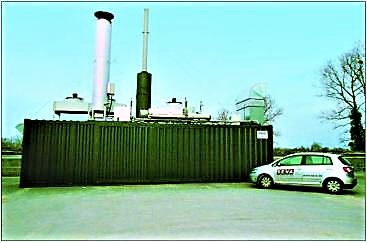
“Biogas Electricity – A (Large-scale) Energy-from-Waste container housing a gas engine reciprocating generator and two biogas chillers on the roof | SSWM …” (CC by SA 3.0) from sswm.info and used with no modifications.
The Importance of Temperature Control in Maintaining Biogas Quality
Raw biogas is usually saturated with water vapour. When this moisture is not removed, it condenses within pipelines and equipment, leading to the creation of environments where hydrogen sulfide dissolves into corrosive acids. Siloxanes, which are volatile silicon compounds commonly found in landfill gas and sewage biogas, solidify on engine surfaces when temperatures fluctuate.
Precise and consistent chilling can prevent these risks from turning into costly failures. In the words of Scott Timms, Chief Operating Officer at G&D Chillers,
“Temperature control is crucial in the upgrading process. Our chillers are designed to maintain the precise temperatures needed for maximum biogas production, even in the harsh environments these facilities are often located in.”
Why the 5°C (41°F) Chilling Threshold is Important
The 5°C (41°F) threshold is not just a random number. It is the temperature at which water vapor in the biogas stream condenses effectively and can be drained off, lowering the dew point of the gas to a level that allows it to be safely compressed, transported, and combusted.
Chilling to this specific point is the industry standard for efficient biogas drying. Being able to achieve this consistently — regardless of changes in ambient temperature or variations in gas flow rates — is what distinguishes a high-performing chiller from a low-performing one. For more insights into biogas technology, check out the biogas generator market trends.
Understanding the Role of Water-Cooled Heat Exchangers in Biogas Chillers
Water-cooled heat exchangers serve as the connection between the chiller unit and the biogas stream. The chiller creates cold water or glycol solution, which is circulated through the heat exchanger, where it picks up heat from the incoming biogas.
As the gas cools down, moisture condenses and is separated. The now-heated coolant goes back to the chiller to be cooled down again and recirculated. This closed-loop system is energy-efficient and ensures the biogas is kept separate from the refrigerant, which is essential for both safety and gas purity in regulated settings.
The Role of Biogas Chillers in Industrial Environments
When it comes to industrial biogas chilling, there is no one-size-fits-all solution. The composition of the gas, the volume of the flow, the surrounding environment, and the final use application all play a part in how a chiller system is set up.
A landfill gas recovery site, for example, functions very differently from a dairy farm's anaerobic digester, and both are significantly different from a municipal wastewater treatment plant that produces biomethane for injection into the grid.
All of these situations require the gas to be cooled quickly, the condensate to be captured effectively, and the outlet temperatures to be kept steady under varying load conditions. Industrial chillers used in biogas applications are designed to cope with harsh gas chemistry, outdoor installation, continuous operation, and performance requirements that standard commercial HVAC equipment simply cannot meet.

Eliminating Water and Harmful Impurities from Mixed Gas
Unrefined biogas is a blend of methane (usually 50–70%), carbon dioxide, water vapour, and minor contaminants such as hydrogen sulfide (H2S), ammonia, and siloxanes. If not eliminated, each of these impurities causes particular issues:
Here are some of the main culprits that cause damage to pipeline infrastructure and equipment:
- Water vapour leads to pipeline corrosion and inconsistencies in pressure drop across the distribution system.
- Hydrogen sulfide is extremely corrosive and poisonous, reacting with moisture to create sulfuric acid that corrodes metal components.
- Siloxanes combust to form hard, abrasive silicon dioxide deposits on engine pistons, valves, and turbine blades.
- Ammonia corrodes copper alloys in downstream equipment and degrades catalysts.
By chilling the gas to 5°C (41°F), water vapour is directly addressed through condensation. This also reduces the partial pressure of other contaminants, increasing the efficiency of downstream scrubbing and filtration stages that handle removal of H&sub2;S and siloxanes.
Biogas Applications in Municipalities, Agriculture, and Industry
Biogas is produced continuously by municipal wastewater treatment plants from sewage sludge digesters. These plants often need chillers capable of handling large, consistent gas flows with little need for operator intervention.
Agricultural biogas plants, especially those in large dairy operations, deal with methane-rich gas produced by manure digesters. The chiller systems in these plants need to be sturdy enough for remote, outdoor installation and have limited on-site technical support.
Industrial applications, such as food processing waste digesters and brewery effluent systems, add additional complexity with variable feedstocks and fluctuating gas quality.
Comparing Landfill Gas Production and Dairy Farm Methane Cooling Requirements
Landfill gas (LFG) and dairy farm methane each come with their own unique set of cooling challenges. Landfill gas contains a much higher concentration of siloxanes and non-methane organic compounds (NMOCs), which means the chiller and heat exchanger must be designed with materials and configurations that can resist fouling and chemical attack.
Dairy farm methane tends to be higher in hydrogen sulfide relative to siloxanes, which requires corrosion-resistant materials throughout the cooling loop.
Cold Shot Chillers designs its biogas chilling systems to operate safely and reliably in both of these harsh environments, using components that exceed standard industry material specifications. For more information on biogas systems, visit our page on biogas generators.
Top-of-the-Line Biogas Chiller Technologies
There has been a significant transformation in the biogas chiller market. Manufacturers are now producing systems that are fine-tuned for particular types of gas, installation environments, and efficiency goals.
The move towards refrigerants with a lower GWP, more intelligent controls, and engineering tailored to specific applications has increased the potential performance of a biogas chiller.
1. Glycol Chillers in Biogas Facilities
Biogas treatment applications most commonly use glycol chillers. These chillers use a water-glycol mixture as the heat transfer fluid, allowing the chiller to operate at temperatures below the freezing point of water without the fluid freezing inside the cooling circuit.
The glycol concentration is adjusted based on the target chilling temperature and the ambient conditions at the installation site. G&D Chillers makes glycol-based systems specifically for biogas facilities, offering precise temperature control down to the 5°C (41°F) operational target with high reliability in continuous-duty industrial environments.
2. Elite 290 Microseries and Propane-Based Chillers
Propane-based chillers are a significant advancement in refrigerant efficiency for biogas applications. Propane (R-290) has a Global Warming Potential (GWP) of only 3, compared to hundreds or thousands for traditional synthetic refrigerants, making it one of the most environmentally responsible choices available.
G&D Chillers has developed its Elite 290 Microseries specifically to bring ultra-efficient, small-scale propane chilling to biogas and other industrial markets. This system delivers high performance in a compact footprint, which is particularly valuable for smaller biogas operations or sites where space and refrigerant charge volume are tightly regulated.
3. A2L Alternative Refrigerants: More Eco-Friendly, More Efficient
A2L refrigerants are a type of mildly flammable, low-GWP replacement for older high-GWP synthetic refrigerants like R-404A and R-134a. Common A2L options include R-32 and R-454B, both of which have a significantly lower environmental impact without sacrificing thermodynamic efficiency.
In biogas chiller systems, switching to A2L refrigerants decreases the carbon footprint of the cooling process itself — a critical factor when the entire goal of the plant is to generate clean, renewable energy.
Modern chiller designs from leading manufacturers are increasingly engineered to be compatible with A2L, with updated safety controls and leak detection systems built into the unit to safely manage the mild flammability classification.
Unique Condenser Coatings That Ward Off Corrosion
Biogas settings are chemically hostile. Hydrogen sulfide, moisture, and ammonia fumes don't just pose a risk to gas treatment equipment, they also target the chiller itself, particularly the condenser coils exposed to ambient air near the gas handling area.
Unique condenser coatings, like epoxy-phenolic and polyurethane-based treatments applied to aluminum or copper fin surfaces, create a chemical barrier that significantly prolongs coil life in corrosive environments. Cold Shot Chillers incorporates these protective coatings as standard on units designed for biogas settings, ensuring that the external chiller components last as long as the internal ones over years of continuous operation.
What to Look for in a Biogas Chiller System
Not every industrial chiller is designed to handle the unique demands of biogas treatment. When evaluating systems, it's important to focus on features that address the specific operating conditions of biogas plants: corrosive atmospheres, continuous-duty cycles, remote locations, and tight temperature tolerances.
Neglecting any of these specifications can lead to premature failure, contamination events, or chronic underperformance that can undermine the entire energy recovery operation.
Reliable and Modifiable Temperature Regulation
The standard expectation is that chilled fluid will be consistently delivered at or close to 5°C (41°F). However, biogas flow rates and compositions are not constant, especially in agricultural and landfill environments, which means the chiller needs to be able to adjust its output to align with fluctuating thermal loads without going over or under the desired temperature. Systems with electronic expansion valves (EEVs) and PLC-based control systems that actively track and modify refrigerant flow in real time are recommended.
There are also some high-tech biogas chiller systems that provide the option of remote monitoring. This feature enables operators to keep an eye on the outlet temperature, the status of the compressor, and any alarm conditions, all from a central control room or even a mobile device. In large facilities, or those in remote locations, this capability alone can prevent many hours of downtime that would otherwise go unnoticed, along with the resulting degradation in the quality of the gas.

Dependable Performance in Extreme Weather Conditions
Biogas facilities are seldom found in climate-controlled environments. Outdoor installations have to deal with severe temperatures, humidity, dust, and exposure to chemicals that would rapidly deteriorate a standard commercial chiller. Units designed for biogas service should have IP-rated electrical enclosures (IP54 or higher), stainless steel or coated carbon steel cabinets, and compressors that can operate at high ambient temperatures — typically up to 45°C (113°F) or more.
Cold Shot Chillers has specifically designed its biogas units to withstand conditions that cause standard equipment to fail. They have selected components that perform well in these conditions. As a result, their system can continue to provide accurate chilling even during summer heat spikes, coastal humidity, and in the presence of corrosive airborne compounds that are common near a biogas processing facility.
Maximum Performance with Minimal Operating Costs
Energy usage is a significant consideration in any industrial cooling process. Biogas chillers that operate non-stop at high load consume a lot of power, and inefficient systems can significantly reduce the plant's net energy output. The use of high-efficiency scroll or screw compressors, variable speed drives (VSDs) on fan motors and pumps, and an optimized refrigerant circuit design can all help to reduce the amount of kWh used per unit of cooling provided. Over the lifespan of a system, which is typically 15 to 20 years, the difference in energy costs between an efficient and an inefficient chiller can be much greater than the difference in initial purchase price.
Pre-Shipment Testing and Regulatory Compliance
Every biogas chiller should be thoroughly tested in the factory before being shipped. This involves running the unit through its full operating range under simulated load conditions to catch any refrigerant leaks, control system errors, or component defects before the unit is installed. This is crucial because the cost of repairs and the downtime for repairs are significantly higher once the unit is on site. Additionally, any biogas plant that is connected to a public gas grid or that is subject to environmental permits must comply with UL, CE, ASME, and any applicable local pressure vessel codes.
Cost-Saving Efficiency Solutions
Efficiency in a biogas chiller system is more than just energy costs. It includes everything from the longevity of the equipment without significant maintenance, to its ability to maintain accurate temperatures as it ages, to its rapid recovery time after a fault. The best biogas chiller solutions tackle all of these aspects at once, rather than sacrificing one aspect to improve another.
Those who consider the total cost of ownership (TCO) when choosing a chiller have consistently been shown to outperform those who only look at the initial purchase cost. A chiller that costs 20% more to buy but lasts twice as long, uses 15% less power, and needs half the amount of maintenance can deliver much better value for money over a 10-year operating period. This is particularly true in biogas plants where the cooling system is in operation 24 hours a day, 365 days a year.
How Anti-Corrosion Coatings Can Prolong Equipment Life
Corrosion is the primary factor that limits the life of biogas chiller components that are exposed to the plant environment. Condenser coils, cabinet panels, and heat exchanger surfaces are all continually exposed to hydrogen sulfide, moisture, and biological off-gases.
Manufacturers who apply multi-layer protective coatings — including both base primers and topcoat sealants that are rated for chemical resistance — are able to deliver systems that maintain heat transfer efficiency and structural integrity for years longer than alternatives that are not coated. The return on investment for corrosion protection is simple: a coated condenser coil that lasts 12 years as opposed to an uncoated one that fails in 5 years eliminates one full replacement cycle and the associated labor costs.
Custom-Engineered Designs for Maximum Process Efficiency
Standard catalog chillers rarely achieve maximum efficiency in biogas applications because the operating conditions rarely match the assumptions built into a generic design. Custom-engineered systems, by contrast, are sized and configured around the actual gas flow rates, inlet temperatures, ambient conditions, and target outlet specifications of a specific plant.
G&D Chillers takes this approach as standard practice, working directly with plant engineers to design, fabricate, and quality-assure cooling systems that are optimized for the exact biogas treatment process at hand.
Customization of this level includes heat exchanger sizing, glycol concentration, refrigerant selection, control system integration, and physical layout. All of these factors affect how efficiently the chiller performs on a daily basis. A custom-engineered biogas chiller is not only built to meet the minimum specification, but it is also designed to perform at its best under the exact conditions it will face in service.
Top Biogas Chiller Manufacturers You Should Know About
Three manufacturers are leading the way in the biogas chiller industry, each with their own unique engineering expertise and experience in different applications. Knowing what each manufacturer excels at can make it much simpler to find the right system for a particular plant type, gas composition, and operational requirement.
1. G&D Chillers: Biogas Chillers for Glycol and Propane
With a focus on glycol and propane-based cooling systems, G&D Chillers has earned a solid reputation in the biogas industry. These systems are designed to meet the specific needs of biogas treatment, and they are engineered to maintain precise outlet temperatures under the variable load conditions and harsh ambient environments that are common at landfill, agricultural, and municipal biogas sites.
he company's commitment to both performance and environmental responsibility is demonstrated by the introduction of the Elite 290 Microseries, a compact chiller that uses propane refrigerant and has a GWP of just 3. Every system is custom-designed and quality-assured for the specific biogas treatment process it will serve.
2. Cold Shot Chillers: Expert Biogas Treatment Solutions
For over 40 years, Cold Shot Chillers has been a leader in industrial chiller manufacturing, with a particular emphasis on biogas and biofuel treatment applications. Their biogas chilling systems are designed for precise water temperature control and dependable, secure operation in the harsh, remote environments typical of biogas facilities.
Units are built with coatings that resist corrosion, electrical enclosures rated for ingress protection, and components chosen to withstand the chemical exposure associated with constant proximity to hydrogen sulfide, ammonia, and biological off-gases.
Cold Shot Chillers stand out in the biogas industry due to their blend of reasonable costs and superior build quality. Before shipping, their systems are factory-tested over the entire operating range, and the company has a dedicated technical support team ready to help with biogas-specific application queries.
This is a real operational benefit for plants in remote areas where there is a lack of on-site expertise.
3. Frigel: Cooling Solutions for Biogas and Biomethane Waste-to-Energy Projects
Frigel offers cooling solutions for the biogas and biomethane industry, focusing on energy technology as a whole. They integrate their solutions with waste-to-energy, organic rankine cycle (ORC), and power grid applications, along with their biogas-specific systems. This makes Frigel an excellent choice for large-scale biomethane upgrading projects that require a cooling system that can work with multiple process stages and energy recovery systems at the same time.
Frigel's biogas and biomethane cooling systems are ideal for plants that aim to produce grid-injection quality gas. This is because these plants have stringent purity requirements and the impact of temperature control failures can be devastating.
Frigel's systems are designed to be incorporated into intricate, multi-stage gas treatment processes. This makes them an excellent option for large-scale waste-to-energy projects where the overall system is just as important as the performance of individual components.
Investing in the Right Biogas Chiller Is a Long-Term Decision
The chiller system a biogas plant chooses to install today will determine its operational efficiency, maintenance requirements, and energy costs for the next 15 to 20 years. Making the right choice involves considering more than just the initial cost.
Factors such as the type of refrigerant, corrosion protection, custom engineering capability, ambient temperature ratings, and manufacturer support depth should all be taken into account.
The best biogas chiller technology is not necessarily the cheapest option. Instead, it is the system that offers the lowest total cost of ownership while ensuring the temperature precision and reliability that biogas treatment requires 24/7.

Best Biogas Chillers – Common Questions and Answers
Here you will find answers to the most frequently asked questions about biogas chiller technology. We cover everything from temperature goals, refrigerant options, corrosion protection, customisation choices, and up-to-date refrigerant classifications.
What is the ideal temperature for chilling biogas?
Biogas must be chilled to roughly 5°C (41°F) in order to properly condense and eliminate water vapour from the gas stream. At this temperature, the moisture in the biogas becomes liquid condensate, which is subsequently drained before the dried gas is transported to the next treatment stage. Proper chilling is essential to ensure the efficiency of the biogas generator systems.
Consistently achieving this goal is of the utmost importance. If the chiller doesn't perform up to par and the gas stays too warm, moisture will get through, leading to corrosion, pressure irregularities, and contamination of downstream equipment.
If the system cools too much, energy is wasted, and there's a chance of ice forming in certain setups. Being precise at the 5°C (41°F) setpoint is the basic operational requirement of an effective biogas drying system.
How Do Glycol and Propane-Based Biogas Chillers Differ?
Glycol-based chillers use a water-glycol mixture as the heat transfer fluid, circulating it through the chiller and into the heat exchanger, where it absorbs heat from the biogas stream. They are well-established, widely serviceable, and effective across a broad range of biogas applications.
Propane-based chillers (R-290) use propane directly as the refrigerant, offering a dramatically lower Global Warming Potential of just 3 compared to conventional synthetic refrigerants.
Propane systems tend to deliver higher thermodynamic efficiency and a significantly smaller environmental footprint, making them the preferred choice for operators prioritising sustainability alongside performance.
The G&D Chillers Elite 290 Microseries is a leading example of this technology applied specifically to biogas and small-scale industrial cooling.
Why is it Important for Biogas Chillers to Have Corrosion-Resistant Coatings?
Biogas chillers are constantly exposed to hydrogen sulfide, ammonia, and biological moisture, which can cause the chiller components, particularly condenser coils and external cabinetry, to degrade.
Without protective coatings, the aluminium and copper fin surfaces can start to degrade within a few years, resulting in a loss of heat transfer efficiency and eventually structural failure.
However, by applying multi-layer corrosion-resistant coatings, such as epoxy-phenolic and polyurethane-based systems, to the condenser fins, the components can last up to 12 years or more, compared to just 4-5 years without the coating.
This not only reduces the cost of replacing the components, but also reduces the frequency of maintenance and the disruption to operations that comes with having to service the chiller in a continuously operating biogas plant.
Are Biogas Chillers Able to Be Custom-Made for Specific Plant Needs?
Customization Factor Why It’s Important for Biogas Plants Gas flow rate & load profile Helps to decide compressor sizing and heat exchanger surface area needed for a consistent 5°C outlet temperature Inlet gas temperature Impacts refrigeration load calculations and the required chiller capacity at maximum operating conditions Ambient temperature range Influences decisions on high-ambient compressor ratings, condenser fan sizing, and glycol concentration Gas composition (H₂S, siloxanes) Guides material selection for heat exchanger wetted surfaces and protective coating specifications Installation environment Affects IP enclosure rating, cabinet material, and whether indoor or outdoor-rated components are necessary Control system integration Helps to determine PLC compatibility, remote monitoring capability, and alarm output configuration
Yes, biogas chillers can definitely be custom-made for specific plant needs, and in most high-performance applications, custom engineering is strongly advised over choosing a standard catalogue unit.
The differences between biogas sources — from landfill sites to dairy digesters to municipal wastewater plants — mean that a chiller designed around generic assumptions will almost always leave performance and efficiency on the table. For more information on biogas chillers, visit Water Chillers.
Take G&D Chillers as an example. They work hand in hand with plant engineers to design and build cooling systems that are tailor-made for the specific process parameters of a given site.
This includes everything from heat exchanger sizing, refrigerant circuit configuration, glycol concentration, control logic, to physical layout — all of which are perfectly matched to the actual operating conditions the chiller will face in service.
What are A2L Refrigerants and Why are They Used in Modern Biogas Chillers?
A2L refrigerants are a safety classification defined by ASHRAE Standard 34. The “A” indicates low toxicity, and the “2L” indicates mildly flammable with a very slow burning velocity — typically less than 10 cm/s under standard test conditions.
Common A2L refrigerants include R-32, R-454B, and R-452B, all of which have significantly lower Global Warming Potential than the R-404A and R-410A refrigerants they are progressively replacing across industrial refrigeration applications.