A digester mixing system is a critical mechanism in wastewater treatment and anaerobic digestion. It homogenises sludge, prevents solids from settling, and regulates temperature to ensure microbes break down organic matter efficiently.
The more biogas output that can be achieved from any Digester Mixing System at anaerobic digestion plants, the better. That’s especially important these days of the Russian war on Ukraine, and the likelihood of reduced energy supplies to Europe from Russia.
Key Takeaways
- Switching to Landia’s pump/mixing system increased biogas yields by over 43% in the second digester — even though it has 10% less capacity than the first.
- The Landia chopper pump (originally invented in 1950) uses venturi nozzles and an external knife system to continuously reduce particle sizes and keep solids in suspension, eliminating common problems like foam, crusting, and blockages.
- High and variable dissolved solids content (typically 16–18%, sometimes up to 22%) demands a robust mixing system — something the first digester’s compressor setup could not reliably deliver.
- The Landia system runs on a 20-minutes-on/20-minute-off cycle, unlike competitor systems that run 24/7, delivering meaningful energy savings alongside higher gas output.
- Results were compelling enough that the customer ordered a second Landia system for a third digester currently under construction.
- In total, the facility now runs 11 Landia pumps across its operations, with three more ready for the new digester.
So, we were very pleased to receive, and publish below, the most recent PR/Case Study from Landia:
Landia Press Release 22 February 2022
Over 43% more gas (!) as Hayley Group wows a customer with a new AD/Biogas mixer system
A leading food waste-to-energy operation has increased its biogas yields by an average of more than 43% – due to a new digester mixing system.
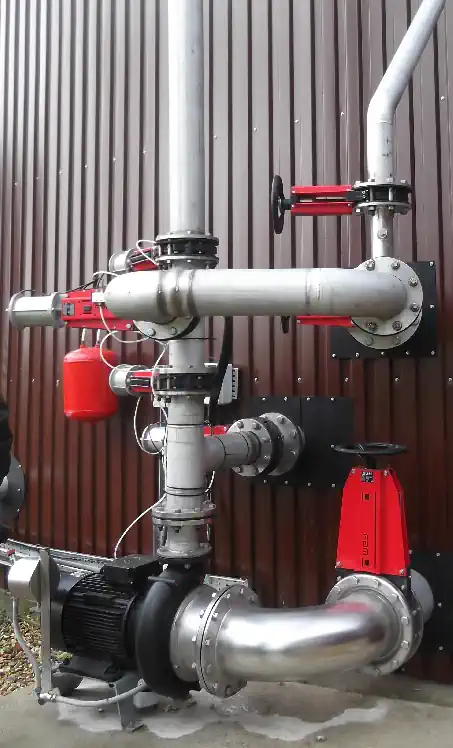
After evaluating the performance of the facility’s first digester, built a decade ago, engineering component specialists Hayley Group were consulted about the availability of an alternative, superior mixing system for its customer’s second digester; mixers that unlike those in the first tank, would eliminate typical biogas process problems such as foam, blocking and crusting – and in doing so, help boost the levels of methane.
Hayley Group’s Engineer, Rob Bentley, said:
“We constantly look to help customers improve efficiencies. This project is of particular note because, with the new, superior mixing system, the increase per cubic metre in gas from the second digester is over 40%. This is extremely encouraging, to say the least, especially when you consider that the second digester also has 10% less capacity than the older first tank”.
He added;
“The first digester with its compressor mixing set-up continues to produce a fair bit of gas, but when we carefully evaluated what would be best for the second digester, we recommended a pump/mixing system from Landia”.
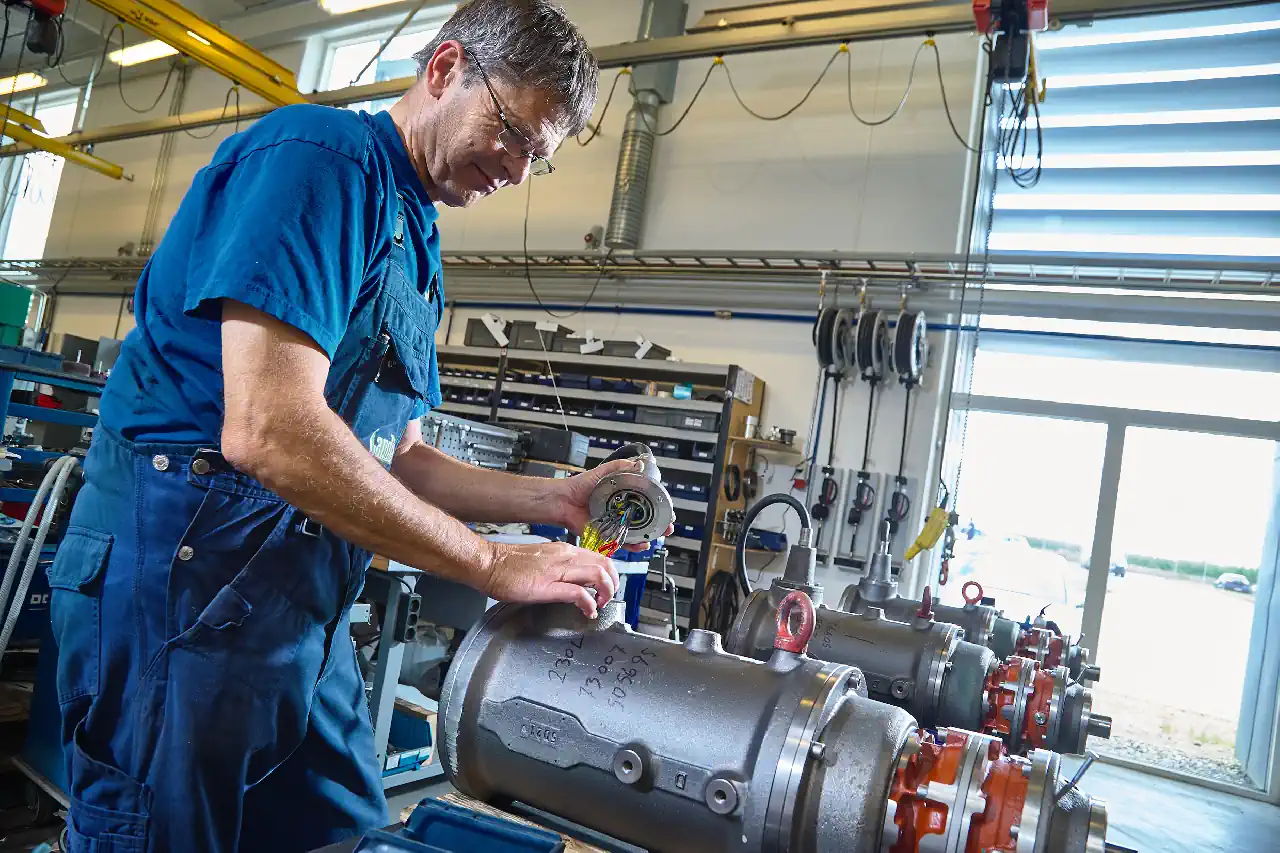
Utilising the chopper pump that Landia invented back in 1950, complete with venturi nozzles, the digester mixing system that is now producing such high levels of gas for the second digester has an external knife system to continuously reduce particle sizes and keep solids in suspension.
Rob Bentley continued:
“Our role as a trusted partner also includes helping maintain the smooth and safe running of operations, as well as helping to improve operational efficiencies, so Landia’s mixing system was a clear front runner – not just because we were confident with its reliability and gas-producing capability, but from past experience, a company that like us, gets stuck in when help is needed – with a fast turnaround”.
‘A more robust system to mix the tank’
With the unpredictability of food waste feedstock, dissolved solids (DS) at the food waste-to-energy facility are typically around 16-18% but can be as high as 22%.
This was an area that, with lessons learned from blockages and downtime from the first digester, saw the clear need for a more robust mixing system for the second digester that could withstand the tough demands made upon it.
‘The increase in gas speaks for itself’
“Our customer has not seen the Landia Digester Mixing System ever struggle to cope”, added Bentley.
“Over time in the first digester, plastics would inevitably float to the top, where they’d form a blanket and then a crust, which would eventually have to be dug-out. This was a rotten job with plenty of unwanted downtimes.”
“Landia’s chopper pumps simply do not allow that build-up of material to happen. The success of the second digester, which has also seen reduced maintenance times and lower parasitic load, means that for a third digester currently under construction, our customer has not surprisingly ordered a second Landia pump/mixing system. On top of the benefits being seen as part of the constant fine-tuning of the process, the increase in gas speaks for itself”.
On average, Digester 1 sees a feedstock intake of 118 tonnes of dry solids per day, which produces a gas flow of 27,000 Nm3 (Normal Meter Cubed) per day.
In comparison, Digester 2 (10% smaller) has a feedstock intake of 110 tonnes of dry solids per day, producing a gas flow of 36,000 Nm3 (Normal Meter Cubed) per day.
Rob Bentley continued:
“Assessing the change to a more resilient digester mixing system, our customer anticipated a decent increase in gas yields. But to see a result as high as 43% is phenomenal. You can also see a big difference in the colour of the digestate that is produced.”
As part of the support process, Hayley Group has also assisted its customer in replacing an ineffective and troublesome pump unit in its hydrolysis tank with a new three-pump Landia system.
‘Energy-savings are also very apparent’
“Previously, foaming was an issue,”
continued Rob Bentley.
“To be fair, too much was being asked of just one pump, but in addition to the problem with foaming, there was way too much settlement of solids.
“The existing supplier was very slow on replacement parts, which just isn’t good enough for a 24/7 food waste-to-energy plant. Uncertainty in getting spares for the site’s pasteurisers was not acceptable, and certainly not up to the standards that we work to.”
“So in total, including two reception tanks and a holding tank, there are now 11 Landia pumps in active use, with three more ready to go into service for the new, third digester.”
“Energy savings are also very apparent, because, unlike other mixers that have to run 24/7, the Landia Digester Mixing System usually only requires 20 minutes on and then 20 minutes off”.
He concluded:
“Reliable equipment and easy maintenance are very important of course, but even with the best kit in the world, backup is key.”
“Landia very much shares the Hayley Group’s commitment to being there when needed to help customers keep their processes going, without unnecessary delays.”
“At this food waste to energy facility, the big increase in biogas yields shows without doubt just how beneficial a resilient and well-designed digester mixing system can be to the success of an AD/biogas plant”.
www.hayley-group.co.uk
www.landiaworld.com
Frequently Asked Questions
Why did the second digester outperform the first despite being smaller?
The second digester uses Landia’s pump/mixing system with chopper pumps and venturi nozzles, which keep solids in suspension and prevent the foam, crusting, and blockages that have hindered the first digester. Better mixing directly translates to more efficient microbial activity and higher biogas output.
What problems did the first digester’s mixing system cause?
The first digester’s compressor-based setup allowed plastics and solids to float to the surface over time, eventually forming a hardened crust that had to be physically removed. This led to significant downtime and maintenance burdens.
How much of a difference does the mixing system make to gas output?
The numbers speak clearly: Digester 1 produces around 27,000 Nm³ of gas per day from 118 tonnes of dry solids. Digester 2 produces 36,000 Nm³ per day from just 110 tonnes — a more than 43% increase per cubic metre.
Does the Landia system use significantly more energy to achieve these results?
No — in fact, the opposite is true. The Landia Digester Mixing System typically operates on a 20-minutes-on/20-minutes-off cycle, rather than running continuously like many other mixer types, resulting in notable energy savings.
What other improvements were seen beyond gas yield?
The facility also reported reduced maintenance times, a lower parasitic load, and a visible improvement in the quality and colour of the digestate produced. Replacing an underperforming pump in the hydrolysis tank with a three-pump Landia system also resolved persistent foaming and solids settlement issues.
Why did Hayley Group choose Landia over other suppliers?
Hayley Group cited Landia’s reliability, gas-producing capability, fast turnaround on support, and their hands-on approach when help is needed — factors that are critical for a 24/7 food waste-to-energy operation where downtime is costly.
[Published February 2022. Summary and FAQ sections added May 2026.]