The Rise and Rise of Industrial Chopper Pumps for Slurry Pumping, Sewage Grinding and Other Industrial Solids Handling Solutions
Landia's amazing milestone in pump production shows that chopper pumps represent a critical component in modern wastewater management systems, offering superior solids handling and reliable pumping performance for municipal and industrial applications. These heavy-duty knife pumps are engineered to handle the toughest sewage, sludge, and industrial waste streams where conventional pumps fail.
Whether you're specifying equipment for an industrial wastewater treatment plant, municipal sewage system, or industrial processing facility, understanding chopper pump technology is essential for optimal system performance. These submersible chopper pumps and inline cutting pumps utilise advanced mechanisms to cut up solids, preventing clogs and reducing maintenance costs across pumping stations worldwide.
The global adoption of Landia chopper pump technology has been remarkable. To put this in perspective, if you laid 100,000 chopper pumps side by side (each measuring just over a foot wide), they would stretch approximately 33.5 kilometres – that's the distance from central London all the way past Heathrow Airport.
This remarkable scale of production reflects the widespread trust developed, over more than 90 years, and held by pump owners in chopper pump reliability across countless facilities.
From sewage chopper pumps handling raw wastewater to industrial knife pumps processing fibrous materials, these systems deliver proven performance in demanding environments. Key applications include lift stations, pump stations, treatment facilities, and industrial waste processing – anywhere solids handling and reliable pumping intersect.
Find Out More About the Landia Chopper PumpPress Release:
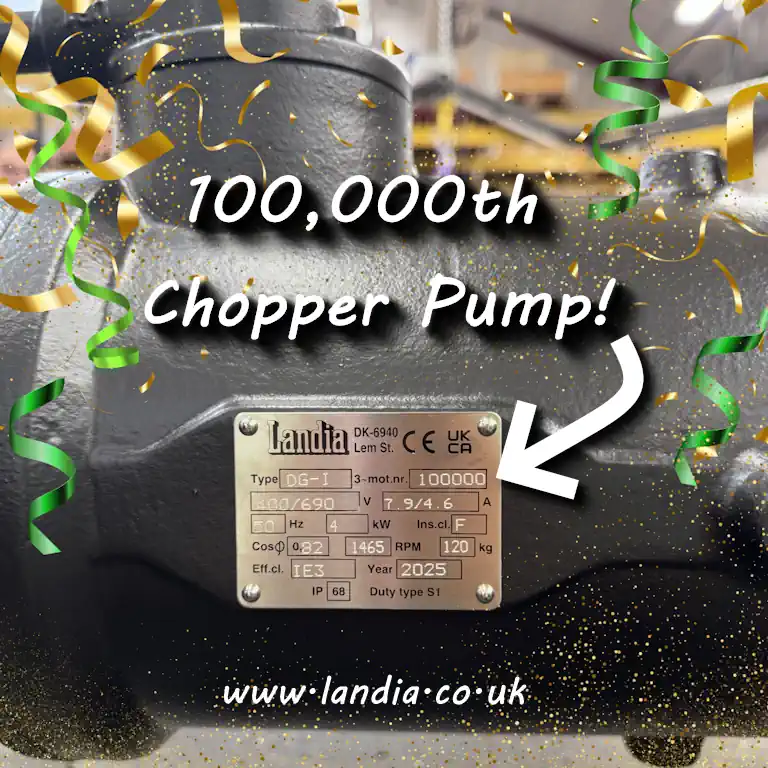
Towering Landmark for Landia Pumps and Mixers with 100,000 custom-built units sold
Leading pump and mixer manufacturer Landia has completed the sale of its 100,000th unit.
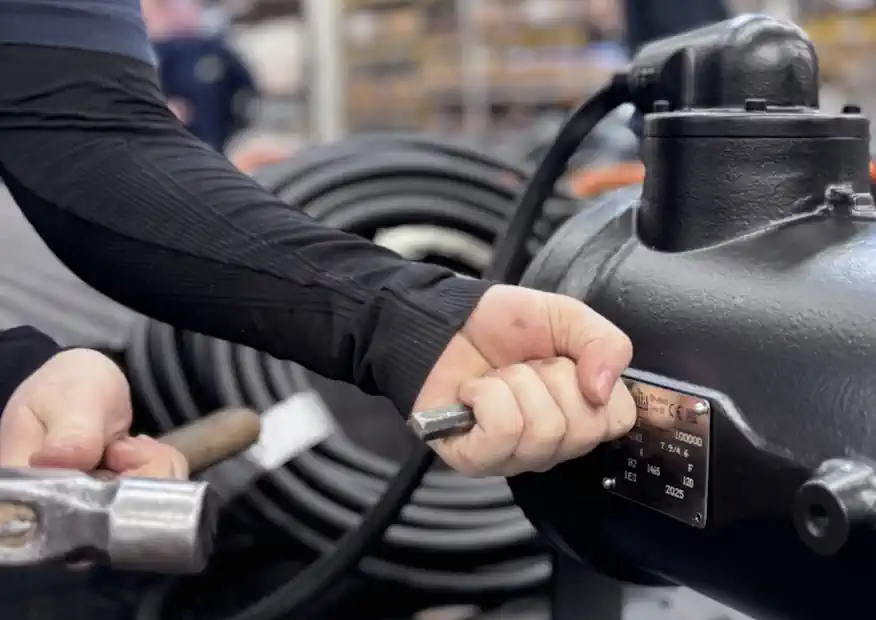
Established in 1933, the company has earned an enviable reputation for the longevity of its equipment.
From humble beginnings, making slurry pumps for farmers, Landia now designs pumps and mixers for numerous industries, including municipal wastewater treatment, biogas and food – as well as maintaining and growing its near century old working relationship with the farming community.
In 1950, Landia invented the world’s very first Chopper Pump, and to this day, the design remains simple yet highly effective for dealing with hard to handle effluents and slurries. The proven Landia aeration system (AirJet) and the Landia GasMix (biogas digester mixing system) have the Chopper Pump design classic as an integral part of their operation.
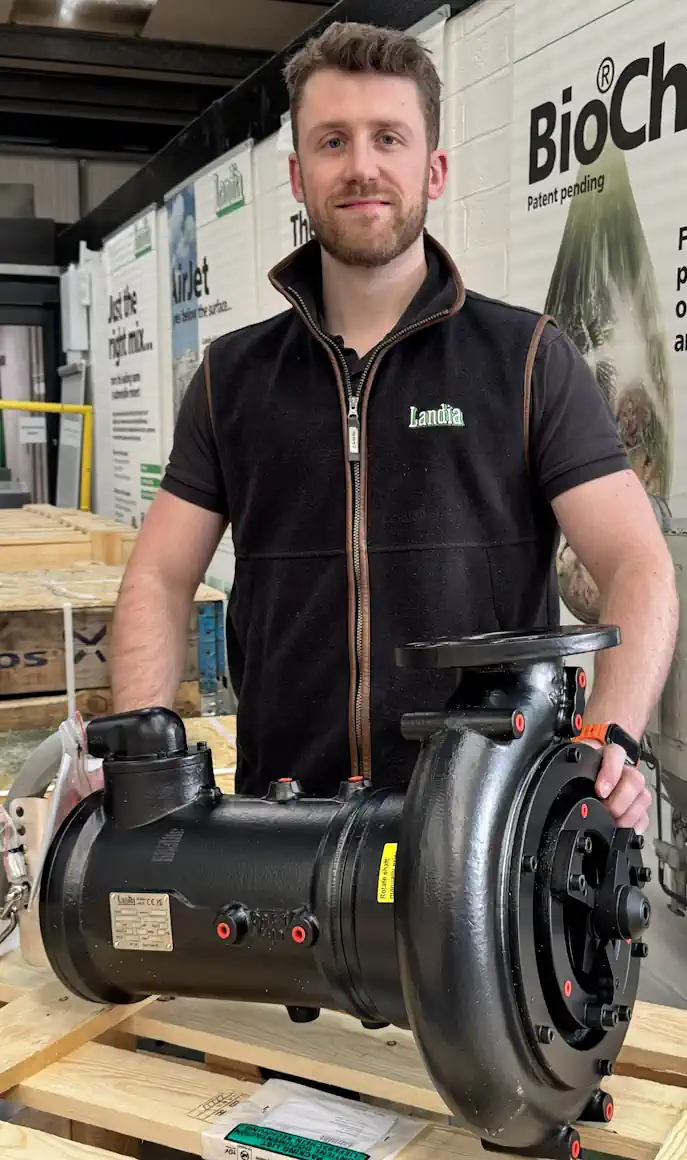
“We know that there are some big manufacturers in our industry with very high volumes of sales,” said Liz Robinson, Landia UK’s Operations Executive, “but we don’t sell off-the-shelf. We build to order. Every pump and mixer matters, and is traceable back to the individual skilled craftsman who built it. Landia engineers take huge pride in building truly reliable products of top quality.”
She added: “Reaching this major milestone in the company’s history with tailor-made solutions for the precise needs of our customers is therefore all the more remarkable. As a company, we continue to grow year-on-year.”
The 100,000th Landia unit, which is a DG-I 80 4.0kW 1500rpm submersible chopper pump, is on its way to a leading fluid handling solutions provider in the Midlands who supplies, installs and maintains pumping systems across the UK.
Landia now sells all over the world with bases in the UK, Germany, China, America, and a head office in Denmark.
ends
Find Out More About the Landia Chopper PumpFrequently Asked Questions About Chopper Pumps
What is a chopper pump, and how does it work?
A chopper pump is a specialised wastewater pump featuring an integrated cutting mechanism that chops up solids before they enter the impeller. This chopping action reduces large solids, fibrous materials, and debris into smaller particles, preventing clogs and enabling smooth pumping operations in sewage and industrial applications.
What are the main applications for chopper pumps?
Chopper pumps are ideal for municipal wastewater treatment plants, sewage lift stations, pump stations, industrial waste processing, food processing facilities, and any application handling solids-laden fluids. They excel in environments where rags, plastics, fibrous materials, and other debris would clog standard pumps.
How do chopper pumps differ from grinder pumps?
While both terms are often used interchangeably, chopper pumps typically feature a cutting mechanism near the impeller that chops solids, whereas grinder pumps may use different grinding technologies. Both serve similar purposes – reducing solids to prevent clogs and enable efficient pumping of wastewater and sewage.
What maintenance do chopper pumps require?
Chopper pumps generally require less maintenance than standard sewage pumps due to their solids-handling capabilities. Regular inspections should include checking the cutting mechanism for wear, monitoring seal condition, and verifying motor performance. The frequency depends on application severity and operating conditions.
Can chopper pumps handle stringy materials and rags?
Yes, this is one of their primary advantages. Chopper pumps are specifically designed to cut through rags, wipes, feminine hygiene products, plastics, and other stringy materials that commonly cause “ragging” in wastewater systems. The integrated cutting system prevents these materials from wrapping around the impeller.
What sizes and capacities are available?
Chopper pumps are available in various configurations, from small residential grinder pumps to large industrial units. Flow rates range from a few gallons per minute to several thousand GPM, with horsepower ratings from fractional HP to hundreds of horsepower for heavy industrial applications.
Are chopper pumps suitable for submersible installations?
Absolutely. Submersible chopper pumps are common in wet well installations, sewage basins, and lift stations. They're designed with sealed motors and corrosion-resistant materials to withstand continuous submersion in aggressive wastewater environments.
How do I select the right chopper pump for my application?
Key selection criteria include flow rate requirements, total dynamic head, solids content and size, chemical compatibility, installation type (submersible or inline), and power availability. Consulting with pump specialists, such as Landia, ensures proper sizing and specification for optimal performance and longevity.
What materials are chopper pumps constructed from?
Chopper pumps are typically offered with either cast iron or stainless steel impellers. Stainless steel is best for durability in corrosive environments, but costs more than the cast-iron versions.
Cutting mechanisms are made from hardened steel or exotic alloys for extended wear life. Seals and gaskets should be of higher quality than those used in clean water applications. Make sure that you choose chemical-resistant elastomer seals suitable for corrosive wastewater service.
Do Landia chopper pumps reduce operating costs?
Yes, significantly. By preventing clogs and reducing pump-outs, Landia chopper pumps minimise emergency service calls, reduce downtime, and lower overall maintenance costs.
The initial investment is offset by improved reliability and reduced lifecycle costs compared to standard sewage pumps requiring frequent maintenance.