IPPTS Anaerobic Digestion releases a comparison guide evaluating covered lagoon and plug flow digesters for livestock biogas production, helping farmers match system capabilities to operational requirements and sustainability goals.
Steve Last, publisher of this website, has released a comparison guide to help livestock farm owners evaluate two dominant technologies for on-farm biogas production: covered lagoon digesters and plug flow digesters.
The guide addresses a decision-making gap for farmers and managers considering investments in anaerobic digestion systems, providing detailed analysis of the operational, economic, and environmental characteristics that distinguish these competing approaches.
Selecting the best choice between covered lagoon and plug flow digester operation has become increasingly important as both systems gain traction across the livestock sector. According to regulatory statistics, plug flow digesters currently dominate dairy operations in the United States, processing manure from over 260,000 dairy cattle at approximately 91 sites.
Covered lagoon systems handle manure from around 210,000 dairy cattle at about 50 sites. This widespread adoption of both technologies underscores the need for comparative analysis that helps operators match system capabilities to their farm's unique requirements.
The decision to implement anaerobic digestion carries significant environmental and operational benefits that extend beyond energy production. Biogas systems convert animal manure into usable energy in the form of electricity, heat, or upgraded biomethane while simultaneously reducing methane emissions that would otherwise escape during conventional manure storage.
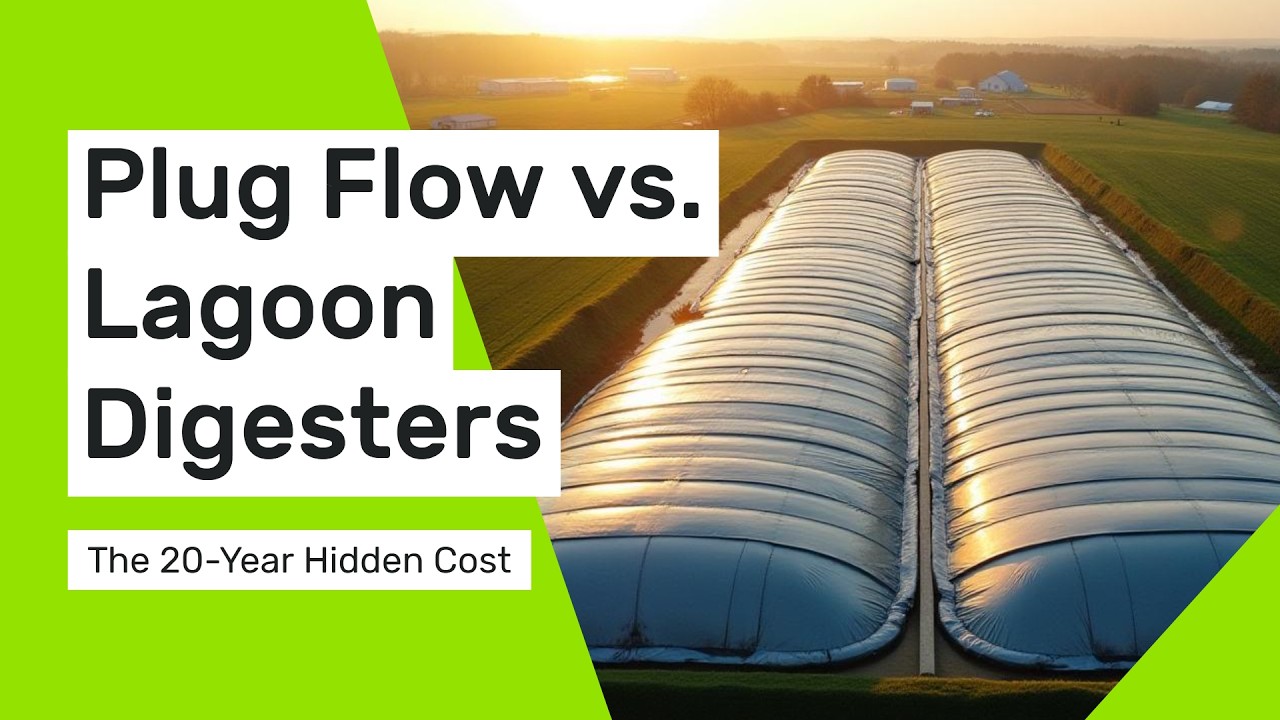
Our Video that Echoes the Dilemma for Farmers who need to Choose Between Covered Lagoon vs Plug Flow Digesters
Watch our video all about the topic of Covered Lagoon vs Plug Flow Digesters. When it says “check out the link in the description”, please be aware that you are already on the webpage.
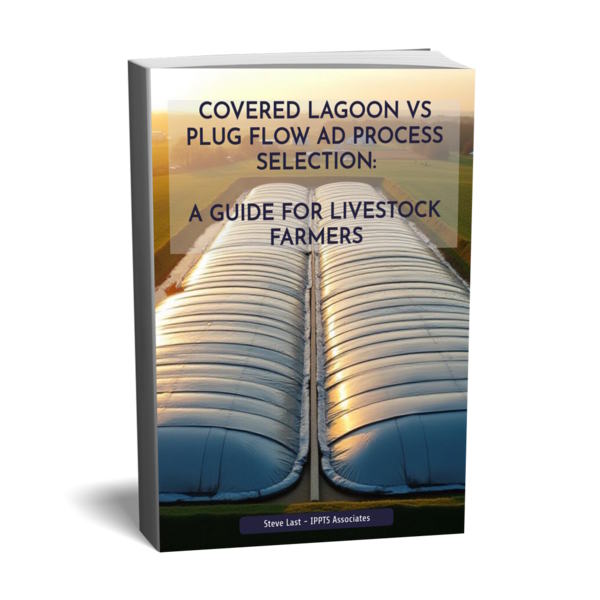
It would have created too long a page to provide more detailed information, so we made it into an eBook. It took a lot of research to create the eBook, so we are asking for a small payment for the eBook.
Industry analysis shows that anaerobic digestion of dairy manure can reduce the carbon footprint of milk production by over 20% and decrease odour from livestock facilities by approximately 50%, making these systems valuable tools for farms seeking to improve sustainability performance and community relations.
Covered lagoon digesters offer a cost-effective entry point for farms evaluating biogas technology, requiring minimal capital investment and featuring straightforward construction and maintenance protocols that appeal to small and medium-sized operations. However, these systems operate at ambient temperatures, which introduces seasonal variability in biogas output. Technical analysis indicates that methane production decreases notably when lagoon temperatures fall below 20 degrees Celsius, a limitation that operators in cooler climates must factor into their production forecasts and economic projections.
In contrast, plug flow digesters deliver more consistent biogas yields through controlled operating conditions. These systems convert volatile solids to biogas at rates ranging from 35% to 45%, with a hydraulic retention time ranging from 15 to 20 days.

They require specific operational parameters to function optimally: manure must be collected by scraping rather than flushing, and total solids content should reach at least 10 to 15%, with some operators recommending concentrations up to 20% for peak performance.
Covered Lagoon vs Plug Flow Digesters Conclusion
Farms that can meet these input specifications benefit from reliable biogas production that remains stable across seasons, though the infrastructure and management requirements represent a more substantial commitment than covered lagoon alternatives.
The comparison guide from IPPTS Anaerobic Digestion synthesises technical specifications, climate considerations, and economic factors into a practical resource for livestock operators evaluating these infrastructure investments.
By clarifying how herd size, manure management practices, regional temperature patterns, and sustainability objectives influence technology selection, the guide enables farmers to make informed decisions aligned with their operational realities and long-term goals.