
Digestate transport involves moving nutrient-rich bio-fertiliser from anaerobic digestion (AD) plants to agricultural land or storage lagoons. Usually, articulated trucks, farm trailers or specialised vacuum tankers are used to handle it. To maximise the benefits of nutrients and adhere to environmental rules, proper logistics are essential.
Digestate Transport – Key Takeaways
- Digestate is a nutrient-rich byproduct of anaerobic digestion that can legally replace synthetic fertilisers — but only when stored, transported, and applied within strict regulatory frameworks.
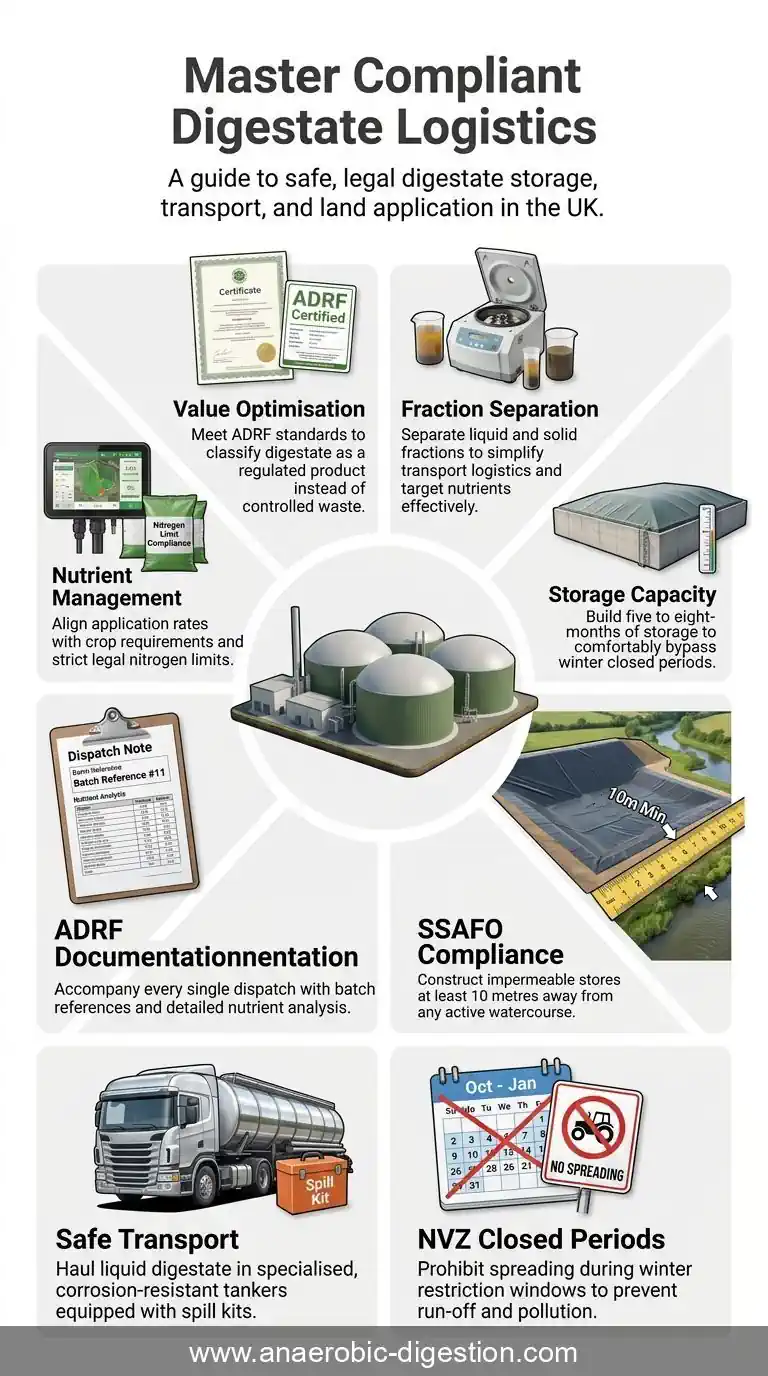
- SSAFO regulations require a minimum four months of storage capacity, but the ten-month ADRF ceiling and NVZ closed periods mean most operators need significantly more than the legal minimum.
- AA Turner Tankers specialises in digestate haulage, offering compliant liquid waste transport between AD plants, storage facilities, and land application sites across the UK.
- Food waste digestate carries higher ammoniacal nitrogen levels than agricultural digestate, making nutrient management planning and RAN calculations especially critical for food waste AD operators.
- The switch from ADQP to ADRF in October 2025 tightened documentation requirements significantly — keep reading to understand exactly what records you now need to maintain.
Digestate has genuine agronomic value, but getting it from the digester to the field without triggering a permit breach, an NVZ violation, or an environmental incident requires a system — not just a tanker and good intentions.
The nutrient profile of digestate makes it a legitimate and often cost-effective alternative to manufactured nitrogen fertilisers. Whole digestate contains both readily available nitrogen (RAN) and organic nitrogen fractions, along with phosphorus, potassium, and trace elements. When applied correctly, it improves soil structure and feeds crops without the carbon cost of synthetic production. The challenge is that “applied correctly” is doing a lot of heavy lifting in that sentence.
For operators looking for compliant haulage support, AA Turner Tankers provides specialist liquid digestate transport services, helping AD plants move material safely between production, storage, and end-use locations.
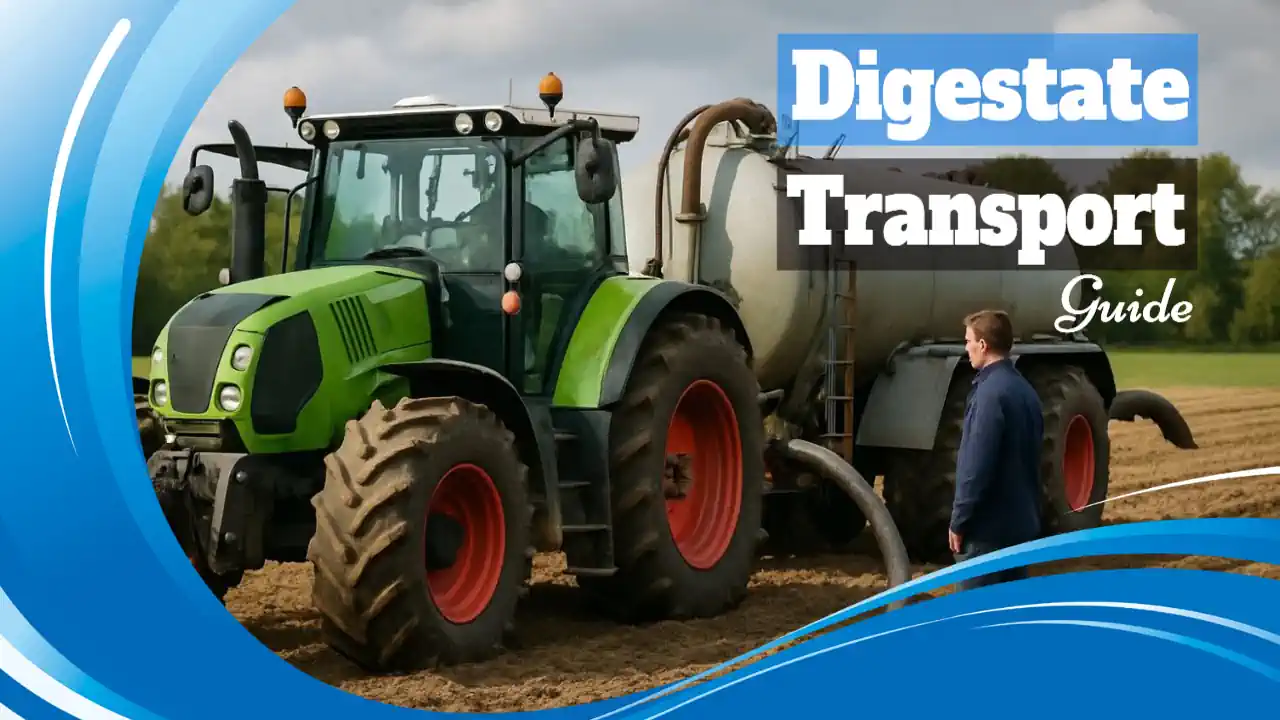
Digestate Is More Valuable Than Most AD Operators Realise
The full agronomic and commercial value of digestate is frequently underestimated. Many AD operators treat it primarily as a waste stream to manage rather than a product to optimise. That framing costs money and creates unnecessary compliance pressure.
When digestate achieves end-of-waste status under the Anaerobic Digestate Resource Framework (ADRF), it becomes a regulated product — not a controlled waste. That distinction matters commercially. It can be sold, supplied to farms, or used directly on land without the permitting overhead that applies to waste materials. The key is meeting the quality and documentation standards that underpin that status. For more information on how digestate can be used effectively, check out this article on digestate fertilizer.
What Digestate Actually Is
Digestate is the material remaining after organic feedstocks have been broken down by microorganisms in an anaerobic digestion (AD) vessel. The feedstocks can be food waste, slurry, energy crops, or a combination. The AD process extracts biogas — predominantly methane — for energy generation, and what remains is digestate: a wet, nutrient-dense material with a composition that varies depending on what went in.
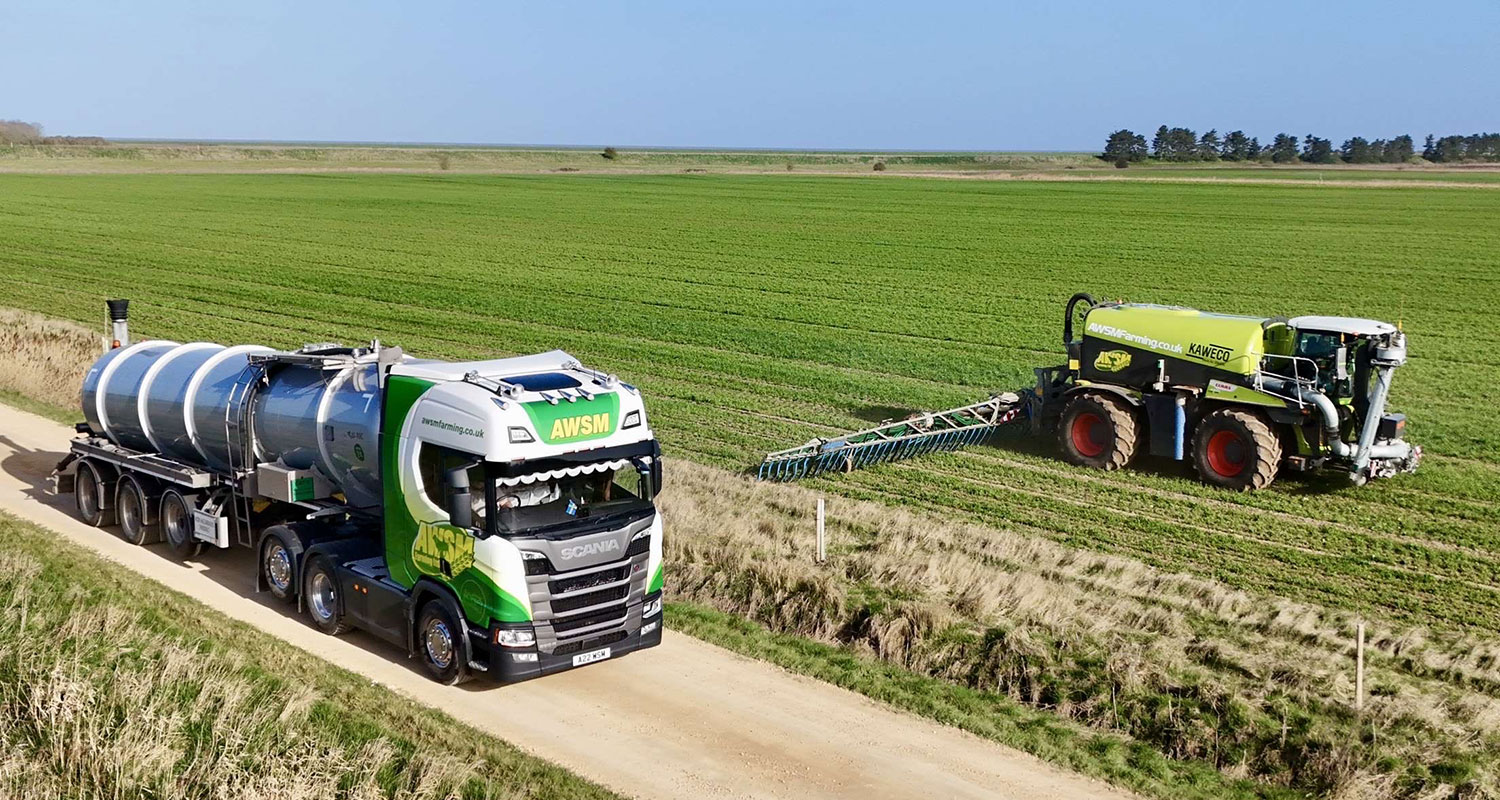
“Digestate Haulage | AWSM Farming Solutions” from awsmfarming.co.uk and used with no modifications.
Solid vs. Liquid Digestate: Key Differences
Most commercial AD plants separate digestate into two fractions after it leaves the digester. The liquid fraction — sometimes called liquor or effluent — contains the majority of the readily available nitrogen and potassium. The solid fraction retains more of the phosphorus and organic nitrogen and has a lower moisture content, making it easier and cheaper to transport over longer distances.
This separation has direct implications for storage and transport planning. Liquid digestate behaves hydraulically, requiring sealed tanks, tanker haulage, and SSAFO-compliant infrastructure. Solid digestate can be stored in covered clamps or bays, is less prone to ammonia volatilisation when properly managed, and can be spread with conventional muck-spreading equipment. The two fractions often move through entirely different logistics chains even when they originate from the same plant.
Why Proper Storage and Transport Matters
The risks in poor digestate management are threefold: environmental, regulatory, and commercial. An uncontrolled release of liquid digestate into a watercourse can cause serious ecological damage — digestate has a high biological oxygen demand, and even a small spillage can strip oxygen from a river system rapidly. Regulatory consequences include permit suspension, Environment Agency enforcement action, and potential loss of end-of-waste status. Commercially, losing ADRF compliance means the material reverts to waste classification, eliminating any revenue from supply agreements and adding disposal costs.
Key Risk Areas in Digestate Management
Risk Category Primary Hazard Consequence Environmental Run-off, leachate, odour escape Watercourse pollution, EA enforcement Regulatory Permit breach, NVZ violation, ADRF non-compliance Suspension of operations, fines Commercial Loss of end-of-waste status Material reverts to waste, disposal costs incurred
Understanding these risks is the starting point. The sections below cover the specific regulatory framework, infrastructure requirements, and operational practices that keep digestate management on the right side of all three.
Digestate Storage Regulations in the UK
UK digestate storage regulation draws from multiple overlapping frameworks. Getting compliant means understanding how they interact, not treating each one in isolation.
The two most significant instruments for storage are the Silage, Slurry and Agricultural Fuel Oil (SSAFO) Regulations and the Anaerobic Digestate Resource Framework (ADRF), which replaced the Anaerobic Digestate Quality Protocol (ADQP) in October 2025. NVZ regulations add a further layer where land application is involved, and environmental permit conditions may impose additional site-specific requirements on top of all of the above.
How Digestate Is Classified for Storage Purposes
Liquid digestate is classified as a liquid organic manure with a high readily available nitrogen content. For storage regulation purposes, where it falls within the definition of slurry, the SSAFO Regulations apply directly. This classification means the construction standards, capacity minimums, and distance requirements in SSAFO are not optional — they are the legal baseline.
SSAFO Regulations: What They Require
SSAFO sets out construction standards for storage structures holding liquid organic manures, including digestate. Structures must be built to withstand the loads placed on them, be impermeable to liquid, and be designed to contain any leakage or spillage. New or substantially reconstructed stores require a structural check by a competent engineer. Stores must also be positioned a minimum of 10 metres from any watercourse, with greater separation distances applying in some circumstances.
Minimum Four Months Storage Capacity Is the Floor, Not the Target
SSAFO requires a minimum of four months’ storage capacity for liquid organic manures. For digestate operations, this is the regulatory floor — and in most real-world scenarios, it is insufficient. When you combine NVZ closed periods, seasonal spreading restrictions, wet weather delays, and the ADRF’s ten-month maximum holding period, most well-run plants need storage capacity in the range of five to eight months of output as a practical working figure.
Capacity planning must account for production rate variability, the seasonal spread of output, and the realistic availability of spreading windows across the year. Operators who plan to exactly the SSAFO minimum consistently find themselves in difficulty when a wet autumn pushes spreader access back by three to four weeks.
NVZ Compliance and Closed Periods
Digestate is treated as a high-RAN liquid organic manure under Nitrate Vulnerable Zone (NVZ) rules, which means it is subject to the closed period restrictions that apply to the highest-risk nitrogen materials. On grassland with heavy soils, the closed period runs from 15 October to 31 January. On sandy or shallow soils used for tillage, it extends from 1 August to 31 January. These dates mean that on heavy land within NVZs, digestate spreading is prohibited for roughly four months of the year — and on lighter soils, the window is even narrower. Accurate soil type mapping across the receiving land bank is therefore not administrative paperwork; it is a core part of storage capacity planning.
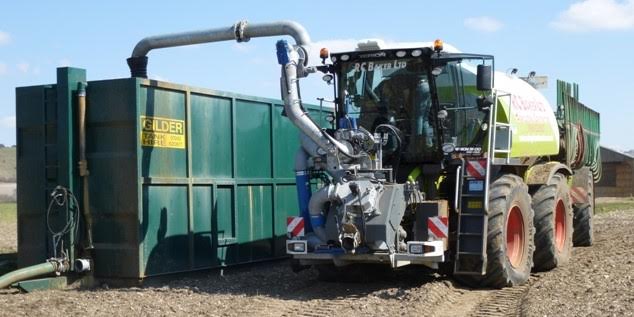
“Digestate and Recycling to Land …” from www.williamgilder.group and used with no modifications.
Digestate Storage Infrastructure: What You Need
Getting storage infrastructure right from the outset is far cheaper than retrofitting it after an enforcement notice. The construction standards, liner specifications, and siting requirements are not bureaucratic obstacles — they reflect the genuine engineering demands of containing a corrosive, high-nitrogen liquid at scale over extended periods.
Tank and Lagoon Construction Standards
Digestate storage structures fall into two broad categories: above-ground tanks (typically steel or reinforced concrete) and in-ground lagoons. Both must be constructed to be impermeable and structurally sound under full load conditions. Steel tanks used for liquid digestate should be specified for the corrosive nature of the material — standard agricultural slurry tank specifications may be inadequate for food waste digestate, which can have a lower pH and higher solids content depending on the feedstock mix. Reinforced concrete stores must be designed and checked by a structural engineer, and the engineer’s certificate must be retained on site.
Lagoons offer lower capital cost per cubic metre of capacity but carry greater liner integrity risk over time. Earthen lagoons require an engineered clay or synthetic liner with a minimum hydraulic conductivity specification, typically 1×10⁻9 metres per second or lower. The design must account for freeboard — the vertical distance between the maximum liquid level and the top of the structure — which should be a minimum of 750mm under SSAFO guidance, though permit conditions may require more.
Liner Integrity and Cover Maintenance
A liner that was correctly installed at commissioning can fail years later due to root intrusion, UV degradation at the exposed edges, settlement cracking, or damage from slurry tanker access tracks running too close to the lagoon edge. Regular visual inspection of the liner perimeter and the exposed bund face should be part of every site’s routine maintenance schedule. Any areas of seepage, discolouration of the surrounding soil, or unexplained vegetation growth near the base of the bund should trigger immediate investigation.
Covers serve two functions: they reduce ammonia emissions and rainfall ingress, both of which affect the practical storage volume available. A floating cover on a lagoon can reduce effective storage capacity if it is not managed correctly — accumulated rainwater on top of a floating cover adds weight and reduces the usable liquid volume below. Operators should include cover maintenance and rainwater removal as a standing item in their weekly site checks.
Minimum Distance Requirements From Watercourses
SSAFO requires storage structures to be sited at least 10 metres from any watercourse, including ditches, streams, and field drains. Where the site is in a Groundwater Source Protection Zone (SPZ), the Environment Agency may impose greater separation distances as a permit condition. A watercourse in this context includes ephemeral drains that only carry water seasonally — if it appears on the OS map or the Environment Agency’s flood mapping, it counts. Site surveys before construction should identify all relevant water features, not just the obvious ones.
For existing stores that predate current standards, a risk assessment approach may apply, but any new construction or substantial reconstruction triggers full compliance with current SSAFO requirements. If expansion of an existing store is being considered, seek early confirmation from the Environment Agency on whether the works constitute a substantial reconstruction.
How to Plan Storage Capacity Correctly
Storage capacity planning is one of the most common areas where AD operators underestimate their needs, and the consequences of getting it wrong play out every autumn when wet weather compresses the spreading window to almost nothing.
The calculation needs to account for more than just production rate multiplied by the minimum storage period. Real-world capacity planning should model the worst-case scenario — maximum production coinciding with minimum spreading opportunity — not the average case.
Variables That Affect Capacity Planning
The key variables are: daily digestate output volume (both liquid and solid fractions separately), the NVZ closed period dates applicable to your land bank, the soil types and drainage characteristics of receiving fields, the realistic number of spreading days per month based on historical weather data, any permit conditions that restrict night spreading or impose buffer zones around residential areas, and the ten-month ADRF maximum holding period. Missing any one of these from the calculation produces a capacity figure that will fail in a bad year.
Food Waste Plants vs. Farm-Based AD Plants
Food waste AD plants tend to produce digestate at a relatively consistent rate year-round, since feedstock supply is driven by commercial food processing and retail cycles rather than seasonal agricultural rhythms. Farm-based plants, by contrast, often have more variable production volumes tied to slurry inputs and energy crop harvesting schedules. The practical implication is that food waste plants need larger absolute storage buffers to manage the continuous accumulation during winter closed periods, while farm-based plants may have more flexibility to manage production rate in line with spreading opportunity — though this flexibility should not be relied upon as a substitute for adequate physical storage.
The Ten-Month ADRF Storage Ceiling
The Anaerobic Digestate Resource Framework introduced a ten-month maximum holding period for digestate to retain end-of-waste status. Digestate held beyond ten months without documented certainty of end use reverts to waste classification under the framework. This ceiling interacts directly with the SSAFO minimum capacity floor: operators must plan storage that is large enough to cover NVZ closed periods and seasonal spreading restrictions, but the material cannot simply be held indefinitely as a buffer. The ten-month rule means that production, storage, and offtake must be genuinely planned as an integrated system rather than managed reactively.
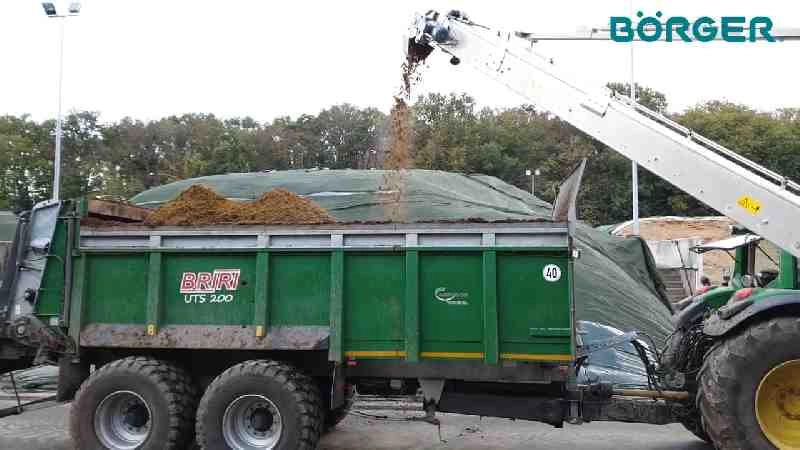
“Digestate Separation Trailers and a New …” from blog.anaerobic-digestion.com and used with no modifications.
Best Practices for Safe Digestate Storage
Regulatory compliance sets the minimum standard. Best practice goes further — it protects against the edge cases that regulations do not fully anticipate, and it protects the agronomic quality of the digestate as a product.
Preventing Ammonia Emissions and Odour Escape
Ammonia volatilisation from open digestate storage is both an environmental problem and a nutrient loss. Every kilogram of ammoniacal nitrogen that escapes as ammonia gas is a kilogram less of plant-available nitrogen in the final product. For food waste digestate, which carries higher NH4-N concentrations than most agricultural digestate, the losses from an uncovered store can be agronomically significant within days of filling.
Covering storage structures — whether with a fixed roof on a tank, a floating membrane on a lagoon, or an inflated gas-tight cover — is the most effective single measure for both odour control and ammonia retention. Where covers are in place, any gaps around agitation hatches, pipework penetrations, or access points become the primary emission route and should be sealed and inspected regularly.
Agitation of the digestate prior to emptying releases a concentrated burst of ammonia and odorous compounds. Where possible, agitation should be carried out during cool, low-wind conditions, and adjacent properties should be considered when scheduling agitation events. Some permit conditions specify restricted hours for agitation — check site-specific permit requirements before establishing an agitation schedule.
Regular Inspection Schedule for Tanks and Lagoons
A written inspection schedule should cover the following at minimum: weekly visual checks of bund condition and perimeter, monthly checks of inlet and outlet pipework integrity, quarterly inspection of cover condition and fixing points, and an annual structural assessment by a competent person for stores above a threshold volume. Records of every inspection, including any defects found and the corrective action taken, should be retained for at least four years in line with standard agricultural compliance record-keeping requirements.
Transporting Digestate Safely
Moving digestate — whether from the digester to an on-site storage lagoon, between storage sites, or from storage to the field — is where many of the most significant spill risks arise. The transfer stage is where things go wrong when equipment is poorly maintained, hose connections are rushed, or drivers are unfamiliar with the material they are handling.
Unlike spreading, which happens in a controlled field environment, transport involves public roads, third-party land, and unpredictable conditions. The consequences of a digestate spill on a public road or near a watercourse during transport are immediate and visible — and the regulatory and reputational fallout is proportionate.
Regulatory Requirements for Digestate Transport
- Digestate that has achieved end-of-waste status under the ADRF can be transported as a product rather than a controlled waste — but the documentation confirming that status must accompany the load.
- Digestate that has not achieved end-of-waste status, or that has been held beyond the ten-month ADRF ceiling, must be transported under waste carrier regulations, requiring a registered waste carrier and a waste transfer note.
- Vehicles carrying liquid digestate on public roads must comply with road traffic legislation regarding load security, vehicle condition, and driver licensing appropriate to the vehicle class.
- Any spillage during transport that reaches a watercourse must be reported to the Environment Agency immediately under the Environmental Permitting Regulations.
The documentation burden for digestate transport increased significantly with the October 2025 transition from ADQP to ADRF. Under the new framework, supply documentation must accompany every consignment of digestate leaving a site, including batch or lot reference, date of dispatch, nutrient analysis results, and the identity of the receiving land or facility.
Where digestate is being transported by a third-party haulier rather than the AD operator’s own vehicles, the contractual arrangement should clearly allocate responsibility for documentation, spill response, and compliance with waste carrier requirements where applicable. A haulier that specialises in liquid digestate transport will already have the relevant systems in place — a general agricultural contractor hired on an ad hoc basis may not.
It is worth auditing your transport contractor’s spill response capability before the first load moves. Does the vehicle carry an adequate spill kit? Does the driver know the reporting protocol? Is there a contact number for the operator’s environmental manager on the vehicle? These are basic questions, but they are the ones that matter at 6am on a wet November morning when a hose fitting fails on a B-road.
Equipment Standards for Liquid Digestate Haulage
Tankers used for liquid digestate haulage should be specified for the material’s corrosive and abrasive characteristics. Stainless steel or high-density polyethylene internal linings are preferable to mild steel for food waste digestate. All hose connections, valves, and fittings should be inspected before each load. Pressure testing of hoses and connections should be carried out at regular intervals — not just when a fault becomes apparent. Tankers operating on farm tracks and field headlands for final delivery to field-edge storage should be assessed for ground pressure to avoid soil compaction damage, particularly on heavier soils in autumn and winter.
Avoiding Spills During Transfer From Plant to Storage
The highest-risk transfer points are inlet connections at the storage structure and the coupling and decoupling of flexible hoses under pressure. Standardising connection fittings across the site reduces the risk of mismatched couplings being forced together under time pressure. All transfers should be supervised by a competent person — not left running unattended. A dry run of the connection sequence with a new driver or contractor before the first live transfer is not overcautious; it is standard risk management for a material that can cause serious environmental damage if released uncontrolled.
Land Application Rules and Record-Keeping
Land application is where digestate delivers its agronomic value — but it is also where the most compliance failures occur. Application rates, timing, field conditions, and documentation all carry regulatory weight, and errors at this stage can unwind the end-of-waste status that the entire upstream management chain was designed to protect.
Matching Application Rates to Nutrient Management Plans
Every field receiving digestate should have a current Nutrient Management Plan (NMP) that accounts for the nitrogen, phosphorus, and potassium content of the digestate being applied. Application rates must not exceed crop nitrogen requirement, and in NVZs, the 170kg total nitrogen per hectare per year limit applies across all organic manures combined — not just digestate. This means the NMP must account for all other organic inputs to the field, including slurry and farmyard manure, before calculating the available digestate application rate.
Nutrient analysis of the digestate must be current. Applying last season’s analysis figures to this season’s material introduces error — digestate composition varies with feedstock changes, seasonal temperature effects on the digestion process, and separation efficiency. Under the ADRF, nutrient analysis results must accompany supply documentation, which means operators need a consistent sampling and testing protocol, not just an annual laboratory submission.
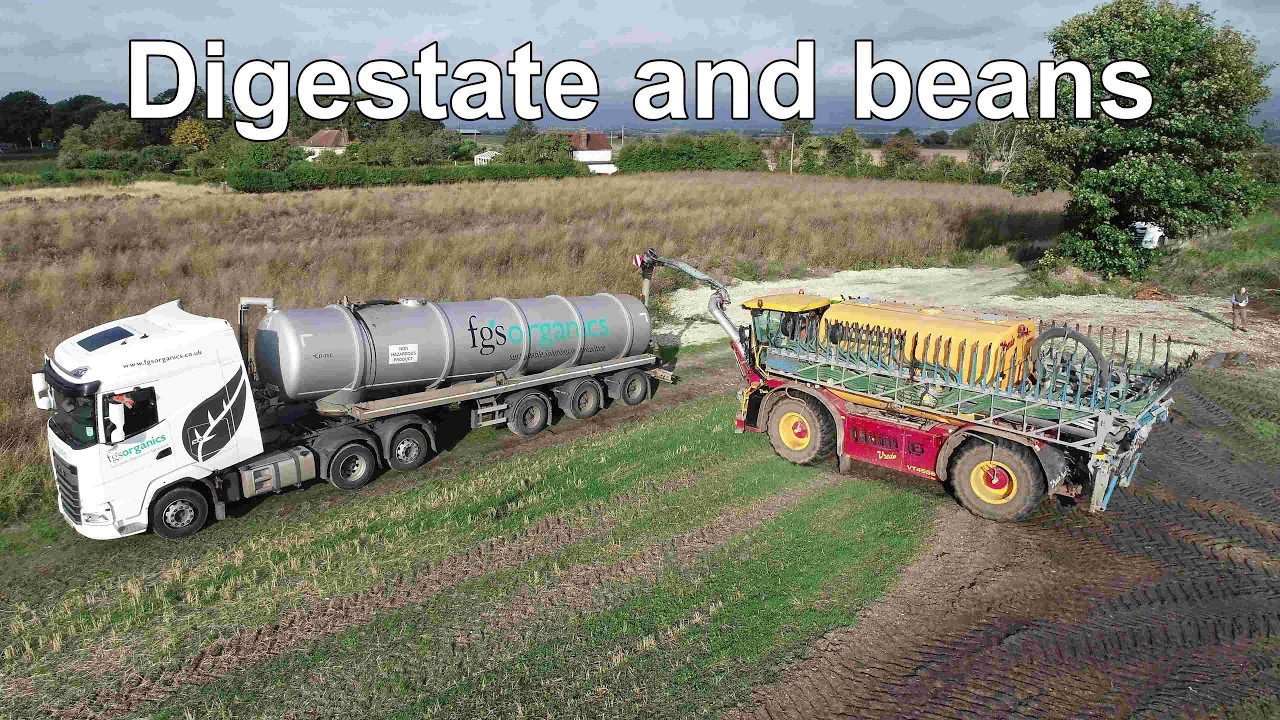
“Beans and digestate – YouTube” from m.youtube.com and used with no modifications.
Prohibited Conditions: Wet, Frozen, and Restricted Periods
Digestate must not be applied to waterlogged, flooded, frozen, or snow-covered land. These restrictions exist because liquid digestate applied to saturated or frozen soil cannot infiltrate — it runs off to field margins, drains, and watercourses instead of being taken up by the soil-plant system. The nitrogen loss from a single application to frozen ground can be equivalent to several months of carefully managed storage being released directly into a watercourse in one event. For more information on how to effectively manage digestate, consider exploring digestate fertilizer practices.
Beyond the soil condition restrictions, NVZ closed periods prohibit application entirely regardless of conditions. Operators must have sufficient storage capacity to absorb production during these periods without being forced into non-compliant spreading under logistical pressure. The most common cause of prohibited spreading is not ignorance of the rules — it is storage capacity that was sized too tightly against the minimum standard and then failed when conditions were worse than average.
Four-Year Record Retention Requirements
All records relating to digestate production, storage, transport, and land application must be retained for a minimum of four years. This is the standard agricultural compliance period and aligns with Environment Agency inspection cycles. Records that must be kept include: nutrient analysis certificates, NMPs for all receiving fields, application records showing date, field, rate, and operator, storage level logs, and all supply documentation issued to receiving farms.
The October 2025 ADRF transition placed significantly greater emphasis on documentation as the primary mechanism for demonstrating end-of-waste compliance. An operator who can produce complete, consistent records for every batch of digestate from production through to land application is in a fundamentally stronger position during an EA inspection than one who relies on verbal accounts of what happened and when. Build the documentation system first, then operate within it — not the other way around.
Supply Documentation for Farmers Receiving Digestate
Under the ADRF, every consignment of digestate supplied to a farm must be accompanied by formal supply documentation. This is not an optional courtesy — it is a condition of maintaining end-of-waste status for the material. The receiving farmer must also retain this documentation, making it a two-party compliance obligation.
Supply documentation must include the batch or lot reference, date of dispatch, quantity supplied, nutrient analysis results applicable to that batch, and the identity of the supplying AD plant. Where digestate is being supplied under a standing agreement to the same farm over a season, it is still necessary to issue documentation per consignment rather than a single annual summary.
The practical implication for transport logistics is that the documentation must be ready before the tanker leaves the site — not prepared retrospectively after delivery. Integrating documentation generation into the dispatch process, rather than treating it as an administrative task to be caught up on at the end of the week, is the only approach that consistently works at scale.
Where a third-party haulier is transporting the digestate, the responsibility for issuing supply documentation remains with the AD operator, not the haulier. The haulier carries the load; the operator is responsible for its regulatory status. This distinction should be explicit in any haulage contract covering digestate movements.
- Batch/lot reference — unique identifier for traceability back to production records
- Date of dispatch — records must confirm material left site within the ten-month ADRF holding period
- Quantity supplied — volume in cubic metres for liquid digestate, tonnes for solid fraction
- Nutrient analysis results — current analysis applicable to the specific batch being supplied
- Supplying site identity — name, address, and permit or registration reference of the AD plant
- Receiving land or facility — field parcel reference or address of the destination
Well-Managed Digestate Logistics Make Compliance Routine
When storage capacity is correctly sized, transport is handled by competent contractors with appropriate equipment and documentation systems, and land application is matched to nutrient management plans and soil conditions, digestate compliance stops being a crisis management exercise and becomes an ordinary part of site operations. The operators who find compliance straightforward are not the ones with the most lenient regulators — they are the ones who built the system correctly at the outset and maintain it consistently. For those exploring alternatives, covered lagoon digesters can offer a low-cost solution.
For reliable digestate haulage that keeps your logistics chain compliant from plant to field, AA Turner Tankers provides specialist liquid waste transport services tailored to the demands of UK anaerobic digestion operations.
Frequently Asked Questions on the Subject of Digestate Transport
Below are answers to the most common questions AD operators and land managers ask about digestate storage and transport compliance.
What Are the SSAFO Regulations for Digestate Storage?
The Silage, Slurry and Agricultural Fuel Oil (SSAFO) Regulations set the legal construction and capacity standards for liquid organic manure storage in the UK. Where liquid digestate is classified as slurry for regulatory purposes, these regulations apply directly to the design, construction, and maintenance of storage structures.
SSAFO requires that storage structures be impermeable, structurally sound, and positioned at least 10 metres from any watercourse. New or substantially reconstructed stores must be checked by a structural engineer, and the relevant certificate must be retained on site. Earthen lagoons must be constructed with an engineered liner meeting minimum hydraulic conductivity standards.
The regulations also set a minimum storage capacity of four months for liquid organic manures. For most digestate operations, this minimum is insufficient in practice — NVZ closed periods, seasonal spreading restrictions, and the ADRF ten-month ceiling mean that practical capacity planning typically targets five to eight months of output as a working buffer.
How Much Storage Capacity Does an AD Plant Need?
The legal minimum under SSAFO is four months of liquid digestate output. In practice, most AD plants need more than this to manage NVZ closed periods, wet weather delays, and the ADRF ten-month maximum holding period without being forced into non-compliant spreading.
Food waste AD plants, which produce digestate continuously year-round, typically need more storage buffer than farm-based plants with more variable output profiles. A plant producing at consistent rates through a four-month NVZ closed period needs at minimum four months of capacity just to cover that restriction — and then additional capacity to absorb wet weather delays on top. To learn more about the uses of digestate, check out this guide on digestate fertilizer.
A realistic planning figure for most operations is five to eight months of total digestate output capacity, accounting for both liquid and solid fractions separately. The solid fraction, with its lower volume and easier handling, is generally less of a storage constraint than the liquid fraction, which requires SSAFO-compliant sealed infrastructure throughout.
Can Digestate Be Spread During Winter Months?
Whether digestate can be spread during winter depends on which NVZ closed period dates apply to your land, what soil types are present, and whether the actual field conditions on the day meet the prohibition criteria for waterlogged, frozen, or snow-covered ground.
For grassland on heavy soils within NVZs, the closed period runs from 15 October to 31 January — no spreading is permitted regardless of conditions during this window. On sandy or shallow soils used for tillage, the closed period extends from 1 August to 31 January, which is a significantly longer restriction. Outside NVZs, the soil condition restrictions still apply — digestate cannot legally be applied to saturated or frozen ground even where no formal closed period exists.
- Heavy soil grassland (NVZ): closed period 15 October to 31 January
- Sandy/shallow tillage soil (NVZ): closed period 1 August to 31 January
- All land types: no spreading on waterlogged, flooded, frozen, or snow-covered ground
- All land types: buffer zones from watercourses, boreholes, and field drains apply year-round
Planning spreading windows around these restrictions — and maintaining enough storage capacity to cover the prohibited periods without pressure — is the foundation of compliant digestate management. Operators who find themselves considering spreading in borderline conditions are almost always dealing with a storage capacity problem, not a spreading decision.
What Is the Difference Between Solid and Liquid Digestate?
Solid and liquid digestate are the two fractions produced when whole digestate is mechanically separated after leaving the digester. The common method used is a digestate separator. The liquid fraction contains the majority of the readily available nitrogen (RAN) and potassium, making it the more agronomically active fraction for rapid crop uptake. It has a high moisture content, typically above 90%, which means it must be stored in sealed, SSAFO-compliant liquid storage and transported by tanker. The liquid fraction is also the most challenging to manage from a storage and transport perspective due to its volume, corrosivity, and ammonia volatilisation potential.
Who Is Responsible for Transporting Digestate Safely?
Legal responsibility for the regulatory status of digestate during transport sits with the AD operator as the producer of the material. If the digestate has not achieved end-of-waste status under the ADRF, it must be transported under waste carrier regulations, and the AD operator is responsible for ensuring the haulier is a registered waste carrier and that a waste transfer note accompanies every load.
Digestate Transport: A Summary
Digestate transport and storage are crucial components in the biogas production process. Efficient management of these aspects ensures that the nutrient-rich by-product is utilised effectively, minimising environmental impact.
For instance, using covered lagoon digesters can be a low-cost alternative to traditional biogas tanks, offering a sustainable solution for digestate management. Proper storage solutions not only help in maintaining the quality of digestate but also in reducing potential emissions during transportation.