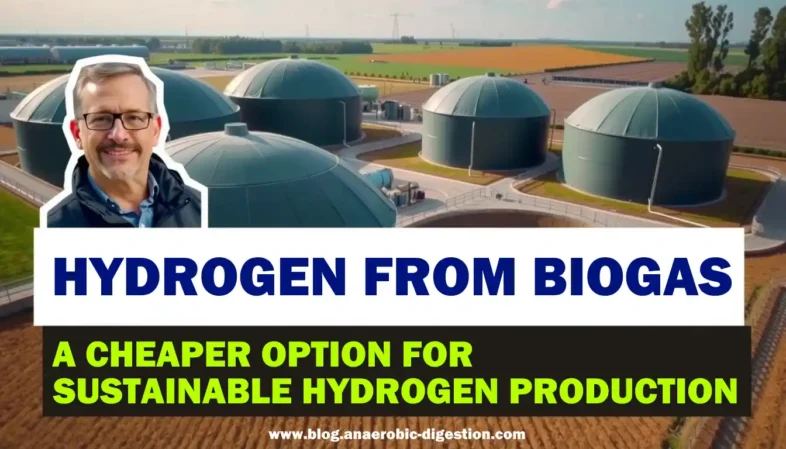
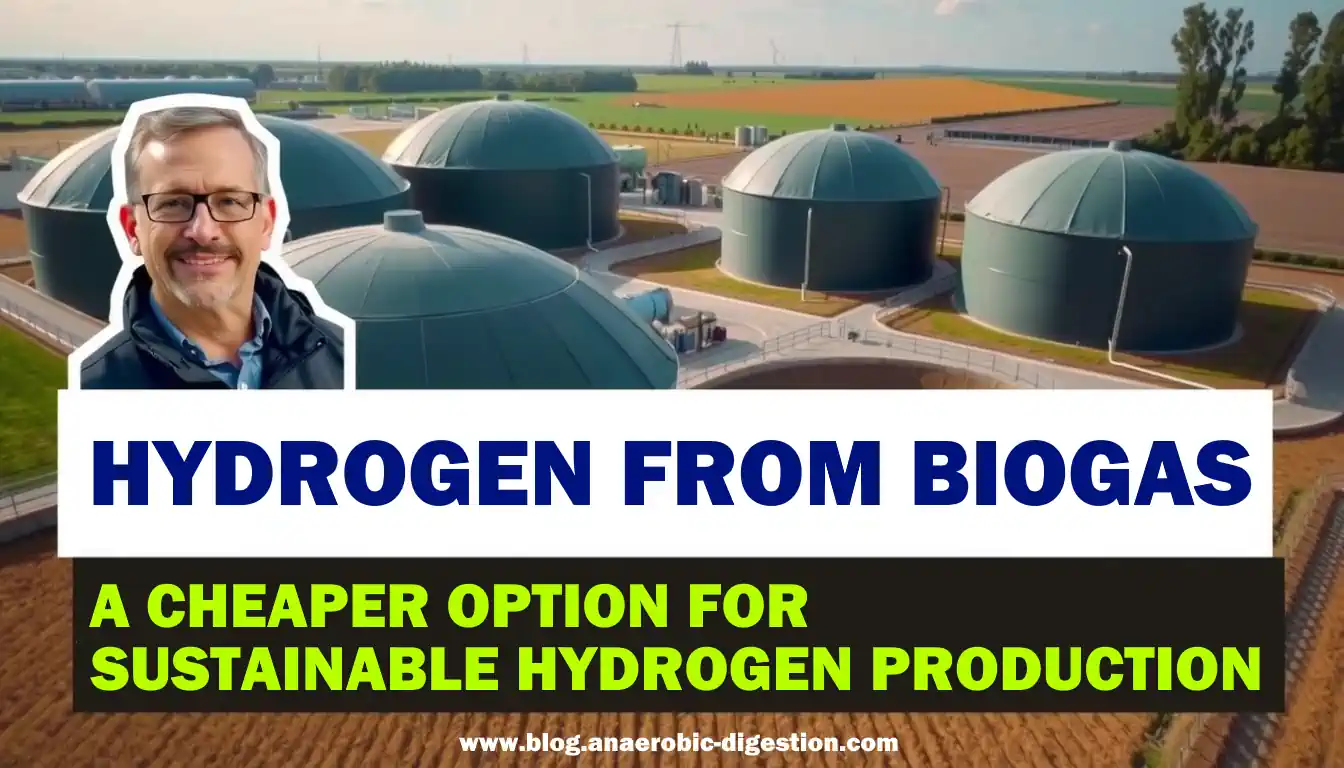
The problem is real. Traditional hydrogen production methods cost far too much. They drain budgets and slow down progress towards net-zero goals.
Here is where things get interesting for anyone in the anaerobic digestion and biogas industry. The International Energy Agency estimates that global biogas resources could fulfil up to 20 per cent of gas demand and help lower emissions significantly. Clearly, biogas energy is becoming a big player, and the biogas-to-hydrogen pathway offers a genuine answer to that cost problem.
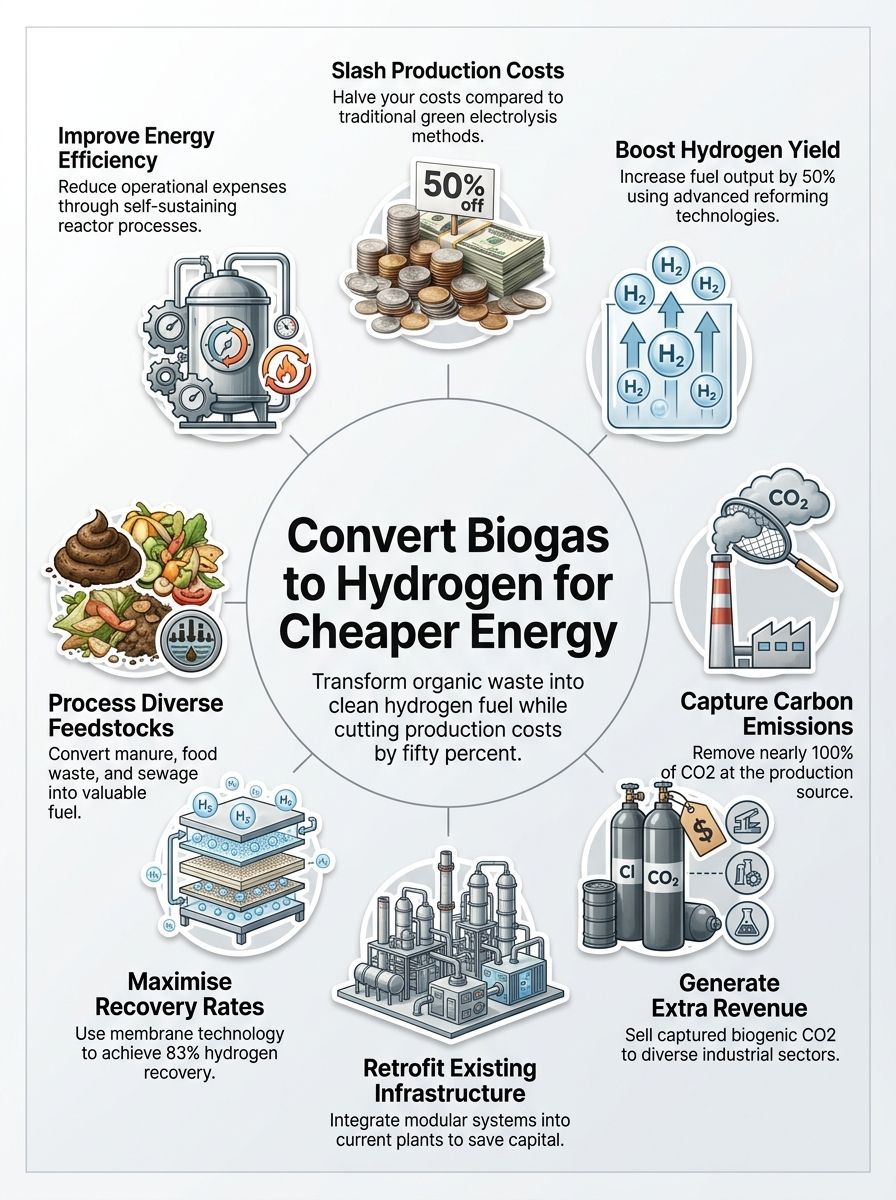
This method transforms raw biogas, captured from your waste streams, into clean hydrogen fuel. 1 It cuts production costs by up to 50 per cent compared to traditional electrolysis methods. 2 You get more hydrogen output, spend less money, and reduce greenhouse gases at the same time.
In this post, I will walk you through exactly how biogas to hydrogen systems work. You will learn about the steam reforming process that converts biogas into pure hydrogen. You will see why companies like Arda Energy partner with Hydrogen Mem-Tech to improve efficiency.
You will also see real projects in Japan and Europe that prove this technology works. 3 By the end, you will know whether this renewable energy approach fits your waste management operation.
Ready to see how much our web research suggests can be saved toward profitable hydrogen production from biogas?
Key Takeaways
- Biogas-to-hydrogen production cuts costs by 50 per cent compared to electrolysis, producing hydrogen at three to four euros per kilogramme.
- Arda Energy’s LOOP technology captures nearly complete carbon dioxide from biogas, achieving high-purity hydrogen output with 99.2 per cent purity levels.
- Auto-Thermal Reforming delivers hydrogen yields of roughly 74 per cent, whilst membrane technology boosts recovery rates up to 83 per cent efficiency.
- Shikaoi Hydrogen Farm in Japan produces 500,000 cubic metres of hydrogen yearly from 550 cows, proving the commercial viability of biogas-to-hydrogen conversion.
- NWaste2H2 achieves hydrogen production at £4.90 per kilogramme with a 5.7-year payback period, saving 17.2 kilograms of CO2 equivalent emissions per person served.
How does Biogas-to-Hydrogen technology work?
Biogas-to-hydrogen technology transforms waste into clean energy through a clever process. Scientists use steam reforming and membrane reactors to convert biogas into hydrogen fuel that powers fuel cells and reduces greenhouse gas emissions.

How does Arda Energy capture carbon dioxide?
Arda Energy uses patented LOOP technology to capture nearly all carbon dioxide from raw biogas before it causes problems. Their system pulls most of the CO2 out during the conversion process. That means you get high-purity hydrogen output at the end.
The process removes carbon dioxide at the source, rather than trying to clean it up later. This approach fits neatly into circular economy principles because it turns waste streams into valuable products.
The captured CO2 itself becomes useful, especially as demand for biogenic CO2 keeps rising across various industries. You can integrate this system with gas distribution networks to capture carbon more efficiently across your operations.
Arda’s method generates hydrogen alongside methane, CO2, and carbon monoxide, creating what experts call synthesis gas. 1 The nearly complete capture of carbon dioxide sets this technology apart from older approaches, giving you cleaner hydrogen for fuel cell applications.
This co-production of CO2 actually strengthens the business model. You gain revenue from selling the captured carbon dioxide to other sectors. Waste professionals benefit here because you reduce your environmental footprint whilst generating multiple valuable outputs from a single feedstock.
The capture of CO2 is nearly complete, leading to high-purity hydrogen output that transforms waste into opportunity.
The system scales up easily. Whether you run a small operation or a large facility, Arda’s technology adapts to your needs.
What is the reforming process for biogas conversion?
The reforming process transforms biogas into hydrogen through a clever adaptation of natural gas methods. Companies like Arda use electromagnetic waves to push biogas through five chambers, converting methane into plasma at low temperature and low pressure.
This approach skips the need for a catalyst, which cuts costs and simplifies operations. The LOOP100H system can handle up to 15 cubic metres per hour of biogas sourced from anaerobic digestion at wastewater treatment facilities.
Energy transfers directly to methane molecules, boosting efficiency across the entire conversion chain. The result gives you carbon and hydrogen from the original biogas, creating valuable products from waste streams.
This method adapts proven steam methane reforming and auto thermal reforming techniques, but operates more efficiently than traditional approaches. 2 Synthesis gas production is a key outcome here, offering waste professionals a practical route to lower-cost hydrogen.
The process maintains operational temperatures below those of conventional methods. That means reduced energy demands and lower operational expenses for your facility.
Partial oxidation principles guide the conversion, ensuring maximum hydrogen yield from each batch of biogas. Membrane technology partnerships then enhance separation efficiency, allowing facilities to capture pure hydrogen streams more effectively.
How does the collaboration with Hydrogen Mem-Tech enhance the process?
Arda Energy partners with Hydrogen Mem-Tech to boost hydrogen production from biogas, using membrane separation technology that pulls high-purity hydrogen straight from syngas. This collaboration works because membrane reactors do two jobs at once: they react and separate gases in a single step.
The system uses polymeric, ceramic, or composite materials to let only certain gases pass through. This means more hydrogen gets recovered and stays pure. Waste professionals benefit because it cuts down on extra processing steps, saves time, and reduces costs compared to older hydrogen production methods. 2
The partnership also tackles real challenges that stop projects from moving forward, like stability and longevity issues with equipment. Hydrogen Mem-Tech’s advanced separation techniques make the whole process more reliable for commercial use.
Economic assessments show these membrane reactors cost less to run than traditional approaches. The selective gas passage technology increases your hydrogen yield significantly, meaning you get more green hydrogen from each batch of biogas you process. 3 Cheaper hydrogen production becomes a genuine reality for waste facilities.
What are the benefits of producing hydrogen from biogas?
Producing hydrogen from biogas slashes your production costs and makes clean energy far more affordable than traditional methods. This approach transforms waste into valuable fuel whilst cutting emissions and boosting your hydrogen yield all at once.

How does this method reduce production costs?
Hydrogen production from biogas slashes costs dramatically compared to other green methods. You get hydrogen at three to four euros per kilogramme, roughly fifty per cent cheaper than electrolysis-based production.
If you are based in the UK, the picture is even more compelling. According to an April 2026 market report by IndexBox, unsubsidised hydrogen from UK SMR biogas plants costs between £4.50 and £7.00 per kilogramme in 2026. The UK Hydrogen Production Business Model subsidy can lower the effective cost for producers to between £3.50 and £5.00 per kilogramme. Securing that government support could make a significant difference to your bottom line.
This massive saving happens because waste-based anaerobic digestion uses low-cost feedstocks like food waste and animal slurry. Your facility requires minimal upgrades to existing infrastructure, which cuts financial burdens significantly.
Onsite energy production also eliminates transport and distribution costs that would normally drain your budget. The approach uses biomass resources already available at your waste management site, so you avoid expensive extraction methods.
- Co-production of biogenic carbon dioxide drives costs down further as carbon prices increase across Europe.
- Anaerobic digestion for hydrogen production typically costs less than fossil fuel extraction methods.
- The techno-economic analysis shows this method outperforms traditional biomethane upgrading in financial terms.
- You avoid expensive separation and purification processes that biomethane upgrading requires.
The strategy is currently the most feasible way to compete with existing green hydrogen cost frameworks.
Your waste facility transforms into a profit centre rather than a cost centre through this technology. The Council for Scientific and Industrial Research (CSIR) and the European Biogas Association confirm these cost advantages through rigorous studies.
Your facility can use thermocatalytic cracking and steam methane reforming without heavy capital investment. This approach aligns with sustainable development goals whilst keeping your operational expenses low, making biohydrogen production an intelligent financial decision.
How can hydrogen yield be increased using this technology?
Advanced reformers transform biogas into hydrogen far more effectively than old methods. Steam Methane Reforming, or SMR, breaks down methane molecules and releases hydrogen gas. Auto-Thermal Reforming, known as ATR, pushes this further and achieves hydrogen yields of roughly 74 per cent.
Dry Reforming offers another route by using carbon dioxide in the conversion process. These reforming processes work hard to strip away carbon and leave pure hydrogen behind.
Membrane technology plays a crucial role here. It can boost hydrogen recovery rates up to 83 per cent. Integration of membrane reactors enhances hydrogen purity and lifts overall yield significantly.
- The electromagnetic plasma reforming method enables direct conversion of methane, which supercharges your hydrogen output.
- Efficient carbon capture and storage during reforming increases the proportion of hydrogen in syngas.
- These combined approaches deliver hydrogen yield increases of 50 per cent compared to traditional biomethane upgrading. 5
- Energy efficiency improvements in reforming processes lead to higher hydrogen output across the board.
Arda Energy and Hydrogen Mem-Tech collaborate to refine these methods further. Your facility can recover more hydrogen from every tonne of biogas you process. That means lower costs per unit of hydrogen produced, which directly improves your bottom line.
In what ways does biogas-to-hydrogen production lower emissions?
Hydrogen made from biogas cuts greenhouse gas emissions significantly. 4 Fossil fuel-derived hydrogen produces far more carbon, but this method offers a substantial improvement. Biogas itself also reduces methane emissions from landfills, which improves air quality straight away.
The LOOP technology captures carbon from methane before it burns, producing clean energy instead. Retrofitting anaerobic digester plants for hydrogen production helps waste professionals reduce emissions at the source. This approach converts waste materials into valuable energy sources, so nothing gets discarded.
Implementation at wastewater treatment plants saves energy and reduces greenhouse gas emissions simultaneously. The NWaste2H2 project shows measurable results, with lifecycle analysis indicating potential savings of 17.2 kg of CO2 equivalent emissions per person served.
Based on a 2025 pilot study conducted by United Utilities and climate tech firm Levidian, using UK sewage waste for biogas-to-hydrogen conversion could produce up to 75,000 tonnes of clean hydrogen annually. That is enough to fuel over 40 per cent of all UK bus and coach journeys. For waste professionals, that scale of impact is hard to ignore.
Biogas serves as a renewable energy source, displacing fossil fuels and cutting carbon emissions across the board. Your facilities can shift to sustainable practices whilst handling waste more effectively, all whilst reducing your carbon footprint.
What challenges exist and how can they be solved?
Biogas-to-hydrogen projects do face real hurdles, from cost pressures to technical setbacks. The good news is that waste professionals like you can find genuine solutions through smart planning, better funding strategies, and the right partnerships.

How is this a cost-effective alternative to traditional biomethane upgrading?
Biogas-to-hydrogen production delivers substantially lower costs than conventional biomethane upgrading methods, making it an attractive choice for waste professionals seeking better financial returns.
| Cost Factor | Traditional Biomethane Upgrading | Biogas-to-Hydrogen Production | Key Advantage |
|---|---|---|---|
| Hydrogen Output Yield | Standard baseline production rates | 50% increased hydrogen yield compared to biomethane upgrading | You get significantly more energy product from the same feedstock, stretching your investment further |
| Feedstock Sourcing | Requires specific quality standards for biomethane | Uses low-cost feedstocks like food waste and animal slurry through anaerobic digestion | Waste streams you already handle become valuable inputs, cutting procurement expenses dramatically |
| Processing Expenses | High capital investment in upgrading equipment and maintenance | Steam Methane Reforming and Auto-Thermal Reforming operate more efficiently with reduced overhead | Your facility runs leaner, spending less on energy and upkeep whilst producing more output |
| Market Value Generation | Biomethane sells at natural gas displacement rates, moderate margins | Hydrogen commands premium pricing in clean energy markets and industrial applications | Revenue per unit produced climbs substantially, improving your bottom line faster |
| Deployment Scalability | Requires extensive infrastructure modifications for existing sites | Integrates with current biogas facilities through membrane technology and reforming systems | You retrofit existing plants rather than build from scratch, slashing capital requirements |
| Economic Growth Potential | Limited job creation and revenue diversification | Increased deployment drives job creation and economic growth across waste management sectors | Your facility becomes an employment hub, strengthening community ties and local supply chains |
| Net Societal Benefits | Moderate greenhouse gas savings and energy cost reductions | Waste-based anaerobic digestion scenarios provide substantial net benefits through lower societal energy costs and greenhouse gas savings | You contribute measurably to climate goals whilst attracting investment from ESG-focused funds |
| Financial Viability | Dependent on volatile biomethane pricing with limited support mechanisms | Competitive hydrogen pricing combined with potential government backing strengthens long-term sustainability | Your project survives market fluctuations better, maintaining stakeholder confidence |
| Future Technology Integration | Limited pathway for cost reduction improvements | Gasification and power-to-gas technology can lower costs further by converting renewable electricity into hydrogen for biogas systems | Emerging innovations keep your facility competitive for decades ahead |
This comparison shows why biogas-to-hydrogen conversion outperforms traditional biomethane upgrading for your waste management operations. You capture greater value from identical feedstock inputs, spending less on infrastructure whilst earning more from premium hydrogen sales.
What measures prevent project cancellations?
Waste professionals must secure funding alignment and infrastructure support to keep hydrogen projects moving forward. Strong partnerships, like those between Arda Energy and Hydrogen Mem-Tech, help teams stay committed to their goals.
Here are the key financial and partnership measures to put in place:
- Align projects with domestic and international funding opportunities for clean technology. According to 2025 project data surrounding the UK Department for Energy Security and Net Zero’s Hydrogen BECCS Innovation Programme, the government recently awarded £3 million to a biogas-to-hydrogen wastewater pilot in Manchester. That kind of targeted funding removes the financial barriers that cause project abandonment.
- Build modular and decentralised systems that integrate with existing biogas plants, reducing upgrade costs and making projects more economically viable.
- Establish clear partnerships between organisations, such as CSIR researchers and technology providers, to share knowledge and prevent isolated decision-making.
- Capture biogenic CO2 as a valuable by-product, creating additional revenue streams that strengthen economic resilience when market conditions shift.
- Produce hydrogen onsite to reduce dependency on centralised grids, lowering operational costs and making projects self-sufficient enough to survive budget cuts.
Beyond the financial measures, these strategic and policy steps are equally important:
- Favour biogas-based hydrogen production over traditional biomethane upgrading, since this method proves more cost-effective and attracts developer interest.
- Implement flexible and scalable systems that adapt to changing market conditions, allowing projects to survive economic downturns without major restructuring.
- Require minimal upgrades to existing infrastructure, which keeps initial capital requirements low and makes projects attractive to waste management facilities.
- Demonstrate that anaerobic digestion for hydrogen production costs less than fossil fuel extraction, persuading stakeholders to maintain investment throughout project lifecycles.
- Engage the United Nations and international bodies to promote biogas-to-hydrogen technologies, creating policy support that protects projects from political shifts.
How can stalled projects be revitalised?
Stalled biogas projects need fresh strategies to restart operations and generate revenue. Adopting cheaper hydrogen production methods prevents further project cancellations across Europe.
Start with these technical approaches:
- Retrofit modular systems to existing biogas plants for decentralised hydrogen production without major rebuilds. This approach cuts installation costs and speeds up project restart timelines.
- Generate extra income through co-production of biogenic CO2, which creates additional revenue streams. This financial boost supports project viability and attracts new investors.
- Integrate advanced reforming technologies like Steam Methane Reforming and Auto-Thermal Reforming to increase hydrogen yield. Higher yields improve economic competitiveness and project profitability.
- Apply membrane technology from partners like Hydrogen Mem-Tech to enhance conversion efficiency. Better efficiency means projects earn more from the same biogas input.
Then layer in these strategic moves:
- Reduce reliance on gas imports by producing biohydrogen domestically, improving energy security for your region. 7 Local production strengthens project appeal to government funders and stakeholders.
- Study successful initiatives such as BIOROBURplus and NWaste2H2 to learn proven restart strategies. These examples show waste professionals how to revitalise operations effectively.
- Adopt Dry Reforming methods to lower production costs compared to traditional biomethane upgrading. Cost savings make stalled projects financially attractive to restart.
- Engage with commercial deployment leaders like Arda Energy who integrate advanced technologies into existing systems. Their expertise helps projects overcome technical and financial barriers quickly.
- Explore research from Nicholas M. Musyoka and Kutemba K. Kapanji-Kakoma on hydrogen energy solutions. 8 Scientific backing strengthens project proposals for funding applications.
Innovative technologies used in biogas-to-hydrogen production
Several reforming methods turn biogas into hydrogen gas through different chemical processes. Steam Methane Reforming, Auto-Thermal Reforming, and Dry Reforming each offer unique advantages for waste professionals seeking efficient hydrogen production pathways.
What is Steam Methane Reforming (SMR)?
Steam Methane Reforming, or SMR, stands as the main method for making hydrogen across the globe. 9 This process heats methane from natural gas with steam inside a reactor, reaching temperatures between 700 and 900 degrees Celsius.
The methane reacts with steam under pressure levels ranging from 3 to 25 bar, creating hydrogen, carbon monoxide, and small amounts of carbon dioxide. The reaction needs heat input to work, which makes it endothermic in nature.
Think of it as cooking a complex recipe where you must add heat at every step to get the right results. For waste professionals exploring hydrogen production from biogas sources, SMR offers a proven pathway that the industry has relied on for decades.
After the initial reforming stage, a water-gas shift reaction converts the carbon monoxide and steam into extra hydrogen and carbon dioxide. This step extracts additional hydrogen from the mixture, boosting your overall yield.
Pressure-swing adsorption then removes the carbon dioxide and other impurities, leaving you with high-purity hydrogen ready for use. For facilities managing waste streams, this technology presents a practical solution that turns a disposal challenge into a valuable hydrogen resource.
How does Auto-Thermal Reforming (ATR) work?
Auto-Thermal Reforming, or ATR, combines two separate processes into one clever reactor system. This technology merges partial oxidation with steam reforming, so you get both reactions happening together in the same space.
Your biogas feeds into the reactor along with pure oxygen and steam, which means you will need an air separation unit, or ASU, to supply that oxygen. 10 The heat from partial oxidation then powers the steam reforming reaction, creating a self-sustaining process that does not need as much external energy as traditional methods.
This integration delivers hydrogen yields of roughly 74 per cent. The system produces approximately 2,508.0 kmol/h of hydrogen at an exceptional purity level of 99.2 per cent, making it suitable for fuel cells and industrial applications.
ATR outperforms conventional SMR in energy efficiency terms, showing an 18.6 per cent reduction in exergy destruction compared to SMR approaches. LNG regasification terminals can supply the cold energy needed to support your ASU operations, which opens up interesting possibilities for integrated waste management facilities. This technology is particularly relevant for operations in South Africa and other regions with substantial waste streams.
The economic evaluation reveals an NPV of 338.9 million USD for optimised ATR systems, demonstrating strong financial viability for waste professionals considering this investment. Your facility gains a more compact design, lower operational complexity, and superior energy recovery compared to traditional biomethane upgrading routes.
What are the benefits of Dry Reforming?
Dry reforming gives waste professionals a real advantage when handling CO-rich biogas streams. This process uses carbon monoxide present in biogas to convert methane into hydrogen fuel, which means you get to use both major components of your biogas instead of discarding them.
The technology adapts well to various biogas compositions. Your facility can work with different feedstock types without major changes, and you reduce reliance on additional feedstocks or external reagents, which cuts operational costs significantly.
Researcher Ashton Swartbooi and colleagues have shown that this method produces hydrogen whilst addressing organic waste management at the same time. The process contributes to carbon-neutral hydrogen pathways, making your waste facility part of the clean energy solution. 11
- Dry reforming handles CO-rich feedstocks efficiently, something traditional methods struggle with.
- Your team gains flexibility since the process works across multiple biogas compositions.
- You eliminate waste streams that other methods create, so your facility runs leaner and greener.
- The International Journal of Hydrogen Energy has documented how this approach delivers better results than older biomethane upgrading techniques.
This technology provides an effective way to use both major components of biogas, transforming what was once considered problematic carbon monoxide into valuable hydrogen output. 4 Your waste management operation becomes a hydrogen production hub, generating carbon-neutral energy whilst solving the organic waste problem at the same time.
How is membrane technology applied in this field?
Membrane technology transforms hydrogen production from biogas into a cleaner, smarter process. Air Products PRISM Membranes stand out as a prime example, allowing specific gases to pass through whilst blocking others.
This selective separation boosts hydrogen purity to impressive levels. Polymeric, ceramic, and composite membranes each serve different jobs in the reaction vessel. Ongis et al. achieved a hydrogen recovery rate of 83 per cent using membrane reactors, which shows just how effective this approach can be. 12
The real advantage is that membrane reactors enable simultaneous reaction and separation, intensifying the whole process in one go. For waste professionals like you, this means less energy wasted and more hydrogen captured from your biogas streams.
- Membrane systems address stability and longevity concerns that have plagued hydrogen production for years.
- Economic assessments suggest membrane reactors outperform traditional methods in cost effectiveness.
- The technology works well for biomethanol and bioammonia production routes too, expanding your options.
- Real-world applications demonstrate practicality across various waste facilities and biogas plants.
Waste professionals gain a powerful tool that reduces both operational costs and environmental impact. It turns biogas into valuable hydrogen without the hefty price tag of conventional approaches.
Where are biogas-to-hydrogen technologies applied and what projects exist?
Real projects across Japan, Europe, and beyond show that biogas-to-hydrogen technology is already transforming waste into clean energy. Keep reading to see which facilities are leading the way.
What is the Shikaoi Hydrogen Farm in Japan?
Shikaoi Hydrogen Farm sits in Hokkaido, Japan, and does something quite remarkable. 13 This facility converts livestock manure into hydrogen gas through a clever biogas process.
Air Water and Kajima Corporation turned their hydrogen verification projects into a real commercial operation back in 2022. The farm harnesses methane from about 550 cows and transforms it into clean hydrogen fuel. Production capacity reaches up to 500,000 cubic metres per year.
This makes Shikaoi the first commercial hydrogen producer from biogas derived from manure anywhere in Japan. Shikaoi Town itself hosts around 100 dairy farms with approximately 21,000 dairy cows scattered across the region.
The hydrogen produced powers fuel cell vehicles for local use, creating a closed-loop system that benefits the community directly. 14 The project emphasises something crucial for waste professionals: local engagement and treating hydrogen as a locally produced resource rather than an imported commodity.
- Fuel cell vehicles now run on this locally generated hydrogen, reducing transport emissions in the area.
- The approach tackles two problems at once: managing agricultural waste and producing clean energy.
- Shikaoi proves that smaller communities can take part in the hydrogen economy without massive infrastructure investments.
The collaboration between Air Water and Kajima Corporation shows how partnerships drive innovation forward. Your waste management operations could explore similar pathways, turning manure and organic waste into profitable hydrogen production opportunities.
What is the BIOROBURplus project?
BIOROBURplus is a fuel processor project that transforms various biogas types into clean hydrogen. 15 Prof. Debora Fino leads this four-year initiative, which kicked off on 1 January 2017 under Horizon 2020 funding. Eleven partners from seven European countries collaborate on this mission.
The project targets hydrogen purity of 99.9 per cent with an output capacity of 50 Nm3/h, which equals 107 kilograms daily. Biogas sources span landfill gas, anaerobic digestion of organic wastes, and wastewater sludges.
The team aims to exceed 80 per cent energy efficiency based on Higher Heating Value standards. Innovations include increased internal heat recovery, PTSA technology, and a recuperative burner built from cellular ceramics. These advances support waste professionals in adopting smarter hydrogen production methods. 4
The final test campaign validates all project targets at Technology Readiness Level 6 using three different biogas types. This pre-commercial fuel processor represents a significant shift in how waste streams convert to valuable energy.
Waste professionals gain access to a solution that maximises hydrogen yield whilst minimising operational costs. Your facility could harness this technology to produce hydrogen at scale, transforming how your site contributes to clean energy goals.
What does the NWaste2H2 project involve?
The NWaste2H2 project at the University of Leeds tackles hydrogen production from waste streams that most facilities simply discard. Researchers recover ammonia from digestate liquor and convert it into hydrogen, working alongside methane from biogas itself.
Food waste, agricultural materials, and sewage sludge feed into anaerobic digestion tanks. Three main processes drive the conversion:
- Ammonia decomposition breaks down the recovered ammonia.
- Steam methane reforming transforms biogas into synthesis gas.
- The water-gas shift reaction completes the hydrogen extraction.
The project produces three key outputs: biogas for energy, digestate solids for soil improvement, and digestate liquids containing valuable ammonia. 16 This approach turns waste treatment into a hydrogen factory, making your facility work harder for you.
The numbers tell a compelling story. Hydrogen production costs sit at just £4.90 per kilogramme. Your investment pays back in 5.7 years, which beats most clean energy projects.
Lifecycle analysis reveals each person served by the treatment facility generates savings of 17.2 kilogrammes of CO2 equivalent emissions. These are real reductions you can measure and report.
According to a January 2026 project briefing from the UK Research and Innovation (UKRI) Gateway, Welsh Water is working with Costain on the “Hy-Value” project in South Wales. The goal is to convert sewage waste biogas into green hydrogen at a target cost of just £5 per kilogramme, achieving price parity with diesel for transport fleets. What the NWaste2H2 project proved in research, commercial water utilities are now putting into practice at scale, making your waste management operation a potential titan of clean energy production.
Conclusion
Biogas-to-hydrogen production offers waste professionals a genuinely compelling path forward. It cuts costs by half compared to electrolysis whilst boosting hydrogen yields significantly. Projects like Shikaoi Hydrogen Farm and BIOROBURplus prove that this technology works in real settings, delivering clean energy at three to four euros per kilogramme.
Arda Energy and Hydrogen Mem-Tech have shown what is possible, using membrane separation and reforming processes to extract pure hydrogen from raw biogas streams. Your waste treatment plants and farms can generate hydrogen on-site, turning organic waste into valuable fuel without massive capital spending.
The decarbonisation opportunity is already here. Modular systems are ready to deploy, costs are falling, and government funding is actively supporting projects right across the UK. Start exploring whether biogas to hydrogen fits your operation today, because affordable clean hydrogen is no longer a distant goal.
FAQs
1. What is biogas to hydrogen, and why does it matter for clean energy?
Biogas to hydrogen is a process that converts biogas into clean hydrogen fuel. It matters because it costs roughly 30-40% less than electrolysis methods, making it one of the most affordable routes to green hydrogen production for waste facilities.
2. How does biogas become hydrogen?
Biogas goes through steam methane reforming, where temperatures around 700-1000°C break down methane into hydrogen and carbon dioxide. The process is well-established and can handle varying biogas quality from different waste streams.
3. Is biogas to hydrogen really a cheaper option for H2 production?
Yes, it is. Biogas feedstock is often free or low-cost since it comes from waste, and the conversion infrastructure is simpler than building new electrolysers from scratch.
4. Can biogas to hydrogen replace other clean energy sources?
It works best alongside solar and wind rather than replacing them. Think of it as a way to store excess renewable energy and turn your waste streams into valuable fuel at the same time.
References
- ^ https://pubs.acs.org/doi/10.1021/acsomega.0c02344
- ^ https://assets.publishing.service.gov.uk/media/6931a83c375aee4a15ee8c22/the-sustainable-biogas-graphene-and-hydrogen-LOOP-Phase-2-final-report.pdf (2025-01-30)
- ^ https://www.sciencedirect.com/science/article/pii/S259017452600200X
- ^ https://www.sciencedirect.com/science/article/pii/S036031992204246X
- ^ https://www.researchgate.net/publication/394033195_Sustainable_Green_Hydrogen_Generation_from_Biomass_Waste_Technologies_and_Environmental_Impact (2025-07-26)
- ^ https://www.seai.ie/sites/default/files/publications/Assessment-of-Cost-and-Benefits-of-Biogas-and-Biomethane-in-Ireland.pdf
- ^ https://www.europeanbiogas.eu/news/biohydrogen-affordable-green-and-yet-overlooked/ (2023-06-14)
- ^ https://pmc.ncbi.nlm.nih.gov/articles/PMC12151804/
- ^ https://studentenergy.org/production/steam-methane-reforming/
- ^ https://pubs.acs.org/doi/10.1021/acs.iecr.0c06265
- ^ https://pmc.ncbi.nlm.nih.gov/articles/PMC12852560/
- ^ https://www.researchgate.net/publication/368932159_Membrane_reactors_for_green_hydrogen_production_from_biogas_and_biomethane_A_techno-economic_assessment
- ^ https://tsh-gx.jp/en/stories/shikaoi/ (2025-03-25)
- ^ https://www.bbc.com/future/article/20250314-how-japan-is-turning-cow-manure-into-hydrogen (2025-03-15)
- ^ https://www.bioroburplus.org/pages/home.aspx
- ^ https://www.leeds.ac.uk/energy/dir-record/profiles/15135/hydrogen-production-from-green-ammonia-and-biogas
Note: A horizontal line through a link denotes a requirement that the visitor confirms that they are human.