
The Importance of Best Practice in the Provision of Precise Dosing in Anaerobic Digestion Process Control
Maintaining optimal biology inside an anaerobic digester requires precise chemical control. Whether adding alkalis (such as sodium hydroxide or lime) to buffer pH against Volatile Fatty Acid (VFA) accumulation, dosing trace elements (like cobalt, nickel, and iron) to feed methanogenic Archaea, or introducing anti-foaming agents, controlled fluid transfer is vital.
As AD plants increasingly move toward real-time automated monitoring—integrating online pH and ORP sensors directly with dosing pumps—the physical housing of these chemical systems becomes critical. Chemical dosing cabinets provide the essential bridge between complex process chemistry and operator safety. Below, we explore the benefits and key features of chemical dosing cabinets in fluid transfer systems.
Key Takeaways
- Biological Stability: Precise chemical dosing of alkalis, trace nutrients, and anti-foaming agents is critical to prevent volatile fatty acid (VFA) buildup and maintain stable methanogenic activity in anaerobic digesters.
- Asset & Environmental Safety: Integrated secondary bunding (holding up to 65L) and corrosion-resistant construction safeguard operators and prevent costly ground contamination during fluid transfer.
- Automated Process Integration: Modern dosing cabinets easily house diaphragm/piston pumps, control manifolds, and digital interfaces necessary for real-time, sensor-driven automated dosing.
- Durable Construction: Fabricated from UV-stable thermoplastics like HDPE and Polypropylene, dosing cabinets withstand aggressive chemicals (acids/alkalis) and harsh outdoor weathering on AD plant sites.
Benefits Of Using A Chemical Dosing Cabinet
Chemical dosing cabinets offer a safe and secure place to offload and transfer chemicals, minimising the risk of a costly loss of containment incident. They are great at preventing damage to operators and the environment during fluid transfer operations and the chemical offloading process. There are a lot of advantages to using a chemical dosing cabinet within your fluid transfer systems, and if you’re not already using one, they could benefit you and your site and improve your systems in many ways.
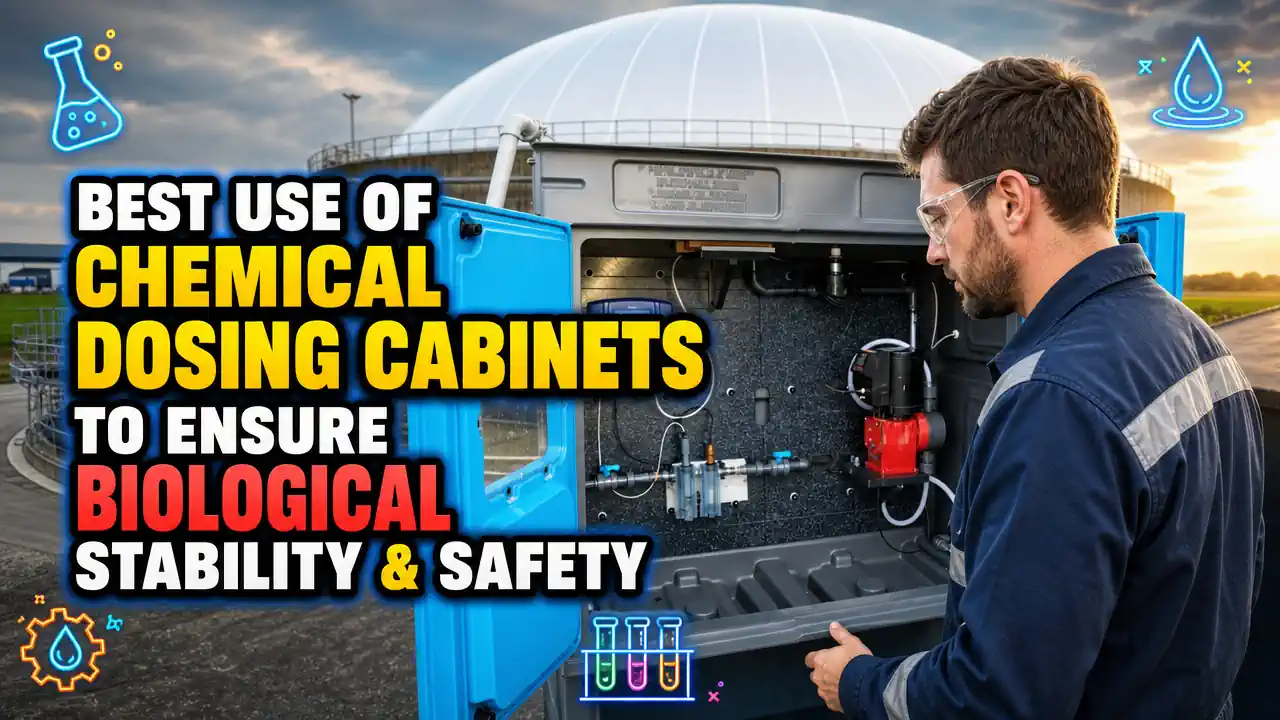
Safe fluid transfer solutions
A chemical dosing system is what controls how chemicals are added to a solution and calculates the precise amounts in an automated process. Used across a range of applications and demanding environments, including water treatment works and food and beverage manufacturing facilities, chemical dosing cabinets are versatile and support processes in a range of industries.
When considering where to purchase your chemical dosing cabinet, there are a few specialist providers. For example, Chem Resist are one of the leading providers of chemical storage and transfer solutions in the UK, offering a range of custom-made ChemiGuard chemical dosing cabinets. They have a selection of pressurised and pumped tanker offload and chemical-dosing cabinets that can be tailored to your site. ChemiGuard dosing cabinets provide safe and secure housing for chemical transfer products such as pumps, pipework, chemical storage tanks and bunds.
Before you make your purchase from the manufacturer of your choosing, it’s important to know the key elements of chemical dosing cabinets, so you can choose the ideal housing solution for your chemical transfer systems.
Key features of chemical dosing cabinets
There are several key features that every chemical dosing cabinet has, including custom-made models and those designed for bespoke fluid transfer solutions.
Containment solutions
Each chemical dosing cabinet will have specialised containment solutions to minimise spills and leaks. Most will feature secondary bunds designed to collect any liquids which may escape during the offloading or dosing process.
These containment solutions can be built into the cabinet itself, with drain valves, so you can empty them and dispose of any waste chemicals safely, as often as is required. If you are correctly using your chemical dosing cabinet and chemical transfer solutions, your containment bunds will only need to catch a small amount of liquid, but they should be able to hold a large volume of up to 65l, and are an ideal feature to help protect against loss of containment incidents.
These secondary containment solutions are essential for protecting the environment from exposure to hazardous chemicals, as well as any staff and those working around the chemical dosing process.
Equipment
Some cabinets come with integrated metering equipment pre-installed, like pipework and pumps for the chemical dosing process. These pumps are essential to the chemical dosing process and are what enables the precise volumes of liquid to be dispensed.
If you have a large chemical dosing cabinet, it should be able to house chemical dosing pumps like diaphragm pumps and piston pumps, as well as any control panels and monitoring equipment used within the chemical dosing system.
Corrosion resistance
The most common materials used to make chemical dosing cabinets are heavy-duty plastics like polyethene, HDPE, or polypropylene, as they are resistant to corrosion.
Rigid thermoplastics are the ideal material for use with chemical processes due to being resistant to aggressive acids and alkalis so can be used for a variety of applications and processes. Chemical dosing cabinets made from UV-stable HDPE are suitable for use outdoors as they are rust-proof, corrosion-resistant and can withstand being in extreme temperatures and harsh weather conditions.
Size options
Depending on your fluid transfer solutions and processes, chemical dosing cabinets come in a range of sizes, so you should choose the one that can best contain your systems and outputs. Suited to single pump chemical transfer applications and compatible with all brands of pump, single panel dosing cabinets include integrated bunds, drain valves and offer excellent containment for spills and leaks.
Secure cabinets for chemical dosing and fluid transfer systems usually come in three sizes, with one, two or three access doors for small and large process plants. You can also use multiple chemical dosing cabinets throughout your facility and fluid transfer systems to secure any access and transfer points.
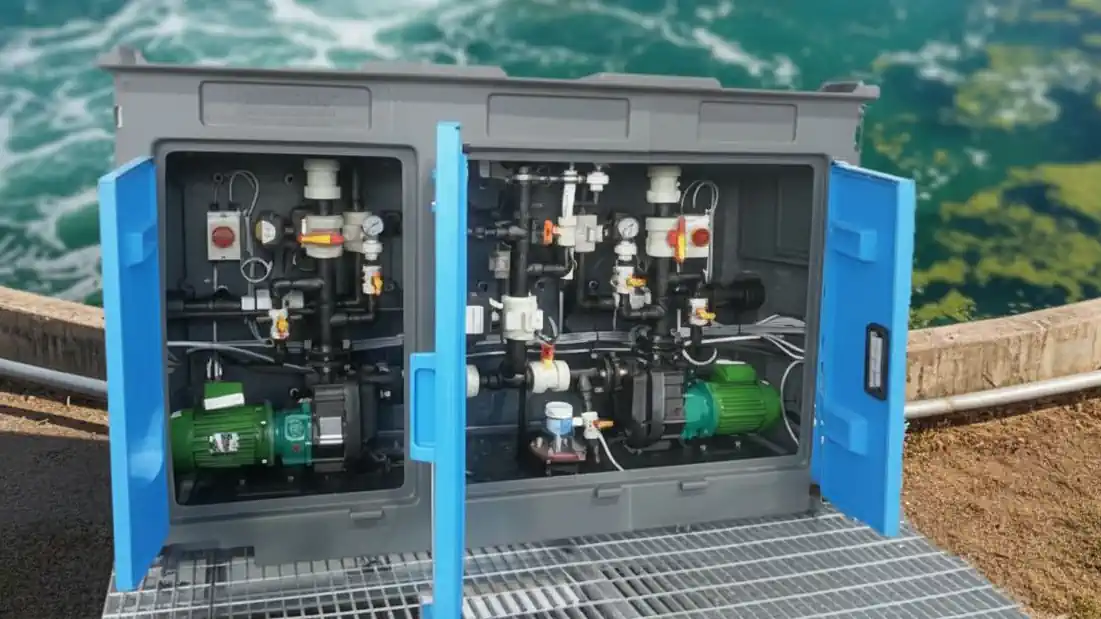
Chemical dosing cabinet safety features
Product labels
Each chemical dosing cabinet you have in your facility should have product labels on show to clearly identify the liquids being processed or transferred within the cabinet. This helps to avoid any dangerous mixing of chemicals and cross-contamination. Having each of your cabinets labelled with the products being used streamlines the transfer process as every chemical, fluid or liquid can be easily identified by those working in and around your facility.
Custom-made chemical dosing cabinets can also be made using colourful plastics to colour code your chemical processes, further reducing the risk of cross-contamination. Having clear labels and colour coding your chemical dosing processes helps to quickly identify your processes and which chemicals are being used, without having to do closer inspections, reducing the risk of accidents and injuries.
Lockable doors
While this may seem obvious and a quite simple safety feature, the doors and any access points of your chemical dosing cabinets should have secure locks. Only trusted site staff and those familiar with the fluid transfer and dosing processes should have access to the key and be able to open the doors.
Keeping your cabinets locked when not in use is standard practice for those in the chemical production industry to prevent tampering and protect staff from potentially harmful chemicals.
Ventilation
Chemical dosing cabinets, especially those which house strong acids, alkalis and chemicals which produce fumes, should have integrated ventilation.
Produced during the chemical dosing process or from strong chemicals, fumes can be hazardous to the health of those working in and around the chemicals and dosing cabinet. Allowing air to flow through the cabinet via ventilation points prevents the potentially harmful buildup of fumes.
Viewing windows
Being able to see the chemical dosing process and into the cabinet itself is incredibly important. Most chemical dosing cabinets will feature windows on the doors, or a viewing hatch so you can regularly inspect the process happening inside the cabinet.
The windows will allow you to have visibility into the cabinet so you can see that the chemical dosing process is working as it should, and if any of the containment systems are at risk of overflowing. Being able to quickly identify leaks or issues within the dosing system without unlocking the cabinet prevents accidents, injuries and loss of containment incidents.
Storage
When handling any chemicals or hazardous liquids, it is important to ensure anyone working in and around the area is wearing the correct safety equipment. Gloves, goggles, splash-proof suits and other personal protection and safety equipment must be worn when working on the chemical dosing systems.
Some chemical dosing cabinets will have storage built in to house this safety equipment, so staff can easily access it when required and put it away after use. Having safety equipment stored inside the cabinets helps to avoid any cross-contamination of chemicals and ensures that there are always safety goggles, gloves and other essentials on hand when required.
Integrating Dosing Cabinets into Your AD Process Infrastructure
In a biogas environment where corrosive liquids, harsh outdoor weather, and strict environmental regulations intersect, offloading and dosing chemicals cannot be an afterthought. By utilising UV-stable, corrosion-resistant thermoplastics and secondary bunding, operators can prevent catastrophic containment failures that jeopardise both plant biology and environmental compliance.
Whether you are manually dosing trace nutrients based on periodic laboratory tests or running an automated feedback loop driven by real-time digester monitoring, securing your pumps, manifold pipework, and controls within a purpose-built cabinet ensures long-term operational uptime and peak methane production.
Frequently Asked Questions (FAQs)
Why is chemical dosing necessary in an anaerobic digestion plant?
Chemical dosing is used in anaerobic digestion to maintain stable biological conditions inside the primary digester. Operators dose alkalis (like sodium hydroxide or lime) to buffer pH against acidification, introduce essential trace nutrients (nickel, cobalt, iron) for methanogenic microbes, and add anti-foaming agents to prevent operational disruptions.
How do chemical dosing cabinets support automated digester control?
When paired with real-time process monitoring tools (such as online pH, ORP, or volatile fatty acid sensors), dosing cabinets house the automated pumps, control panels, and manifold pipework that execute immediate, precise chemical adjustments based on sensor feedback.
What materials are best for dosing cabinets handling aggressive AD chemicals?
Rigid, UV-stable thermoplastics such as High-Density Polyethylene (HDPE) and Polypropylene (PP) are ideal. They are completely rust-proof, highly resistant to chemical corrosion from harsh acids and alkalis, and capable of enduring extreme outdoor weather conditions typical of biogas plants.
What containment features should be installed on an AD chemical dosing cabinet?
A high-quality dosing cabinet should feature secondary containment bunds equipped with drain valves to catch up to 65 liters of spilled liquid. Additional essential safety features include viewing windows for visual leak detection without opening doors, lockable access points, integrated cabinet ventilation to prevent fume buildup, and dedicated storage for operator Personal Protective Equipment (PPE).