A landmark new survey published this week by the American Biogas Council (ABC) paints a remarkably positive picture of how Americans feel about living near biogas facilities. But cross the Atlantic to the UK, and a very different story emerges from planning committee rooms, parish council meetings and online petition campaigns.
The contrast between US and UK public attitudes to biogas plant local opposition and community acceptance is striking — and it tells us something important about how the industry communicates, how regulators engage communities, and what drives public trust in renewable energy infrastructure.
Key Takeaways
- US residents near biogas plants are strongly supportive: Among those familiar with their local facility, positive views outnumber negative views by more than four to one (50% vs 12%).
- UK communities frequently oppose new AD plants: Individual planning applications routinely attract hundreds — sometimes over 800 — formal objections, driven largely by fears of odour, traffic, and visual impact.
- Odour incidents are the single biggest trust-killer in the UK, with a documented history of Environment Agency fines and resident complaints at poorly managed sites.
- Early, genuine community engagement makes a measurable difference in both countries — but it remains the exception rather than the rule in the UK.
- Familiarity breeds approval, not contempt: The US evidence shows that residents who simply live near a well-run plant tend to view it positively, even without actively seeking information about it.
- The UK industry has much to learn from the US approach of framing biogas benefits in local, community-level terms rather than leading with national policy arguments.
The American Picture: Neighbours Who Approve
The ABC’s new national survey, conducted by Candid Counsel among residents living within two miles of biogas systems across 144 US communities, delivers a powerful message for the industry. Among residents already familiar with their local biogas facility, positive views outnumbered negative views by more than four to one — 50% describing the facility’s impact as positive against just 12% negative, a net approval margin of 38 percentage points.
Even more telling is what happened when residents who had not previously been aware of their local facility were informed about it during the survey. Positive impressions still outweighed negative ones by more than six to one (31% to 5%), suggesting that the facilities are simply not a source of significant anxiety for most Americans who happen to live near one.
As ABC Executive Director Patrick Serfass put it:
“People who are familiar with them tend to see them as assets that help manage waste, produce renewable energy, and support local communities.”
The survey identified the benefits residents value most:
- Turning waste into renewable energy
- Protecting waterways by reducing nutrient runoff
- Supporting farmers and agricultural communities
- Creating local jobs and economic activity
These are not abstract national benefits — they are tangible, place-based advantages that residents recognise in their own backyards. This builds on earlier ABC polling showing that 77% of American voters support expanding biogas capture nationally, and that nearly three in four (74%) back increased government investment in the technology.
The UK Picture: Battlegrounds at the Planning Committee
Walk into any English planning committee meeting where an AD plant application is on the agenda, and you are likely to encounter a very different atmosphere.
In Keynsham, near Bath, plans for an anaerobic digester capable of processing 92,000 tonnes of food waste and crops a year attracted 847 objections and just 10 letters of support. Campaign group Protect Our Keynsham Environment warned the scheme would permanently alter the green belt, create noise and smell, and potentially harm residents’ health.
In County Durham, a proposed AD plant near Sedgefield attracted more than 800 objections from individuals and organisations, including the owners of a golf centre and a four-star hotel, both of whom feared the impact on their businesses and their guests’ experience of the outdoors. A Durham County councillor went so far as to declare that having an anaerobic digestion plant within ten miles of a built-up area “makes no sense whatsoever.”
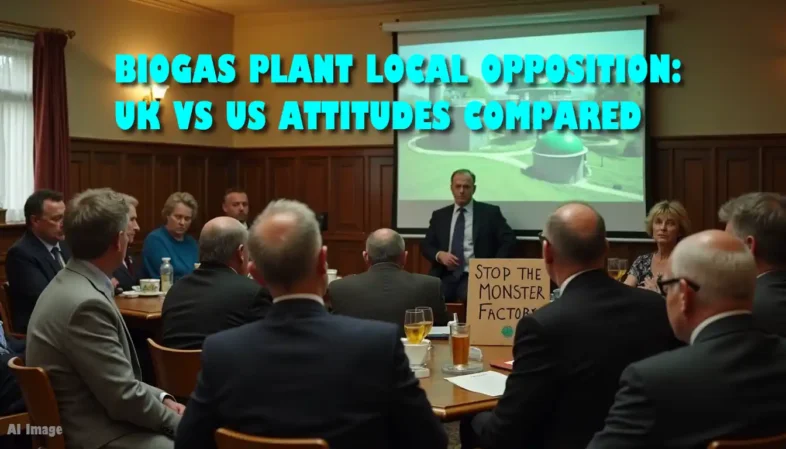
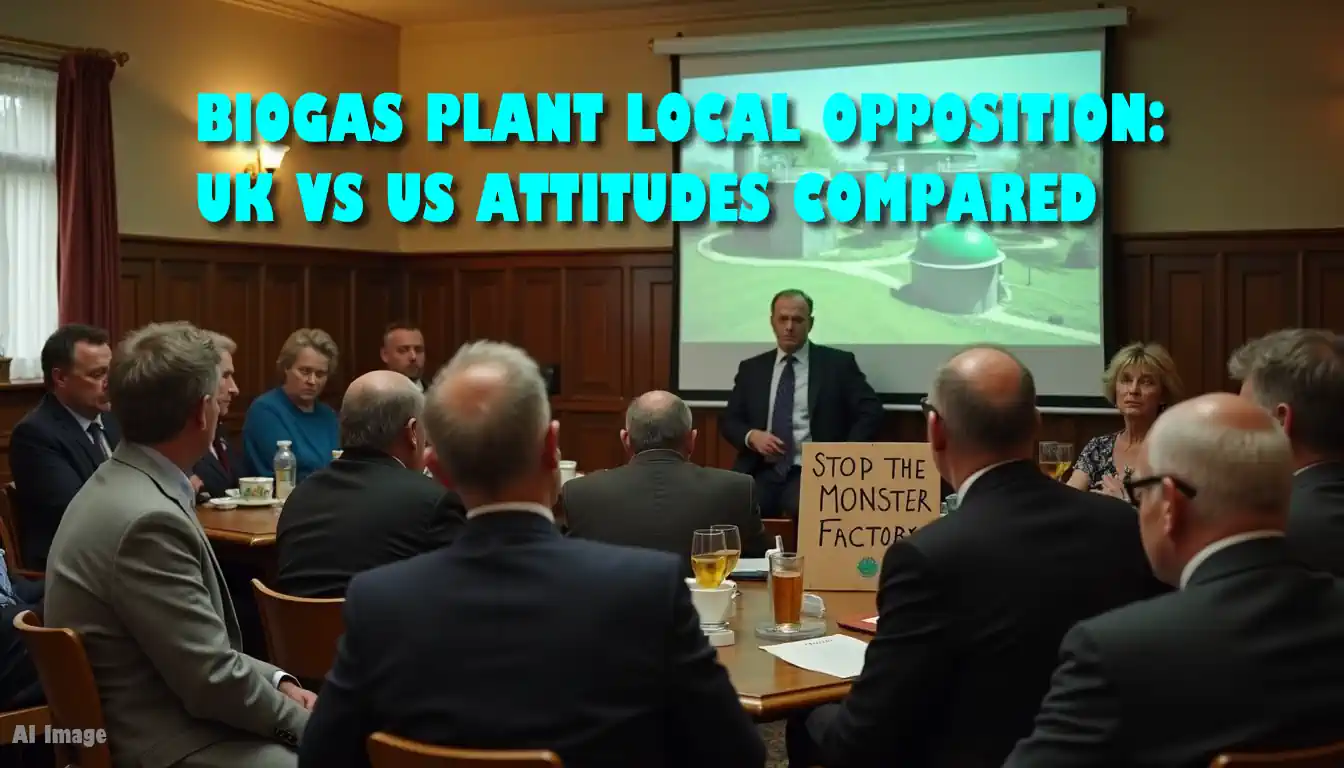
In Northamptonshire, one parish council chair described a proposed biomethane plant as a “monster factory” after residents had been “battling for over three years” to stop it — and still lost, in a split planning committee vote of seven to three.
The catalogue of odour incidents that UK campaign groups frequently cite in their objections is extensive: residents subjected to “unbearable odours” from an AD plant in Ballymena; councillors appealing to the Environment Agency to shut down a plant near Farleigh Wallop due to smells affecting hundreds of homes for sustained periods; an operator in Stockton-on-Tees fined by the Environment Agency for failing to control odour; and a councillor describing a plant near Rothwell as “absolutely disgusting.”
Industry guidance acknowledges that the most common concerns raised against AD planning applications in the UK are noise, odour, visual impact and traffic. These concerns are not imaginary. They reflect a genuine pattern of localised problems at some UK sites that has hardened public scepticism more broadly.
Why Such a Stark Difference?
Scale and Location of Facilities
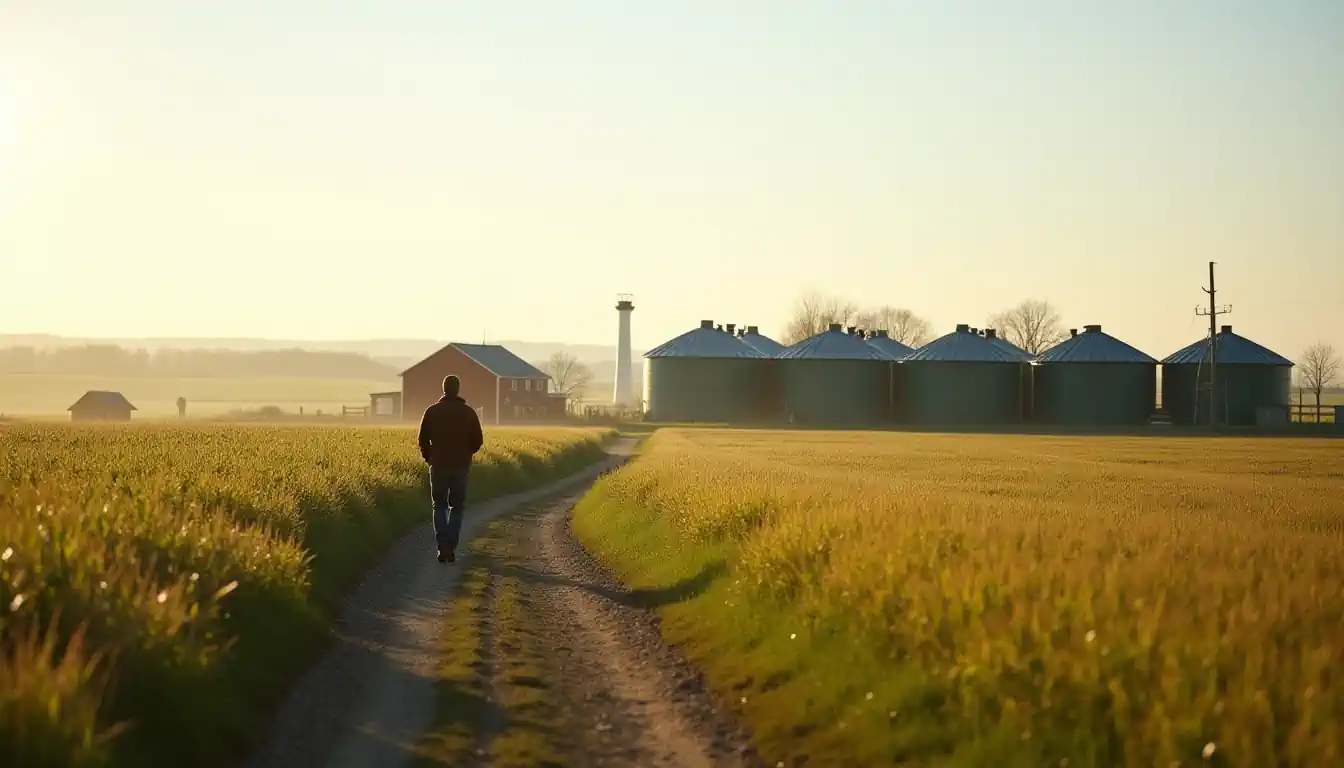
The US biogas industry is dominated by agricultural digesters — on-farm systems that process livestock manure and are situated well away from residential areas. They are, by their nature, rural and relatively low-profile. Many UK AD plants, by contrast, are large-scale waste processing facilities handling food waste, crop silages and sometimes industrial organic waste, often sited on the fringes of market towns or in open countryside that communities regard as their own to protect.
The Odour Problem: A Patchy UK Track Record
The ABC survey notes that US residents who live near biogas facilities do not find them a major focus of daily life — the facilities simply do not intrude. That is a very different experience from communities near poorly managed UK sites where odour complaints have been persistent and well-documented.
One UK operator was previously fined for emissions from a plant that “caused up to four days of misery for local residents, many of whom moved out because of the smell.” Once a community has experienced that or heard about it happening elsewhere, trust is extremely hard to rebuild.
Community Engagement Approaches Differ Markedly
The ABC data suggests US biogas developers have largely succeeded in being low-profile, unobtrusive members of their local communities. In the UK, the planning process itself — often adversarial, slow and conducted at a distance from communities — tends to crystallise biogas plant local opposition rather than resolve it. Where UK developers have invested heavily in community consultation before submitting planning applications, the results have been notably better, with letters of support secured from bodies such as the Council for Protection of Rural England and the Ramblers’ Association. But such early engagement remains the exception rather than the rule.
The Countryside Protection Instinct
UK objectors frequently frame their concerns not just as self-interested nimbyism but as a defence of rural character, green belt and agricultural landscapes. Planning committee debates often feature language about turning open countryside into “a major industrial area” — a framing that resonates deeply with English and Welsh communities.
The American landscape and American attitudes toward industrial activity in rural areas are simply different.
Information Asymmetry and Trust in Institutions
The ABC survey found that even residents who had never heard of their local biogas facility tended to view it positively once informed about it. In the UK, the information environment is often shaped by well-organised local opposition groups who flood planning portals and social media with concerns. The industry’s positive messaging — jobs, renewable energy, waste diversion — tends to arrive late in the process, after alarm has already taken hold.
The UK Picture: Biogas Plant Local Opposition at the Planning Committee
What the UK Industry Can Learn
The ABC findings are not cause for complacency in the US, but they do offer a useful mirror for the UK sector.
The most important lesson is that familiarity breeds approval, not contempt. Where communities actually live alongside well-run biogas facilities and experience no significant odour, noise or traffic problems, they tend to regard the facility positively. The challenge for UK developers is getting to that point — past the planning battle and into the operational phase — while maintaining genuinely good neighbour standards.
The World Biogas Association and UK industry bodies have argued for more support during the planning and pre-development stages, with local authorities recognising that AD plants can be beneficial community assets — but this requires developers, planners and communities to approach the process very differently from the current adversarial norm.
Odour management is not optional. The single biggest driver of UK community opposition is the fear of smell — and that fear is grounded in real experience at real sites. Developers who can demonstrate an impeccable operational record at existing facilities, offer binding odour management commitments, and provide accessible complaint channels stand a far better chance of winning local trust.
Finally, the US evidence underscores the value of framing biogas benefits in local rather than national terms. Farmers supported. Waterways protected. Jobs created. Energy produced locally. These are not abstract policy goals — they are things that matter to the people who live nearby. UK developers who lead with these community-level benefits, early and consistently, are likely to find a more receptive audience than those who arrive with a planning application and a promise that the odour model says everything will be fine.
Conclusion
The American Biogas Council’s new survey is a genuinely encouraging data point for the global biogas industry. It demonstrates that biogas plants can be “good neighbours” — invisible, beneficial, unremarkable features of the local landscape. The UK experience, characterised by hundreds of objections, protracted planning battles and high-profile odour incidents, shows that this outcome is not automatic. It has to be earned, through good site selection, rigorous operations, early community engagement and the kind of patient relationship-building that turns a potential enemy into an ally.
The technology is the same on both sides of the Atlantic. The difference lies in how it is introduced, managed and communicated to the people who live nearby. That is a lesson the UK AD industry cannot afford to ignore.
Frequently Asked Questions
Why do Americans seem more accepting of biogas plants than people in the UK?
The main reasons are scale, location and track record. Most US biogas facilities are agricultural digesters on working farms, well away from residential areas, with few if any complaints. Many UK AD plants are larger, food-waste-based facilities sited closer to towns and villages — and a number have had genuine odour problems that have damaged confidence in the technology more broadly. Early, proactive community engagement also appears to be more embedded in US development practice.
What is the biggest concern UK communities raise about local AD plants?
Odour is by far the most frequently cited issue, followed by increased heavy goods vehicle traffic, visual impact on the landscape, and — in greenbelt or open countryside locations — concerns about inappropriate industrialisation of the rural environment. Noise during construction and operation is also raised, though less commonly than smell.
Do odour problems at UK biogas plants actually justify public concern?
Unfortunately, yes — at some sites. The Environment Agency has issued fines to operators for odour breaches, and there are documented cases of residents experiencing significant and prolonged smell nuisance. However, well-designed and well-managed facilities do operate without complaints. The problem is that a handful of poorly run plants have made it harder for the whole industry to build public trust.
What can developers do to reduce local opposition to new UK biogas plants?
The evidence points consistently to early and genuine community engagement — long before a planning application is submitted — as the single most effective tool. This means being transparent about feedstocks, odour management plans and traffic routes; visiting existing operational sites with community representatives; and offering accessible, responsive complaint channels. Demonstrating a clean track record at other facilities is also critical.
Are biogas plants actually beneficial to local communities?
When well-sited and well-managed, yes. They divert organic waste from landfill, produce renewable energy, generate digestate that replaces synthetic fertiliser, create local employment, and — in the case of agricultural digesters — provide farmers with an additional income stream. The ABC’s US survey found that local residents recognised these benefits once they understood what their nearby facility actually did.
Is the UK government doing enough to support community acceptance of AD?
Industry bodies such as the Anaerobic Digestion and Bioresources Association (ADBA) have argued that more support is needed during the planning and pre-development stages, and that local authorities should be better equipped to understand the benefits of AD. Greater clarity in national planning policy on where and how AD plants should be sited could also reduce the adversarial nature of individual planning battles and help set clearer expectations for both developers and communities.
Where can I find more information about anaerobic digestion and biogas?
For in-depth, accessible information on all aspects of anaerobic digestion — from home-scale systems to commercial biomethane plants — visit anaerobic-digestion.com and the Anaerobic Digestion Blog. For the latest US industry data, the American Biogas Council publishes regular research and policy updates.