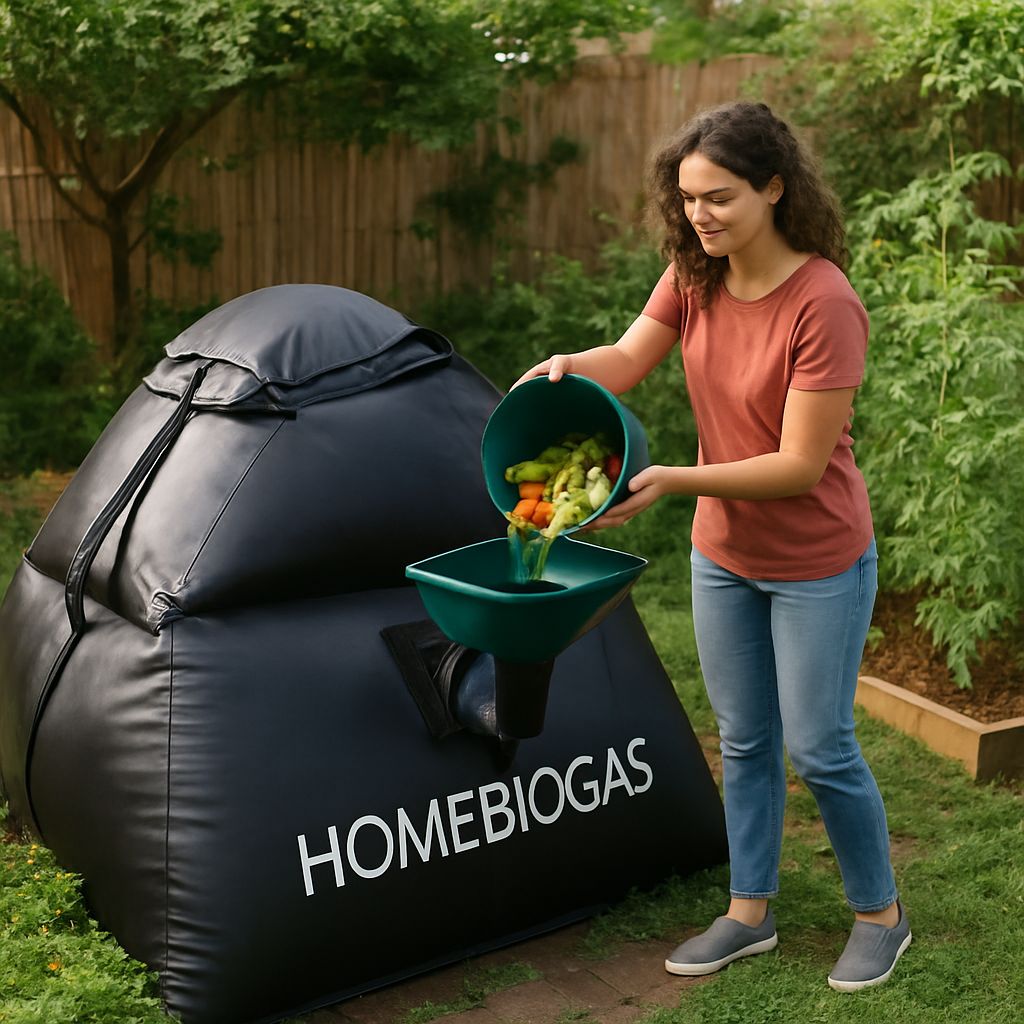
First of all, when comparing HomeBiogas vs. Puxin, both use organic waste to produce organic fertiliser and clean cooking gas; however, their designs and sizes are different. While Puxin offers a modular system better suited for larger rural properties, farms, and commercial uses, HomeBiogas is a popular, plug-and-play, above-ground unit designed for urban and suburban backyards.
HomeBiogas vs. Puxin – Summary
- HomeBiogas (Israel) and Puxin (China) are the leading home biogas digesters available today, each with unique advantages depending on your specific climate and setup.
- Both systems transform food waste and organic materials into usable cooking gas and liquid fertiliser, with no need for a grid connection.
- Puxin has a distinct advantage in colder climates due to its greenhouse enclosure and insulation design, while HomeBiogas is simpler to set up right out of the box.
- The best digester for you depends on three main factors: your local weather conditions, the amount of waste you produce daily, and the outdoor space you have available. We’ll discuss each of these factors in more detail below.
- Home biogas technology has evolved to the point where households in developed countries are beginning to embrace it as a viable off-grid energy solution.
When deciding between HomeBiogas and Puxin, price is only one factor to consider. Climate, capacity, and the complexity of setup are all more important than most consumers realise.
For those already delving into sustainable living solutions, learning about home biogas digesters is one of the most actionable steps you can take to achieve true energy independence. These aren’t just novelty products anymore — they’re practical systems utilised by households in dozens of countries.
Note: This is not an affiliate post. We seek to provide an unbiased review, and we hope to help you make a decision.
Choosing between HomeBiogas and Puxin should come after deciding whether household anaerobic digestion is suitable for the property at all. Our independent overview examines home biogas digester performance, costs and safety before comparing individual manufacturers or models.
HomeBiogas vs. Puxin: The Verdict Is In
If you are in a warm climate, want a simple plug-and-play setup, and primarily feed the system kitchen scraps, HomeBiogas is the better choice for you. However, if you want more versatility — it handles colder temperatures better, offers a broader product range, and its modular design allows for more customisation — Puxin is the winner.
- HomeBiogas — Best for warm climates, beginners, and households wanting fast, easy installation
- Puxin — Best for colder regions, users who want year-round operation, and those needing a scalable or portable system
- Both systems produce biogas for cooking and liquid bio-fertiliser as a byproduct
- Neither system requires a grid connection or professional plumbing background to operate
That said, the details matter. The gap between these two systems becomes much clearer once you look at feedstock capacity, daily gas output, available accessories, and real-world performance in non-ideal conditions.
What Each System Does
Both the HomeBiogas system and the Puxin Portable Assembly Biogas System use anaerobic digestion — a natural process where microorganisms break down organic matter without oxygen, producing methane-rich biogas. That gas is captured, stored, and piped directly to a biogas-compatible stove for cooking.
The liquid that comes out of the system isn’t waste — it’s a nutrient-dense liquid fertiliser that can go straight onto your garden. This dual output (gas + fertiliser) is what makes home digesters so compelling from a zero-waste perspective.
Here’s how it works:
- First, you add organic waste, such as food scraps, animal manure, or garden waste, to the digester inlet.
- Then, anaerobic bacteria within the sealed tank break down the waste over a period of days to weeks.
- As the bacteria do their work, they produce methane-rich biogas, which rises and collects in the upper storage compartment or bag.
- When you’re ready to cook, the gas flows through a pipe to your stove burner.
- Finally, the liquid effluent exits through the outlet as ready-to-use liquid fertilizer.
Which System is Right for You?
If you live in an urban or suburban area with a warm or temperate climate, and you’re looking for a low-maintenance way to start producing your own energy at home, HomeBiogas may be the right choice for you. Its clean design and easy assembly make it a great option for those who are new to biogas technology but serious about reducing their environmental footprint.
On the flip side, Puxin is a better match for rural users, smallholders, or anyone in a colder climate that requires a system that can be insulated or enclosed in a greenhouse structure. Its modular design also means it can be expanded or combined with other Puxin units, a feature that HomeBiogas currently doesn’t provide.
Understanding Home Biogas Digesters
Home biogas digesters are airtight anaerobic systems that transform organic waste from households into two useful products: flammable biogas (mainly methane) and liquid bio-fertiliser. This process is different from composting, which needs oxygen and generates heat. Instead, anaerobic digestion occurs in a sealed, oxygen-less environment and generates energy rather than just decomposing the material.
Biogas digesters are not a new invention. They have been used for over a hundred years in countries such as India and China for community and agricultural purposes. What has changed is the design. Modern home-scale digesters like HomeBiogas and Puxin have made the technology small, cheap, and truly manageable for a single household.
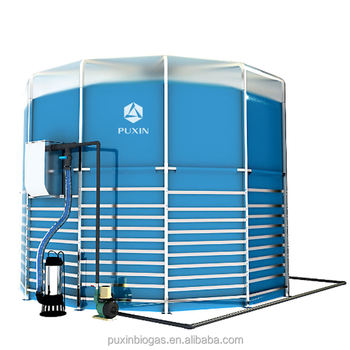
“Company Overview – Shenzhen Puxin Technology Co., Ltd.” from puxinbiogas.en.alibaba.com and used with no modifications.
Creating Biogas From Leftovers and Yard Waste
Most of the materials that go into home digesters are kitchen scraps — things like fruit and vegetable peels, uneaten leftovers, and small amounts of meat. These are all full of the carbohydrates, proteins, and fats that the anaerobic bacteria in the digester need to eat. Yard waste and animal manure can also be used, and manure is especially good because it has a lot of bacteria in it, which helps to get the digestion process started and keep it going quickly.
The temperature is the key player here. Anaerobic bacteria are most active between 20°C and 40°C (68°F to 104°F). Below 15°C (59°F), gas production slows significantly. This is the main technical issue that separates the two systems we’re comparing, and it’s why the climate is the most important factor in deciding between HomeBiogas and Puxin. For more insights into the different types of digesters, explore the comparison of covered lagoon vs. plug flow digesters.
Why Home Biogas Is Becoming More Popular in Developed Countries
Home biogas has traditionally been a solution for rural communities in developing countries, where cooking fuel is hard to come by, and organic waste is plentiful. This is rapidly changing. Increasing energy costs, rising interest in circular economies, and better product design have made home biogas more popular in Europe, North America, and Australia.
Electricity-Free Operation
A significant but often overlooked benefit of a home biogas digester is that it doesn’t rely on the electrical grid or gas utility infrastructure. The digester operates entirely through biological processes, meaning it doesn’t require electricity to function.
For those living off the grid or anyone looking to reduce their reliance on utilities, this is a significant benefit. A fully operational cooking fuel source powered solely by your food waste is, in practical terms, one of the most concrete forms of energy independence available for homes today. Learn more about biogas digester design and how it can reduce costs and enhance sustainability.
HomeBiogas: A Market Leader Born from an Israeli Startup
HomeBiogas began with a straightforward yet ambitious idea: to bring anaerobic digestion to any home with a backyard. This Israeli company started through crowdfunding and has now arguably become the most well-known name in home biogas systems worldwide.
From a Small Crowdfunding Campaign to Over 1,000 Homes Across the Globe
The first HomeBiogas unit, which was the original product, has been developed into a more sophisticated product line. The company started in 2006 with initial development, and through feedback from real-world use, they improved their design. They eventually replaced their first-generation unit with a model that was not only more efficient but also less expensive. This new model also solved the problems of the original model, which included inconsistent gas pressure and inlet clogging. For those interested in the broader context of biogas technology, you can explore how biogas plants face local opposition in various communities.
HomeBiogas didn’t grow because of aggressive advertising. Instead, it grew because people in sustainable living communities started talking about it. The company also made a name for itself by participating in international development projects. Systems have been set up all over Africa, Southeast Asia, Latin America, and more and more in Europe and North America.
From the get-go, HomeBiogas nailed packaging. The system comes ready to put together with only a few tools, easy-to-understand instructions, and a design that doesn’t need any digging, concrete work, or professional installation. This was a game-changer for households that found traditional digester systems too complex.
What You Can Put in the HomeBiogas System Each Day
The HomeBiogas system can handle up to 6 litres of food waste each day, which is enough to produce about 2 to 3 hours of cooking gas under regular conditions. You can also put animal manure in the system — as much as 15 litres each day — so it’s a good option for households with chickens, rabbits, or small livestock. The gas that the system produces each day is stored in a flexible gas bag that’s integrated into the top of the digester, so it’s ready to use whenever you need it.
The liquid fertiliser is produced constantly. As new material is fed into the inlet, processed effluent exits through the outlet on the other side. This means that every time you feed the digester, you’re also collecting fertiliser — a truly closed-loop process that sends virtually nothing to the landfill.
Keep in mind that you won’t see gas output right away. It takes a new system anywhere from 2 to 4 weeks to fully establish the bacterial colony inside the digester. Only then will you see consistent gas production. People who expect to see results right away often underestimate the system’s performance during this startup phase. But once the biology is established, it will sustain itself as long as you keep feeding it regularly.
Adding a Bio-Toilet: Using Human Waste as Feedstock
HomeBiogas provides an accessory Bio-Toilet that can be connected directly to the digester, which enables the use of human waste as an additional feedstock. This is especially useful for off-grid cabins, tiny homes, or rural properties that don’t have access to a municipal sewage system. The toilet uses a small amount of water per flush and sends waste directly into the digester inlet.
When it comes to gas production, human waste is a moderately effective raw material. It’s not as potent as food waste or animal dung, but it’s a helpful addition. More importantly, it provides a practical solution to a genuine sanitation issue for those living off-grid, while also contributing to energy production. This is a combination that very few products on the market can offer.
HomeBiogas’s Weakness: It Doesn’t Work Well in Cold Climates
HomeBiogas is clear about one big problem: it’s not made for cold climates. The company says it should be used in places where the temperature is always above 17°C (63°F), or at least during the months when it’s being used. This means it can’t be used outside all year in many parts of Northern Europe, Canada, and the northern United States unless you add extra insulation or put it in a greenhouse — and HomeBiogas doesn’t include either of those things. For those interested in alternative systems, you might want to explore the differences between covered lagoon vs. plug flow digesters for cold climate applications.
When the temperature falls below the recommended level, the anaerobic bacteria slow down and gas production significantly decreases. The system essentially stops working in freezing temperatures. For users in colder climates who want to use the system all year round, this is where Puxin’s design philosophy has a real structural advantage over HomeBiogas.
Puxin: A Chinese Rival Offering a Wide Array of Products
Shenzhen Puxin Technology Co., Ltd. has been a leader in the production of biogas equipment for many years and boasts one of the most extensive product lines of any company in the home-scale biogas industry. Unlike HomeBiogas, which aims to provide a simplified, user-friendly product, Puxin leans more towards the engineering side of things. They offer a variety of digester sizes, accessories, and system configurations that can be customised to fit individual needs.
Putting It Together and Setting It Up
The Puxin Portable Assembly Biogas System comes flat-packed in cardboard boxes and doesn’t require any digging, excavation, or concrete foundation because it’s made to be surface-mounted. The system uses a membrane digester and an integrated gas storage bag, all of which is housed within a greenhouse structure made from hollow sunlight sheet panels that are supported by a metal frame.
Putting it together is a bit more complicated than HomeBiogas. You have to assemble the greenhouse frame, membrane digester, inlet and outlet pipe connections, and gas line in the right order. But Puxin designed it so that if you’re good at DIY, you can do it yourself without needing a professional. And because it’s mounted on the surface, you can take it apart and move it somewhere else if you need to. HomeBiogas can’t do that.
Year-Round Use with Insulation and Heating Features
The Puxin Assembly Biogas System uses a hollow sunlight sheet greenhouse enclosure to not only protect the membrane digester from physical damage, but also to trap solar heat around the digester. This allows the system to maintain its operating temperature even in cooler conditions. The passive solar heating effect gives Puxin a significant operational advantage in temperate and cooler climates where HomeBiogas may not perform as well.
The Puxin system‘s greenhouse structure can be layered with additional insulation for users in especially cold regions. This adaptability is intentional — Puxin’s design recognises that their worldwide customer base covers a broader range of climates than a single static design could accommodate.
- Greenhouse enclosure: Transparent panels for sunlight absorption that passively heats the digester
- Metal support frame: Provides structural stability without the need for ground anchoring or concrete
- Membrane digester + gas bag combo: Reduces the number of connection points and potential leak points due to its integrated design
- Surface mounted: Excavation is not needed, allowing for possible relocation if necessary
- Modular design: Multiple Puxin units can be combined to increase the total capacity
As a result, this system can realistically operate all year round in climates where HomeBiogas would need to be shut down for winter. This is a critical difference for anyone serious about consistent, reliable home energy production from organic waste.
Safety Design: No Excavation, No Fall Risk, No Need to Enter the System
Traditional fixed-dome biogas digesters — the type that you might see in rural India or China that are made of brick and mortar — require digging, professional construction, and someone to enter the system for cleaning and maintenance. Puxin’s system, which is mounted on the surface and uses a membrane design, eliminates all three of these requirements. The system is completely accessible from the outside, requires minimal cleaning, and there is no risk of someone getting stuck inside the system during normal operation or routine maintenance.
Additional Accessories: Biogas Storage and Transport Bags
One accessory that works well with Puxin systems is the biogas storage and transport bag. This is a flexible and portable container that allows you to capture and move excess gas to another location for use. This is especially useful for community setups where one digester serves several households, or for users who want to store surplus gas production during periods of high output for use later. Puxin offers these bags as catalogue accessories, which gives the system a level of operational flexibility that HomeBiogas does not currently offer through its own product line.
HomeBiogas vs. Puxin: A Comparative Analysis
When you compare the two systems side-by-side, the differences become immediately applicable rather than theoretical. Neither system is universally better — the best choice depends entirely on your specific operating conditions, technical comfort level, and what you’re trying to achieve with home biogas.
HomeBiogas is the clear winner when it comes to ease of installation. The system is designed so that a single person can assemble it in a few hours using simple hand tools. The components are colour-coded for easy identification, the instructions are simple to follow, and the flexible bag-based gas storage eliminates the need for rigid pressure vessels or complicated valve systems. For someone who has never worked with biogas technology before, HomeBiogas is the quickest and easiest way to get up and running.
While Puxin’s installation is more challenging, it’s still achievable for a skilled DIY builder. The greenhouse frame needs accurate panel alignment and secure fastening, and the membrane digester needs to be correctly positioned before the gas storage bag and outlet connections are finalized. Although Puxin requires more effort upfront, it compensates for that effort with a sturdier and more climate-resistant installation — one that can realistically outlast and outperform a HomeBiogas unit across a broader range of seasonal conditions.
Input and Output Capacity
HomeBiogas can take up to 6 litres of food waste per day, which can produce about 2 to 3 hours of cooking gas. Puxin’s two main home models — the PX-ABS-2.65M3 and the bigger PX-ABS-3.4M3 — provide a larger total digester volume, which means they can produce more gas for homes that produce more organic waste. If you’re running a small farm, have animals, or have a large family to feed, Puxin’s larger models give you more flexibility than HomeBiogas’s one-size-fits-all model.
Weather Compatibility
For most consumers, this is the deciding factor. HomeBiogas needs a minimum surrounding temperature of 17°C (63°F) to keep gas production going, making it a system designed for warmer climates. Puxin’s greenhouse enclosure naturally traps solar heat, keeping the membrane digester warmer than the outside air and significantly lengthening the workable operating season. For those living in the UK, northern Europe, Canada, or the northern United States, Puxin’s thermal design is not just a nice bonus — it’s the difference between a system that works all year and one that goes dormant for five months.
Extra Items and Features
HomeBiogas seems to keep its selection of extra items limited. The most notable feature is the HomeBiogas Bio-Toilet, which can be connected directly to the digester and transports human waste into the system as an additional feedstock — a truly beneficial feature for off-grid users. There is also a biogas cooking stove available that is compatible and is designed for the lower pressure output that home digesters produce compared to standard LPG systems.
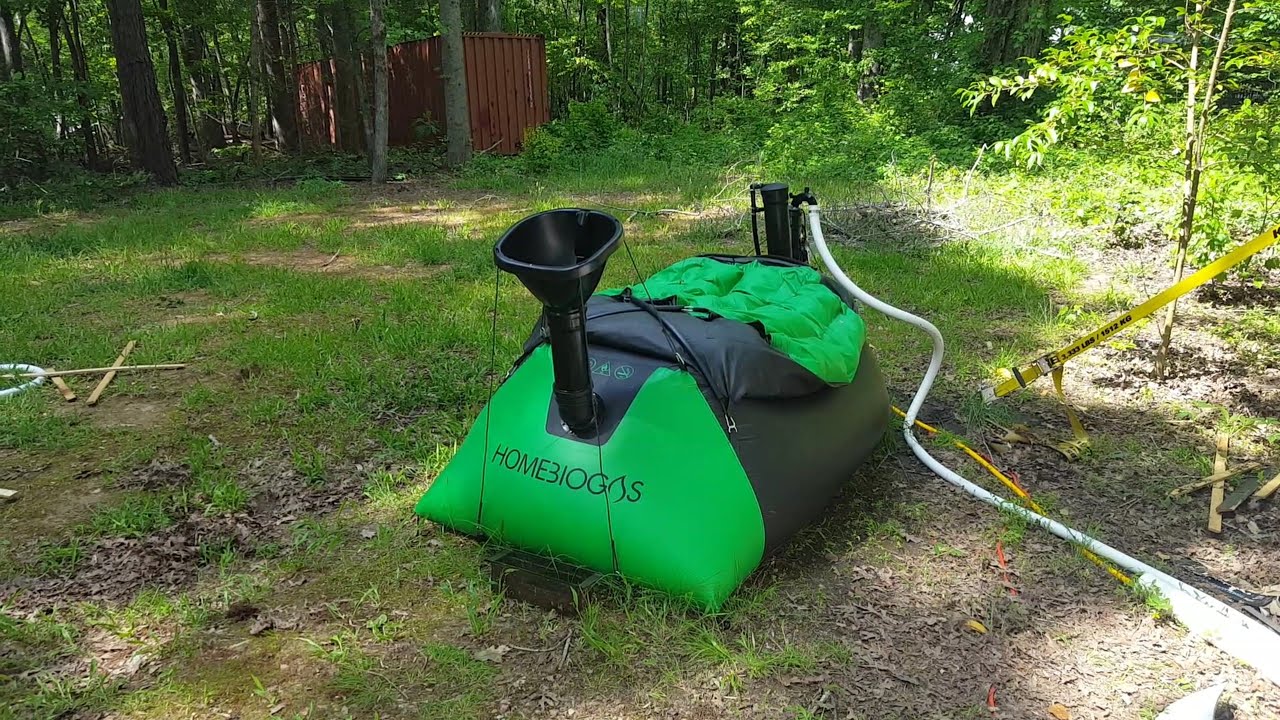
“HomeBiogas Toilet and Digester Review” from www.youtube.com and used with no modifications.
Puxin has a wider range of accessories. They offer a biogas-compatible stove, a biogas generator for electricity production, biogas storage and transport bags for capturing and moving surplus gas, and a range of components that allow multiple units to be linked together for increased capacity. This makes Puxin a better option for users who want to expand their system over time or serve multiple households from a shared digester.
What this means in real terms is that HomeBiogas is a fully integrated solution that comes with a few carefully selected add-ons, while Puxin is more of a foundation – a basic system that you can customize to meet your unique energy needs. Both methods are valid, but they cater to different users with different aspirations for their home energy configurations.
- Accessories for HomeBiogas: Bio-Toilet add-on, biogas cooking stove, system cleaning kit
- Accessories for Puxin: Biogas cooking stove, biogas generator, portable storage and transport bags, additional membrane digester units for expanded capacity
- Both systems are compatible with biogas-specific burners that handle lower pressure output than LPG
- Puxin storage bags allow surplus gas to be captured during high-production periods and used on demand — a feature HomeBiogas does not currently offer natively
Which One Offers the Best Value for Money?
Value here isn’t just about the upfront purchase price — it’s about what you actually get out of the system over a 5 to 10 year operating life. HomeBiogas has a lower barrier to entry in terms of setup complexity and is well-suited to users who want to start generating cooking gas from food waste quickly and without a steep learning curve. For warm-climate households, it delivers solid return on investment through consistent daily gas output and zero-waste fertiliser production.
If you live in a cooler climate or have a higher volume of daily waste, Puxin is a better long-term investment. Its greenhouse design significantly extends its operational months, and the larger digester models can handle more feedstock per day. The modular accessory system also allows for more flexibility than a fixed configuration. However, the installation process is more complicated, and the consumer experience is not as seamless as with HomeBiogas.
Both systems offer great value if chosen to match your specific needs. Go for HomeBiogas if you’re located in a warm climate, prefer a straightforward system, and your main aim is to produce cooking gas from kitchen waste. On the other hand, Puxin would be a better choice if you’re in a cooler area, have larger volumes of waste daily, require year-round operation, or need a system that can expand along with your homestead. For more information on waste treatment processes, you can explore anaerobic digestion alternatives.

Common Questions – HomeBiogas vs. Puxin
These are the questions most often asked by people who are thinking about buying a home biogas digester system and comparing different models.
Is it possible to use a Home Biogas Digester in cold climates?
It is possible, but there are some important things to consider. The standard HomeBiogas units are not recommended for use in environments where the temperature regularly falls below 17°C (63°F). This is because the activity of anaerobic bacteria slows down significantly in cold conditions and gas production can stop completely when it freezes.
Puxin’s design includes a greenhouse enclosure that provides passive solar insulation. This extends the operational range to cooler climates, making it a more viable option for year-round use for users in temperate and northern regions. In very cold climates, additional insulation or additional heating may be necessary, regardless of which system you choose.
How Much Cooking Gas Does a Home Biogas Digester Produce Daily?
If the temperature is right and it is fed every day, a HomeBiogas system can produce enough gas to cook for about 2 to 3 hours a day. This is from 6 litres of food waste.
Puxin’s bigger models, like the PX-ABS-3.4M3, can make more gas each day because they are bigger. But the exact amount depends on what you feed it, the temperature, and how often you feed it. Both systems need 2 to 4 weeks to start making a stable amount of gas. This is because the bacteria that make the gas need time to grow inside the digester. For those interested in the technology behind these systems, exploring UASB reactors vs CSTR digesters could provide valuable insights.
Can You Get the Puxin Biogas System Outside of China?
Definitely, Puxin products are sold all over the world through platforms like Alibaba. The company has also provided systems to projects throughout Africa, Asia, and other areas via development and agricultural channels.
Shipping costs and wait times can change a lot based on where you are. And buyers should consider the cost of international shipping when comparing the total cost to HomeBiogas. HomeBiogas has a more developed direct-to-consumer distribution network in Western markets.
Is HomeBiogas Capable of Processing Animal Manure and Food Waste?
Indeed. HomeBiogas can process animal manure, and it’s built to handle up to 15 litres of manure daily. This makes it a viable option for homes with small livestock like chickens, rabbits, or guinea pigs. Manure is especially useful because it contains a high concentration of the anaerobic bacteria required for digestion — adding manure to a new system can speed up the startup phase and help form a healthy bacterial colony quicker than just using food scraps.
It’s important to keep in mind that not all types of manure are created equal. Chicken and cow manure are usually the most effective. Dog and cat waste should be avoided in home digesters because they contain pathogens that the system isn’t designed to safely neutralise. As always, a consistent and varied organic feedstock will provide the most stable and reliable gas output over time.
Do Home Biogas Digesters Need Planning Permission or Permits?
Usually, they don’t — but it does depend on the country, region, and local municipality. In the UK, most home biogas systems are considered garden structures under permitted development rights, as long as they’re not connected to the gas grid and are only used for personal household purposes. In the US, the rules vary by state and county. Some places require permits for any structure you put in a residential garden, while others have no specific rules for home biogas systems.
It’s always a good idea to check with your local planning authority or zoning office before you install anything. However, in reality, most people install home-scale digesters without any problems, especially if the system is surface-mounted (like both HomeBiogas and Puxin), not permanently fixed, and used only for personal energy production and not for commercial purposes.
For those who are members of a homeowners association (HOA) or are residing in a managed property, it’s a good idea to go over your lease or ownership agreement before setting up any outdoor energy system. Although home biogas digesters are much less noticeable than solar panels or wind turbines, some HOAs have blanket bans on external structures, which could technically include these.