During starch wastewater treatment processes, high quantities of organic contaminants and suspended solids are removed from starch effluent using physical, chemical, and biological techniques such as screening, coagulation-flocculation, and anaerobic digestion. Ten to twenty cubic metres of wastewater with a high Chemical Oxygen Demand (COD) are created for every tonne of starch produced.
Article-At-A-Glance: Starch Wastewater Treatment Processes
- Starch processing wastewater carries extremely high organic loads — typical COD levels range from 200–250 mg/L in secondary effluent, making untreated discharge a serious environmental hazard.
- Anaerobic digestion is the most effective biological treatment for high-strength starch wastewater, achieving COD removal rates above 89% while producing biogas as a renewable energy byproduct.
- Advanced reactor designs like the eddy-integrated internal circulation anaerobic reactor can process 4,000 m³/d of wheat starch sugar wastewater — the performance benchmarks may surprise you.
- Physicochemical treatment alone cannot handle the full organic load of starch wastewater — biological treatment is always required as a core process stage.
- Choosing the right combination of treatment technologies depends on COD load, climate, discharge standards, and whether energy recovery is a facility goal.

Starch wastewater is one of the most organically concentrated industrial effluents on the planet — and most processors are still underestimating what it takes to treat it properly.
The global starch industry produces tens of millions of tons of product annually, and every step of that production generates high-strength wastewater loaded with biodegradable organics, suspended solids, and in some cases, compounds like cyanide depending on the raw material source.
Without a correctly designed treatment system, that wastewater causes serious damage to receiving water bodies and contributes to greenhouse gas emissions through uncontrolled decomposition. For facilities looking to understand their options — and the engineering behind them — this resource on anaerobic digestion in wastewater treatment offers a solid technical foundation.
Starch Wastewater Is a Bigger Problem Than Most Processors Realise
The starch production process is water-intensive. Washing, steeping, separation, and drying all generate process water that exits the facility carrying a heavy organic burden.
What makes starch wastewater particularly challenging is not just the volume — it is the concentration of that load and how quickly it can deplete oxygen in receiving water bodies if discharged without adequate treatment.
The environmental pressure on starch manufacturers is intensifying globally. Regulatory discharge limits are tightening, and the penalties for non-compliance — both financial and reputational — are significant. But the challenge also presents an opportunity: the same organic richness that makes starch wastewater difficult to manage also makes it an excellent feedstock for biogas production through anaerobic digestion.
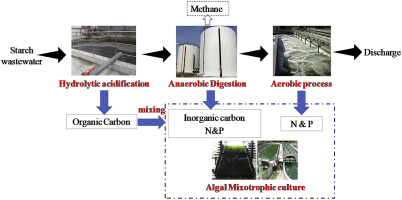
“Starch Wastewater Treatment Processes” from www.sciencedirect.com and used with no modifications.
Why COD and BOD Levels in Starch Wastewater Are Dangerously High
Starch wastewater is characterised by its exceptionally high Chemical Oxygen Demand (COD) and Biological Oxygen Demand (BOD). Even treated secondary effluent from starch processing typically contains COD levels around 200–250 mg/L and turbidity of 150–200 NTU.
Raw process wastewater entering the treatment system carries far higher loads than this. The organic content is predominantly biodegradable, which is why biological treatment is not optional — it is the cornerstone of any effective starch wastewater management strategy.
The Three Main Sources: Potato, Wheat, and Wheat Starch Sugar Processing
Not all starch wastewater is identical. The three dominant sources each have distinct characteristics that influence treatment design:
- Potato starch processing — produces wastewater high in organic matter and nutrients, with significant suspended solids from the washing and separation stages
- Wheat starch manufacturing — generates wastewater that can be treated aerobically, but this approach faces serious challenges with energy consumption and sludge generation at scale
- Wheat starch sugar production — creates exceptionally high-strength organic wastewater that demands advanced anaerobic treatment systems capable of handling large daily volumes
Understanding the source is the first step in designing a treatment system that actually performs. A system built for potato starch wastewater will not automatically translate to effective treatment of wheat starch sugar effluent — the COD loads, nutrient profiles, and hydraulic characteristics are simply too different. Learn more about dry fermentation vs. wet anaerobic digestion to better understand the treatment systems required for different types of wastewater.
What Happens to Ecosystems When Starch Wastewater Goes Untreated
When starch wastewater reaches rivers, lakes, or coastal waters without proper treatment, the consequences are rapid and severe. The high BOD causes dissolved oxygen levels to crash, creating hypoxic or anoxic zones where aquatic life cannot survive. Decomposing organic matter releases methane and carbon dioxide directly into the atmosphere — a completely avoidable source of greenhouse gas emissions. In regions where starch plants discharge into sensitive watersheds, the downstream ecological damage can persist for years.
Physicochemical Treatment: The First Line of Defence
Before biological processes can work efficiently, the raw wastewater needs to be conditioned. Physicochemical treatment does exactly that — it removes the coarser fraction of pollutants and prepares the wastewater stream for the more intensive biological stages that follow.
How Sedimentation and Coagulation Remove Suspended Solids
Sedimentation tanks allow heavier suspended solids to settle out of the wastewater stream under gravity, reducing the suspended solids load before the water moves downstream in the treatment process.
Coagulation and flocculation — typically using chemical agents like aluminum sulfate or ferric chloride — aggregate fine colloidal particles into larger flocs that can then be settled or filtered out. These steps reduce turbidity and lower the incoming load to biological treatment units, improving their efficiency and protecting downstream equipment.
When Physicochemical Treatment Alone Is Not Enough
Physicochemical treatment is effective at removing suspended solids and some colloidal organic matter, but it cannot address the dissolved organic load that drives the high COD and BOD readings in starch wastewater.
The biodegradable fraction — which is the dominant pollutant in starch effluent — requires biological degradation. This is why physicochemical treatment is always a pre-treatment or polishing step, never a standalone solution for starch wastewater management.
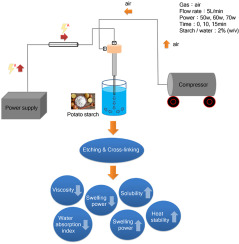
“Physicochemical Treatment for Starch Wastewater Treatment Processes from www.sciencedirect.com and used with no modifications.
Anaerobic Digestion: The Most Effective Biological Treatment for Starch Wastewater
Anaerobic digestion consistently outperforms other biological treatment methods for high-strength starch wastewater, and the data backs this up clearly.
It handles high organic loads without the energy-intensive aeration requirements of aerobic systems, and it produces biogas — a recoverable energy source — as a direct output of the treatment process. For starch processors dealing with large volumes of concentrated wastewater, anaerobic digestion is not just the best option — it is often the only economically viable one at scale.
How Anaerobic Digestion Breaks Down High-Strength Organic Wastewater
Anaerobic digestion works through a sequence of microbial processes — hydrolysis, acidogenesis, acetogenesis, and methanogenesis — that progressively break down complex organic molecules into simpler compounds, ultimately producing methane and carbon dioxide.
In starch wastewater treatment, the high concentration of readily biodegradable carbohydrates makes the organic fraction highly amenable to anaerobic breakdown. Microorganisms thrive on this feedstock, which is why COD removal rates in well-designed anaerobic systems treating starch wastewater are consistently high — often exceeding 89% in full-scale applications.
Starch Wastewater Treatment Processes and Biogas Production: Turning Waste Into Renewable Energy
One of the most compelling advantages of anaerobic digestion for starch wastewater is the biogas it generates. Advanced systems treating wheat starch sugar wastewater have demonstrated biogas yields of 0.4 m³ per kilogram of COD removed. At industrial scale — processing thousands of cubic meters per day — this represents a substantial and continuous source of renewable energy that can offset facility operating costs, reduce reliance on grid electricity, and contribute directly to a facility’s greenhouse gas reduction targets.
COD Removal Rates: What the Data Actually Shows
Full-scale anaerobic systems treating starch wastewater consistently deliver COD removal rates above 89.2%. The eddy-integrated internal circulation anaerobic reactor treating wheat starch sugar wastewater at a design capacity of 4,000 m³/d has demonstrated exactly this performance in real operating conditions — not just laboratory benchmarks.
Anaerobic ponds in tropical climates have shown over 90% COD and TSS removal, confirming that when the system is correctly matched to the wastewater characteristics, anaerobic digestion reliably achieves the organic load reductions that starch processors need to meet discharge standards.
Why Anaerobic Digestion Outperforms Aerobic Treatment for High-Load Wastewater
The core issue with aerobic treatment for high-strength starch wastewater is energy. Aerobic systems require continuous mechanical aeration to supply oxygen to microbial communities, and for high-COD wastewater, that energy demand becomes prohibitive. Conventional aerobic treatment typically requires 0.5–1.0 kWh of electricity per kilogram of COD removed — with zero energy recovery on the other side of the equation.
Anaerobic digestion flips this equation entirely. Instead of consuming large amounts of electricity to destroy organic matter, it captures the energy stored in that organic matter as biogas. The operational cost difference at industrial scale is significant, and when biogas is used to generate heat or electricity on-site, the net energy position of the treatment facility improves dramatically.
- Aerobic treatment: Requires 0.5–1.0 kWh per kg COD removed, generates large volumes of excess sludge, no energy recovery
- Anaerobic digestion: Produces 0.4 m³ biogas per kg COD removed, minimal sludge generation, net energy positive at scale
- COD removal: Both achieve high removal rates, but anaerobic systems handle much higher inlet concentrations without performance degradation
- Sludge handling: Aerobic treatment produces significantly more biological sludge, adding to disposal costs and complexity
- Climate suitability: Anaerobic systems perform exceptionally well in tropical and warm climates where starch processing is concentrated
For starch facilities processing large daily volumes of high-strength effluent, the choice between aerobic and anaerobic primary treatment is not really a close call. The economics, the energy balance, and the treatment performance all point decisively toward anaerobic digestion as the core biological treatment technology.
Advanced Anaerobic Reactor Designs That Deliver Superior Results
Not all anaerobic reactors are created equal. The evolution of reactor design over the past few decades has produced systems that can handle dramatically higher organic loads, maintain more stable microbial populations, and achieve more consistent COD removal than earlier-generation anaerobic ponds or simple covered lagoons.
For starch wastewater specifically — which often arrives at the treatment plant in high volumes with variable organic loads — reactor design choices have a direct impact on treatment reliability and operational costs. The three reactor types most relevant to starch wastewater treatment are internal circulation anaerobic reactors, UASB systems, and EGSB systems.
Internal Circulation Anaerobic Reactors and Their Performance Benchmarks
The eddy-integrated internal circulation (IC) anaerobic reactor represents one of the most advanced configurations available for treating high-strength industrial wastewater. Its design creates a natural internal circulation loop driven by biogas lift, which keeps the microbial granule bed thoroughly mixed and in continuous contact with incoming substrate — without any external energy input for mixing.
In documented full-scale operation treating wheat starch sugar wastewater, the IC reactor configuration at 4,000 m³/d design capacity achieved COD removal rates exceeding 89.2% with a biogas yield of 0.4 m³ per kg of COD removed. These are not theoretical numbers — they represent verified operational performance at industrial scale.
The IC reactor’s tall, narrow profile also makes it well-suited to sites where footprint is constrained. Compared to anaerobic lagoons or ponds, IC reactors occupy a fraction of the land area while processing significantly higher hydraulic and organic loads per unit volume.
UASB and EGSB Systems: Real-World COD Removal at Industrial Scale
The Upflow Anaerobic Sludge Blanket (UASB) reactor was one of the original high-rate anaerobic treatment technologies and remains widely used in starch wastewater applications today. Wastewater flows upward through a dense blanket of anaerobic granular sludge, with organic matter degraded as it passes through.
UASB systems are particularly effective for wastewater with consistent composition and flow — conditions that many starch processing facilities can achieve with proper equalisation.
The Expanded Granular Sludge Bed (EGSB) reactor is an evolution of the UASB design, operating at higher upflow velocities that expand and fluidise the granular sludge bed. This improves contact between wastewater and active biomass, making EGSB systems better suited to lower-temperature operating conditions and wastewater with lower COD concentrations or inhibitory compounds.
Both UASB and EGSB systems have demonstrated strong COD removal performance in starch wastewater applications across multiple continents.
The decision between UASB and EGSB configurations typically comes down to site-specific factors — wastewater temperature, COD concentration, available footprint, and operator experience. In many industrial-scale starch treatment projects, UASB systems are selected for their simplicity and proven track record, while EGSB configurations are favoured where enhanced mass transfer and lower operating temperatures are priorities.
Multi-Stage Digestion: How Staging Improves Treatment Efficiency
Multi-stage anaerobic digestion separates the hydrolysis/acidogenesis phase from the methanogenesis phase into distinct reactor vessels. This matters because the microbial communities responsible for each phase have different optimal conditions — pH, temperature, and substrate preferences.
By staging the process, each microbial group operates in its ideal environment, which improves overall system stability, increases COD removal efficiency, and reduces the risk of process upsets caused by organic load spikes that are common in starch processing operations.
Aerobic Treatment as a Secondary Polishing Step
Aerobic treatment earns its place in starch wastewater management — just not as the primary biological treatment stage. After anaerobic digestion has removed the bulk of the organic load, aerobic treatment polishes the effluent to meet stringent discharge standards that anaerobic treatment alone cannot always achieve for parameters like ammonia, residual BOD, and suspended solids.
The combination of anaerobic primary treatment followed by aerobic polishing is the configuration that delivers both cost-effective performance and consistently compliant discharge quality.
Trying to use aerobic treatment as the sole biological process for raw starch wastewater simply results in excessive energy consumption, sludge management problems, and operating costs that are difficult to justify.
Why Aerobic Treatment Works Best After Anaerobic Pre-Treatment
When anaerobic digestion has already removed 89%+ of the incoming COD, the aerobic polishing stage receives a much lower-strength wastewater stream. This dramatically reduces the aeration energy required, shrinks the volume of biological sludge generated, and allows the aerobic system to be designed and operated at a much smaller scale.
The overall treatment system becomes more efficient, more stable, and less expensive to operate than either technology used in isolation.
Aerobic processes used in the polishing role include activated sludge systems, sequencing batch reactors (SBRs), and moving bed biofilm reactors (MBBRs). Each has operational advantages depending on the specific effluent quality targets and site conditions, but all benefit from receiving pre-treated anaerobic effluent rather than raw starch wastewater.
Energy Consumption and Sludge Generation: The Key Tradeoffs
Treatment Stage Energy Demand Sludge Output COD Removal Energy Recovery Aerobic Only (Primary) 0.5–1.0 kWh/kg COD High High None Anaerobic Only Low Low >89% 0.4 m³ biogas/kg COD Anaerobic + Aerobic Polish Low–Moderate Low–Moderate Very High 0.4 m³ biogas/kg COD Anaerobic Ponds Minimal Low >90% (tropical) Limited (open systems)
The data makes the operational tradeoffs clear. Aerobic-only systems demand significant electricity input with no energy return, while generating the largest sludge volumes that then require further handling and disposal. For a high-volume starch processing facility, these costs accumulate quickly and create a recurring operational burden.
Anaerobic systems, by contrast, generate far less sludge — the anaerobic microorganisms grow slowly and convert less substrate into new cell mass, meaning less biological solids to manage. The sludge that is produced is also more stable and easier to dewater than aerobic sludge, further reducing disposal costs and complexity.
For facilities with energy goals or sustainability commitments, the biogas produced by anaerobic digestion can be directed to combined heat and power (CHP) systems, generating on-site electricity and thermal energy. In some configurations, this biogas utilisation can offset a substantial portion of the facility’s total energy demand — transforming the wastewater treatment plant from a cost centre into an energy asset.
How to Choose the Right Treatment Process for Your Facility
Selecting the right starch wastewater treatment configuration is not a one-size-fits-all decision. The optimal system depends on a set of facility-specific and site-specific variables that need to be evaluated together — not in isolation. Getting this selection process right at the design stage avoids costly retrofits and performance shortfalls later.
The most important variables to assess before committing to a treatment configuration are the incoming wastewater characteristics, the required discharge quality, the facility’s energy strategy, and the physical constraints of the site.
Climate matters too — anaerobic systems, particularly open pond designs, perform differently in tropical climates compared to temperate or cold regions, and this directly affects which reactor configurations are appropriate.
Key Factor What to Assess Impact on Technology Choice COD Load Inlet COD concentration and daily mass load Determines if high-rate anaerobic reactors are needed Wastewater Volume Daily flow rate (m³/d) and flow variability Influences reactor sizing and equalization needs Climate Ambient temperature range Affects anaerobic pond viability vs. enclosed reactors Discharge Standards Required effluent COD, BOD, TSS, ammonia limits Determines need for aerobic polishing stage Energy Goals Biogas utilization strategy (CHP, boiler, flaring) Affects reactor type and capital investment justification Site Constraints Available footprint, soil conditions, water table Influences choice between ponds, IC reactors, UASB/EGSB Starch Source Potato, wheat, or wheat starch sugar Affects wastewater composition and pre-treatment needs
Engineering teams conducting comprehensive site assessments evaluate all of these factors simultaneously — including soil characteristics, water table levels, and regional climate patterns — before recommending a specific treatment configuration.
This systematic approach is what separates treatment systems that consistently meet discharge standards from those that underperform under real operating conditions.
Matching Treatment Technology to Wastewater Strength and Volume
The relationship between wastewater strength and treatment technology selection is direct and non-negotiable. High-strength starch wastewater — particularly from wheat starch sugar production — demands high-rate anaerobic reactor configurations like IC reactors or EGSB systems that can handle the organic loading without process instability.
Lower-strength effluent streams, or wastewater that has already received primary anaerobic treatment, can be effectively managed with aerobic polishing systems at much smaller scale.
Matching the technology to the actual load is what determines whether a treatment system delivers consistent compliance or constant operational headaches.
Key Factors: COD Load, Climate, Energy Goals, and Discharge Standards
Four factors consistently drive treatment configuration decisions for starch wastewater facilities. COD load determines reactor sizing and whether high-rate systems are justified. Climate — particularly ambient temperature — affects biological activity rates and whether open pond systems are viable or whether enclosed heated reactors are necessary.
Energy goals determine how seriously biogas recovery infrastructure should be engineered into the design from the outset. And local discharge standards set the floor for effluent quality, which determines whether aerobic polishing is required after anaerobic primary treatment or whether anaerobic treatment alone can achieve compliance.
These four factors rarely point in the same direction simultaneously, which is exactly why treatment system design requires site-specific engineering rather than off-the-shelf solutions.
A starch facility in a tropical climate with high COD loads, aggressive discharge standards, and a strong energy recovery mandate will end up with a fundamentally different system configuration than a temperate-climate facility with lower flows and more lenient discharge limits — even if both are processing potato starch.
Starch Wastewater Treatment Is Both an Environmental Obligation and a Resource Opportunity
Every cubic meter of starch wastewater that passes through a well-designed anaerobic digestion system is simultaneously being cleaned to protect receiving water bodies and converted into a renewable energy resource that offsets facility operating costs.
That dual value proposition is what makes investing in proper starch wastewater treatment infrastructure one of the more strategically sound decisions a starch processor can make — not just an environmental compliance exercise.
The facilities that have made this investment are operating with lower energy bills, smaller carbon footprints, and stronger regulatory standing than those still relying on inadequate or outdated treatment systems. The technology is proven, the performance benchmarks are documented, and the case for action has never been clearer.
Frequently Asked Questions About Starch Wastewater Treatment Processes
Starch wastewater treatment involves a range of technical decisions that facility managers, environmental engineers, and sustainability teams regularly encounter.
The questions below address the most common points of uncertainty — covering treatment effectiveness, biogas yields, system limitations, and emissions impacts — with direct, data-backed answers drawn from full-scale operational experience.
Understanding these fundamentals is essential whether you are evaluating a new treatment system, optimising an existing one, or making the case internally for capital investment in anaerobic digestion infrastructure. The key areas this FAQ covers include:
- Which treatment method delivers the best results for high-strength starch wastewater
- Realistic biogas production figures from anaerobic digestion of starch effluent
- Whether anaerobic digestion alone is sufficient or if aerobic polishing is always required
- Typical COD concentrations across different starch processing operations
- How anaerobic digestion directly reduces greenhouse gas emissions from starch processing
Each answer below is grounded in verified operational data and engineering practice — not theoretical projections.
What Is the Most Effective Treatment Method for High-Strength Starch Wastewater?
Anaerobic digestion is the most effective treatment method for high-strength starch wastewater. Full-scale systems consistently achieve COD removal rates exceeding 89%, handle large daily volumes — up to 4,000 m³/d in documented configurations — and do so while generating biogas as a recoverable energy byproduct.
For facilities that also need to meet stringent effluent discharge standards for parameters beyond COD, an aerobic polishing stage following the anaerobic primary treatment delivers the additional removal needed without the energy penalty of running aerobic systems on raw high-strength wastewater.
How Much Biogas Can Anaerobic Digestion of Starch Wastewater Produce?
Anaerobic digestion of starch wastewater produces approximately 0.4 m³ of biogas per kilogram of COD removed. This figure comes from full-scale operational data on systems treating wheat starch sugar wastewater — not laboratory estimates.
The actual energy value of that biogas depends on its methane content, which in well-operated anaerobic systems typically ranges from 60–70% methane by volume. For more insights on how biomethane can replace natural gas, explore our detailed guide.
At industrial scale, this biogas yield is substantial. A facility processing 4,000 m³/d of wastewater with an inlet COD of several thousand mg/L can generate enough biogas to supply meaningful on-site energy through combined heat and power systems.
This offsets electricity and thermal energy purchases, reduces operating costs, and contributes directly to the facility’s renewable energy and carbon reduction targets.
Can Anaerobic Digestion Fully Treat Starch Wastewater on Its Own?
Anaerobic digestion alone can achieve very high COD removal — consistently above 89% in well-designed systems. However, whether it can fully treat starch wastewater to discharge standard compliance depends entirely on the specific effluent quality requirements set by local regulators. In some jurisdictions and discharge scenarios, the quality of anaerobically treated starch wastewater is sufficient for compliance. In others — particularly where strict limits apply to ammonia, residual BOD, suspended solids, or nutrients — an aerobic polishing stage is required to bridge the gap between anaerobic effluent quality and the required discharge standard.
The practical answer for most industrial-scale starch facilities is that the optimal system combines anaerobic digestion as the primary biological treatment stage with aerobic polishing to meet final discharge requirements. This combination delivers the best overall outcome: energy recovery and high organic load removal from the anaerobic stage, plus the effluent quality refinement needed for consistent regulatory compliance from the aerobic stage.
What COD Levels Are Typical in Starch Processing Wastewater?
COD levels in starch processing wastewater vary significantly depending on the process stage and the type of starch being produced. Secondary effluent — wastewater that has already received some treatment — typically contains COD levels around 200–250 mg/L with turbidity of 150–200 NTU. Raw process wastewater entering the treatment system carries substantially higher COD concentrations than post-treatment figures suggest.
Wastewater Stream Typical COD Range Turbidity Primary Treatment Challenge Secondary effluent (post-treatment) 200–250 mg/L 150–200 NTU Final polishing to discharge standard Potato starch process water High organic and nutrient load Elevated Nutrient management alongside organic removal Wheat starch manufacturing effluent Moderate to high Moderate Energy-intensive if treated aerobically Wheat starch sugar wastewater Very high (industrial strength) High Requires high-rate anaerobic reactor design
The variability across starch types reinforces why inlet wastewater characterization is a non-negotiable first step in treatment system design. Designing a system based on secondary effluent COD figures when the actual inlet load is industrial-strength wheat starch sugar wastewater will result in a critically undersized system that fails to meet discharge standards.
Comprehensive wastewater characterisation — measuring COD, BOD, TSS, pH, temperature, nutrient concentrations, and any process-specific compounds — needs to be conducted over a representative operating period to capture the variability that is inherent in starch processing operations. This data forms the engineering basis for every subsequent design decision, from reactor sizing to sludge management strategy.
How Does Anaerobic Digestion Reduce Greenhouse Gas Emissions From Starch Processing?
Anaerobic digestion reduces greenhouse gas emissions from starch wastewater treatment through two distinct mechanisms. First, it prevents the uncontrolled decomposition of organic matter in open water bodies or untreated storage ponds — a process that releases methane and carbon dioxide directly into the atmosphere as unavoidable fugitive emissions. By capturing that decomposition inside engineered reactor vessels, the methane generated is contained and utilized rather than vented.
Second, the biogas captured through anaerobic digestion directly displaces fossil fuel consumption. When biogas is used in combined heat and power systems to generate on-site electricity and thermal energy, it replaces grid electricity and natural gas or diesel that would otherwise be purchased and burned. Every unit of fossil energy displaced by biogas represents a direct reduction in net greenhouse gas emissions from the facility’s operations.
The greenhouse gas benefit extends further when the reduced energy demand of the overall treatment system is considered. Because anaerobic digestion processes the high-strength organic load without requiring the energy-intensive aeration that aerobic treatment demands — consuming 0.5–1.0 kWh per kilogram of COD removed with no energy return — the facility’s total electricity consumption from wastewater treatment operations drops substantially. At industrial scale, across a facility processing thousands of cubic meters of starch wastewater daily, the cumulative emissions reduction is significant and measurable.
Starch wastewater treatment processes are essential for reducing environmental pollution and recovering valuable resources. One effective method is anaerobic digestion, which breaks down organic matter in the absence of oxygen. This process not only treats the wastewater but also produces biogas, a renewable energy source. For more information on the benefits of anaerobic digestion, check out this article on biogas and hydrogen production.