Converting distillery wastewater to biogas can recover two useful resources: renewable energy for production and nutrient-rich digestate for agriculture.
The organic matter that creates an effluent treatment burden also provides the biodegradable carbon needed to produce biogas. The organic matter that creates an effluent treatment burden also provides the biodegradable carbon needed to produce biogas.
This creates a close fit between distilling and anaerobic digestion. A distillery needs heat and often electricity, generates organic residues during production, and depends on agricultural raw materials. Recovering energy from those residues and returning suitable nutrients to farmland can connect these activities into a more productive cycle.
A Landia GasMix order for one of India’s largest distilleries illustrates the energy opportunity. It also provides a starting point for examining how distilleries can combine wastewater management with fuel production and, where suitable agricultural outlets exist, liquid fertiliser use.
Key takeaways
- Organic contaminants can become an asset. Biodegradable material in distillery wastewater can support the production of methane-rich biogas.
- Distilleries can use recovered energy close to its source. Suitable biogas equipment can help supply process heat, steam or electricity.
- Nutrients remain valuable after digestion. Suitable liquid digestate can replace part of a farm’s manufactured fertiliser requirement.
- Agricultural use can change the treatment requirement. Where liquid digestate has a suitable, authorised land application route, further treatment for discharge may be unnecessary for that stream.
- Food and beverage residues are promising candidates for agricultural recycling. Their suitability depends on source control, composition, processing and the needs of the receiving land.
Why Distillery Wastewater Suits Biogas Production
Distilling concentrates value into a finished beverage, but useful organic material remains in the production residues. Depending on the process and raw materials, liquid streams can contain dissolved organic compounds, yeast and suspended plant material.
These substances create a treatment challenge because their breakdown consumes oxygen. Chemical oxygen demand, or COD, is commonly used to describe this pollution load. In a digester, the biodegradable portion of that load becomes a potential energy resource.
Anaerobic digestion uses microorganisms to break down organic material without oxygen. The process produces biogas and a residual material known as digestate. As the US Environmental Protection Agency explains, biogas can provide heat, electricity or fuel after appropriate processing.
The opportunity is particularly attractive when a distillery can use that energy on site. Rather than transporting a residue elsewhere and purchasing all its production energy separately, the business can recover part of the energy contained in its own process outputs.
For the wider treatment principles behind this approach, see our guide to anaerobic digestion wastewater treatment.
Turning distillery wastewater from a liability into a fuel resource
The value of an organic residue depends partly on how it is managed. In a receiving watercourse, a concentrated organic load can cause pollution. Within a controlled digestion process, the same biodegradable material can support methane production.
Installing a biogas plant therefore changes the investment question. Alongside asking how much wastewater treatment will cost, a distillery can assess how much useful energy it can recover and whether the resulting digestate has an agricultural outlet.
Research examining by-products at nine operational distilleries in seven countries estimated that anaerobic digestion could reduce fossil fuel demand by 13–66%, depending on the site and scenario. The study, Decarbonising distilled spirits, demonstrates the potential while showing why individual project assessment matters.
Wastewater volume alone does not establish that potential. Organic concentration, biodegradability, feed consistency and the energy required to operate the plant all affect the outcome. Our guide to assessing biogas feedstock potential provides further background.
For a Scottish example of distillery integration, see the Balmenach section in our overview of anaerobic digestion plants in Scotland.
Case study: Landia GasMix for a major Indian distillery
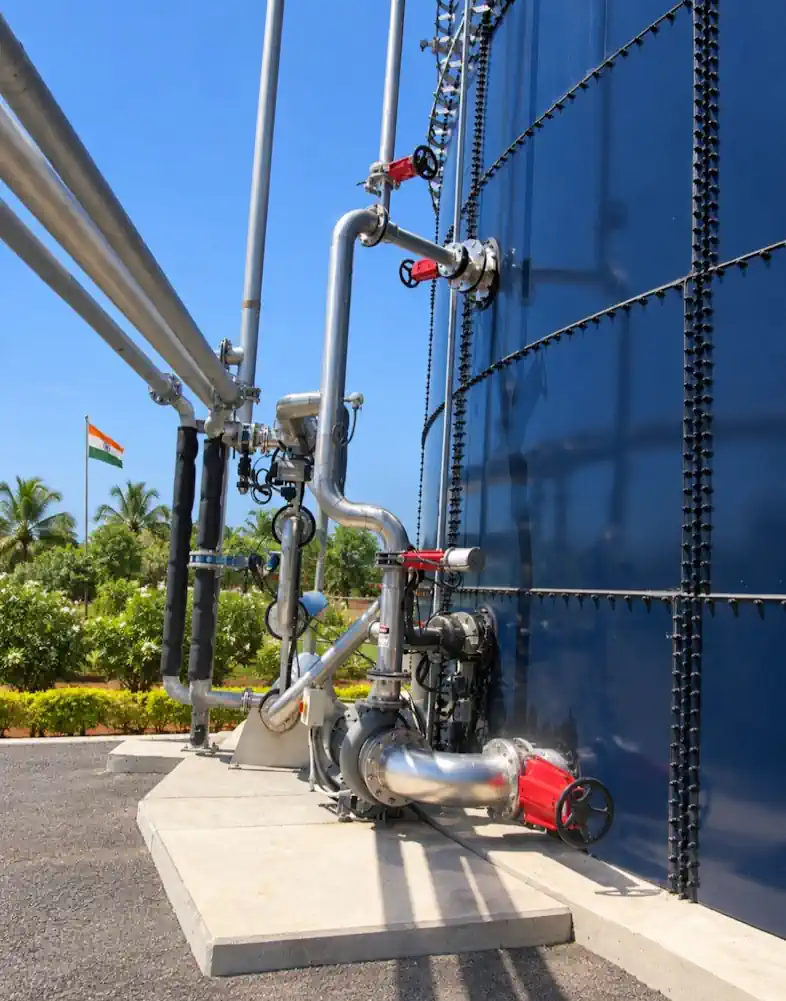
According to the supplied announcement, Landia will supply its GasMix digester mixing system to one of India’s largest distilleries. Chopper pumps will break down solids and keep them suspended, while the system recirculates liquid and biogas to mix the digester contents.
The project shows how a distillery can incorporate wastewater energy recovery into a wider programme of improving energy self-sufficiency. The release reports that the business has already reduced its dependence on the national grid by 60% through a new high-pressure turbine. That reduction precedes the new biogas installation and should not be attributed to GasMix.
Mixing is one part of maintaining suitable digestion conditions. For a wider explanation of equipment configurations, maintenance access and operating considerations, read our guide to anaerobic digester mixing systems.
The announcement describes an equipment order, rather than measured results from the new plant. It does not specify the digestate destination. Agricultural use is therefore discussed below as an opportunity for suitable distillery projects, rather than a confirmed feature of this installation.
The supplied press release is reproduced verbatim below.
Press Release:
Distillery in India for Landia GasMix Biogas Digester Mixing System
Landia has secured an order to supply its acclaimed GasMix Biogas digester mixing system to one of India’s largest distilleries, where wastewater will be utilised for the site’s biogas plant.
The Landia GasMix, which already has over 1,700 installations worldwide, is designed so that everything can be easily accessed from outside the tank. As part of the GaxMix system with its venturi nozzles, 30kW, 1500rpm Landia Chopper Pumps will break down solids from the distillery’s waste stream and keep them in suspension to maximise the mixing process and gas yields.
Producing some of India’s biggest selling whiskies, gins, vodkas, rums and brandies, the distillery has already reduced its dependence on the national grid by 60%, thanks to a new high-pressure turbine. By effectively recycling a mixture of liquid and biogas at the new AD plant, the Landia GasMix will make the distillery even more self-sufficient.
This latest order for Landia follows its work at the Rosemaund Farm Distillery in England, where a new premium single malt whisky is being produced, with a Landia pump playing a key role in the handling of the site’s wastewater.
Guy Ritchie, Creator of the Netflix series, The Gentlemen, is an early backer, shareholder & creative collaborator at Rosemaund, who have recently announced their third release; a whisky made with Maris Otter barley, distilled and aged among apple orchards on the family farm in Herefordshire.
— PR Ends —
Liquid digestate from distilleries: planning an agricultural outlet
Energy recovery is only part of the opportunity. Digestion converts some biodegradable carbon into biogas while leaving a liquid or slurry containing remaining organic material and nutrients. Where separation is used, the resulting liquid fraction may provide a useful agricultural fertiliser.
The fertiliser value depends on the material’s measured composition and the receiving crop’s requirements. The European Commission’s Joint Research Centre identifies digestates from agricultural and food industry materials as potential fertilising resources, while emphasising that their performance depends on feedstock quality, processing and responsible management. Its review of agricultural digestate use explains these opportunities and limitations.
For a distillery with suitable nearby farmland, this creates a practical connection between beverage production and agriculture. Nutrients remaining after energy recovery can help support crop production and reduce purchased fertiliser requirements.
Our guide to using digestate fertiliser in agriculture explains nutrient assessment, crop requirements and application planning in more detail.
Can distillery digestate use replace further effluent treatment?
Anaerobic digestion followed by beneficial land application can provide an alternative to treating a suitable liquid stream further for discharge. The destination changes: nutrients are directed towards crops that need them, rather than being removed to achieve a water discharge specification.
Anaerobic digestion is itself a treatment process. It does not automatically produce discharge-quality water, and land application must serve a genuine agricultural purpose. Calling a liquid fertiliser does not establish that it is suitable to spread.
For a distillery, the practical assessment must include digestate quality, available land, crop demand, transport distance and storage. Production may continue throughout the year while spreading opportunities are seasonal.
Where those factors align, agricultural recycling may avoid some downstream treatment costs. Where they do not, additional treatment or another outlet may still be required.
Requirements vary by location. In England, for example, the Environment Agency’s anaerobic digestate resource framework sets conditions relating to approved inputs, processing, quality and certainty of use. Agricultural application must also reflect soil and crop needs.
Storage and field access should be considered alongside the choice of digestate spreading equipment and application methods.
Designing food and beverage residues for a return to land
As a general resource-management principle, clean organic outputs from food and beverage processes should be considered candidates for a return to agriculture after appropriate processing. Their biological origin gives manufacturers a strong starting point for recovering useful nutrients.
The most effective approach is to preserve that suitability from the outset. Distilleries can keep suitable production residues separate from unrelated waste and identify which cleaning or process streams could affect digestion or agricultural use.
Food-grade ingredients do not make every factory output automatically acceptable for land application. Cleaning chemicals, excessive salts, packaging fragments and other contaminants can enter residual streams, and digestion does not guarantee their removal.
Preserving a useful agricultural outlet therefore starts with controlling the input materials. Read more about digestate composition and contaminants.
The objective is to retain the value of clean process outputs, demonstrate their suitability through analysis and match their use to the receiving soil and crop.
Making the distillery energy and nutrient cycle work
The strongest projects plan the complete route from distillery residue to useful energy and final digestate use. A dependable feedstock supply needs a suitable digester; recovered gas needs a useful energy demand; and digestate needs an outlet that can accept its volume and nutrients.
Financial assessment should account for energy displaced, potential treatment savings and agricultural value, alongside plant operation, gas conditioning, storage, transport and spreading costs. Existing by-product markets also matter: material already valuable as animal feed carries an opportunity cost if diverted to digestion.
Biogas plants at distilleries can bring these decisions together. The Landia project illustrates the drive towards greater energy self-sufficiency. Where suitable digestate also returns to farmland, a distillery can recover both fuel value and fertiliser value from material previously treated primarily as an effluent burden.
FAQs
How do biogas plants at distilleries produce usable energy?
Microorganisms break down biodegradable distillery residues without oxygen, generating methane-rich biogas. After appropriate conditioning, the gas can fuel suitable boilers or combined heat and power equipment. Further upgrading can produce biomethane.
Which distillery residues are suitable for anaerobic digestion?
Suitable streams may include organic wastewater and distillation by-products containing biodegradable material. Their suitability depends on composition, concentration, contaminants and the proposed digestion system. Representative feedstock testing is needed before plant design.
Can liquid digestate from distillery wastewater be used as fertiliser?
Yes, where its quality, composition and legal status permit agricultural use. Analysis should establish its nutrient value and relevant contaminants, with application matched to the receiving soil and crop requirements.
Can a distillery avoid further effluent treatment by using digestate on land?
Potentially. A suitable, authorised agricultural outlet may remove the need to treat that stream further for discharge. The distillery still needs sufficient storage, suitable land and dependable seasonal outlets. Other wastewater streams may require separate treatment.
Does producing beverages make a distillery’s wastewater automatically suitable for farmland?
No. Clean organic production residues are promising candidates for agricultural recycling, but process chemicals, salts and other contaminants can affect suitability. Source segregation, appropriate processing and testing help establish whether land application is acceptable.
Does the Indian Landia project confirm digestate fertiliser production?
No. The supplied press release announces a GasMix order for a distillery biogas project. It does not specify the digestate destination or provide measured operating results from the new installation.