




How much biogas is an important question. The amount of biogas produced varies greatly by feedstock, with examples like cattle slurry yielding 15-25 m³/ton, poultry 30-100 m³/ton, and grass silage 160-200 m³/ton, while 1 kg of kitchen waste can yield about 0.07 m³ of methane, enough to power a lamp for 50 hours or drive an eco-car 1-2 km.
Main Points
- For a biogas project to be feasible, it's crucial to accurately calculate biogas production, which involves analyzing the types of feedstock, the content of volatile solids, and the efficiency of the digester.
- Depending on the type of feedstock, the amount of biogas produced can vary — for example, animal manure typically produces 0.2-0.5 m³ per kg of volatile solids, while food waste can produce up to 0.8 m³.
- The basic equation for calculating biogas production is: Biogas Yield = Feedstock Amount × % Total Solids × % Volatile Solids × Biochemical Methane Potential × Digester Efficiency.
- BiogasWorld provides specialised calculators that offer a detailed analysis, including potential revenue, GHG reduction, and mass balance for biogas projects.
- Typically, at least about 30,000 wet tons of feedstock per year are needed to accurately assess biogas production and for the operation of a commercial biogas plant to be economically viable. (Small farms can be viable with less, but only if the farmer is willing to devote the time needed to develop the necessary DIY expertise.)
Correctly calculating the capacity for biogas production can be the difference between a profitable renewable energy business and an expensive mistake. Whether you're planning a small digester on a farm or a large industrial biogas plant, it's important to understand your potential output in order to make informed decisions about equipment, infrastructure, and financial projections.
As we continue to move away from fossil fuels, renewable energy solutions like biogas are becoming more and more critical. Biogas is a versatile option that turns organic waste into usable energy.
Let's delve into the scientific principles, equations, and practical factors that will enable you to accurately estimate your biogas production potential.

Note: Always verify your figures before committing to any investment by analysing your own feedstock. This article may contain errors, so always check our figures before any use by referring to the official yield tables by the US EPA, European Biogas Association, US Biogas Council, etc.
Understanding Biogas Production Potential: A Brief Overview
Before you start crunching numbers, you should know that biogas production is affected by a variety of factors, including the type of feedstock, its organic content, retention time, temperature, and the design of the digester.
Biogas is mainly made up of methane (50-75%) and carbon dioxide (25-50%), with small amounts of hydrogen sulfide, ammonia, and other gases. The amount of methane in your biogas determines its energy value—the more methane, the more energy. For more insights, you might be interested in learning about the American Biogas Council and their role in the industry.
Understanding the Biogas Production Process
Biogas is produced through a biological process known as anaerobic digestion. In this process, microorganisms break down organic material without the presence of oxygen. The anaerobic digestion process happens in four stages: hydrolysis, acidogenesis, acetogenesis, and methanogenesis.
The first stage, hydrolysis, involves the breakdown of complex organic compounds into simpler molecules. Then, in the acidogenesis stage, acidogenic bacteria convert these simple molecules into volatile fatty acids, alcohols, carbon dioxide, and hydrogen. For more insights into the biogas industry, you can explore Biogas Americas 2026.
During the acetogenesis stage, these intermediary products are converted into acetic acid, hydrogen, and carbon dioxide. Lastly, methanogenic archaea transform these compounds into methane and carbon dioxide, which creates biogas.
Knowing about this biological process helps us understand why different feedstocks produce different amounts of biogas and why operating conditions have a big impact on production rates.
Several elements influence the efficiency of this process, such as the pH level (which should ideally be between 6.5 and 7.5), temperature (mesophilic systems function at 35-40°C, whereas thermophilic systems operate at 50-55°C), carbon-to-nitrogen ratio, and the lack of substances that inhibit the process, like antibiotics or heavy metals. To get the most out of your biogas yield, it's critical to optimise these conditions.
Why You Need to Accurately Calculate Biogas
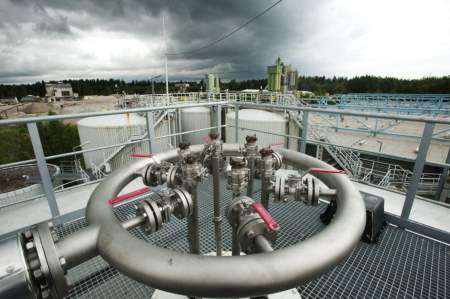 Accurate biogas production calculations are key for any project. They help you determine the size of your digester, gas storage system, and energy conversion equipment. If you overestimate production, you might end up with a large, underused facility that costs too much and never makes a profit.
On the other hand, if you underestimate production, you might miss out on opportunities or have a system that can’t handle peak outputs. For more insights, check out how a food waste pump proved itself at the largest US university biogas plant.
Accurate production calculations are also critical for financial projections. Estimates of biogas generation are necessary for realistic revenue forecasts, payback periods, and return on investment analyses.
For projects that are seeking external funding or incentives, lenders and program administrators usually require detailed production calculations that are supported by credible methodologies and assumptions. To learn more about the biogas industry and its developments, you can explore the American Biogas Council.
Furthermore, precise calculations are essential for refining feedstock management strategies. Recognizing the biogas potential of various materials allows operators to make educated choices about which feedstocks to focus on and how to adjust their digester inputs for optimal efficiency and output. This information becomes even more useful when dealing with seasonal changes in feedstock availability or contemplating new waste streams.
Frequent Errors in Biogas Output Estimation
The most common mistake in biogas calculations is to use standard yield values without adjusting for the specific characteristics of the feedstock.
Different batches of the same feedstock type can have widely differing biogas potentials depending on their dry matter content, percentage of volatile solids, and biodegradability. For instance, dairy manure from farms with different feeding regimes or bedding materials will yield different amounts of biogas per ton.
One more frequent error is not considering temperature changes and seasonal differences. Biogas production usually drops during the colder months unless the digester is adequately insulated and heated. Some calculations do not take these seasonal impacts into account, resulting in annual production estimates that are too optimistic.
Furthermore, many novices forget about the biogas used by the system itself (sacrificial load) to maintain the ideal digester temperature, particularly in colder climates. For more insights on maintaining efficient biogas systems, check out this guide on industrial mixers.
Lastly, if you use the maximum theoretical yields instead of the practical, achievable ones, you may be disappointed. The biochemical methane potential (BMP) determined in the lab represents the maximum possible yield under ideal conditions.
However, systems in the real world typically only achieve 60-80% of this theoretical maximum because of variations in mixing efficiency, retention time limitations, and unavoidable inhibitory factors. Experienced designers always apply the appropriate efficiency factors to theoretical yields when calculating expected production.
Understanding Biogas Yields from Different Feedstock Types
The type and quality of organic material you use in a digester can greatly affect the potential for biogas production. Each type of feedstock has a unique biochemical methane potential (BMP). This is the volume of methane that can be produced per unit of volatile solids under ideal conditions. It’s important to understand these differences to accurately calculate and choose the best feedstock.
Potential of Animal Manure
Animal manures are commonly used as feedstocks in agricultural biogas plants because they are consistently available and farms already have systems in place to handle them.
Dairy cow manure typically produces 200-300 litres of biogas per kilogram of volatile solids, and the methane content is typically around 55-60%. This yield can be affected by the animal's diet, the type of bedding material used, and how the manure is collected.
Animal Waste Potential
Animal waste is a popular choice for agricultural biogas plants because it is consistently available, and farms usually have systems in place to handle it. Manure from dairy cows can typically produce 200-300 litres of biogas per kilogram of volatile solids, with a methane content of about 55-60%.
The yield can be affected by the animal's diet, the type of bedding material used, and the method of collecting the manure.
Pig manure tends to produce more biogas than cow manure, usually in the range of 300-400 litres per kilogram of volatile solids, with a methane content of around 60-65%. The higher yield is due to the pig's more efficient digestive system, which leaves more material in their manure that is easily broken down.
oultry manure can produce even more, sometimes over 450 litres per kilogram of volatile solids, but it often needs to be co-digested with other materials because it has a high nitrogen content that can interfere with the digestion process.
The age of manure plays a crucial role in the amount of biogas it can produce. Manure that has been stored for a long time, particularly in open ponds, will have partially decomposed, reducing its biogas potential by up to 50%.
To maximise biogas production, manure should be gathered and processed as soon as possible, ideally within 3-7 days of being excreted.

Converting Food Waste into Biogas
Food waste is one of the most productive sources of biogas, typically creating between 400-800 litres of biogas per kilogram of volatile solids, often with a methane content of over 60%. Waste from restaurants, especially if it contains a lot of fats and oils, can fall towards the top end of this range because lipids have a high energy content.
Waste from fruit and vegetables, whether from markets or processing plants, usually produces 300-600 litres per kilogram, with starchy produce like potatoes producing more than fibrous materials like corn husks or pineapple rinds.
Food waste has a mixed nature, which is both a boon and a bane. When you blend different types of food waste, you can get the best carbon-to-nitrogen ratio and offer a balanced nutrient profile for microorganisms, which could potentially boost overall biogas production.
However, this same variability also makes it tougher to make exact calculations, as the composition can significantly vary from one batch to another. It becomes especially crucial to regularly test total solids and volatile solids content when dealing with food waste streams.
Using Agricultural Waste for Biogas
The biogas potential of crop waste can vary greatly depending on the amount of lignin and how easily it can be digested. Corn silage, for example, can produce between 350 and 450 litres of biogas per kilogram of volatile solids.
Wheat straw, on the other hand, might only yield between 150 and 250 litres because it has a higher lignin content.
Energy crops like Sudan grass or miscanthus, which are grown specifically for producing biogas, can yield between 500 and 700 litres per kilogram of volatile solids if they are harvested at the right time. For more information on estimating biogas yields, you can explore the Biogas Benefits Calculator.
Pre-treatment methods can significantly enhance the biogas potential of fibrous agricultural residues. Physical treatments like milling or shredding increase the surface area available to microorganisms, while thermal, chemical, or enzymatic pre-treatments can break down lignin structures that would otherwise resist digestion.
These processes can increase biogas yields from agricultural residues by 20-100%, though the energy required for pre-treatment must be factored into overall efficiency calculations.
Industrial Waste and Sewage Sludge
Many city sewage treatment plants use anaerobic digestion to treat sewage sludge, which usually produces between 200 and 400 litres of biogas per kilogram of volatile solids.
Primary sludge (separated physically) usually creates more biogas than secondary sludge (treated biologically) because it contains more easily biodegradable organic matter.
Many treatment plants now co-digest sewage sludge with food waste or FOG (fats, oils, and grease) to significantly increase biogas production.
Waste products from food processing, brewing, distilling, and the pulp and paper industries are all valuable sources of biogas. Brewery spent grain can produce 400-500 litres of biogas per kilogram of volatile solids, while paper mill sludge might only produce 100-200 litres because it has already been processed to remove easily digestible components.
Dairy processing waste like whey can generate 400-600 litres per kilogram, making it a great option for on-site energy recovery systems.
How BMP Values Vary Among Different Feedstocks
- Animal manure: 200-450 L/kg VS (lower for cattle, higher for poultry)
- Food waste: 400-800 L/kg VS (higher for fats and oils, lower for vegetable matter)
- Energy crops: 350-700 L/kg VS (higher for specialised biogas crops, lower for conventional crops)
- Agricultural residues: 150-450 L/kg VS (depending on lignin content)
- Wastewater sludge: 250-350 L/kg VS (higher for primary sludge)
- Industrial organic waste: 100-600 L/kg VS (highly variable based on source)
How to Calculate Biogas Production: A Step-by-Step Guide
To calculate biogas production potential, you need to take a systematic approach that takes into account the amount and quality of the feedstock you have available. The basic methodology involves a series of steps that gradually turn raw material measurements into accurate predictions of biogas volume. Let's break down this process into manageable chunks that anyone can apply to their particular situation.
How to Calculate Biogas Production
When it comes to calculating biogas production, the most basic formula is: Biogas Yield = Amount of Feedstock × % of Total Solids × % of Volatile Solids × Biochemical Methane Potential × Efficiency of Digester. This formula is used to convert the raw quantities of feedstock into the expected biogas output by taking into account the content of moisture, the organic fraction, and the performance of the system. If your operation uses a mixture of feedstock, you will need to perform this calculation for each type of feedstock and then add up the results to determine the total production.
Let's say you have 10 tons of dairy manure with a total solids content of 12%, volatile solids make up 80% of the total solids, a BMP of 250 L/kg VS, and a digester that operates at 70% efficiency. Your calculation would look like this: 10,000 kg x 0.12 x 0.80 x 250 L/kg x 0.70 = 168,000 litres of biogas (or 168 cubic meters).
This calculation can be used to estimate daily production if 10 tons is your daily input, or it can be used to estimate per-batch production if that's the total amount being processed. For more insights on biogas systems, check out how a food waste pump proved itself at the largest US university biogas plant.
Remember, this equation is based on a digester working at its best, with the right temperature, pH, and mixing conditions. If these conditions aren't met, the actual amount of biogas produced will be less than what the equation predicts.
Most biogas project developers who know what they're doing add an extra 10-20% to the equation to make up for things that can go wrong in the real world that the equation doesn't account for.
Considering Moisture Content
Moisture content plays a crucial role in biogas production calculations and the operation of the digester. As only dry matter has the ability to produce energy, it is vital to measure moisture levels accurately.
The fraction of the feedstock that is dry matter is represented by the Total solids (TS) percentage, which is calculated as follows: TS% = (Dry Weight ÷ Wet Weight) × 100. For instance, fresh cow manure usually has a TS content of 12-14%, which means that each ton only contains 120-140 kg of dry matter. For more insights into biogas facility operations, explore a day in the life of an engineer at a biogas facility.
The moisture content of the feedstock is handled differently by different digester designs. Wet digesters typically operate with a total solids content of 8-12%. If the feedstocks exceed this range, they must be diluted.
Dry digesters can handle materials with 20-40% total solids content. It is essential to match the moisture levels of your feedstock to your digester technology for optimal performance. Adding or removing water changes the hydraulic retention time and affects the volume of the digester required.
The amount of biogas produced can be greatly influenced by changes in moisture content, which can be seasonal or depend on the source. For instance, during the rainy season, cattle manure collected from a pasture may only contain 8-10% total solids, whereas the same herd may produce manure with 14-16% total solids during dry periods. This 50% change in dry matter content can cause a 50% difference in the biogas potential per ton of raw manure.
While lab analysis offers the most precise measurement of moisture content, on-site estimation methods can provide adequate results for initial calculations. An uncomplicated moisture test consists of weighing a sample, fully drying it (using an oven at 105°C for 24 hours), and then weighing it once more.
The difference in weight represents the moisture content, while the remaining weight signifies total solids. For further insights into biogas facilities, consider exploring a day in the life of an engineer at a biogas facility.
Quick Reference: Typical Total Solids Content
Dairy manure (fresh): 12-14%
Pig manure (fresh): 8-10%
Food waste (mixed): 15-30%
Corn silage: 25-35%
Grass silage: 20-30%
Wastewater primary sludge: 3-7%

Calculating Volatile Solids Percentage
Volatile solids (VS) represent the organic fraction of total solids that can be converted to biogas. VS is typically expressed as a percentage of total solids, not of the total feedstock weight.
The calculation is: VS% = (Organic Dry Matter ÷ Total Dry Matter) × 100. Determining VS accurately requires laboratory analysis, as it involves heating a dried sample to 550°C and measuring the weight loss, which represents the organic matter that has been combusted.
| Feedstock Type | Typical VS (% of TS) | Notes |
|---|---|---|
| Dairy Manure | 75-85% | Lower with sand bedding |
| Pig Manure | 75-86% | Higher with concentrated feeding |
| Food Waste | 85-95% | Very high biodegradability |
| Crop Residues | 80-90% | Lower for woody materials |
| Wastewater Sludge | 65-75% | Higher inert content |
The difference between total solids and volatile solids represents inert materials like sand, soil, or minerals that pass through the digester unchanged and accumulate as non-degradable matter.
These inert materials occupy digester volume without contributing to biogas production and may eventually require removal during maintenance. High levels of inert materials can significantly reduce the effective capacity and lifespan of a digester.
For operations that use a blend of feedstocks, you will need to calculate a weighted average VS percentage based on the proportion of each material in the mix.
For example, if your feedstock is made up of 70% cow manure (which has an 80% VS) and 30% food waste (which has a 90% VS), the weighted VS percentage would be: (0.7 x 80%) + (0.3 x 90%) = 56% + 27% = 83%. This combined VS value can then be plugged into the main biogas production formula.
Understanding the Efficiency Factor of a Digester
The efficiency of a digester is the proportion of the theoretical potential for biogas that can be actually achieved in real-world conditions. While laboratory BMP tests might suggest the highest possible yields, practical systems usually reach between 50-80% of this potential, depending on the design, the retention time, and the operating conditions.
The factors that affect efficiency include the adequacy of the mixing, the stability of the temperature, the regularity of the feeding, and inhibitory substances.
Modern, well-managed systems with optimal hydraulic retention times usually reach the higher end of this range, while simple, unmixed digesters or those with shorter retention times are at the lower end. For more insights, explore how industrial mixers can enhance digester efficiency.
Practical Examples of Biogas Calculations
To give you an idea of how these calculations are applied in the real world, we'll look at three typical scenarios that represent common uses of biogas.
These examples will show you that the same calculation principles can be used on different scales and with different combinations of feedstock. They'll also help you understand how to interpret the results when you're planning a project. For instance, the largest US university biogas plant demonstrates practical applications of biogas technology.
1. Dairy Farm with 200 Cows
Let's consider a dairy farm with 200 lactating cows. Each day, this farm generates around 9,600 kg of manure (48 kg per cow). A lab analysis of the manure reveals that it contains 14% total solids, and 78% of these solids are volatile. If we use a BMP value of 220 L/kg VS and assume a digester efficiency of 70%, we find that the farm generates 9,600 kg × 0.14 × 0.78 × 220 L/kg × 0.70 = 162,330 L of biogas each day (162.33 m³).
With a typical methane content of 60%, this equates to 97.4 m³ of methane per day. If we convert this methane to electricity in a CHP unit with an electrical efficiency of 35%, we generate around 340 kWh each day—enough to power 11-12 average homes.
A farm-scale system would need a digester volume of around 300-400 m³, given a 30-day hydraulic retention time. The capital investment would usually be between $300,000-$500,000 based on the chosen technology, with possible payback periods of 5-8 years if the electricity can be sold to the grid or used to offset the power that has been purchased.
Other revenue streams could include heat utilization, carbon credits, and tipping fees if the farmer agrees to accept off-farm organic waste to increase gas production. For more detailed calculations, you can refer to the Biogas Benefits Calculator.
2. Waste from Food Processing Facilities
A facility that processes vegetables produces 5 tons of organic waste each day. This waste is mainly made up of peelings, rejected produce, and the sediment from wash water. Tests show that this material is made up of 22% total solids, with a volatile solids content of 92%.
It also has a high BMP of 450 L/kg VS. If a modern digester is used at 75% efficiency, the daily production of biogas would be: 5,000 kg × 0.22 × 0.92 × 450 L/kg × 0.75 = 380,700 L (380.7 m³). If the methane content is the typical 65% for food waste, this would produce 247.5 m³ of methane each day. This is the equivalent of approximately 865 kWh of electricity generation capacity or 2,475 kWh of heat energy.
3. Scenario of Mixed Feedstock
In a community biogas project, 15 tons/day of separated-at-source municipal food waste is combined with 20 tons/day of dairy manure. The food waste has 28% TS, 90% VS, and a BMP of 500 L/kg VS, while the manure has 12% TS, 80% VS, and a BMP of 240 L/kg VS.
If we apply a digester efficiency of 72% for this co-digestion scenario, we get the following daily biogas production: [15,000 kg × 0.28 × 0.90 × 500 L/kg × 0.72] + [20,000 kg × 0.12 × 0.80 × 240 L/kg × 0.72] = 1,360,800 L + 332,800 L = 1,693,600 L (1,693.6 m³) of biogas.
With an average methane content of about 62%, this system could continuously power a 600 kW generator, producing approximately 14,400 kWh per day—enough to provide about 480 households with electricity.
What Can You Do with the BiogasWorld Calculator?
BiogasWorld has developed a sophisticated biogas calculation tool for those who are serious about their project development and feasibility studies. This calculator is unique in that it allows for multiple feedstock inputs, with adjustable parameters for each type of material.
This makes it possible to model complex mixed-feedstock scenarios with a high degree of accuracy. But what really sets this calculator apart is the depth of its output analysis. It doesn't just give you biogas volumes.
It also provides potential revenue streams, greenhouse gas reduction metrics, and preliminary mass balance calculations that are useful for digester sizing.
If you're working on a project that handles more than 30,000 wet tons a year, the BiogasWorld calculator can be a great help. It can give you a good idea of whether your project is economically and technically feasible.
Biogas Calculation Tools from the EPA
The U.S. Environmental Protection Agency provides a variety of biogas calculators tailored to specific sectors. This includes the AgSTAR tools for agricultural uses and LMOP (Landfill Methane Outreach Program) calculators for landfill gas initiatives.
These complementary resources offer standardised methods that are in line with regulatory needs and funding program guidelines. For municipal treatment facilities thinking about using anaerobic digestion for sludge management, the EPA's Biogas Wastewater Assessment Tool is particularly helpful.
EPA calculators are usually conservative in their biogas predictions, which helps to avoid overly positive forecasts that could lead to financial letdowns. They include a wide range of default values based on many years of actual project data collection, making them ideal for initial feasibility assessments even when there is little site-specific information available.
However, these tools usually do not have the customisation options found in commercial calculators and may not fully capture the potential of innovative digester designs or preprocessing technologies.
For a more detailed analysis, you can explore the Biogas Benefits Calculator provided by the World Biogas Association.
High-End Software Choices for Modelling
When it comes to large commercial projects, dynamic modelling capabilities are a must. That’s where professional simulation software like BioWin, GPS-X, or SuperPro Designer comes in. They offer far more than a basic calculator.
These tools can simulate the entire digestion process, including complex biological kinetics, inhibitory effects, temperature fluctuations, and process disturbances. You’ll get detailed operational parameters such as alkalinity, ammonia levels, and pathogen reduction alongside biogas production predictions.
These complex software packages need a lot of skill to use effectively and usually come with substantial licensing costs. However, for biogas investments worth millions of dollars, the improved accuracy and process optimisation capabilities they provide can justify the investment many times over.
Many engineering firms that specialise in biogas projects keep these tools in-house and offer modelling services as part of their feasibility studies or detailed design packages. For more insights into the industry, you can explore how the biogas industry connects, learns, and grows.
Translating Biogas Production into Energy Worth
Biogas production numbers are not the whole picture—converting these amounts into usable energy measurements gives a better sense of a project's real-world value.
Various biogas use pathways have differing efficiency levels, equipment needs, and economic impacts, all of which need to be thoughtfully considered to get the most out of a project.

Turning Biogas into Electricity
The most frequent use of biogas is to convert it into electricity using internal combustion engines or microturbines. The energy content of biogas is primarily dependent on the percentage of methane it contains—pure methane contains about 9.97 kWh/m³, so biogas with a 60% concentration of methane has an energy content of around 6 kWh/m³.
When this energy is used in generator sets, it is converted into electricity at efficiency rates that range from 30-42%, depending on the technology and scale used. For instance, 100 m³ of biogas with a 60% methane content could generate around 180-252 kWh of electricity. For more detailed calculations, you can explore the Biogas Benefits Calculator.
When sizing a generator, you need to consider both the average and peak biogas production rates. If your system is too small, you'll end up wasting potential by flaring excess gas during high-production periods.
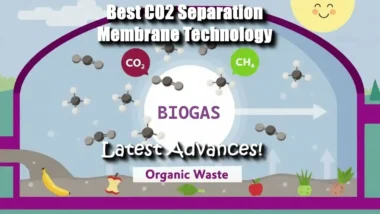
But if your system is too big, it'll operate inefficiently and increase your capital costs unnecessarily. Most biogas-to-electricity systems today come with gas conditioning equipment to remove hydrogen sulfide, siloxanes, and moisture that could damage engines and reduce performance. For more insights, check out these CO2 separation membrane technologies that enhance biogas systems.
How Much Heat Can Biogas Generate?
The most straightforward and efficient way to convert biogas to heat is by directly burning it in boilers. This method can achieve thermal efficiencies of 80-90%. A cubic meter of biogas with a methane content of 60% can generate about 4.8-5.4 kWh of useful heat energy after sacrificial loads.
When used in a Combined Heat and Power (CHP) plant, this can provide roughly 2.5 kWh of heat alongside over 2 kWh of electricity per m3.
This makes biogas particularly useful for operations that require a lot of heat, like food processing facilities, greenhouses, or district heating systems. In these cases, the heat can be fully used throughout the year.
Calculator for Environmental Benefits
In addition to energy generation, biogas initiatives provide considerable environmental advantages. These advantages can turn into extra value through carbon credits, renewable energy certificates, or adherence to environmental laws.
To calculate these advantages, we need specialised calculations that consider both the direct reduction in emissions and the emissions avoided by replacing conventional energy sources. For example, biomethane in public transport has been a significant contributor to decarbonization efforts.
Contemporary biogas plants are an amalgamation of waste management and renewable energy solutions that tackle numerous environmental issues at once. If they're properly designed and operated, they can transform problematic waste streams into valuable resources while reducing pollution across various environmental domains.
The combined environmental benefits often surpass the direct economic value of the energy produced, especially when they're monetised through environmental markets or regulatory compliance mechanisms.
How to Calculate Carbon Emission Reductions
There are several steps to calculate the reduction of greenhouse gases from biogas projects. The most significant reduction comes from capturing methane that would otherwise be released from decomposing organic waste.
Methane has a global warming potential that is 28-36 times greater than carbon dioxide over a 100-year period. For projects involving animal manure, the basic calculation multiplies the volatile solids processed by an emission factor that is specific to the type of animal and the manure management system being replaced.
Replacing Fossil Fuels
Another significant environmental advantage is the substitution of fossil fuels with renewable biogas energy. Depending on the regional electricity generation mix, each kilowatt-hour of electricity produced from biogas usually replaces grid electricity with an emissions factor of 0.4-0.7 kg CO₂e/kWh. Similarly, each GJ of heat energy from biogas can replace about 50-70 kg CO₂e from natural gas or significantly more if displacing coal or fuel oil.
Biogas is one of the most carbon-negative energy options available due to the combined impact of methane capture and fossil fuel replacement. It often achieves net reductions of 2-3 kg CO₂e per kWh of energy produced. This is even more impressive when compared to other renewable energy sources like solar or wind, which typically achieve emission reductions of 0.4-0.7 kg CO₂e per kWh by displacing grid electricity without providing additional methane capture benefits.
Extra Environmental Benefits
Aside from reducing greenhouse gases, biogas projects also have a number of other environmental benefits that should be considered in a full evaluation. Digestate, which is the nutrient-rich byproduct of anaerobic digestion, provides a fertiliser that has been stabilised and has reduced pathogens.
This can replace synthetic fertilisers, which are carbon-emitting and require a lot of energy to produce. If the application of digestate is managed properly, it can reduce nutrient runoff by 30-60% compared to raw manure. This protects waterways from eutrophication and algal blooms. Learn more about biogas projects and their benefits.
Another major benefit is the reduction of odour from the spreading of the output (digestate), as the process of anaerobic digestion breaks down the volatile organic compounds that are the main cause of the unpleasant smells associated with manure and food waste.
Research has shown that the reduction of odour can be between 70-95% after digestion, significantly improving the quality of life for nearby communities and often raising property values. While these benefits may be more difficult to measure economically, they can be essential in gaining the support of the community and regulatory approval for biogas projects.
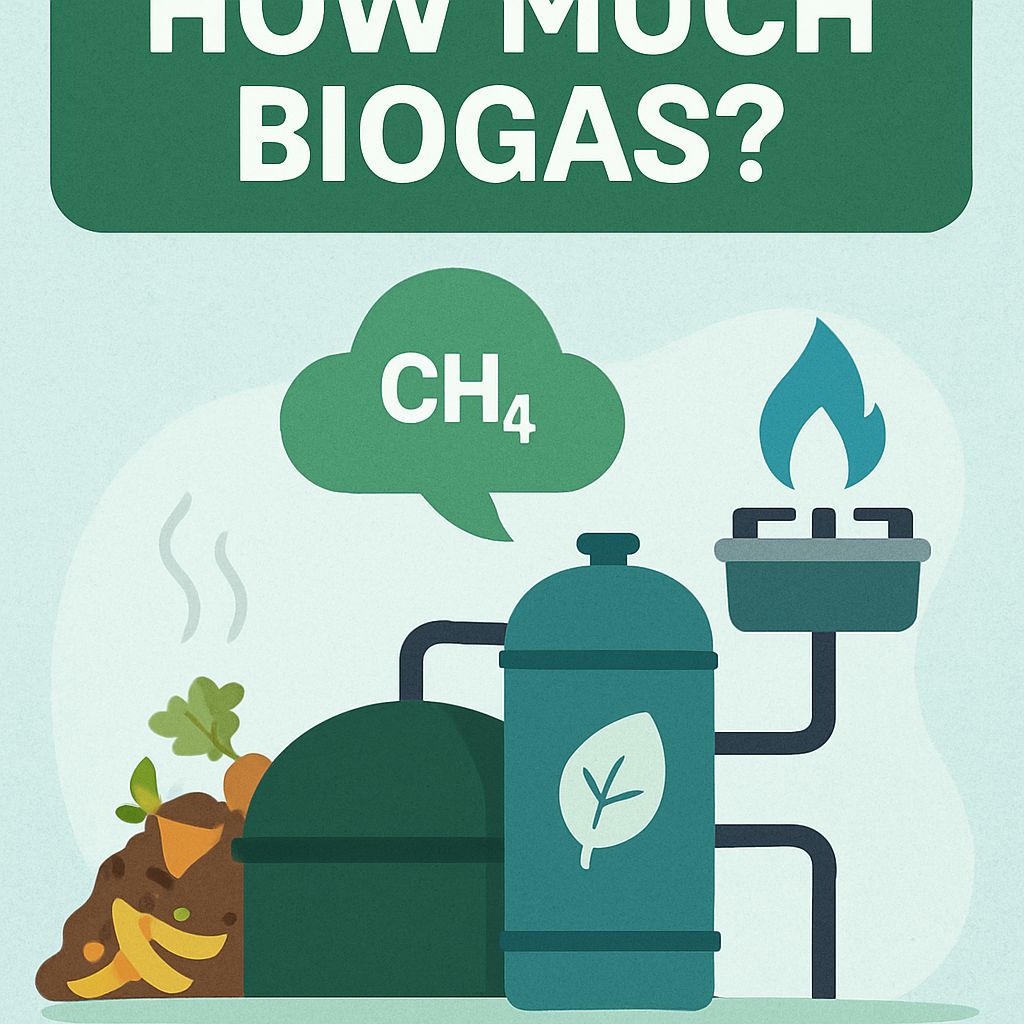
Common Questions – Re: “How Much Biogas?”
As more and more people start to use biogas technology, those who are developing projects and those who are thinking about adopting the technology often have similar questions about whether it's possible, how well it works, and what problems they might run into.
The answers below address the questions that people ask most often about how to calculate biogas production and how to plan a project.
How do biogas calculator estimates compare to real-world production in terms of accuracy?
The accuracy of biogas calculator estimates can vary greatly, depending on the quality of the input data and the complexity of the calculation methodology. Basic calculators that use generic values may be accurate within ±30-50% of the actual production.
On the other hand, advanced tools that use laboratory-analysed feedstock data and site-specific parameters may be accurate within ±10-15% of real-world results. The largest discrepancies usually occur during the first 6-12 months of operation, as the biological system stabilises and operators learn to optimise the process.
For the most precise forecasts, you should conduct pilot-scale testing using real feedstock samples in controlled digesters that mimic full-scale conditions. Although this method is costly and time-consuming, it may be worthwhile for large commercial projects where even minor efficiency gains can result in substantial financial advantages.
- Simple online calculators: ±30-50% accuracy
- Advanced calculators with lab data: ±15-30% accuracy
- Dynamic modelling software: ±10-20% accuracy
- Pilot testing with actual feedstock: ±5-15% accuracy
- Established systems with historical data: ±3-10% accuracy
Can I produce enough biogas from my small farm to power my home?
Small-scale digesters designed for individual farms typically cost between $1,000-$3,000 per cow equivalent capacity. For a system sized to power a single home, this translates to an investment of $20,000-$75,000 depending on technology choices, climate considerations, and whether you opt for DIY approaches or professional installation.
While this may seem substantial, the combined benefits of energy production, waste management, and fertiliser value can make small-scale biogas financially viable, especially when displacing expensive propane or heating oil in rural areas. For more insights into the industry, consider exploring The American Biogas Council and its efforts in promoting biogas solutions.
[Article originally posted in October 2017. Updated January 2022 and rewritten January 2026.]


How much did it cost to design and construction the plant used
We suggest that you read our articles on AD plant costs. To find our articles on the cost of anaerobic digestion plants search for “cost” using our search facility (top right), and read the articles which come up.
I often visit your website and have noticed that you always have good biogas information. But, here you say do not use biodegradable plastic bags. I disagree with you. The world must stop using plastic bags which are hurting more and more sea creatures. This is a crisis but you STILL say no to biodegradable plastic. You must change this if you have any care for animals.
Can you clarify your statements in the last couple of paragraphs? In one line you say “Their aggregate output is approximately 80 petajoule per year, which is the equal energy amount of approximately 1.8 billion gallons of diesel per year.” and in the next paragraph you say “Worldwide consumption of liquid fossil fuels used annually reached more than 3,000 billion litres in 2014. Compared with that, 1.8 billion litres ” so which is it? Gallons or litres, the units must all be the same to be a valid comparison.
Thanks for commenting on my error. The answer is that both should have been gallons. I have made the necessary change to gallons. Thanks for spotting the error. I must be more careful.