Several specialist agricultural contractors are offering self-propelled slurry spreader hire and application services from across the UK. These providers typically offer an all-inclusive service using their own fleet of specialist machinery and skilled operators.
Self Propelled Slurry Spreader – Article-At-A-Glance
- Self-propelled slurry spreaders offer biogas plant owners precise application control and reduced soil compaction compared to tractor-pulled alternatives
- Digestate from biogas plants provides a renewable, nutrient-rich fertiliser that can reduce dependence on chemical fertilisers by up to 30%
- Hiring equipment like Samson Flex 16 spreaders provides cost-effective access to precision spreading technology without capital investment
- Professional spreading services that include operators can ensure compliance with Nitrate Vulnerable Zone regulations while maximizing nutrient availability
- Neighbours of biogas plants can benefit from reduced fertiliser costs and improved soil health through coordinated digestate application programs
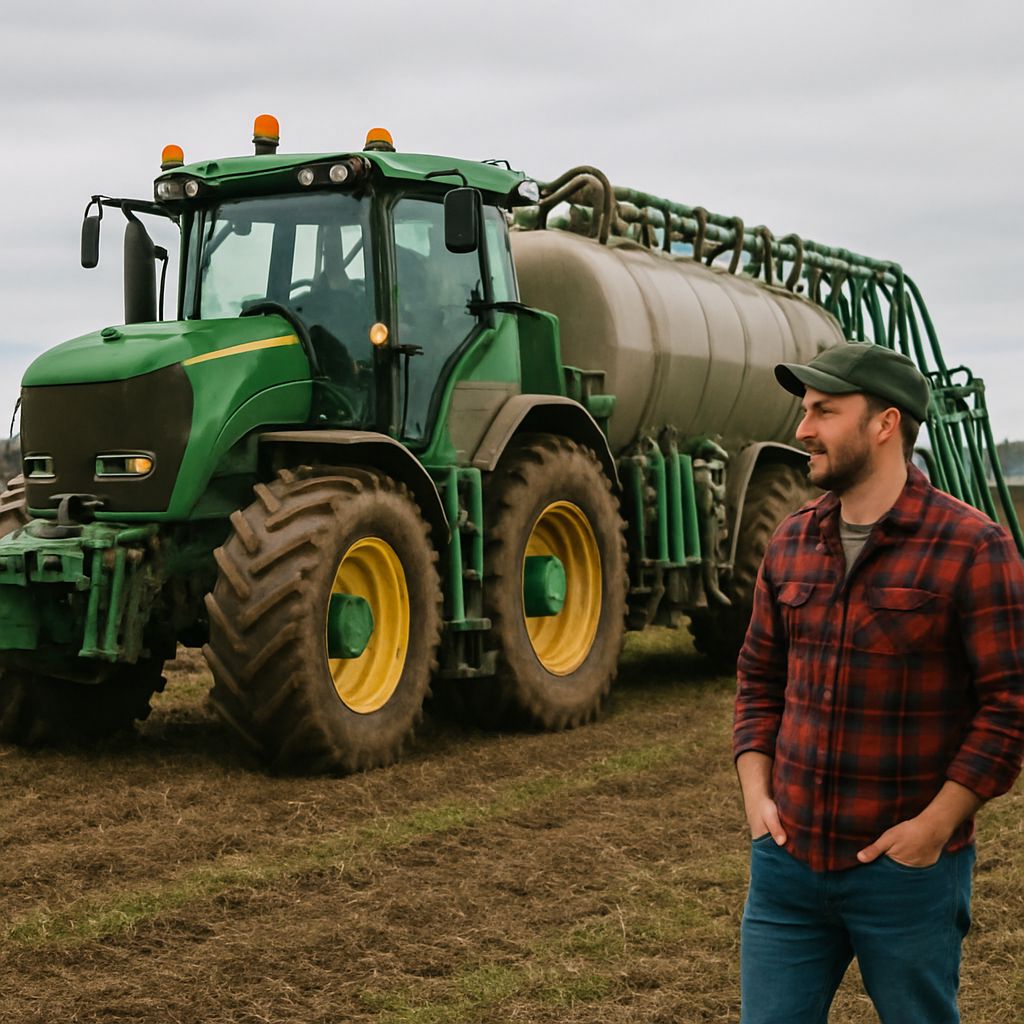
Digestate spreading technology has transformed how UK farms manage organic fertilisers, with self-propelled slurry spreaders leading this agricultural revolution. For biogas plant owners and neighbouring farms, these specialised machines offer unprecedented precision, efficiency, and environmental compliance. Agricultural Hire UK provides access to cutting-edge spreading equipment that maximises the value of digestate as a renewable fertiliser while minimising environmental impact.
Modern digestate management requires sophisticated equipment that can handle the unique properties of biogas plant outputs. Self-propelled spreaders feature independent suspension, precision application systems, and computer-controlled distribution that traditional towed equipment simply cannot match. These advanced features ensure uniform application of valuable nutrients while reducing soil compaction and minimising ammonia emissions.
Why Self-Propelled Slurry Spreaders Are Transforming UK Farming for Biogas Plant Owners and their Neighbours
Self-propelled slurry spreaders represent a paradigm shift in digestate management for biogas operations. Unlike conventional tractor-pulled units, these purpose-built machines offer superior manoeuvrability, reduced soil compaction, and precise application control. The elevated operator position provides excellent visibility, while integrated GPS systems ensure accurate spreading patterns even on irregular fields. For biogas plant owners, this translates to maximum utilisation of digestate nutrients while maintaining compliance with increasingly strict environmental regulations.
Neighbours of biogas plants particularly benefit from these advanced spreading technologies. The renewable nutrients in digestate can replace significant amounts of commercial fertilisers, reducing input costs while improving soil health. Professional spreading services utilising self-propelled equipment can coordinate application timing across multiple farms, ensuring optimal nutrient availability while minimising odour concerns and traffic disruption.
The environmental advantages of self-propelled spreaders extend beyond precision application. Their reduced ground pressure minimises soil compaction, protecting soil structure and reducing runoff potential. Many modern units incorporate trailing shoe or injection systems that place digestate directly at root level, dramatically reducing ammonia emissions and odour while maximising nitrogen retention. This technology helps biogas operations maintain positive community relations while demonstrating environmental stewardship.
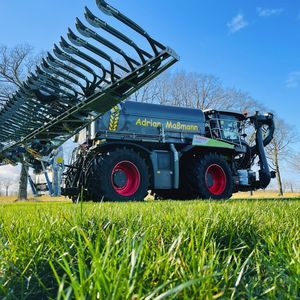
“Self-propelled slurry tanker – The Self Propelled Slurry Spreader …” from www.agriexpo.online and used with no modifications.
Digestate Value Comparison
Average nutrient content per 1000 gallons of digestate:
Nitrogen: 2.3kg (70% plant-available)
Phosphate: 1.2kg
Potassium: 3.0kg
Commercial fertiliser equivalent value: £25-£35 per 1000 gallons. For more information on the benefits of using digestate, check out anaerobic digestion for food waste solutions.
Top Equipment Options for Digestate Slurry Spreading in the UK
The UK market offers several high-performance spreading options for digestate application. Each system provides specific advantages depending on soil type, crop requirements, and operational scale. Leading manufacturers have developed specialised features to address the unique characteristics of anaerobic digestate, including its higher nitrogen content and different viscosity compared to traditional slurries.
Samson Flex 16 Spreaders: Precision and Efficiency in Self Propelled Slurry Spreaders
Samson Flex 16 spreaders have established themselves as industry leaders for digestate application, offering a substantial 13-tonne capacity combined with precision 16-metre spread patterns. These units feature twin horizontal shredding rotors feeding high-speed spinning discs, ensuring consistent material breakdown and uniform distribution. The advanced hydraulic system maintains precise application rates regardless of ground speed variations, essential for maximising the nutrient value of digestate.
Available at approximately £175 per day, these spreaders represent an excellent balance of capacity, precision, and cost-effectiveness. Their design specifically accommodates the variable consistency of digestate from biogas operations, with adjustable rotor speeds to handle different viscosities. For biogas plant owners, this adaptability ensures optimal spreading performance regardless of feedstock variations or digestate storage conditions.
Conor Slurry Tankers: Reliability at Competitive Rates
Conor Slurry Tankers represent exceptional value for digestate application, with daily hire rates starting at just £85. Available in 2600-gallon and 2750-gallon capacities, these Irish-built units are renowned for their durability and ease of operation. The robust construction is specifically designed to handle the corrosive properties often present in digestate from biogas operations, extending equipment life even under intensive use conditions.
These tankers can be equipped with various application systems to suit different spreading requirements. Dribble bar attachments provide low-emission surface application ideal for growing crops, while trailing shoe options place digestate directly at soil level to maximize nitrogen retention. Biogas plant operators particularly value the quick-fill systems that reduce loading times and increase daily spreading capacity.
Supporting Equipment: Storth Stirrers and Kane Trailers
Effective digestate management requires more than just spreaders and tankers. Storth Slurry Stirrers are essential for maintaining consistent digestate quality, preventing settling and ensuring uniform nutrient distribution. These powerful mixers can handle the variable solids content typical of biogas digestate, creating a homogeneous material that flows easily and spreads uniformly. For biogas plants supplying digestate to multiple farms, this consistency is crucial for maintaining predictable nutrient values.
Kane Trailers complement the spreading operation by facilitating efficient logistics between storage and field. Available at £85 daily, these 16-ton capacity units feature air brakes, rear steering axles, and hydraulic tailgates for safe, efficient operation. The 560/60/22.5 radial tyres minimise soil compaction during transport, protecting field access points even in challenging conditions. This integrated equipment approach ensures continuous spreading operations with minimal downtime.
Self Propelled Slurry Spreader Cost Analysis: Daily Hire Rates and Value Comparison
Understanding the economics of digestate spreading equipment is essential for biogas operations and recipient farms alike. Daily hire rates provide a cost-effective alternative to equipment ownership, especially for seasonal operations or farms with variable spreading requirements. The current market offers various hire options to suit different scales and budgets.
Standard Pricing Structure
Equipment hire rates reflect both capacity and technology level, with self-propelled spreaders commanding premium rates due to their advanced capabilities. Samson Flex spreaders typically hire at £175-£220 per day depending on capacity, while Shelbourne units range from £180-£220 daily. Slurry tankers offer more economical options, with standard Conor tankers available from £85 per day, while more sophisticated units with dribble booms command £200+ daily rates. These costs must be evaluated against the substantial nutrient value of digestate, which can offset commercial fertiliser purchases worth £25-£35 per 1000 gallons applied.
Long-Term vs. Short-Term Hire Economics
Significant discounts are available for extended hire periods, with many providers offering tiered pricing that can reduce daily rates by 10-20% for weekly or monthly agreements. For biogas operations with continuous digestate production, these longer-term arrangements provide substantial cost advantages while ensuring equipment availability when needed. Progressive rate reductions typically begin after 3 days, with maximum discounts applied to monthly hire periods.
Seasonal planning allows biogas plants to coordinate equipment availability with optimal spreading windows, potentially securing preferential rates during off-peak periods. This approach requires careful planning of digestate storage capacity but can result in 15-25% lower application costs compared to emergency or short-notice hiring.
Tractor and Driver Options: When to Consider Full Service
Many equipment providers offer comprehensive packages that include tractors and qualified operators, providing a turnkey solution for digestate management. While this increases the daily rate, it eliminates the need for trained staff and additional towing equipment. For biogas plants supplying digestate to neighbouring farms, these full-service options ensure professional application while minimizing the learning curve and equipment requirements for recipients.
The economics often favor full-service hire for operations spreading less than 500,000 gallons annually or during peak agricultural periods when farm labor is fully committed to other activities. Professional operators bring valuable expertise regarding application rates, spreading techniques, and regulatory compliance, potentially improving nutrient utilisation while reducing environmental risks. For more insights on improving agricultural efficiency, consider these silage clamp tips.
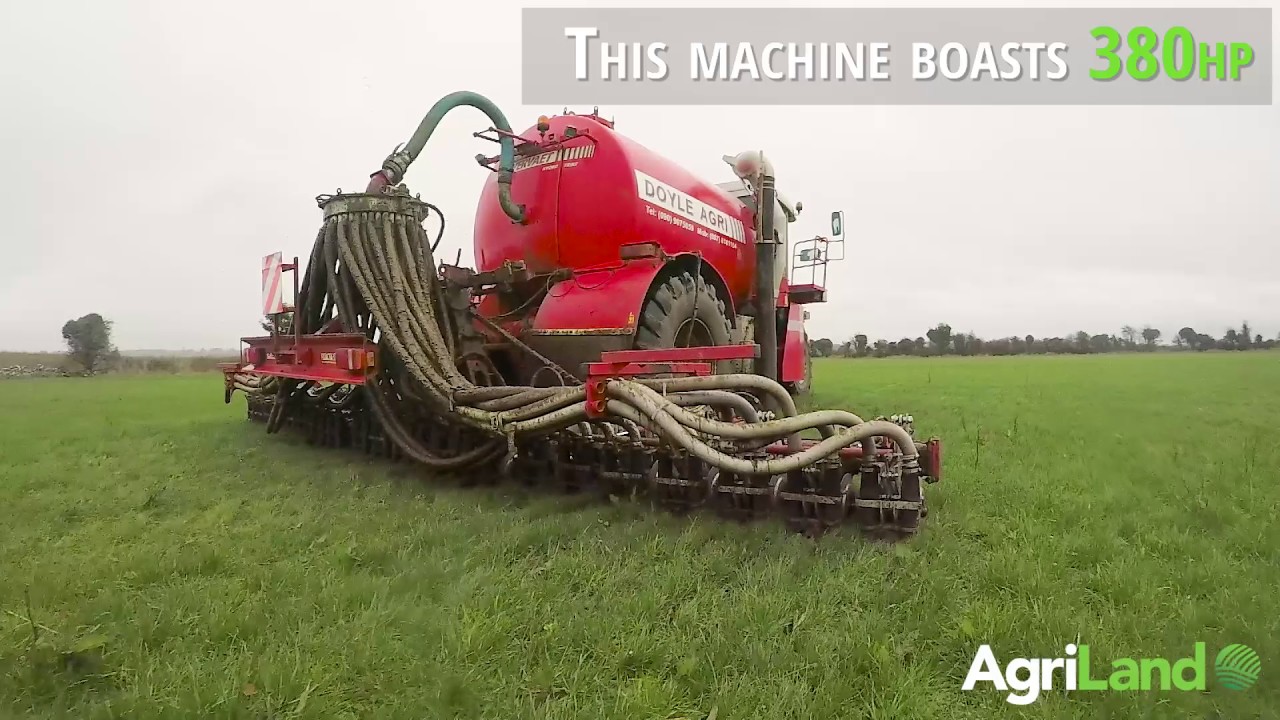
“self-propelled slurry spreader …” from www.youtube.com and used with no modifications.
Practical Applications of Self-Propelled Slurry Spreaders
Maximizing the agronomic and environmental benefits of digestate requires appropriate application techniques tailored to specific conditions. Self-propelled spreaders offer unparalleled versatility for handling these requirements, with computerized control systems that maintain precise application rates regardless of ground speed or digestate consistency variations.
Application Rates and Coverage Capabilities
Modern self-propelled slurry spreaders deliver application precision that transforms digestate from a waste management challenge into a valuable precision farming tool. Typical units can apply rates from 1,000 to 5,000 gallons per acre, adjustable in 100-gallon increments to match specific crop requirements and soil conditions. Advanced flow control systems maintain consistent application regardless of forward speed variations, ensuring uniform nutrient distribution even on irregular fields or when navigating obstacles.
Ideal Field Conditions for Maximum Effectiveness
Timing digestate applications to match optimal field conditions dramatically improves nutrient utilization while reducing environmental impacts. Self-propelled spreaders perform best on moderately dry soils where their wide flotation tyres minimize compaction damage. The ideal application window typically occurs 24-48 hours after light rainfall when soil moisture facilitates nutrient infiltration without creating runoff risks. For biogas plant owners, coordinating spreading operations with these optimal conditions maximizes the fertilizer value while maintaining good neighbour relations.
Field accessibility represents another critical consideration, as even self-propelled units require suitable entry points and turning areas. Preparing dedicated field access routes with hardcore surfaces or temporary tracking can extend the spreading season while protecting soil structure. Many biogas operations now incorporate field condition monitoring into their digestate management plans, using soil moisture sensors to identify optimal application windows.
Crop-Specific Spreading Techniques
Different crops require tailored application approaches to maximize digestate benefits. For established grassland, trailing shoe applicators place digestate directly at soil level, reducing foliar contamination while minimizing ammonia losses. Arable applications benefit from shallow injection systems that incorporate digestate into the root zone, increasing nitrogen utilization by up to 40% compared to surface broadcasting. Winter cereal crops typically respond best to early spring applications when plant uptake potential is highest. For more information on equipment options, you can visit Ball and Ball Farm Services.
Precision application technology allows biogas plant operators to vary application rates across fields based on soil analysis or crop requirements. GPS-guided systems maintain accurate spread patterns even in poor visibility conditions, ensuring uniform nutrient distribution. This level of precision transforms digestate from a waste product into a valuable component of precision agriculture systems.
Environmental Impact Management
Modern spreading equipment incorporates multiple features to minimize environmental impacts during digestate application. Low emission spreading technologies like trailing shoes, dribble bars and shallow injection systems can reduce ammonia emissions by 30-90% compared to splash plate application. These systems place digestate directly at or below soil level, maximizing nutrient retention while minimizing odor release.
Buffer zone management represents another critical environmental consideration. Self-propelled spreaders with section control can automatically maintain required distances from watercourses, minimizing contamination risks. Many units now incorporate real-time weather monitoring that alerts operators to changing wind conditions that could affect drift or odor dispersion.
For biogas plants seeking to demonstrate environmental stewardship, these advanced application systems provide quantifiable emission reductions that can be included in sustainability reporting. Neighboring farms receiving digestate benefit from technology that maintains good community relations while maximizing nutrient utilization.
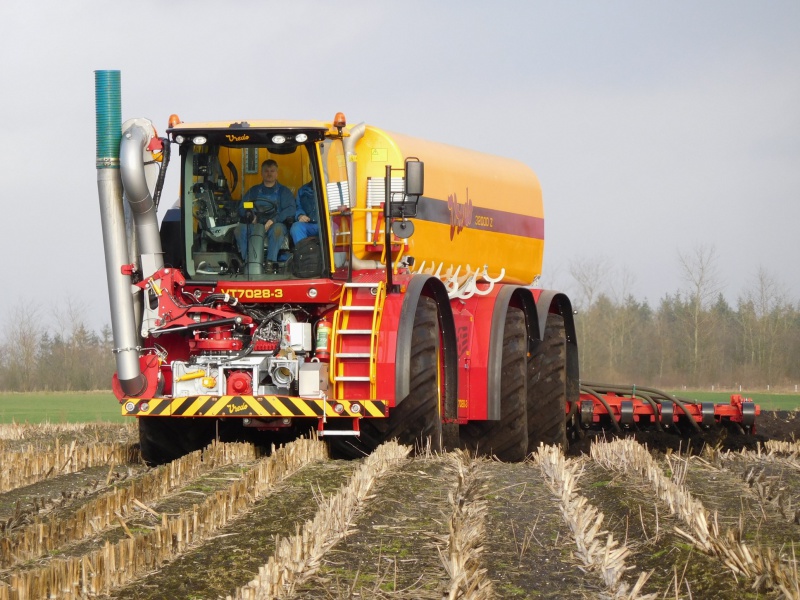
“self-propelled slurry machine …” from www.profi.co.uk and used with no modifications.
UK Regulations for Slurry Application You Must Know
Digestate application in the UK operates under increasingly stringent regulatory frameworks designed to protect water quality and reduce air pollution. Self-propelled spreaders with precision application systems help achieve compliance while maximizing the agronomic value of digestate.
Nitrate Vulnerable Zones (NVZ) Compliance
Approximately 55% of UK agricultural land falls within designated Nitrate Vulnerable Zones where strict application limits apply. Within these areas, digestate applications must not exceed 170kg of total nitrogen per hectare annually across the farm, with individual field limits determined by crop type and soil conditions. Self-propelled spreaders with integrated flow meters and application control systems automatically adjust application rates to maintain compliance while optimizing nutrient utilization.
Record-keeping requirements are particularly stringent within NVZs, with operators required to document application dates, rates, and locations. Modern spreading equipment often incorporates automated documentation systems that generate compliance reports directly from operational data, significantly reducing administrative burdens while ensuring accurate records.
Closed Periods for Spreading
Seasonal restrictions prohibit digestate application during high-risk periods, with specific dates varying by soil type and land use. On sandy or shallow soils, closed periods typically extend from September 1st to December 31st for grassland and from August 1st to December 31st for arable land. These restrictions make effective storage capacity and spreading schedule coordination essential for biogas operations, often requiring spreading capacity of 3-4 times normal daily volumes during peak application windows.
Weather-related restrictions further limit spreading opportunities, prohibiting applications on waterlogged, frozen, or snow-covered ground. Advanced self-propelled spreaders with extended reach booms and low ground pressure tires can operate in marginal conditions, extending practical application windows while maintaining compliance.
Record-Keeping Requirements
Comprehensive documentation is essential for regulatory compliance, with operators required to maintain detailed spreading records for a minimum of five years. These records must include application dates, field locations, application rates, and total nitrogen applied. Self-propelled spreaders often incorporate automated recording systems that integrate with farm management software, generating accurate documentation while reducing administrative burdens.
Risk assessments represent another critical documentation requirement, with operators expected to evaluate potential environmental impacts before each application. Modern spreading equipment supports this process by incorporating soil mapping, slope analysis, and proximity warnings for sensitive features like watercourses or residential areas.
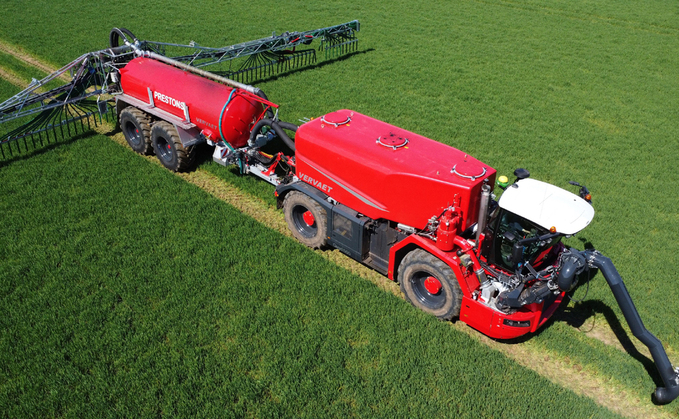
“Vervaet launch XL spreader | Farm News …” from www.farmersguardian.com and used with no modifications.
How to Choose the Right Slurry Equipment for Your Farm
Selecting appropriate digestate spreading equipment requires careful consideration of farm-specific factors including operational scale, soil conditions, and crop requirements. The diverse range of available technologies offers solutions tailored to different farming systems and environmental conditions.
Farm Size Considerations
Operational scale significantly influences equipment selection, with larger farms typically benefiting from higher-capacity self-propelled units that maximize daily spreading capacity. Operations managing 500+ hectares often find the productivity advantages of 16-20 cubic meter self-propelled spreaders justify their premium hire rates, particularly during tight application windows. Smaller operations may find umbilical systems or medium-capacity tankers provide better cost efficiency, especially when spreading distances are minimal.
Annual digestate volumes provide another critical sizing metric, with typical application rates ranging from 25-50 cubic meters per hectare depending on crop requirements and nutrient content. Farms receiving large digestate volumes from nearby biogas plants often benefit from storage facilities that allow strategic application timing, reducing dependence on immediate spreading capacity.
Soil Type and Terrain Assessment
Ground conditions significantly impact spreader selection, with heavy clay soils typically requiring specialized low ground pressure equipment to prevent compaction damage. Self-propelled units with independent suspension and wide flotation tires can reduce ground pressure by up to 40% compared to tractor-pulled alternatives, extending operational windows on vulnerable soils. Steep or irregular terrain benefits from articulated chassis designs that maintain ground contact and traction in challenging conditions.
Soil infiltration rates also influence application technology selection, with heavy soils often requiring shallow injection systems that place digestate below the surface to prevent runoff. Sandy soils typically accommodate higher single application volumes but may benefit from split applications to reduce leaching potential.
Storage Capacity vs. Application Needs
Effective digestate management requires balancing storage capacity with spreading capabilities to accommodate seasonal application restrictions. UK regulations typically require a minimum of five months storage capacity, with six months recommended in areas with extended closed periods or challenging soil conditions. Coordinating spreading schedules with storage capacity often requires intensive spreading during optimal application windows, making high-capacity self-propelled units particularly valuable during these periods.
Transport logistics between storage and application sites significantly impact spreading efficiency, with distant fields potentially reducing daily application capacity by 30-50% compared to nearby operations. For biogas plants supplying multiple farms, coordination of transport and spreading schedules becomes essential for maximizing equipment utilization.
Budget Planning for Seasonal Requirements
Financial planning for digestate management must consider both equipment costs and potential nutrient value. Typical spreading costs range from £30-£60 per hectare depending on application rate and technology level, while the fertilizer replacement value typically ranges from £50-£120 per hectare for nitrogen, phosphorus and potassium. This favorable cost-benefit ratio makes digestate application economically attractive for most farming operations, particularly when advanced spreading equipment maximizes nutrient utilization.
Seasonal variations in equipment availability significantly impact hire rates, with peak demand periods often commanding premium pricing. Advance booking discounts of 10-15% are typically available for equipment secured 3+ months ahead, making early planning financially advantageous. Many biogas operations establish annual contracts with spreading contractors to ensure equipment availability during optimal application windows.
The Self-Propelled Advantage: Benefits Over Traditional Methods
Self-propelled slurry spreaders represent a significant technological advancement over traditional tractor-pulled units, offering numerous operational and environmental benefits. These purpose-built machines integrate advanced control systems with specialized chassis designs to deliver superior performance across diverse conditions and applications.
The self-contained design eliminates the need for high-powered tractors, reducing overall capital requirements while improving operational flexibility. For biogas plants managing digestate application across multiple farms, these units provide logistical simplicity and improved mobility between sites.
Reduced Soil Compaction
Soil structure protection represents one of the most significant advantages of self-propelled spreaders, with specialized designs distributing weight more effectively than tractor-pulled alternatives. Multiple-axle configurations with independent suspension systems reduce ground pressure by up to 30%, significantly decreasing compaction risk in vulnerable soils. This advantage is particularly valuable for spring applications when soil moisture levels typically remain elevated but nutrient demand is high.
Improved Application Accuracy
Precision application capabilities transform digestate from a bulk organic fertilizer into a precision nutrient source. Modern self-propelled units incorporate flow control systems that maintain consistent application rates regardless of forward speed variations, ensuring uniform distribution even on irregular fields or when navigating obstacles. Many advanced systems now offer variable rate application capabilities, adjusting output based on pre-programmed prescription maps or real-time soil sensors.
Section control technology enables automatic boom management when approaching field boundaries, headlands or sensitive areas, eliminating double application while maintaining accurate coverage. GPS guidance systems maintain precise pass-to-pass alignment, reducing overlap while ensuring complete coverage even in poor visibility conditions. For more insights on related technology, explore the advantages of UASB reactor design in treating wastewater and generating renewable biogas.
Application monitoring systems provide real-time feedback on performance metrics including flow rates, speed, and coverage, allowing operators to optimize settings for specific field conditions. These monitoring capabilities also generate comprehensive application records, simplifying compliance documentation while providing valuable data for future planning. For those interested in enhancing their understanding of these systems, exploring high-rate anaerobic digestion processes could provide further insights into optimizing performance.
Faster Operation and Higher Work Rates
Operational efficiency represents another critical advantage of self-propelled equipment, with typical units achieving 20-40% higher daily application rates compared to tractor-pulled alternatives. Purpose-designed spreading systems with higher flow capacities, faster turn capabilities, and increased transport speeds significantly reduce cycle times between loads. Many units achieve application rates of 100+ cubic meters per hour under optimal conditions, allowing complete utilization of favorable weather windows.
Operator Comfort and Safety Features
Enhanced operator environments significantly improve productivity during extended operation. Climate-controlled cabins with advanced suspension systems reduce fatigue during long operational days, while improved visibility through panoramic glazing and camera systems enhances safety and application accuracy. Intuitive control interfaces simplify operation, reducing training requirements while improving performance consistency between different operators. For those interested in sustainable practices, exploring anaerobic digestion for food waste solutions might offer valuable insights into integrating eco-friendly technologies in operational environments.
Self Propelled Slurry Spreader Safety features extend beyond operator protection to include comprehensive monitoring systems that prevent operational errors or equipment damage. Automatic shutdown systems activate when unsafe operating conditions develop, while diagnostic capabilities identify maintenance requirements before failures occur. For example, in egg-shaped anaerobic digesters, these systems ensure optimal performance and safety.
Book Your Slurry Spreading Equipment Today
Securing appropriate spreading equipment requires advance planning, particularly during peak application seasons. Early booking ensures equipment availability while potentially qualifying for preferential rates. Most providers offer flexible scheduling options to accommodate weather variations, typically requiring 24-48 hours notice for delivery or collection.
Contact details for equipment providers should include phone, email and online booking options, with emergency contact numbers for unexpected requirement changes. Many suppliers now offer digital booking platforms that display real-time equipment availability and instant confirmation.
Self Propelled Slurry Spreader – Frequently Asked Questions
The following questions address common inquiries regarding self-propelled slurry spreader hire and digestate application. These practical considerations help biogas plant operators and recipient farms plan effective spreading operations while maintaining regulatory compliance and maximizing nutrient utilization.
What is the minimum hire period for a self-propelled slurry spreader?
Most equipment providers require a minimum one-day hire period for self-propelled slurry spreaders, with the standard operational day typically defined as 10 hours. Significant discounts are generally available for extended hire periods, with weekly rates often offering 15-20% savings compared to daily hire. For biogas operations with continuous digestate production, monthly hire arrangements may provide optimal cost efficiency while ensuring consistent equipment availability.
Do I need special training to operate hired slurry equipment?
Operators require appropriate certification and training before using self-propelled slurry equipment. Most hire companies provide basic familiarization training as part of the delivery process, but assume operators possess fundamental skills and relevant certifications. For specialized equipment or advanced application systems, dedicated training sessions may be recommended or required. Many providers offer operator-included hire options that eliminate training requirements while ensuring optimal equipment performance.
How far in advance should I book slurry equipment during peak seasons?
Peak spreading seasons typically require booking 2-3 months in advance to ensure equipment availability, particularly for specialized self-propelled units with limited fleet numbers. Spring application windows (February-April) and autumn windows (August-October) experience highest demand levels, often with complete fleet utilization during optimal spreading conditions. Early booking not only secures equipment availability but may qualify for advance reservation discounts of 10-15% from many providers.
What cleaning requirements apply when returning hired equipment?
Equipment must be returned in clean, operational condition to avoid additional charges. Most hire agreements require removal of all digestate residues from tanks, pumps and application systems, with particular attention to enclosed spaces where material hardening could damage components. Basic pressure washing is typically sufficient for external surfaces, while tank flushing with clean water is recommended for internal components. Many providers offer cleaning services for an additional fee, typically ranging from £75-£150 depending on equipment size and condition.
Damage assessment forms part of the return process, with operators responsible for identifying any operational issues or damage that occurred during the hire period. Prompt reporting of mechanical issues can prevent more serious damage and associated repair costs.
Can I hire slurry spreading equipment with an operator included?
Most equipment providers offer operator-included services that provide both equipment and qualified personnel for complete spreading operations. These turnkey services typically command a 30-50% premium over equipment-only hire but eliminate training requirements while ensuring optimal application performance. Professional operators bring valuable expertise regarding application techniques, regulatory compliance and equipment capabilities, potentially improving nutrient utilization while reducing environmental risks. For more information on related topics, you can explore the benefits of anaerobic digestion for food waste.
For biogas plants supplying digestate to multiple farms, these operated services provide consistent application quality across different sites while simplifying logistics and administration. Many contractors offer scheduling flexibility to accommodate weather variations, with typical response times of 24-48 hours for mobilization once conditions become suitable.
Looking for reliable self-propelled slurry spreader hire or complete digestate application services? Agricultural Hire UK offers comprehensive equipment solutions and experienced operators to maximize the value of your biogas digestate while ensuring regulatory compliance.