
Acetoclastic methanogenesis is one of the principal biological pathways by which methane is produced during anaerobic digestion. In this pathway, specialised methane-producing Archaea use acetate as their substrate and convert it principally into methane and carbon dioxide.
For anaerobic digestion plant operators, designers and students, this pathway matters because acetate is a major intermediate produced as organic matter passes through the earlier biochemical stages of digestion.
Recent research is also showing that the balance between different acetoclastic methanogens is influenced by reactor operating conditions, including solids retention time, feeding regime and substrate availability.
This article explains what acetoclastic methanogenesis is, which microorganisms perform it, how it differs from hydrogenotrophic methanogenesis, and what recent research may mean for the optimisation of anaerobic digesters.
What Is Acetoclastic Methanogenesis?
Acetoclastic methanogenesis is the production of methane from acetate by specialised methanogenic Archaea.
It occurs during methanogenesis, the final of the four principal biochemical stages normally used to describe anaerobic digestion:
- Hydrolysis
- Acidogenesis
- Acetogenesis
- Methanogenesis
During the preceding stages, complex organic compounds are progressively broken down into smaller molecules.
Acetate is one of the particularly important products available to the methanogenic community.
Acetoclastic methanogens can then use that acetate to produce methane.
A simplified representation of the overall reaction using acetic acid is:
CH3COOH → CH4 + CO2
In a real anaerobic digester the biochemistry is, of course, considerably more complex than this single equation suggests. Acetate must be transported into the cell, activated and processed through a sequence of enzyme-mediated reactions while the organism conserves enough energy for growth and maintenance.
Are Acetoclastic Methanogens Bacteria?
No.
Methanogens are sometimes informally described as methanogenic bacteria, but this terminology is biologically inaccurate.
Methanogens belong to the domain Archaea, not Bacteria.
This distinction is particularly important in a technical discussion of anaerobic digestion because methanogenic Archaea have different cell biology, metabolism and evolutionary origins from the bacteria responsible for many of the earlier hydrolytic, acidogenic and acetogenic reactions.
For a broader explanation of the complete sequence, see our guide to the anaerobic digestion process.

Which Methanogens Carry Out Acetoclastic Methanogenesis?
Two genera are particularly associated with methane production from acetate:
- Methanosarcina
- Methanothrix, formerly commonly referred to as Methanosaeta
These organisms can occupy rather different ecological niches within anaerobic digestion systems.
Methanosarcina
Methanosarcina is metabolically versatile.
Many species can use acetate but can also use other methanogenic substrates and pathways, including hydrogen and carbon dioxide or certain methylated compounds.
Methanosarcina generally has a relatively high maximum growth rate and tends to compete well when acetate concentrations are relatively high or when substrate availability fluctuates.
This versatility can make Methanosarcina important in digesters experiencing comparatively high organic loading or changing operating conditions.
Methanothrix
Methanothrix is more specialised.
It is strongly associated with acetate utilisation and has a comparatively high affinity for acetate.
This means that Methanothrix can be particularly competitive where acetate concentrations are relatively low.
Its slower-growing, substrate-efficient strategy differs markedly from the faster-growing behaviour normally associated with Methanosarcina.
The name Methanosaeta still appears frequently in older anaerobic digestion literature, but much recent research uses the genus name Methanothrix.
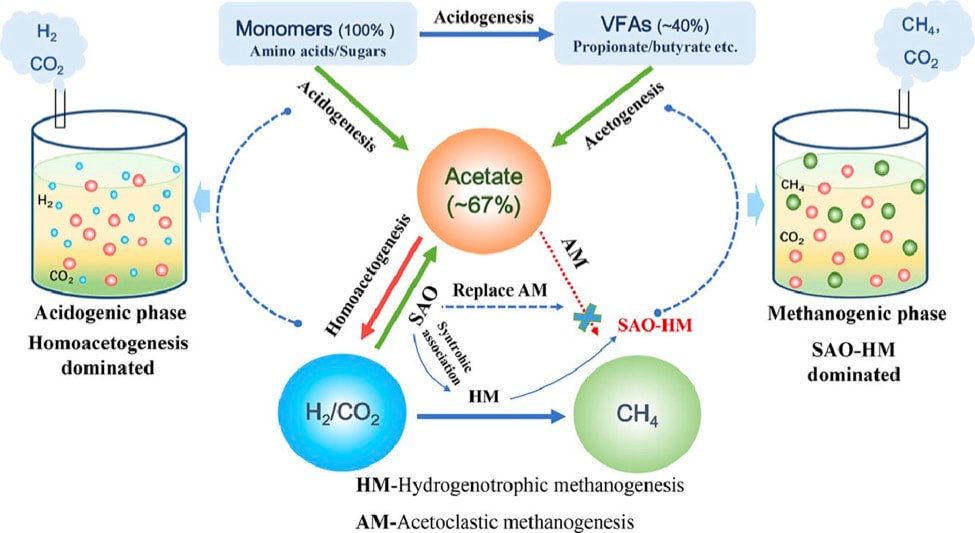
“anaerobic digesters …” from www.biologicalwasteexpert.com and used with no modifications.
Acetoclastic vs Hydrogenotrophic Methanogenesis
Acetoclastic methanogenesis is not the only route through which methane is produced in an anaerobic digester.
Another major pathway is hydrogenotrophic methanogenesis.
In simplified terms:
- Acetoclastic methanogenesis uses acetate as the principal methane precursor.
- Hydrogenotrophic methanogenesis uses carbon dioxide together with hydrogen or another suitable electron donor to form methane.
These pathways operate within a much larger microbial community, and their relative importance can change with feedstock, ammonia concentration, temperature, organic loading and other digester conditions.
There is also methylotrophic methanogenesis, in which methanogens utilise methylated compounds such as methanol or methylamines.
Consequently, it is misleading to imagine methanogenesis as a single organism performing a single reaction.
An operating anaerobic digester is a microbial ecosystem in which several methane-producing pathways may occur simultaneously.
Why Is Acetate So Important in Anaerobic Digestion?
Acetate is an important intermediate between the earlier fermentation reactions and final methane production.
Organic polymers such as carbohydrates, proteins and fats are first broken down and fermented through a succession of microbial reactions.
Volatile fatty acids and other intermediates are produced, and acetogenic reactions contribute to the formation of acetate.
The methanogenic community then has to consume these intermediates at a sufficient rate for the overall process to remain stable.
If volatile fatty acids are being produced faster than they can subsequently be consumed, they can accumulate.
That is one reason why monitoring parameters such as volatile fatty acids, alkalinity and pH can be so useful in the operation of an anaerobic digester.
The important practical point is that methane production cannot be optimised simply by considering methanogens in isolation.
The upstream microbial populations have to supply their substrates, while environmental conditions have to remain suitable for the entire microbial community.

“hydrogenotrophic methanogenic cultures …” from commons.wikimedia.org and used with no modifications.
What Did the 2024 Chang Study Find?
A particularly useful recent study was published in Environmental Research in 2024 by Huanhuan Chang, Bang Du, Kai He, Qidong Yin and Guangxue Wu.
The paper, entitled Mechanistic understanding of acclimation and energy metabolism of acetoclastic methanogens under different substrate to microorganism ratios, investigated how reactor operation influenced acetoclastic methanogenic communities.
The researchers compared continuous-flow reactors with sequencing batch reactors and operated them at solids retention times of 10 and 25 days.
The systems were acetate-fed, allowing the researchers to study acetoclastic methanogenesis more directly than would normally be possible in a complex mixed-feedstock digester.
One particularly interesting result was the difference between Methanosarcina and Methanothrix.
Methanosarcina represented approximately 16.0% to 46.0% relative abundance across the reactors, while Methanothrix ranged from approximately 3.7% to 22.9%.
The shorter 10-day solids retention time favoured enrichment of Methanosarcina.
By contrast, Methanothrix showed a preference for acclimation under the longer 25-day solids retention time.
The sequencing batch reactors also showed potential to enrich both genera.
This does not mean that every commercial digester should be operated at one of those particular retention times.
The experimental reactors were designed to investigate microbial mechanisms, and the results should not be converted directly into universal full-scale operating rules.
What the work does demonstrate is that reactor configuration and retention time can influence the structure of the acetoclastic methanogenic community.
Newer Research Shows Feeding Regime Matters Too
Chang and colleagues followed this work with further research published in the Biochemical Engineering Journal in 2025.
That study again compared sequencing batch and continuous-flow operation, this time using solids retention times of 15 and 50 days.
The researchers found that the feeding regime had an important effect on the distribution of acetoclastic methanogens.
Methanosarcina was substantially more abundant in the sequencing batch reactors, while Methanothrix showed greater enrichment in the continuous-flow reactors at the same retention time.
The sequencing batch reactors also achieved a significantly higher methane production rate than the continuous-flow reactors under the conditions of the experiment.
The authors concluded that feeding regime played a more important role in methanogen distribution than solids retention time in their experimental systems.
Again, this is not evidence that changing a commercial digester from continuous to batch feeding will automatically deliver a particular percentage increase in methane production.
It is evidence that how substrate is supplied to the microbial community can alter which methanogens become established and how the system performs.

“Methanosarcina – Wikipedia” from en.wikipedia.org Acetolactic Methanogens and used with no modifications.
What Determines Whether Methanosarcina or Methanothrix Dominates?
The competition between these organisms can be thought of as two different ecological strategies.
Methanosarcina tends to grow faster and can perform well where acetate is more abundant or substrate concentrations fluctuate.
Methanothrix grows more slowly but has a higher affinity for acetate and can remain competitive at lower acetate concentrations.
This helps explain why different anaerobic digesters can develop substantially different methanogenic populations despite carrying out apparently similar overall functions.
Important influences may include:
- acetate concentration;
- organic loading rate;
- solids and hydraulic retention times;
- feeding frequency and feeding regime;
- temperature;
- pH and alkalinity;
- ammonia concentration;
- mixing and mass transfer;
- feedstock characteristics; and
- interactions with syntrophic bacteria and other members of the microbial community.
This is another reason why there is rarely a single microbial intervention that can be guaranteed to increase methane production across all anaerobic digestion plants.
Can Acetoclastic Methanogenesis Be Used to Increase Biogas Yield?
Understanding acetoclastic methanogenesis can certainly help us understand why an anaerobic digester is performing well or poorly.
However, claims that simply increasing the number of acetoclastic methanogens will produce a fixed percentage increase in biogas yield should be treated cautiously.
Methane yield is ultimately constrained by factors including the biodegradable energy content of the feedstock.
Operating changes may help a plant approach its achievable biological potential, improve stability, reduce losses or increase the rate at which conversion occurs.
They cannot create additional biodegradable energy that was not present in the substrate in the first place.
Furthermore, encouraging one methanogenic pathway may not always be desirable.
Under some conditions, particularly elevated ammonia concentrations, syntrophic acetate oxidation coupled with hydrogenotrophic methanogenesis can become increasingly important.
The appropriate objective is therefore not necessarily to maximise the abundance of one methanogen.
The objective should be to maintain a stable microbial community capable of converting the available intermediates efficiently under the actual conditions inside the digester.
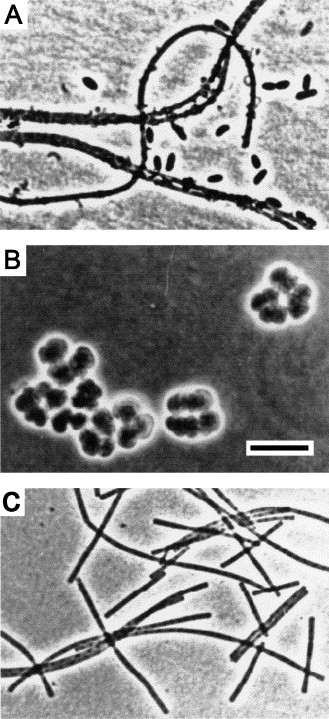
“Methanosaeta spp …” from www.sciencedirect.com and used with no modifications.
What Does This Mean for AD Plant Operators?
The practical conclusion is that acetoclastic methanogenesis is not something an operator can optimise by simply trying to increase one group of methanogens.
What operators can influence are the conditions that determine which methanogenic pathways remain competitive and whether acetate is being consumed as quickly as it is produced.
Recent research shows that reactor configuration, solids retention time and feeding regime can change the relative abundance of Methanosarcina and Methanothrix. In experimental systems, Methanosarcina tended to be favoured by more variable substrate availability, while Methanothrix was better suited to more stable conditions and lower acetate concentrations.
For the plant operator, that leads to several practical implications.
- Avoid sudden changes in loading where possible. Large changes in feed rate or composition can increase volatile fatty acid and acetate production faster than the methanogenic population can respond.
- Pay attention to feeding regime as well as total daily loading. Delivering the same quantity of feed in large intermittent batches can expose the microbial community to very different substrate concentrations from a more even feeding regime.
- Do not reduce retention time simply to increase throughput without considering the biology. Slow-growing methanogens can be disadvantaged if solids retention time becomes too short.
- Treat rising VFAs as an early warning rather than merely a chemistry problem. Persistent acetate and other VFA accumulation indicates that the rate of intermediate production is exceeding the rate at which downstream organisms are consuming them.
- Watch ammonia particularly closely with nitrogen-rich feedstocks. Acetoclastic methanogenesis is especially vulnerable to ammonia inhibition. Under higher-ammonia conditions, methane production can increasingly shift towards syntrophic acetate oxidation followed by hydrogenotrophic methanogenesis rather than direct acetate conversion.
- Use pH together with alkalinity and VFA trends rather than relying on pH alone. A well-buffered digester can accumulate VFAs before a major fall in pH becomes apparent.
Therefore, the most useful operational objective is not to ask, “How do I maximise acetoclastic methanogens?”
It is to ask:
“Are acetate and other intermediates being converted into methane at approximately the same rate at which they are being produced?”
If the answer is yes, the methanogenic stage is broadly keeping pace with the upstream biological reactions.
If acetate and other VFAs begin to accumulate while methane production weakens or fails to increase with loading, the process is becoming unbalanced and corrective action may be required.
In practical terms, operators should therefore track trends in feed rate and composition, organic loading, VFA concentration, alkalinity, pH, ammonia, gas production and methane concentration together rather than considering any one parameter in isolation.
Microbial-community analysis can provide valuable diagnostic information, particularly in research, commissioning or persistent process-instability investigations, but most full-scale plants do not need routine DNA analysis simply to operate effectively.
The firm operating conclusion is this: maintain conditions that allow the methanogenic population to keep pace with acid and acetate production, and avoid rapid operational changes that force the biology to adapt faster than it can respond.
That is a more useful route to stable methane production than attempting to favour a particular methanogen without understanding the rest of the process.
For experienced AD operators, much of this conclusion may sound familiar. Long before modern microbial-community analysis made it possible to observe changes in methanogen populations directly, full-scale plant experience showed that digesters respond poorly to abrupt changes in loading and feed composition and that process imbalance is often visible in VFA, alkalinity and gas-production trends before outright failure occurs. The microbiological research described above is valuable because it helps explain why those established operating observations make sense at microbial level.
For the broader engineering and operating measures used to improve plant performance, see our guide to the optimisation of biogas production.

Acetoclastic Methanogenesis Is Part of a Larger Process
It is tempting to focus on methane-producing Archaea because methane is the energy product we ultimately want. But a successful digester depends on a chain of interacting biological processes.
Hydrolytic microorganisms must first make complex organic matter accessible. Fermentative organisms generate organic acids and other intermediates.
Acetogenic and syntrophic populations transform those products into substrates that methanogens can use. Only then can acetoclastic, hydrogenotrophic and other methanogenic pathways complete the conversion to methane.
For a practical overview from feedstock reception through digestion, gas cleaning and final energy use, see our complete guide to the biogas production process.
Frequently Asked Questions
What is acetoclastic methanogenesis?
Acetoclastic methanogenesis is a methane-producing pathway in which specialised methanogenic Archaea utilise acetate and convert it principally into methane and carbon dioxide.
What are acetoclastic methanogens?
Acetoclastic methanogens are methane-producing Archaea capable of using acetate as a substrate. The two principal genera associated with this metabolism are Methanosarcina and Methanothrix.
What is the difference between Methanosarcina and Methanothrix?
Methanosarcina generally grows faster, uses a wider range of substrates and tends to compete well where acetate is relatively abundant. Methanothrix is more specialised, grows more slowly and has a high affinity for acetate, allowing it to remain competitive at low acetate concentrations.
Is Methanosaeta the same as Methanothrix?
The name Methanosaeta appears extensively in older scientific literature. Much recent literature uses Methanothrix for this genus, so readers researching anaerobic digestion microbiology will encounter both names.
What is hydrogenotrophic methanogenesis?
Hydrogenotrophic methanogenesis is a different methane-producing pathway in which methanogenic Archaea reduce carbon dioxide to methane using hydrogen or another suitable electron donor.
What is methylotrophic methanogenesis?
Methylotrophic methanogenesis produces methane from methylated compounds such as methanol, methylamines or methylated sulphur compounds. It represents another methanogenic pathway distinct from acetate utilisation and hydrogen-dependent carbon dioxide reduction.
Are methanogens bacteria?
No. Methanogens belong to the Archaea. The phrase “methanogenic bacteria” is still encountered in non-specialist material, but it is not taxonomically correct.
Does increasing acetoclastic methanogens always increase biogas production?
No. Methane production depends on the entire anaerobic digestion system, including feedstock biodegradability, loading, retention time, temperature, inhibition, VFA production and the wider microbial community. Research into acetoclastic methanogens can help explain and optimise digester behaviour, but it does not support a universal percentage increase in biogas yield.
Conclusion
Acetoclastic methanogenesis is a central part of the microbial ecology of many anaerobic digesters because it provides a direct route from acetate to methane.
Two important acetoclastic genera, Methanosarcina and Methanothrix, employ different ecological strategies and respond differently to acetate availability, retention time and feeding regime.
Recent research is improving our understanding of how operating conditions select for these different methanogenic communities.
For operators, the lesson is not that one species or pathway should always be maximised.
It is that digester operating conditions influence the microbial community, and a stable balance between substrate production and substrate consumption is fundamental to reliable methane generation.
References and Further Reading
- Chang, H., Du, B., He, K., Yin, Q. and Wu, G. (2024). Mechanistic understanding of acclimation and energy metabolism of acetoclastic methanogens under different substrate to microorganism ratios. Environmental Research, 252, 118911.
- Chang, H., Yin, Q., He, K., De Vrieze, J. and Wu, G. (2025). Feeding regime selectively enriching acetoclastic methanogens to enhance energy production in anaerobic digestion systems. Biochemical Engineering Journal, 220, 109764.
- Meegoda, J.N., Li, B., Patel, K. and Wang, L.B. (2018). A Review of the Processes, Parameters, and Optimization of Anaerobic Digestion. International Journal of Environmental Research and Public Health.
- Ali Shah, F. and colleagues. For a broader discussion of anaerobic digestion microbiology and methanogenic communities, see Microbiological insights into anaerobic digestion for biogas, hydrogen or volatile fatty acids: a review.
- For a detailed discussion of microbial community and process function, see Relating Anaerobic Digestion Microbial Community and Process Function.
[Published December 2025. Rewritten September 2026.]