England’s “Food Waste Revolution” is a government-driven initiative focused on mandatory, consistent food waste collection for households and businesses by April 2026, aiming to divert food from landfills into recycling for energy and compost. It has been designed to reduce waste across the food system, ultimately cutting environmental impact and improving resource efficiency.
But, as England prepares for one of its most significant environmental policy changes in years, local authorities across the country are grappling with a new reality: the Simpler Recycling regulations require them to collect food waste separately from all households by March 2026.
This mandate represents a monumental shift in how the nation manages its organic waste, affecting millions of homes and fundamentally changing the landscape of local waste management.
All government and professional bodies with responsibilities for sustainable food waste management have confirmed that the use of food waste to feed anaerobic digestion facilities is preferred above composting.
So why are local authorities still tendering solely for disposal by composting, with no option for anaerobic digestion?
The Tender Tsunami
The recent tender issued by Derbyshire councils—covering Erewash Borough, Amber Valley Borough, South Derbyshire District, and Derbyshire Dales District—offers a glimpse into what’s becoming a nationwide phenomenon.
Local authorities that don’t already collect food waste are racing against the clock to secure processing facilities for the food waste they’ll soon be collecting from every doorstep.
This particular contract, seeking composting services for household and commercial food waste from kerbside caddies, is just one of probably dozens about to be issued across England as the end of March 2026 deadline looms.
The scale of this change cannot be overstated. Previously, food waste collection was patchy across England, with some councils offering the service while others didn’t.
Now, every local authority must provide weekly food waste collections to all households, creating an unprecedented demand for processing capacity.
The result? A wave of tenders like Derbyshire’s, as councils scramble to find facilities capable of handling thousands of tonnes of food waste annually.
The Composting Conundrum
Here’s where the story takes a frustrating turn. The Derbyshire tender, like many others emerging across England, specifies composting as the sole treatment method for collected food waste.
While composting certainly has its place in the waste hierarchy and produces a valuable soil conditioner, this narrow specification represents a missed opportunity of staggering proportions.
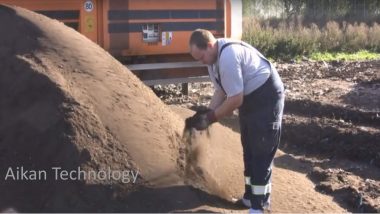
Composting is essentially a process of controlled decomposition, where microorganisms break down organic matter in the presence of oxygen.
The end product—compost—enriches soil, improves structure, and helps retain moisture. It’s beneficial, certainly, but it’s also the most basic level of food waste processing available.
The Anaerobic Digestion Advantage
Anaerobic digestion (AD) operates on an entirely different principle and delivers benefits that composting simply cannot match.
In an AD facility, food waste is broken down by microorganisms in the absence of oxygen, inside sealed tanks called digesters. This process yields two uniquely valuable outputs: biogas and digestate.
The biogas produced—primarily methane—can be used to generate renewable electricity, heat buildings, or be upgraded to biomethane and injected into the gas grid or used as vehicle fuel. This represents genuine energy recovery from waste, contributing to energy security and reducing reliance on fossil fuels. In contrast, composting releases its carbon and methane content into the atmosphere without capturing any energy value whatsoever.
The digestate left after anaerobic digestion is processed into a nutrient-rich fertiliser and soil improver that’s often superior to compost. It’s more stable, has higher nutrient content, and can be applied more precisely to agricultural land.
Essentially, anaerobic digestion delivers everything composting does, plus renewable energy generation—it’s a win-win scenario.
From a climate perspective, the difference is stark. Anaerobic digestion captures methane that would otherwise be released during decomposition and puts it to productive use. When biogas replaces natural gas or generates renewable electricity, it displaces fossil fuel consumption.
Composting, while avoiding the methane emissions of landfill, still releases greenhouse gases during the decomposition process and captures no energy. The process is a net energy consumer, while composting plant operators continue to run their plant on diesel fuel, a heavy emitter of fossil fuel carbon emissions.
Anaerobic digestion (AD) plants also use non-renewable fuels for their mobile plant, but the renewable biogas they produce outweighs their emissions by an order of magnitude. These plants also compost the lower tonnage of fibrous material that remains after the digestion and may use non-renewable fuelled plant to do that.
But the mass of this fibrous material is reduced by the AD process, and again, this is easily offset by the renewable fuel they produce.
The environmental credentials continue: AD facilities are typically enclosed, meaning odour control is significantly better than at composting sites. They require less land area to process equivalent volumes of waste.
They can handle a wider range of organic materials, including meat, fish, and dairy products that can be problematic for traditional composting operations.
The process is faster, too—AD can process waste in a matter of weeks, while composting takes months.
Economically, AD facilities create value streams that composting cannot. The renewable energy produced generates revenue through electricity sales, Renewable Heat Incentive payments, or biomethane sales.
The digestate commands premium prices as a certified fertiliser (PAS110). These multiple revenue streams can make AD operations more financially resilient and potentially reduce the gate fees local authorities pay for waste processing.
The Tender Specification Problem
Given these overwhelming advantages, why are councils like those in Derbyshire issuing tenders that exclusively specify composting? The answer likely lies in a combination of factors: historical precedent, risk aversion, concerns about capital costs, and perhaps simply a lack of awareness about the full potential of anaerobic digestion.
Traditional procurement thinking often favours the familiar. Composting has been around for generations; it’s well understood, and many councils already have relationships with composting facilities. Anaerobic digestion, while increasingly common, may still seem like newer, more complex technology to some procurement teams.
There may also be concerns about processing costs. AD facilities typically require more sophisticated infrastructure than composting sites, and gate fees might be perceived as higher.
However, this view fails to account for the broader environmental and economic value AD delivers, and it overlooks the fact that competition from multiple bidders offering different technologies could actually drive down costs.
The most frustrating aspect is that by specifying composting in the tender requirements, these councils are actively excluding AD operators from bidding, or forcing them to partner with composters rather than offering their superior technology directly.
A more enlightened approach would be to specify performance outcomes:
- safe processing of food waste, production of quality outputs, and environmental protection
- while remaining technology-neutral
- and allowing the market to propose the most efficient, environmentally beneficial solutions.
What Could Have Been
Imagine if the Derbyshire tender had been written differently. Instead of “reception and Composting of household and commercial Food Waste,” it could have requested “reception and processing of household and commercial food waste into valuable end products, with preference given to solutions that maximise resource recovery and minimise environmental impact.”
Such a specification would have opened the door for AD operators to bid, potentially offering facilities that would not only process Derbyshire’s food waste but also:
- Generate enough renewable energy to power thousands of homes
- Produce high-grade fertiliser for local agriculture, supporting the rural economy
- Create local green jobs in a growing sector
- Reduce the region’s carbon footprint more substantially than composting alone
- Position Derbyshire as a leader in circular economy thinking
- Potentially reduce long-term processing costs through multiple revenue streams
The eighteen-month initial contract term with possible extensions suggests the councils are keeping their options open for the future. But why wait?
The infrastructure decisions made now will shape Derbyshire’s waste management landscape for years to come. Food waste collected under these contracts could be feeding biogas plants, powering homes, and demonstrating genuine environmental leadership. Instead, it will simply rot in windrows, missing its potential entirely.

The Bigger Picture
The Simpler Recycling initiative represents a genuine opportunity for England to lead in organic waste management.
Separate food waste collection is just the first step; what matters equally is what happens to that waste once collected. With millions of tonnes of food waste set to be diverted from general waste bins, England has a once-in-a-generation chance to build the infrastructure for genuine circular economy processing.
Other European nations have grasped this opportunity. Countries like Germany, Austria, and Sweden have built extensive networks of anaerobic digestion facilities that process organic waste into renewable energy and fertiliser, supporting both climate goals and energy security.
Indeed, English councils need look no further than Wales for a nation that successfully anaerobically digests all but a small fraction of the food waste.
England has the chance to follow suit, but only if local authorities think beyond traditional composting when procuring processing services.
The irony is that the government’s own waste policy documents acknowledge the superiority of anaerobic digestion in the waste hierarchy. The Resources and Waste Strategy and subsequent policy papers consistently place AD above composting as a preferred treatment method for food waste. Yet this policy preference isn’t translating into tender specifications at the local level.
A Call for Smarter Procurement
As more councils issue similar tenders in the coming months, there’s still time to change course. Procurement teams should be encouraged—indeed, required—to write technology-neutral specifications that allow the most sustainable solutions to compete.
Environmental regulators and government departments should provide clearer guidance emphasising the climate and energy benefits of anaerobic digestion.
Local authorities have a responsibility not just to comply with the letter of the Simpler Recycling regulations, but to embrace their spirit: creating a more sustainable, circular approach to resource management.
Food waste isn’t just rubbish to be disposed of in whichever way seems most straightforward—it’s a valuable resource that can heat homes, power vehicles, and grow food when processed correctly.
The Derbyshire tender will likely attract capable composting operators who will process the food waste competently and produce decent compost. But competent isn’t optimal.
In an era of climate emergency, energy insecurity, and the urgent need for sustainable solutions, local authorities owe their residents better than just competence. They owe them the best environmental outcomes their council tax can buy.
Every tonne of food waste sent to composting instead of anaerobic digestion represents lost renewable energy, lost carbon savings, and a lost opportunity to demonstrate that local government can be a force for genuine environmental progress.
With dozens of similar tenders coming down the pipeline as councils across England prepare for the March 2026 deadline, there’s still time to get this right.
The question is: will they?
References:
1. UK Government Anaerobic Digestion Strategy and Action Plan
This official UK strategy recognises that for separately collected food waste, AD is generally preferable to composting because it produces both renewable energy and a biofertiliser, generating greater greenhouse gas offset than compost alone.
- Anaerobic Digestion Strategy and Action Plan (Government of the UK)
https://assets.publishing.service.gov.uk/media/5a7968b4e5274a2acd18c991/anaerobic-digestion-strat-action-plan.pdf GOV.UK Assets
2. UK Government Statutory Guidance on Food Waste Hierarchy
UK Defra guidance on the food waste hierarchy states that separately collected food waste should be treated by anaerobic digestion, which presents the best environmental outcome due to biofuel production and nutrient recycling through digestate application. Research Briefings
- Food and drink waste hierarchy: deal with surplus and waste (Defra / UK Government)
https://www.gov.uk/government/publications/food-and-drink-waste-hierarchy-deal-with-surplus-and-waste/food-and-drink-waste-hierarchy-deal-with-surplus-and-waste GOV.UK
3. UK Academic/LCA Literature (Comparative Environmental Assessment)
Recent LCA research on the environmental sustainability of anaerobic digestion of food waste in the UK context shows that AD can simultaneously generate renewable energy and reduce environmental impacts relative to baseline routes—including composting—by harnessing the energetic value of the waste and returning nutrients back to land. Pure Manchester
- Environmental sustainability of anaerobic digestion of food waste (University of Manchester / peer-reviewed analysis)
https://pure.manchester.ac.uk/ws/files/85632150/Environmental_sustainability_of_AD_of_food_waste.pdfPure Manchester
4. WRAP (Waste and Resources Action Programme) Industry Survey
While not strictly a strategy document, the WRAP Industry Survey Report provides context showing continued UK growth in anaerobic digestion capacity and uptake for organic wastes (including food waste), signalling policy and industry support for AD as a preferred recovery route alongside composting. REA
- WRAP Industry Survey Report: Anaerobic Digestion and Composting (WRAP / REA)
https://www.r-e-a.net/resources/wrap-industry-survey-report-anaerobic-digestion-and-composting/