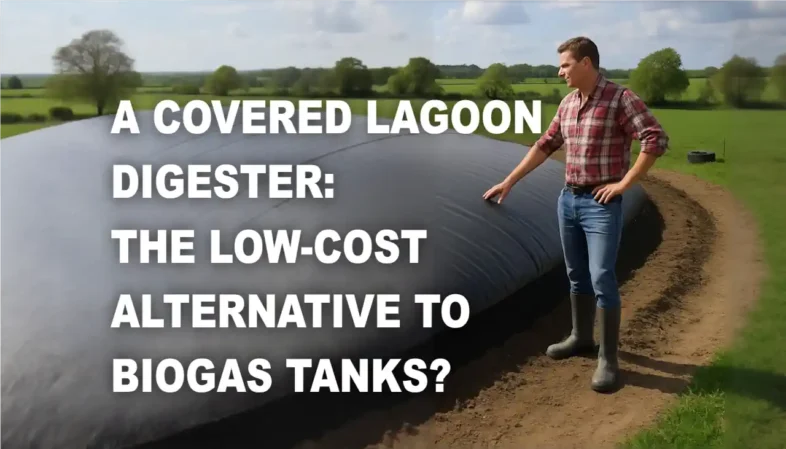
Why do farms build expensive Biogas Digester Tanks when they could just add a plastic membrane cover to an existing manure storage SSAFO slurry lagoon and have a covered lagoon digester?
A covered lagoon digester is a large, in-ground anaerobic treatment pond topped with an impermeable, flexible cover to capture biogas. It breaks down agricultural or industrial organic waste to capture methane-rich biogas for energy generation, while simultaneously minimising foul odours, greenhouse gas emissions, and sludge buildup.
Slurry lagoon covers, also known as manure lagoon covers, are specialised plastic membranes designed to cover agricultural waste storage structures to control odours, capture biogas, and exclude rainwater.
Key Takeaways for Covered Lagoon Digesters
- One of the most cost-effective solutions for farm biogas digesters today is to simply cover an existing slurry lagoon with a geomembrane membrane — no new tank required, no major civil works.
- The Covered Lagoon Anaerobic Process has been a proven technology since the 1950s, yet the majority of UK farms still haven't adopted it.
- A two-lagoon system that separates digestion and storage provides both usable biogas energy and high-quality digestate fertiliser from the same infrastructure.
- Temperature directly affects biogas yield in uncovered lagoons — but even in cooler climates, the economics can still favour a membrane cover over a dedicated digester tank.
- There's a common misconception that biogas requires expensive engineering — keep reading to find out why that's simply not true for most dairy and beef livestock farms.
The majority of these farms already have everything they need to start generating biogas — they just don't know it yet.
For those currently operating a slurry lagoon, you may not realise that you're actually sitting on a methane-producing system that is releasing a potent greenhouse gas into the atmosphere, wasting a free energy source, and potentially drawing odour complaints from the local community — all at once. Anaerobic digestion specialists have long promoted covered lagoon systems as the most practical and cost-effective way for farms to start producing biogas, and the evidence supports this.
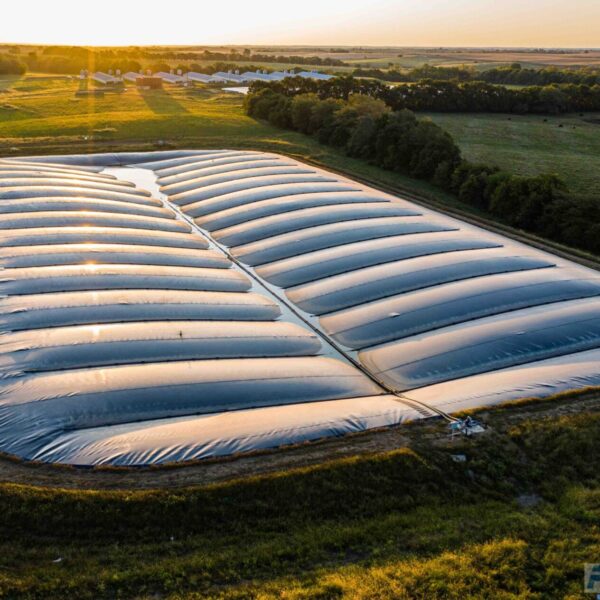
“Floating Manure Lagoon Covers Installation” from www.plasticfusion.com and used with no modifications to illustrate a Covered Lagoon Digester.
Farmers Are Overpaying for Biogas
Most farmers never consider biogas because they think it requires a dedicated digester tank.
These systems come with hefty civil engineering requirements, specialised contractors, and infrastructure costs that can easily reach six figures.
But for farms that already have a slurry lagoon under SSAFO regulations, the groundwork is already done. A geomembrane cover can be floated over an existing lagoon to capture methane for a fraction of the cost — and it's often a smarter long-term choice.
Understanding the Functionality of a Covered Anaerobic Lagoon
A covered anaerobic lagoon is just as its name implies: it’s a man-made pond filled with animal slurry or manure waste that is covered with a floating plastic membrane. This membrane captures the biogas that is naturally produced during anaerobic decomposition.
The system doesn’t need to be heated, doesn’t have intricate mechanical parts, and doesn’t require a specialist to operate it daily. The system works because the anaerobic bacteria that are needed for the process are already present in the slurry, and the cover simply prevents the methane from escaping.
Concentrated animal feeding operations (CAFOs) and livestock farms that produce large amounts of manure slurry are ideal for these systems. The lagoon offers a cost-effective solution for managing large amounts of liquid waste in terms of land and capital. Meanwhile, the cover turns what was once a source of emissions into a source of energy.
Understanding the Basic Science of Biogas Production in a Lagoon
An anaerobic lagoon is a place where organic matter breaks down in the absence of oxygen. Methanogenic bacteria eat up the organic compounds in the slurry and produce a gas mixture that is typically 60–70% methane and 30–40% carbon dioxide — this is biogas. Without a cover, that methane simply escapes into the atmosphere, where it is approximately 80 times more potent than CO₂ as a greenhouse gas over a 20-year period. The biology doesn't need any help — it's already happening. The cover just captures the output. Learn why reducing landfill methane is crucial for slowing climate change.
How Methane is Trapped by a Floating Plastic Membrane
The geomembrane cover sits directly on top of the lagoon liquid, moving up and down with the changes in the slurry level. The cover inflates as biogas builds up under it, creating a natural dome for collecting gas. The gas is then extracted through pipes attached to the cover and sent to its needed location — a boiler, a combined heat and power (CHP) unit, or a gas flare if it can't be used immediately.
Working with constant-volume lagoons is the simplest option. Variable-level lagoons require a more meticulously designed cover system to ensure gas-tight integrity as the liquid level changes throughout the season. Regardless, the membrane itself is a relatively straightforward component — the complexity lies in the pipework, gas handling, and safety systems rather than the cover itself.
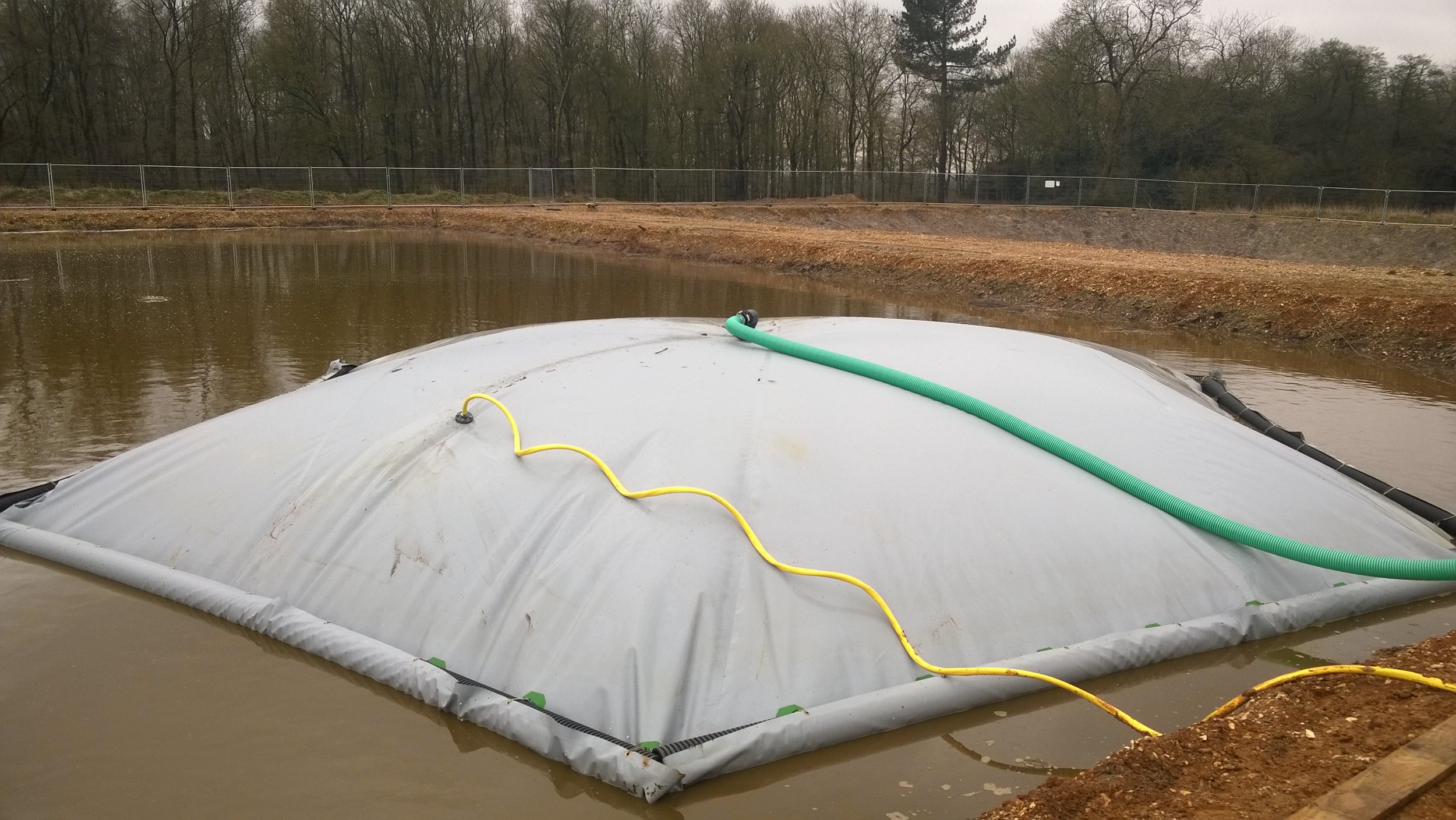
“lagoonQUBE | QUBE Renewables Ltd” from www.quberenewables.co.uk, an expert in the Covered Lagoon Digester, and used with no modifications.
Why This Technology Has Been Around Since the 1950s
Geomembrane lining systems have been commercially available since the 1950s, initially as an economical solution for large-scale water storage. Farmers and engineers quickly realised that the same materials could be used to both line and cover earthen lagoons, containing odours and capturing biogas at the same time.
Decades of use of the covered lagoon digester concept in tropical climates, where warm temperatures speed up methane production, have refined the technology into what farms around the world now use as a reliable, mature system. The fact that it is not yet standard practice on UK farms says more about awareness gaps than it does about the technology itself.
Why Conventional Biogas Tanks Are So Much More Expensive
Constructing a dedicated biogas digester tank involves using reinforced concrete or steel, insulation systems to keep mesophilic or thermophilic operating temperatures, mechanical mixing equipment, gas-tight roofing structures, and extensive civil groundworks. All of these components increase cost, lead time, and maintenance responsibility. For larger farms that process a lot of feedstock, the economics can still justify this approach. But for smaller and mid-sized operations, these costs can make the entire project unfeasible before it even begins.
The Necessary Infrastructure for a Standalone Biogas Tank
In addition to the tank itself, a standalone digester system usually needs a feedstock reception area, pre-treatment equipment, a heated vessel with temperature controls, a gas storage balloon or pressurized vessel, digestate separation equipment, and connection to the farm's electrical or heating infrastructure.
Each component requires commissioning, and many require ongoing specialist maintenance contracts. The total installed cost for even a small farm-scale tank digester can start at £150,000 in the UK market. For more information on the covered anaerobic lagoon process, you can explore additional resources about the covered lagoon digester concept.
Comparing the Costs of Installation and Engineering to a Membrane Cover
Installing a geomembrane cover over an existing SSAFO-compliant lagoon bypasses almost all of those expenses. The lagoon is already designed and lined. The cover is made off-site, delivered, and floated into place. A simple utilisation system, such as gas pipework and even just a boiler connection, can finish the installation at a total cost that is a small fraction of a dedicated tank system.
It's not just about the initial investment, but also about the time it takes to start seeing returns. A covered lagoon can start making usable biogas within weeks of being set up. On the other hand, a dedicated tank digester might take 12 to 18 months from the planning stage to the first gas production, with significant financial costs adding up during that time.
For farms that already have a lagoon producing and releasing methane into the atmosphere, each day without a cover is a missed opportunity, both financially and environmentally.
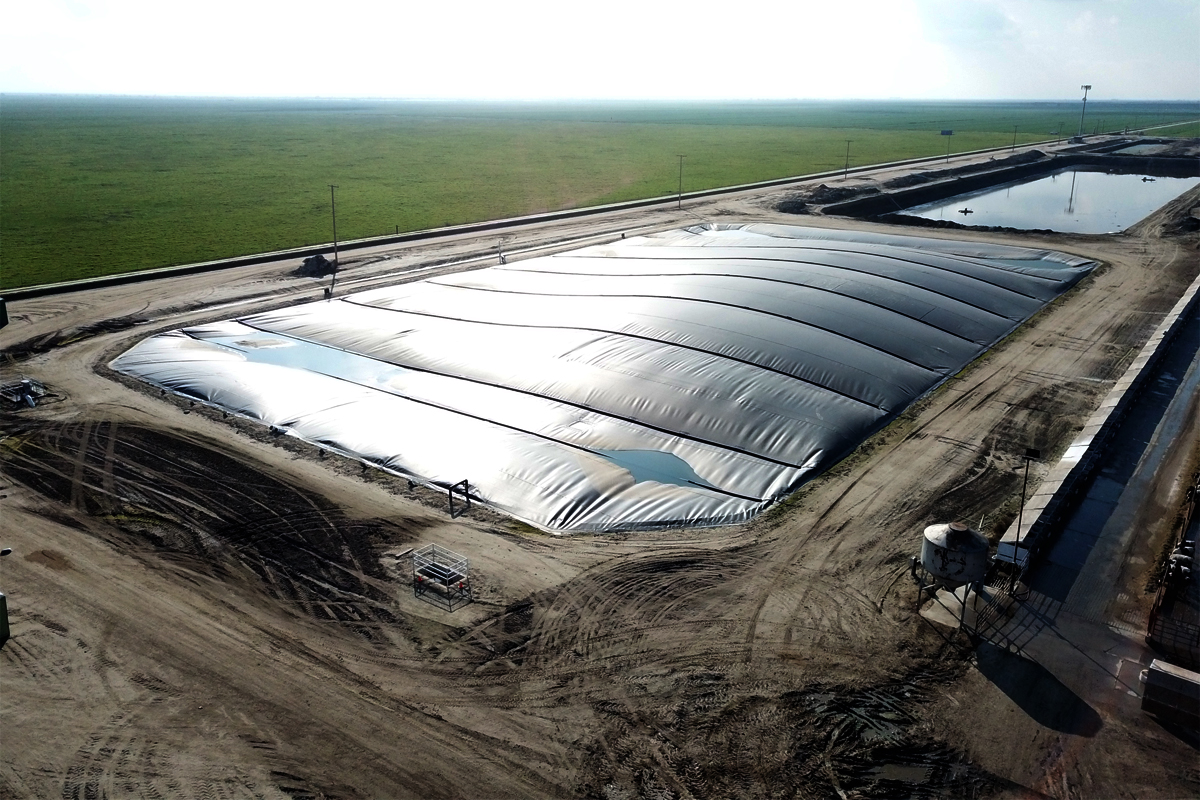
“Dairy Digesters the Renewable Energy …” from civileats.com and used with no modifications.
Transforming an Existing SSAFO Slurry Lagoon Into a Biogas System: A Simple Guide
Turning an existing slurry lagoon into a functional biogas system is a methodical process, but it's a lot easier than most farmers think. The lagoon does most of the work — the transformation mainly involves containment, gas management, and connecting to an energy end-use.
Now, let's look at what's needed to consider the feasibility of a covered lagoon digester.
Step 1: Evaluate Your Current Lagoon for Readiness
While not every lagoon is immediately ready to be covered, most can be made ready with little preparation. The first step is a simple physical evaluation of what you already have — size, state, positions of the inlet and outlet, and current volumes of slurry.
- Measure the lagoon's surface area and depth — cover fabrication is sized to these dimensions
- Check the integrity of the existing geomembrane liner — any punctures or seam failures need repair before a cover is installed
- Identify inlet and outlet pipe positions — these will need to be accommodated in the cover design
- Note proximity to housing, watercourses, and site boundaries — relevant for both odour management and regulatory requirements
- Assess lagoon type — constant-volume lagoons are easier and cheaper to cover than variable-level systems
If your lagoon was built to SSAFO standards, you're already working from a solid foundation. SSAFO-compliant lagoons are generally already geomembrane-lined and designed with appropriate freeboard, impermeable lining, and structural integrity — exactly the conditions a floating membrane cover needs to perform reliably.
It is common for people to overlook seasonal variations in slurry volume at this point. If a farm frequently empties its lagoons, it will need a cover system that can handle low liquid levels without compromising the gas-tight seal.
This is something that should be discussed with the cover supplier before specifications are made, as it will impact both the design of the cover and the layout of the gas collection pipework.
Step 2: Create a Double-Lagoon System for Digestion and Storage
The most effective covered lagoon biogas systems utilise two lagoons connected in a series instead of just one basin. The first lagoon functions as the active digestion cell — this is where anaerobic bacteria decompose the organic material and generate biogas. The second lagoon operates as a storage container for the treated digestate liquid before it is used on land.
There are two key reasons for this separation. First, it ensures the biogas yield is protected. If fresh, high-solids slurry is continuously mixed with material that has already been digested, it interferes with the microbial population and reduces the gas output.
Secondly, it results in a clean, stable digestate in the storage cell that is easier to manage from an agronomic perspective. The digestion cell of a covered lagoon digester is covered, while the storage cell can either remain open or be separately covered for odour control, depending on the location and requirements of your site.
Step 3: Place a Geomembrane Cover on the Digestion Lagoon
The cover is made from high-density polyethylene (HDPE) or similar geomembrane materials. It is cut and welded to fit the exact dimensions of the lagoon. The cover is delivered to the site in panels, unrolled across the lagoon surface, and anchored at the perimeter using ballast tubes or anchor trenches filled with compacted material. The cover floats on the surface of the slurry and rises as biogas accumulates underneath it. For more insights, check out this biogas plant construction guide.
The highest point of the cover, usually the centre, is fitted with gas collection pipes which lead to a gas manifold at the edge of the lagoon. The biogas then travels through standard pipework to the installed end-use system. Along the gas line, condensate traps are installed to remove water vapour, which is crucial because water in the gas line causes blockages and corrosion in downstream equipment.
People often overlook the significance of rainwater management in design. When rain falls on the cover surface, it needs a controlled way to drain. If it collects on top of the membrane, it adds weight, which can stress the cover and mess up the gas collection geometry.
Most covered lagoon digester designs include a drainage channel or sump pump setup around the perimeter to handle this automatically. To understand more about the underlying processes, you can explore the covered anaerobic lagoon process.
Key maintenance requirements for the cover:
• Weekly visual inspection, and after every significant wind event
• Ensure that rainwater drainage points are clear and functioning
• Monitor gas flow rate for unexpected drops — this can indicate damage to the cover or microbial stress
• Inspect perimeter anchoring quarterly for displacement or erosion
• Any tears or seam failures must be repaired immediately — small damage can escalate quickly if ignored
Step 4: Understand UK SSAFO Regulations and Environment Agency Requirements
In England and Wales, the Storage of Silage, Slurry and Agricultural Fuel Oil (SSAFO) Regulations 2010 set the legal standards for slurry storage infrastructure. If your existing lagoon was built and maintained to these standards, adding a biogas cover doesn't automatically mean you need a new permit — but it does mean you need to carefully consider what changes and what new obligations arise from gas production and use on site.
If you're producing and utilising biogas, especially if you're supplying a CHP unit or linking to a gas grid, the Environment Agency will be interested. It's a good idea to involve your local EA officer early in the planning stages.
The Water Environment (Controlled Activities) (Scotland) Regulations govern similar rules in Scotland, while the Nitrates Action Programme governs in Northern Ireland.
In all situations, we think that you will be expected to provide documented compliance records and a site management plan for the covered lagoon digester.
Step 5: Connect the Biogas Output to your Energy or Heating Systems
Once the biogas starts flowing from the cover, you have a few options for how to use it. The easiest and most cost-effective end-use is direct combustion in a modified gas boiler for space heating or water heating on the farm. A slightly more advanced option is a combined heat and power (CHP) unit, which generates both electricity and heat at the same time — improving the overall efficiency of the biogas energy captured. For farms that have aspirations to connect to the grid, biomethane upgrading equipment can remove the CO₂ and inject near-pure methane into the gas network, but this involves a significantly higher capital investment and is more suitable for larger operations.
If you can't use the energy right away or it's not practical to do so, you should at least install a biogas flare. This changes the methane into CO₂ before it gets into the air. CO₂ is still a greenhouse gas, but it's about 80 times less powerful than methane that hasn't been burned over 20 years. A flare also makes the gas collection system safer by relieving pressure when demand is low or during maintenance.
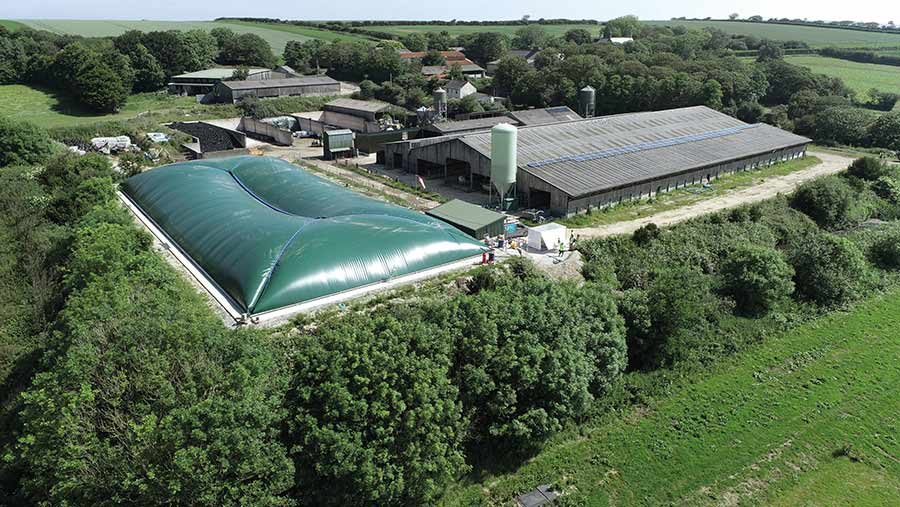
“slurry emissions into fuel …” a covered lagoon digester image from www.fwi.co.uk and used with no modifications.
What Farms Stand to Gain from a Covered Lagoon Digester
Farms that have transitioned to covered lagoon biogas systems have consistently reported benefits that extend far beyond energy generation. They've seen a noticeable decrease in odour, an improvement in the quality of their fertiliser, and better relationships with the surrounding community. All these secondary benefits often turn out to be just as valuable as the energy output over the system's lifespan.
A Covered Lagoon Digester Greatly Reduces Farm Smells Near Homes and Local Communities
A farm's uncovered slurry lagoon is often the main culprit when it comes to complaints about farm-related smells in rural planning disputes. Hydrogen sulphide, ammonia, and volatile fatty acids can all escape freely from an open lagoon surface.
A geomembrane cover can almost entirely eliminate this — the same seal that captures biogas also contains every smell compound the slurry produces. For farms near villages, residential developments, or footpaths, this benefit alone can make the investment worth it, even without considering the energy value generated.
Using Digestate as a Fertilizer for Crops
After the anaerobic digestion process in the covered lagoon, the remaining liquid is called digestate. This is a biofertilizer rich in nutrients that can be applied directly to farmland. The digestate from a covered lagoon system contains ammoniacal nitrogen, phosphorus, and potassium that are readily available and in forms that plants can absorb. The anaerobic process turns the organic nitrogen into a form that is more immediately accessible to crops than raw slurry. This reduces the need for synthetic fertilisers. For arable and mixed farms, this is a real and measurable cost saving, especially in a market where fertiliser prices are unpredictable.
Using Methane for Energy and Heat on the Farm
How much energy you can get from the biogas depends on a few factors, like the size of the lagoon, how much slurry is in it, the temperature, and how long the slurry stays in the lagoon. But even a small covered lagoon can create enough methane to heat the buildings on the farm, dry out grain, or power a small combined heat and power (CHP) unit all year.
Systems that digest waste in the absence of oxygen, such as covered lagoons, release less methane into the atmosphere than their uncovered counterparts. Furthermore, when the biogas captured from these systems is used in place of fossil fuels on the farm, the environmental benefits are even greater. As a result, covered lagoons are not only a source of energy, but they also play a significant role in a farm's efforts to achieve net-zero emissions or reduce its carbon footprint.
Whether a farm is part of an agri-environment program or getting ready for carbon audits due to supply chain needs, having a proven system for capturing and using biogas can greatly enhance the farm's sustainability credentials. These credentials are becoming more and more important to processors, retailers, and consumers.
Estimated on-farm energy benefits from a covered lagoon system:
| Farm Type | Primary Energy Use | Potential Biogas Application |
|---|---|---|
| Dairy (200+ cows) | Water heating, parlour washing | Gas boiler connection |
| Pig unit (500+ pigs) | Space heating, ventilation | CHP unit or direct boiler |
| Poultry (broiler) | House heating | Direct gas combustion |
| Mixed arable/livestock | Grain drying, workshop heating | Gas boiler or CHP |
Temperature and Biogas Yield: What Farmers Need to Know
Temperature is the single biggest variable affecting how much biogas a covered lagoon produces. Unlike heated tank digesters that maintain a controlled mesophilic temperature of around 35°C year-round, covered lagoons operate at ambient temperature — which in the UK means significant seasonal variation.
During the summer months, microbial activity and gas production increase substantially. Through winter, production slows, sometimes considerably. This doesn't make the system unviable — it means energy planning needs to account for seasonal output variation rather than assuming a constant daily yield.
Why Heated Tank Digesters Generate More Biogas Than Covered Lagoons
Regardless of the season outside, a heated tank digester running at 35°C (mesophilic) or 55°C (thermophilic) maintains peak microbial activity. Covered lagoons lack a heating system, so the slurry temperature mirrors the ambient air and ground temperature.
In northern Europe, these temperatures can plunge to single digits during the winter. At these temperatures, methanogenic bacteria significantly reduce their activity, and biogas output can decrease by 50% or more compared to peak summer production. This is the central technical trade-off: dramatically lower capital cost versus lower and variable yield.
However, it's important to remember that a heated tank digester, which produces biogas all year round, still needs to be paid for, maintained, and run. These costs can easily outweigh the benefit of the extra gas produced in winter for smaller operations.
On the other hand, the covered lagoon produces free energy from existing infrastructure and doesn't require any heating energy. The difference in performance often becomes much smaller once the cost of heating energy for the tank digester is taken into account.
Why Smaller Farms Still Benefit From Lower Biogas Yield
For farms that produce between 500 and 2,000 cubic metres of slurry annually, investing in a dedicated heated digester tank is seldom the best financial decision. The period to recoup the capital expenditure is too long and the operational complexity is too high compared to the amount of gas produced.
A covered lagoon at this scale can still produce enough methane to heat farm buildings from spring through autumn. This can offset significant amounts of LPG, oil, or grid gas. The decrease in output during winter coincides with the farm's lower heating needs during the warmer shoulder seasons.
When a farm is already looking to upgrade or replace an old slurry lagoon, that's when the real turning point comes. At this point, specifying a new lagoon with cover-readiness built in from the start – constant volume design, gas-pipe penetration points, perimeter anchoring details – adds very little extra cost to what is already a necessary capital project. This is the point where the covered lagoon biogas system delivers its strongest return on investment case.
Why a Plastic Membrane Lagoon is More Practical than a Biogas Tank
The simple truth is that for most UK livestock farms, a covered anaerobic lagoon is the more practical choice. If you're already operating a SSAFO-compliant slurry lagoon, consistently producing volumes of manure slurry, and purchasing farm energy from fossil fuel sources, the covered lagoon system tackles all three of those at once — with less initial investment, quicker installation, and fewer operational complications than any dedicated tank digester available.
The farms for which a purpose-built tank digester is more financially sound are usually those larger farms co-digesting multiple feedstocks, processing food waste under gate-fee agreements, or operating at a scale where biomethane grid injection is feasible. For everyone else, the membrane is the first step.

Common Questions About the Covered Lagoon Digester Concept
Many farmers considering the move to covered anaerobic lagoon systems have similar questions. The answers below provide clear, straightforward information about the most frequently asked questions, including those related to regulations, lifespan, size, gas usage, and compliance.
The UK's regulatory landscape has changed as we've learned more about biogas from farm sources. The Environment Agency and HMRC now have a good understanding of this.
The framework for farm-scale covered lagoon systems is now relatively well-established. For most operations, the path to compliance is straightforward. It's just a matter of getting in touch with the right bodies early on, rather than making assumptions during the planning phase.
If you're currently operating a slurry lagoon and wondering if this is a feasible and cost-effective solution for your farm, the frequently asked questions section below will provide the answers you're looking for.
Can a Covered Anaerobic Lagoon Be Legal in the UK Without a Permit?
As a slurry storage structure, the covered lagoon falls under existing SSAFO regulations, which do not require an environmental permit for standard agricultural slurry storage. However, once you start generating and using biogas on site, you need to consider additional factors.
If you use biogas in a boiler or CHP unit on the same farm, you generally do not need an environmental permit in England, as long as gas production and use stay within specified limits. Instead of applying for a full permit, you need to register the exemption with the Environment Agency, which is a simpler and quicker process. Always check the current limits directly with the EA, as they may change.
What is the Lifespan of a Geomembrane Cover on a Slurry Lagoon?
Under normal farming conditions, a properly maintained and well-specified HDPE geomembrane cover can last for 20 years or more. The longevity of the cover is influenced by factors such as UV exposure, mechanical damage from debris or maintenance access, and the quality of the perimeter anchoring system.
Covers that have standing water pooling on their surface, which indicates a poor drainage design, will degrade faster at those stress points. Covers that are inspected weekly, kept clear of sharp objects, and have properly functioning rainwater drainage systems often last longer than their design life. For more on installation tips, check out our Biogas Plant Construction Guide.
It's a good idea to set aside some money for a membrane replacement when planning your budget for a covered lagoon system. Think of it as a roof that will need to be replaced eventually. The cost of replacing the membrane alone is much lower than the initial installation cost because the lagoon infrastructure, pipework, and gas utilisation equipment will not need to be replaced.
Is a Covered Anaerobic Lagoon System Beneficial for a Small Farm?
Yes, it can be — as long as the farm consistently produces a large amount of slurry and has a lagoon that is the right size and in good condition. A dairy farm with 80 to 100 cows, a pig finishing farm with 300 to 500 pigs, or a poultry farm of a similar size can all produce enough methane from a covered lagoon to significantly reduce farm energy costs.
The smaller the scale, the less gas is produced, which simply means that the end use of the energy needs to be carefully matched with what the system can produce — a gas boiler for heating water and space is the most straightforward and cost-effective match at this scale.
What Does the Biogas From a Covered Lagoon Consist Of?
Biogas that is gathered from a covered lagoon is composed of methane, carbon dioxide, water vapour, and trace amounts of hydrogen sulphide. It requires basic conditioning before it can be utilised in most combustion equipment.
This conditioning primarily involves removing moisture through condensate traps on the gas line. In certain applications, it may also be necessary to scrub the hydrogen sulphide to protect the metal parts in boilers or engines.
After it has been conditioned, the biogas can be utilised in a variety of ways, depending on the size of the farm and its energy requirements. For more insights on how to optimise its use, consider reading this biogas energy security article.
Here are some of the ways in which biogas can be used:
- Burning in a gas boiler — This is the easiest and least expensive option. It can be used for heating spaces, heating water, and drying grain.
- Combined heat and power (CHP) unit — This generates electricity and heat that can be recovered at the same time, making it a more efficient use of energy.
- Biogas flare — This turns methane into CO₂ when the gas cannot be used right away. Any system must have this as a minimum for safety and environmental reasons.
- Biomethane upgrading — This removes CO₂ to create almost pure methane that can be injected into the grid. This is only cost-effective on a larger scale or with co-digestion volumes.
The biogas flare should be highlighted as an essential part of any covered lagoon installation. There will always be times — scheduled maintenance, equipment downtime, peak production periods — when more gas is produced than can be used right away. Without a flare, that gas either vents as methane or builds up to unsafe pressure under the cover. A flare solves both problems and is a relatively inexpensive addition to the overall system.
When farms look into CHP, the numbers look a lot better when all of the heat output is used right there on the farm. If a CHP unit that runs on lagoon biogas can provide all of the electricity and heat that a farm needs, it can pay for itself in a time that can compete with the cost of electricity from the grid at the prices we have now in the UK.
Biogas Usage Option Cost Range for Initial Investment Best Suited For Primary Requirement Gas boiler (direct combustion) Low (£2,000–£8,000) Small to medium-sized farms Removal of moisture on gas line Combined heat and power (CHP) Medium (£15,000–£60,000+) Medium to large farms Consistent gas flow, H₂S scrubbing Biogas flare (minimum safety requirement) Low (£1,500–£5,000) All covered lagoon systems Automatic ignition, pressure relief Biomethane upgrading High (£200,000+) Large-scale or co-digestion sites Grid connection agreement
Does Adding a Cover to My Existing Slurry Lagoon Make the SSAFO Regulation Applicable?
In England and Wales, the SSAFO regulations apply to the construction, maintenance, and integrity of slurry storage structures. Regardless of whether a cover is added, an existing compliant lagoon remains subject to these standards.
Adding a geomembrane cover does not in itself constitute a material change to the storage structure under SSAFO, provided the cover does not alter the structural integrity, capacity, or drainage characteristics of the lagoon. The cover sits on top of the existing structure — it doesn't change what's beneath. For more information on biogas regulations, you can explore this biogas permit guide.
The complexity in this issue arises when the SSAFO compliance intersects with the biogas utilisation part of the project. If the gas pipework penetrates the lagoon bund or liner, the installation must be done in such a way that the impermeability and structural integrity of the SSAFO-compliant storage are maintained.
This is a detail that the cover installer and contractor should address explicitly in the design specification. Poor penetration detailing is one of the most common causes of regulatory non-compliance in retrofit installations.