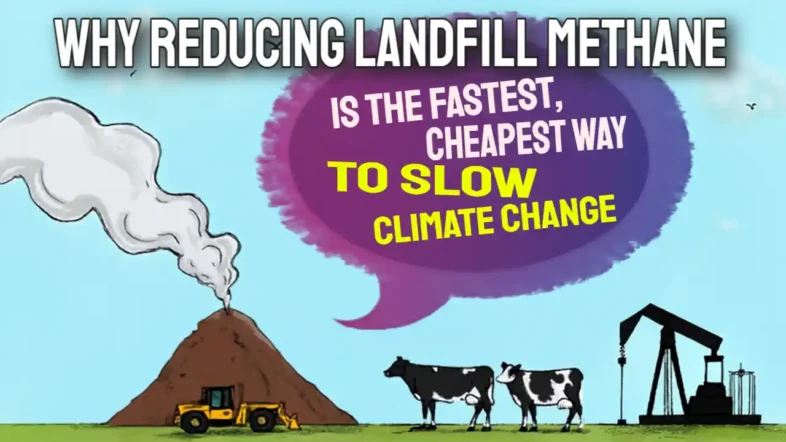
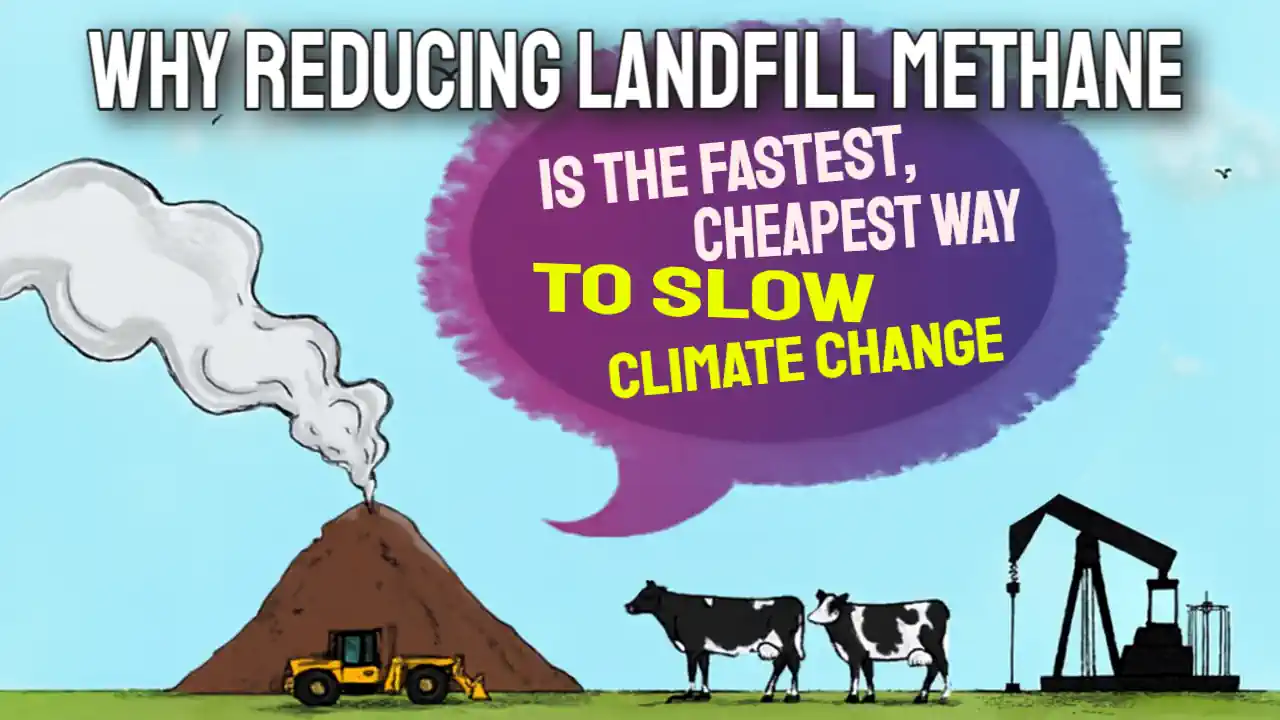
While billions flow to long-horizon solutions, reducing landfill methane emissions remains the fastest, cheapest way to slow global warming — acting within years, not decades.
The world is focused on solar panels and EVs, but one of the most powerful near-term climate levers is decomposing quietly beneath our feet.
If your priority was reducing warming as quickly and cheaply as possible, the science points to perforated pipes buried in rubbish tips. Landfill methane represents one of the most accessible, shovel-ready climate solutions available.
If you were designing a climate strategy from scratch and your top priority was reducing global warming as quickly and cheaply as possible, the science would point you somewhere unexpected.
Not to solar farms or offshore wind. Not to electric vehicles or carbon capture. It would point you to a network of perforated pipes buried in decomposing rubbish tips. Because landfill methane emissions — the invisible, odourless gas quietly seeping out of the world’s waste — represent one of the most accessible, shovel-ready, cost-effective climate interventions on the planet.
And we are, with breathtaking consistency, choosing not to deploy them.
The story of landfill methane is ultimately a story about the gap between what we know and what we do. The science has been clear for years. The technology has existed for decades. The economics are, compared to virtually every other form of large-scale climate mitigation, almost embarrassingly favourable.
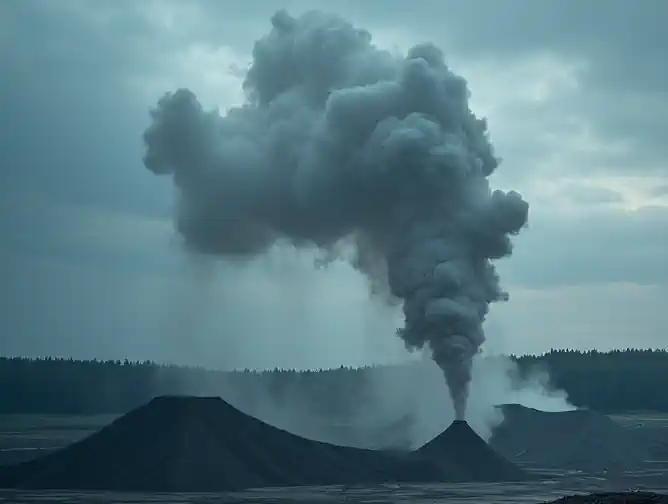
And yet, according to the World Bank’s global waste data, only 8% of the world’s waste ends up in sanitary landfills equipped with gas collection systems.
UNEP’s Global Waste Management Outlook 2024 tells us waste is already at 2.1 billion tonnes annually and climbing towards 3.8 billion by 2050. The methane those future landfills will generate is a ticking atmospheric clock.
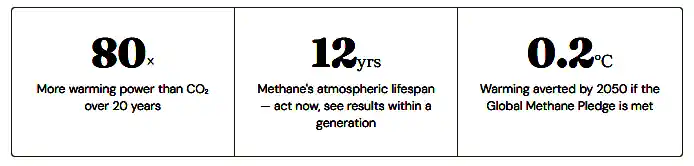
- 80× More warming power than CO₂ over 20 years
- 12yrs – Methane’s atmospheric lifespan — act now, see results within a generation
- 0.2°C – Warming averted by 2050 if the Global Methane Pledge is met
The Short-Term Climate Forcer We Keep Ignoring
To understand why landfill methane deserves such urgent attention, it helps to understand what makes methane different from CO₂ as a climate driver. Carbon dioxide is the climate crisis’s slow-burning villain — it accumulates over centuries, and cutting emissions now won’t produce measurable temperature benefits for generations. Methane is different in every important way. It stays in the atmosphere for roughly 12 years, not hundreds. But while it is there, it is devastatingly effective at trapping heat — more than 80 times as powerful as CO₂ over a 20-year period.
This short atmospheric lifespan is actually cause for cautious optimism. It means that cutting methane emissions now delivers measurable climate benefits within years, not decades. Scientists describe methane as a “short-lived climate forcer,” and what that means in practice is this: reduce it fast, and you bend the warming curve downward almost immediately.
The Methane Reduction Lever
The International Energy Agency and the IPCC have consistently highlighted methane reduction as one of the few levers capable of producing near-term changes in the rate of global warming. That is rare. Most climate actions are investments whose payoffs arrive long after the politicians who commissioned them are gone. Methane reduction is different. It works on a human timescale.
“Because methane is a short-lived climate pollutant, abating it will have a relatively large near-term impact on slowing global climate change — a critical window to implement longer-term climate strategies.”
— International Energy Agency (IEA), Global Methane Tracker
Landfills: The Third-Largest Methane Source, and the Most Overlooked
When people think of methane emissions, they tend to think of oil wells or cattle. Landfills rarely enter the picture. Yet municipal solid waste landfills are the third-largest human-related source of methane in the United States, accounting for roughly 14.4% of all domestic methane emissions.
Globally, landfills contribute around 20% of all human-caused methane — more than most countries’ entire annual CO₂ emissions. The gas is produced by bacteria breaking down organic material — food scraps, garden waste, paper, wood — in the oxygen-deprived depths of a buried waste pile. The process is continuous, ongoing for decades after a landfill closes.
And critically, recent satellite-based research suggests the official numbers are a significant undercount. A Harvard-led study published in 2024 found that US landfill methane emissions were on median 77% higher than facility self-reports to the EPA suggested.
For sites with gas collection systems already operating, the gap between reported and real-world emissions was even more dramatic — actual emissions were more than 200% above the figures regulators relied on, implying a collection efficiency of around 50% rather than the assumed 75%. The landfills we think are working are leaking far more than we know. The ones without any collection at all are, in effect, uncapped methane geysers.
The Solution Is Not New — The Scale of Deployment Is
Landfill gas collection is a mature, proven technology. Networks of perforated pipes driven into the waste mass draw gas to a central collection point, where it can be flared — which converts methane into CO₂, dramatically reducing its warming impact — or, better still, used to generate electricity, heat, or renewable natural gas.
The system design is not complicated. The engineering involved is well-understood. A well-installed modern collection system can recover between 60 and 90% of a landfill’s methane output, making it one of the most efficient gas capture technologies in any sector.
A Scandalous Story
What makes the landfill methane story genuinely scandalous is the economic side. Experts quoted in Scientific American note that emission controls for landfills can cost as little as a few dollars per tonne of methane — a fraction of what it costs to achieve equivalent reductions in the energy or industrial sectors.
Meanwhile, the revenue from selling captured landfill gas as renewable energy frequently offsets a significant portion of installation and operating costs. At many landfills, the gas collection system essentially pays for itself. This is not a situation where the climate-right choice requires painful economic sacrifice. It is one where the climate-right choice also makes financial sense.
What Full Action Would Deliver
Where Nations Are Acting — and Where They Are Not
The Global Methane Pledge, launched at COP26 in Glasgow, commits 159 countries to cutting methane emissions 30% below 2020 levels by 2030. It was heralded as a breakthrough moment. And in some respects, it is bearing fruit. Canada published draft landfill methane regulations in 2024 designed to roughly halve emissions by 2030. The UAE has set aggressive waste diversion targets. The European Union has added binding requirements for separate biodegradable waste collection and a 10% maximum landfilling target by 2035. These are encouraging signals.
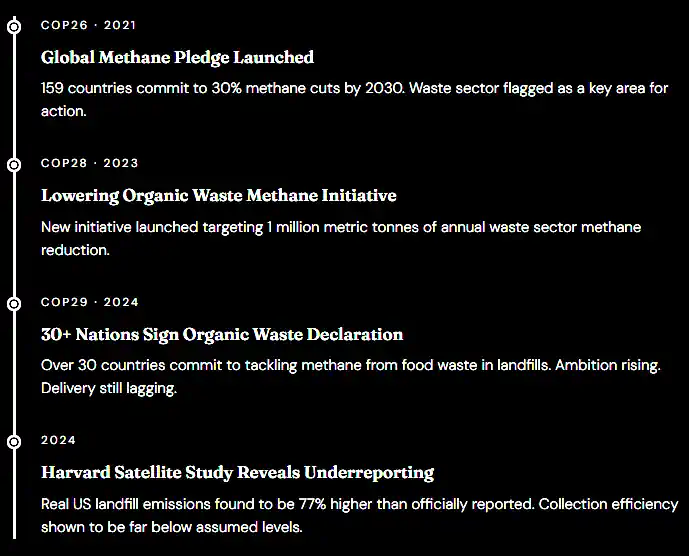
Timeline of National Pledges and Actual Action
- COP26 · 2021 – Global Methane Pledge Launched. 159 countries commit to 30% methane cuts by 2030. Waste sector flagged as a key area for action.
- COP28 · 2023 – Lowering Organic Waste Methane Initiative. New initiative launched targeting 1 million metric tonnes of annual waste sector methane reduction.
- COP29 · 2024 – 30+ Nations Sign Organic Waste Declaration. Over 30 countries commit to tackling methane from food waste in landfills. Ambition rising. Delivery still lagging.
- 2024 – Harvard Satellite Study Reveals Underreporting. Real US landfill emissions found to be 77% higher than officially reported. Collection efficiency shown to be far below assumed levels.
But for every nation making concrete progress, many more have signed the Pledge without producing the sector-specific plans and regulations needed to implement it.
The IEA found that fewer than a third of GMP signatories have provided detailed implementation strategies. High-level commitments have not been matched by the unglamorous work of drafting regulations, allocating budgets, and mandating collection infrastructure.
The Clock Is Running
Climate change is a problem of compound interest — every year of delay makes the eventual cost higher and the achievable outcomes worse. But landfill methane is also a problem of lock-in.
Every new landfill built today without gas collection infrastructure is committing the atmosphere to decades of uncontrolled emissions. Retrofitting collection systems is possible, but it is more expensive and less effective than building them in from the start.
The design decisions being made right now in emerging economies — where waste volumes are growing fastest — will determine the methane emissions profile of the 2030s, 2040s, and 2050s.
The urgency is real, the opportunity is vast, and the barriers are not technical or economic — they are political and institutional.
Reducing landfill methane emissions is the fastest, cheapest climate intervention available at scale. Meeting the Global Methane Pledge would shave 0.2°C off projected warming by 2050. Preventing 255,000 premature deaths a year. Avoiding 26 million tonnes of annual crop losses. All for a few dollars per tonne. The world has signed the paperwork. Now it needs to lay the pipe.
You may also find the following Waste to Energy “Blindspot” interesting.