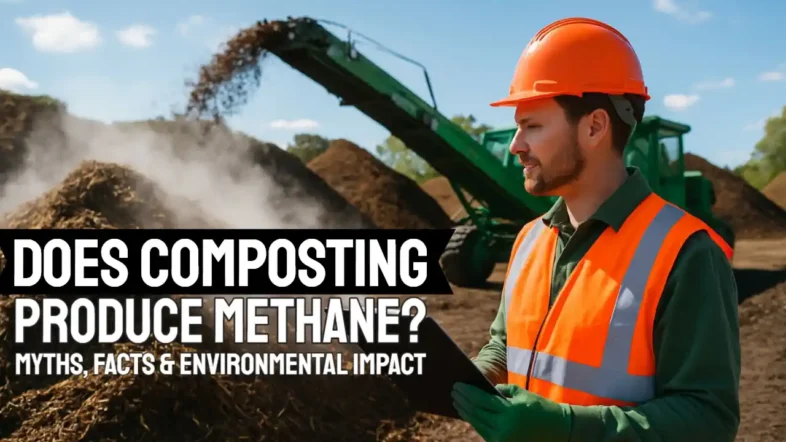
Yes, compost can release methane, but massively less than landfills. While proper aerobic composting (with oxygen) mainly produces carbon dioxide (CO2), improperly or poorly managed compost piles can become anaerobic (lacking oxygen), which produces methane (CH4), a potent greenhouse gas.
Does Composting Produce Methane? – Key Takeaways
- Composting in an aerobic environment primarily produces CO2, not methane, making it much better for the environment than landfill disposal.
- Methane (CH4) is 28–36 times more powerful as a greenhouse gas than carbon dioxide over a 100-year period.
- Landfill gas is about 50% methane, while the gas from aerobic compost is mostly CO2.
- There are five composting methods that minimise methane production — and one doesn’t require any outdoor space.
- Moonshot Compost demystifies the science of food waste and composting to help people make smarter, more climate-friendly decisions.
While composting does produce some methane, the real story is how much less it produces compared to the alternative.
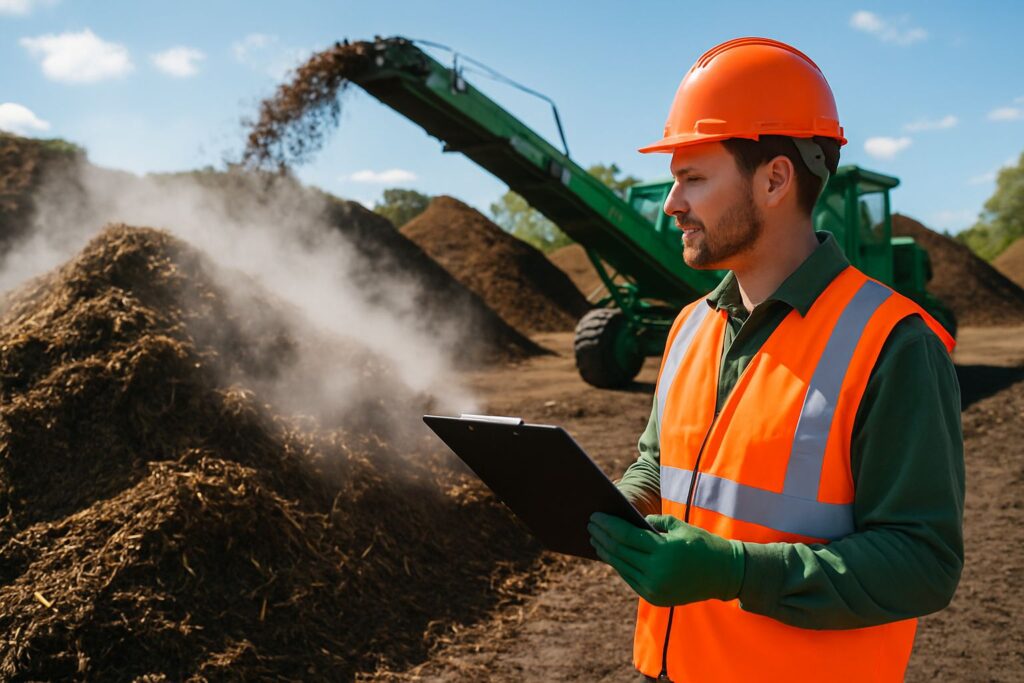
Decomposing food scraps and organic materials releases gases, which is a natural process. However, the type of gas released is determined by the presence or absence of oxygen.
This factor determines whether the decomposed food waste becomes beneficial or harmful to the climate. Moonshot Compost has been educating communities about this important distinction, emphasising the significance of the location and process of organic waste decomposition for the planet.
Composting Does Produce Methane, But Not As Much As You Might Believe
While it’s true that composting can produce methane under certain conditions, the amount of methane produced by well-managed aerobic composting is minimal. That’s a key point that often gets left out of the discussion.
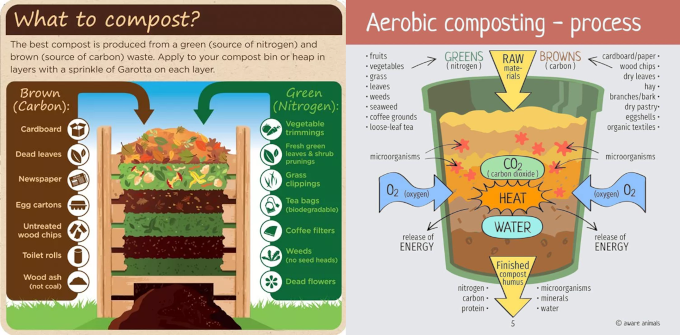
“Cold Creek Compost” from coldcreekcompost.com and used with no modifications.
Understanding the Basics: Aerobic and Anaerobic Decomposition
Decomposition can occur in two different ways. Aerobic decomposition happens when oxygen is present. On the other hand, anaerobic decomposition takes place when there is no oxygen. These two methods result in entirely different byproducts. Knowing the difference between them is crucial when it comes to composting and greenhouse gas emissions.
Aerobic Decomposition (with oxygen): This is when organic matter is broken down into CO2, water, and heat. This is the process that takes place in a well-managed compost pile.
Anaerobic Decomposition (without oxygen): This is when organic matter is broken down into methane (CH4) and CO2. This is the process that happens to food waste that is buried in a landfill.
This is important because methane is not just any greenhouse gas. It is significantly more harmful than carbon dioxide in the short term, and landfills are one of the largest sources of methane that are driven by humans.
How the Kind of Decomposition Makes a Huge Difference
When food waste is dumped in a landfill and covered by piles of garbage, it becomes deprived of oxygen. Methanogens, the microbes that thrive in environments without oxygen, produce methane as they break down organic matter. When oxygen is available, these methane-producing microbes are inactive. This is why aerobic composting, which involves oxygen, is so successful in reducing methane emissions.
Why It Matters: Carbon Dioxide and Methane
Carbon dioxide (CO2) and methane (CH4) are both greenhouse gases, but they are not created equal. Methane is 28 to 36 times more efficient at trapping heat in the atmosphere than carbon dioxide over a century. When composting in the presence of oxygen (aerobic composting) releases CO2, the carbon is recycled back into the natural carbon cycle and is absorbed by plants through photosynthesis. Methane from landfills doesn’t have this benefit—it’s released directly into the atmosphere and remains potent for decades.
Understanding the Creation of Methane During Decomposition
In order to fully grasp why composting is a superior option, it’s beneficial to examine what’s occurring on a microscopic level when organic matter decomposes in an environment without oxygen.
What Happens to Organic Waste in the Absence of Oxygen
When there is no oxygen, decomposition occurs in stages. Initially, bacteria break down complex organic molecules such as carbohydrates and proteins into simpler compounds. Then, another group of microbes converts those compounds into acetic acid, hydrogen, and CO2. Finally, methanogens consume these byproducts and release methane as waste. This entire process is a chain reaction that is automatically triggered by food scraps in a landfill – and once it starts, there’s no stopping it.
The term “biodegradable” can be quite deceptive. Just because something is breaking down doesn’t mean it’s doing so in an environmentally friendly way. Organic material that’s buried in a landfill is technically biodegrading, but it’s doing so in a way that releases methane into the atmosphere.
Methane’s Impact on Global Warming: 28–36x More Damaging Than CO2
When comparing the impact of different greenhouse gases on our environment, we use a measure known as Global Warming Potential (GWP). This measures the amount of heat a gas traps in the atmosphere compared to CO2 over a set period. Over a 100-year period, methane’s GWP is 28–36 times that of carbon dioxide. This means that for every pound of methane released, it’s as damaging as releasing 28–36 pounds of CO2.
| Gas | Source | Global Warming Potential (100-yr) |
|---|---|---|
| Carbon Dioxide (CO2) | Aerobic composting | 1x (baseline) |
| Methane (CH4) | Landfills, anaerobic decomposition | 28–36x |
Even if a compost pile emits small amounts of methane during an imperfect process, it still produces a fraction of the warming impact of the same organic material sitting in a landfill. This single data point reframes the entire conversation.
How Different Composting Techniques Affect Methane Levels
There’s more than one way to compost, and the method you choose can greatly affect the amount of methane produced. All composting methods that produce less methane have one thing in common: they allow for plenty of airflow. The more oxygen present, the fewer methanogens there will be, leading to less methane.
There are five main methods of aerobic composting, each one is suitable for different scales and situations.
1. Composting in an Open Pile

“Compost – Wikipedia” from en.wikipedia.org and used with no modifications.
Composting in an open pile is a simple and straightforward method. Organic materials are layered and left to decompose in the open air. The pile is exposed to the air on all sides, allowing oxygen to circulate naturally. If you turn the pile regularly, you can speed up the process and prevent the formation of anaerobic pockets in the center, which could otherwise lead to the production of methane.
2. What is Static Pile Composting?
Static pile composting is a more advanced method of open pile composting that uses a forced air system. This is achieved by running perforated pipes under the compost pile. The pipes either push or pull air through the pile, ensuring that oxygen levels remain consistent throughout the pile. This even includes the core of the pile, where natural airflow is unable to reach. For more information on composting techniques, visit the EPA’s composting guide.
Large-scale municipal composting operations often use this method because it can manage high volumes without the need for constant manual turning. The controlled airflow is what prevents the production of methane, making it one of the most dependable options for consistent, low-emission composting on a large scale.
3. Windrow Composting
Windrow composting is the process of arranging organic waste into long, parallel rows that are usually 4 to 8 feet high. This waste is then regularly turned with specialized equipment. The turning process is the most crucial part of windrow composting. It reintroduces oxygen, releases accumulated heat, and disrupts any anaerobic areas that may have formed between turns. Windrow composting is a common method for processing food waste, agricultural waste, and yard waste on a commercial scale. When properly managed, it produces very little methane.

“Windrow composting – Wikipedia” from en.wikipedia.org and used with no modifications.
4. In-Vessel Composting
At a Glance: In-Vessel Composting
• The composting process takes place within a closed drum, silo, or container
• Temperature, moisture, and airflow are mechanically controlled
• Finished compost can be produced in as little as a few weeks
• This method is suitable for composting food waste, including meat and dairy — materials that can cause problems in open systems
• In-vessel composting is used in hospitals, universities, and food processing facilities
In-vessel composting is the most controlled composting method. By enclosing the composting process, operators can accurately control the oxygen levels that determine whether the decomposition process remains aerobic. This results in a highly efficient, very low-methane process that can be used even in urban environments where space is limited and odor management is a concern. Additionally, this method is advantageous for food waste management in various facilities.
One of the main advantages of in-vessel composting is its ability to deal with food waste streams that other methods find challenging. Meat scraps, dairy products, and cooked foods, which would attract pests in an open pile and could potentially cause smell problems, can be processed safely inside a closed vessel.
Countertop food recyclers like the FoodCycler work on a similar principle, but on a smaller scale. They provide a sealed, aerated environment that processes food scraps quickly and without the methane output of anaerobic breakdown. This is a practical solution for people who want to divert food waste but don’t want to maintain a full outdoor compost system.
5. Worm Composting
Worm composting, also known as vermicomposting, uses worms to break down organic material. Red wigglers (Eisenia fetida) are the most commonly used species. As the worms move through the compost, they aerate the material, creating an oxygen-rich environment that suppresses methane-producing microbes. The end product, known as worm castings or vermicast, is one of the most nutrient-dense soil amendments available. This makes it an ideal composting method for those living in apartments or without outdoor space.
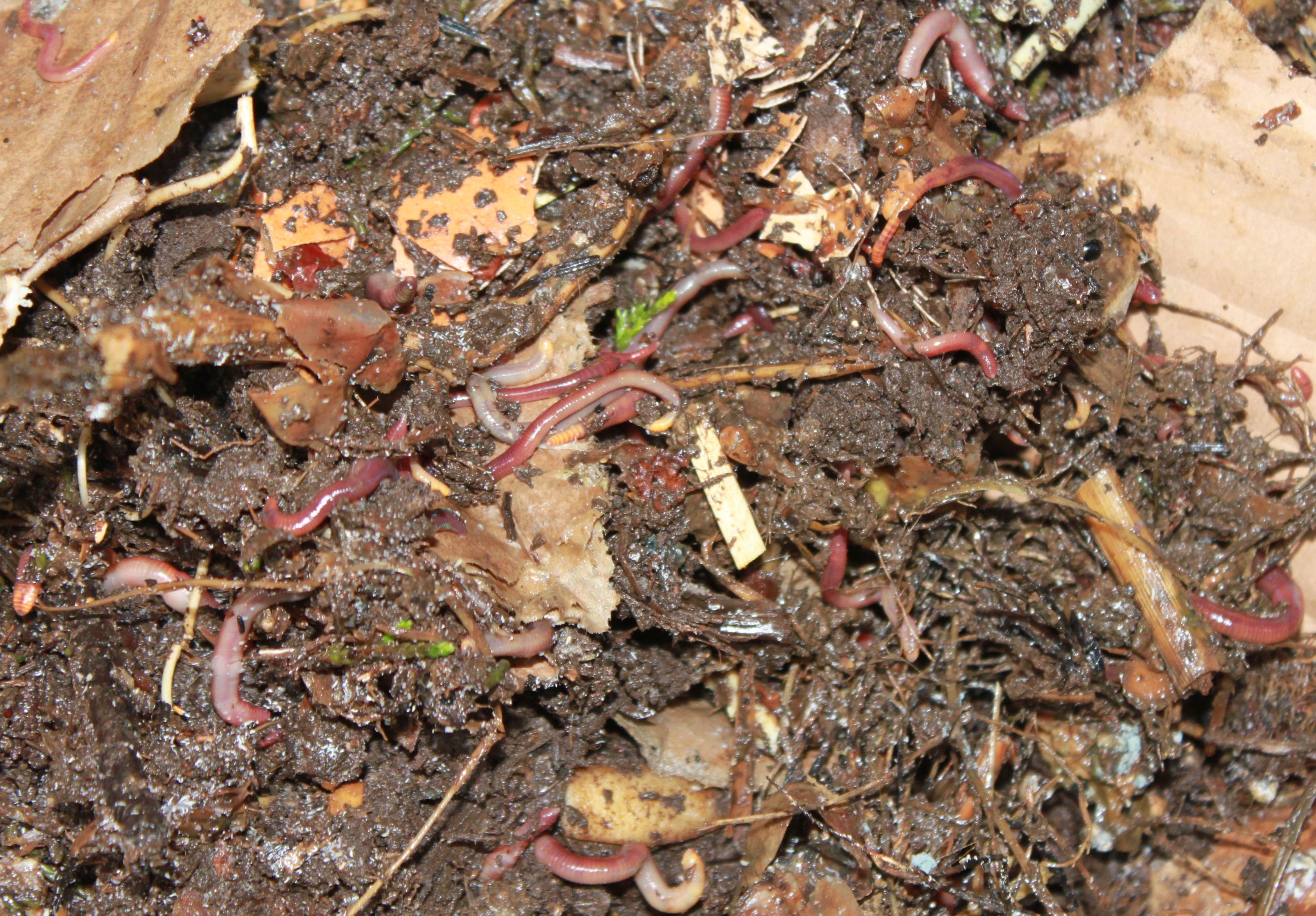
“Vermicompost – Wikipedia” from en.wikipedia.org and used with no modifications.
Compost vs. Landfills: The Gap in Methane Emissions
The disparity in methane emissions between compost and landfills isn’t just noticeable — it’s significant. Grasping this difference is what makes composting such a powerful tool in combating climate change, even on a small scale at home. For those interested in sustainable waste management, exploring food waste anaerobic digestion can offer additional insights into reducing emissions.
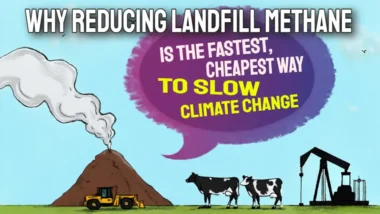
Food waste that ends up in a landfill is quickly smothered by other types of waste, leaving it with no access to oxygen. This triggers anaerobic decomposition and the production of methane begins. There is no one turning the waste to aerate it and no one doing anything to stop the process. It just continues on its own. The methane gas that is produced is either captured by the landfill’s collection systems, which don’t catch all of it, or it goes straight into the atmosphere. Reducing landfill methane is crucial as it is the fastest, cheapest way to slow climate change.
Landfill Gas Is Half Methane, Compost Gas Is Mostly CO2
Landfill gas, the mix of gases produced by decomposing waste in a landfill, is made up of about half methane and half carbon dioxide. In contrast, the gas released from well-managed aerobic compost is mostly carbon dioxide — with only tiny amounts of methane produced during brief anaerobic moments inside the pile. The Global Warming Potential of the gases coming off a compost pile is a lot lower than those coming off the same material in a landfill, even when you take into account any imperfections in the composting process.
58% of Fugitive Methane Emissions Come from U.S. Landfills
Landfills in the United States are a major contributor to the methane problem. These landfills are one of the largest producers of human-caused methane emissions in the country, accounting for a large portion of fugitive methane gas that is released into the atmosphere instead of being captured or utilised.
Composting, which diverts organic waste from landfills, directly reduces the amount of material entering these systems that generates methane. This is why many states are now actively enacting laws for organic waste diversion programs.
Debunking Common Misconceptions About Composting and Methane
| Misconception | Truth |
|---|---|
| Food waste decomposes safely in landfills | Landfills decompose waste anaerobically, leading to high-methane gas production |
| Food rotting in a landfill is the same as composting | Composting is an aerobic process, while landfill decomposition is anaerobic – they are entirely different processes |
| A backyard bin is necessary for composting | Indoor systems, drop-off programs, and food recyclers are all effective alternatives |
| Biodegradable is synonymous with environmentally friendly | Biodegradable materials can still produce methane when they decompose anaerobically in landfills |
| Individual food waste doesn’t significantly impact the climate | Organic waste is one of the biggest contributors to landfill methane emissions |
These misconceptions often persist because decomposition is not visible to us. We throw away our food scraps, the garbage truck takes them away, and it feels like the problem is solved. But just because it’s out of sight doesn’t mean it’s out of our atmosphere.
The fate of that banana peel or leftover pasta once it reaches the landfill has very real implications – and those implications can be measured in terms of greenhouse gas emissions.
The myth that all biodegradable materials are harmless is a persistent one. Many people believe that because something will eventually decompose, it must be doing so without causing any harm.
However, the chemistry of anaerobic decomposition doesn’t care about our good intentions. It will produce methane whether the decomposing material is a plastic bag or an organic apple core.
It’s crucial to debunk these myths as they often lead to a lack of action. If a person thinks their food waste is decomposing without harm in a landfill, they won’t see a need to compost. However, the facts tell a different story. Once people grasp the real process, they are naturally inspired to change their habits, such as using food waste anaerobic digestion methods.
Let’s take a closer look at each of the myths below, as it’s crucial to know the details when deciding what to do with food waste.
Myth 1: It’s safe for food waste to decompose in landfills
- Food waste in landfills is immediately compacted and deprived of oxygen after disposal
- These anaerobic conditions trigger microbial activity that produces methane
- Landfill gas is approximately 50% methane, one of the most potent greenhouse gases
- Even landfills with gas capture systems don’t collect all of the methane produced
- There is nothing “safe” about how organic material decomposes underground in a sealed landfill environment
While the term “breakdown” suggests a neutral, natural process, the environment in which this breakdown occurs determines whether it is beneficial or harmful. A landfill is not a composting facility. It was never intended to handle organic waste in a way that reduces emissions — it was designed to store waste, period.
The food scraps that end up in a landfill don’t improve over time — they actually deteriorate. As more waste accumulates on top, the anaerobic pressure increases, and so does the production of methane. The decomposition that we envision happening quietly and harmlessly beneath the ground is, in fact, one of the most powerful sources of greenhouse gas in today’s waste system.
When you compost your food scraps at home or via a community program, the result is completely different. Instead of producing a gas that warms the atmosphere, you create a material that enriches the soil.
Myth 2: Decomposing Food in a Landfill Is the Same as Composting
This is one of the most prevalent misunderstandings, and it’s not hard to see why it persists. Both processes involve organic matter decomposing over time. But that’s where the similarity ends. The presence or absence of oxygen completely changes the chemical, microbial, and environmental outcomes.
Microbes that thrive in oxygen-rich environments are responsible for the decomposition in a compost pile. These microbes produce heat, break down complex organic compounds, and release CO2, which is then absorbed by plants during photosynthesis. In contrast, in a landfill, methanogens, which can survive without oxygen, produce methane as a byproduct. Unlike CO2, there is no natural short-term recycling mechanism for methane.
Comparing landfill decomposition to composting is like comparing a house fire to a controlled burn. Sure, both involve combustion on a technical level. But the conditions, the control, and the outcomes are worlds apart. For instance, reducing landfill methane is considered one of the fastest and cheapest ways to slow climate change.
Myth 3: Composting Requires a Compost Bin
When most people think of composting, they imagine a wooden box in a garden corner, filled with vegetable scraps and coffee grounds. This image has unintentionally led people to believe that composting is only for those with outdoor space and time to manage a pile.
But that’s simply not the case. Thanks to municipal food scrap drop-off programs, curbside organics collection, countertop food recyclers like the FoodCycler, and community composting sites, anyone — including apartment dwellers — can now compost.
Myth 4: Biodegradable Materials Are Always Environmentally Friendly
The term “biodegradable” is often used as a green stamp of approval, suggesting that a product or material is inherently good for the environment because it will eventually decompose. However, biodegradability only tells you that something will decompose, not how, where, or what gases will be emitted during that process. For example, some biodegradable materials may contribute to biogas production under certain conditions.
Even if a food container is certified as biodegradable, if it’s buried in a landfill it will still decompose without oxygen, which will still activate methane-producing microbes, and will still contribute to greenhouse gas emissions.
The problem isn’t the container’s ability to decompose, it’s the environment in which it decomposes. Just because something is biodegradable doesn’t mean it’s safe for the climate. The environmental impact of decomposition is determined by the conditions under which it happens, not the label on the package.
Myth 5: Throwing Away Food Doesn’t Really Harm the Environment
It’s easy to think that throwing away a half-eaten sandwich won’t make much of a difference to the environment. But when you consider the sheer amount of food waste that ends up in landfills, it becomes clear that it’s a major contributor to methane emissions. Organic material makes up a large proportion of landfill waste, and every pound of it that breaks down without oxygen produces methane. This makes landfills one of the biggest human-caused sources of greenhouse gases. To understand the impact of food waste, explore the process of food waste anaerobic digestion as a sustainable alternative.
Each decision we make about our food waste has a real, cumulative effect. One household’s decision to compost food scraps instead of sending them to the landfill won’t single-handedly solve the climate crisis, but if you multiply that by thousands or millions of households, the math starts to look very different. Composting is one of the few things we can do as individuals that, when done on a large scale, has a direct, measurable impact on methane emissions.
Composting Is An Easy Way To Help The Climate
It’s not necessary to change your entire lifestyle to make a significant impact. Composting food waste — whether in your backyard, through a community program, or with a countertop food recycler — directly decreases the amount of organic material that goes into landfills and produces methane. It also returns nutrients to the soil, supports carbon sequestration, and completes the natural carbon cycle in a way that landfill disposal can’t. The science is undeniable, the methods are easy to implement, and the impact is tangible.
Common Questions
Here are the most common questions people have when they start researching composting and greenhouse gases — answered in a straightforward and simple way.
Can my backyard compost pile produce dangerous amounts of methane?
Not at all. A well-maintained backyard compost pile that is turned regularly and kept aerated produces only trace amounts of methane. The oxygen introduced through turning suppresses the methane-producing microbes that thrive in anaerobic conditions.
The primary gas released by aerobic backyard composting is carbon dioxide, which re-enters the natural carbon cycle through photosynthesis. The key is keeping the pile from becoming waterlogged or compacted, both of which cut off oxygen and create the anaerobic conditions that allow methane to form.
How does aerobic composting differ from anaerobic composting?
Aerobic composting occurs when oxygen is present. Microbes that thrive in oxygen-rich environments break down organic material, releasing carbon dioxide, water, and heat in the process. This results in finished compost, a stable material rich in nutrients that enhances soil health.
Anaerobic composting, on the other hand, occurs in the absence of oxygen. Microbes that produce methane dominate, releasing methane (CH4) and carbon dioxide as byproducts. The final product is much less stable, often has a foul smell, and is significantly more damaging to the environment. To understand why reducing landfill methane is crucial, consider that it is the fastest and cheapest way to slow climate change.
Most common composting methods — like open pile, windrow, in-vessel, static pile, and vermicomposting — are designed to use oxygen. In contrast, landfills are basically big anaerobic decomposition systems, which is why they generate so much more methane than composting operations.
Why is landfill methane more harmful than compost CO2?
Compared to carbon dioxide, methane has a Global Warming Potential (GWP) 28 to 36 times greater over a 100-year period. This means that every unit of methane that a landfill releases traps significantly more heat in the atmosphere than the CO2 released by a compost pile processing the same organic material.
Moreover, the CO2 produced by aerobic composting naturally re-enters the carbon cycle — plants absorb it through photosynthesis. On the other hand, methane has no equivalent short-term recycling mechanism, making it much more harmful as a near-term driver of climate change. To understand why reducing landfill methane is crucial, visit this article on reducing landfill methane.
Is it possible for composting to completely get rid of methane emissions from food waste?
Not exactly — but it does a great job when done properly. Even the most efficient aerobic composting systems can form tiny anaerobic pockets inside a pile, particularly in the centre where there is limited airflow. These pockets can create small amounts of methane. However, the overall methane output from a well-managed compost system is a lot less than what the same organic material would produce in a landfill.
It’s not about being perfect — it’s about making a significant change. Aerobic composting changes the gas profile of decomposition from a roughly equal mix of methane and CO2 (which is what we see in landfill gas) to an output that’s mostly CO2, which has a much lower Global Warming Potential.
In practical terms, composting is one of the most powerful ways to reduce methane emissions from organic waste, whether it’s at home or on a commercial scale. For more information on composting and its impact, you can explore this detailed article.
Which composting technique generates the smallest quantity of methane?
Of all composting techniques, in-vessel composting consistently generates the smallest quantity of methane. This is because it provides the most accurate control over oxygen levels, temperature, and humidity.
By enclosing the process in a sealed, aerated container, operators can maintain aerobic conditions throughout the entire decomposition cycle. This eliminates the anaerobic pockets that cause methane production in less controlled systems.
Conclusion
While composting does produce some methane, it is significantly less than what is generated by organic waste in landfills.
This is why reducing landfill methane is considered one of the fastest and most cost-effective strategies to slow climate change. By managing composting processes properly, methane emissions can be minimised, making composting a viable option for reducing overall greenhouse gas emissions.