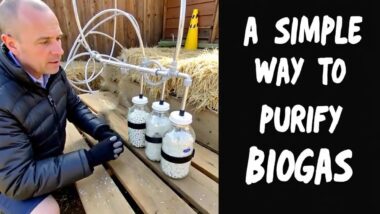
Struggling with impurities in biogas? You’re not alone. Many face the challenge of purifying biogas to ensure it’s suitable for use. One effective solution stands out: using activated carbon for biogas purification.
This method targets pollutants like hydrogen sulphide and volatile organic compounds, ensuring cleaner, more efficient energy from sources such as agricultural waste and sewage plants. 3
This guide illuminates how to use activated carbon for biogas purification. You’ll learn about the types of activated carbon—like extruded pellets and Granular Activated Carbon (GAC)—and their roles in removing siloxanes and adsorbing harmful gases.
With enhanced purity and efficiency on your side, transforming organic waste into renewable natural gas becomes simpler. 2
Ready to unlock cleaner energy? Keep reading.
Key Takeaways – Activated Carbon For Biogas Purification
- Activated carbon effectively purifies biogas by capturing harmful gases, thereby enhancing its safety and usability.
- Two primary forms of activated carbon – extruded pellets and granular – prove efficient in eliminating undesirable elements such as hydrogen sulphide from the gas.
- The deployment of activated carbon serving to purify the biogas concurrently upgrades its quality, facilitating the attainment of criteria set for utilising biogas as a greener energy resource.
- The cleansing procedure employing activated carbon aids in converting waste into beneficial energy, contributing positively to our environment.
Role of Activated Carbon in Biogas Purification
Activated carbon plays a key part in cleaning biogas. It grabs and holds onto harmful bits like siloxanes and hydrogen sulphide, making the gas cleaner and safer.
Removal of Siloxanes
Siloxanes in biogas harm engines and equipment by forming silicon dioxide during combustion. AP-460 coal-based pelletised activated carbon proves effective for this issue. Likewise, VPR reactivated carbon offers a solution, including reactivation and disposal services.
The pore size of activated carbon captures siloxane molecules efficiently, making it the top adsorbent for volatile methyl siloxane (VMS) removal in biogas purification. 1
Using these products ensures cleaner biomethane production from anaerobic digestion at wastewater treatment plants (WWTP) and landfills. This process turns waste into renewable energy with fewer emissions, supporting sustainable fuel cells use.
Siloxanes removal is crucial for maintaining high-quality biogas for energy crops and food waste utilisation in biodigesters. 2
Adsorption of Hydrogen Sulphide (H2S)
Moving on from siloxanes, dealing with hydrogen sulphide (H2S) presents a unique challenge in biogas purification. Activated carbon plays a crucial role here. Granular activated carbon (GAC), due to its impressive loading capacity and ease of handling, is the preferred choice for this task.
This type of active carbon can convert H2S into elemental sulphur effectively. Products like STIX granular or pelletised activated carbon utilise this capability well.
Furthermore, CENTAUR catalytic GAC transforms H2S into H2SO4, showcasing another method of removal. With over 99% efficiency in removing hydrogen sulphide from biogas streams, activated carbons are indispensable tools for operators. 3 Notably, 1 kg of GAC can treat up to 568 ± 112 m³ of biogas at average concentrations of H2S around 1,260 ± 256 ppm. These figures highlight the effectiveness and necessity of employing activated carbons in ensuring the purity and safety of biogas intended for various uses. 4

Types of Activated Carbon Used for Biogas Purification
For cleaning biogas, we use special kinds of activated carbon. Two main types stand out: extruded pellets and granular form.
Extruded Pellets
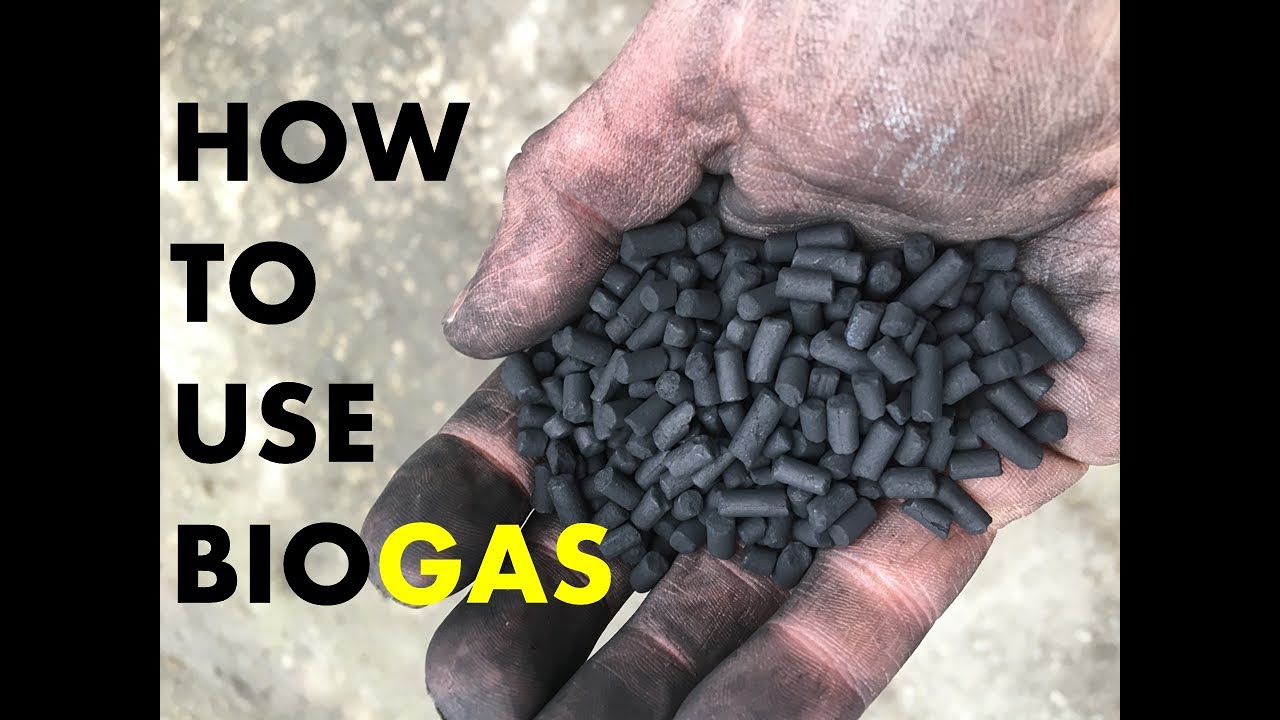
Extruded pellets, shaped like cylinders, are a type of activated carbon made for cleaning biogas. They come in two kinds: WS-480 and AP-460. The first one has a lot of power to catch harmful gases from coal and is great for getting rid of VOCs (Volatile Organic Compounds).
AP-460, with standard activity, also works well but is more common. These pellets grab onto gases like hydrogen sulphide (H₂S) and mercaptanes that can make biogas dirty. 5
Using extruded pellets means you can be sure your biogas will be clean enough to use. This method is straightforward because the pellets are easy to handle and fit perfectly into the systems designed for gas purification at plants where they turn organic material into energy.
They improve how well these systems work by catching more unwanted chemicals found in landfill gas or during anaerobic decomposition. 6
Now let’s look at Granular Activated Carbon (GAC), another option for keeping biogas pure.

Granular Activated Carbon (GAC)
Granular Activated Carbon (GAC) plays a crucial role in biogas purification, acting both as an adsorbent and a catalyst for hydrogen sulphide removal from gas streams. In practical applications, 1 kg of GAC can treat up to 568 ± 112 m³ of biogas with average H2S concentrations getting up to 1,260 ± 256 ppm.
This capacity heavily boosts the quality of biogas, making it safer and performing better for use. 7
Water vapour and oxygen presence notably amplify GAC’s ability to adsorb H2S. This process cleans the biogas and also promotes its production, predominantly in pilot-scale anaerobic digesters processing agro-industrial wastewater. 8 By trapping contaminants like siloxanes and hydrogen sulphide effectively, GAC makes sure that treated biogas complies with stringent requirements necessary for multiple uses, while limiting corrosive damage to machinery and reducing emissions dangerous to the environment.
Advantages of Using Activated Carbon for Biogas Purification
Using activated carbon to clean biogas makes it much cleaner. This method works well in getting rid of bad stuff.
Enhanced Purity of Biogas
Activated carbon is critical in achieving heightened biogas purity, rendering it appropriate for injection into the natural gas grid. This cleansing procedure successfully eradicates impurities like hydrogen sulphide and siloxanes. 10 For example, the use of WS-480 high activity coal-based pelletised activated carbon or AP-460 standard activity coal-based pelletised activated carbon results in significant nitrogen removal from biogas.
Likewise, for CO2 separation in RNG processes, the use of carbon molecular sieves (CMS) in kinetic mode pressure swing adsorption systems guarantees the production of highly pure biomethane.
The consequences are transparent: the cleaned biogas meets the quality standards required for renewable natural gas sources, promoting cleaner energy objectives. Effective removal of contaminants ensures not just regulatory compliance but also boosts the performance and extends the lifespan of downstream utilised equipment.
Now, we shift our focus to the effectiveness in removing contaminants.
Efficiency in Removing Contaminants
Activated carbon shines in purifying biogas by pulling out harmful bits like hydrogen sulphide (H2S) with over 99% success. 4 This means nearly all H2S gets caught, leaving cleaner gas behind.
Interesting fact: different natural leftovers from eucalyptus to coffee grains have shown great promise in grabbing H2S from the mix. Eucalyptus leads the pack, nabbing up to 690 mg of H2S per gram of carbon used.
Mixing several cleaners and soaking solutions also bumps up how well both H2S and carbon dioxide get pulled from biogas. 9 This combo approach ensures even cleaner energy output for use or further processing.
Next up, let’s explore the types of activated carbon that make this possible.
Conclusion
Using activated carbon for biogas purification makes clean energy from organic waste. This guide showed its key role, like pulling out harmful gases and making biogas purer. We looked at different types, such as pellets and granular versions.
They help get rid of unwanted chemicals effectively. By choosing the right carbon type, plants can produce cleaner fuel. This benefits us all by turning waste into valuable energy resources.
FAQs
1. What is the role of activated carbon in biogas purification techniques?
Activated carbon, also known as activated charcoal, plays a crucial role in biogas production. It acts as an adsorbent to remove impurities such as hydrogen sulphide and ammonia from the biogases produced during anaerobic digestion.
2. How does impregnated activated carbon work in this process?
Impregnated activated carbon works by chemisorption and physical adsorption… Hydrogen sulphide gets adsorbed onto its surface and transforms into elemental sulphur through a reaction with SO42-. This prevents acid rains caused by combusted gases.
3. Can you explain more about pressure swing adsorption (PSA) and membrane separation?
Pressure swing adsorption (PSA) is a technique used for gas separation… In PSA, certain gases get adsorbed at high pressure but can be desorbed when pressure drops. Membrane separation uses membranes to separate different components of gas based on their sizes.
4. Are there any other materials that can be used for biogas purification?
Yes indeed! Other than activated charcoal, materials like zeolites and SiO2 are commonly used as adsorbents… They have good microporosity which makes them effective for removing smaller molecules from the gas mixtures.
5. Where does lignin come into play in all of this?
Lignin comes from biomass sources such as dumpsites or decomposed organic matter… During pyrolysis, it’s converted into biochar or ‘pyrolysed’ lignin which can then be utilised to produce natural gas through anaerobic digestion processes...
6. Finally, why is purifying biogas so important?
Purifying biogas has several benefits – not only does it make it suitable for use as vehicle fuel but also reduces environmental pollution associated with burning untreated gases… Moreover, purified biogas serves as a renewable source of energy, contributing to sustainability.
References
- ^ https://www.mdpi.com/1996-1073/13/10/2605
- ^ https://www.researchgate.net/publication/317024149_Siloxanes_removal_from_biogas_using_activated_carbon
- ^ https://www.proquest.com/scholarly-journals/adsorption-hydrogen-sulfide-on-activated-carbon/docview/2843081417/se-2
- ^ https://www.tandfonline.com/doi/full/10.1080/21655979.2020.1768736
- ^ https://www.activatedcarbon.net/pellet-activated-carbon-guide/
- ^ https://www.donau-carbon.com/getattachment/696b7765-9920-4c6b-905e-d814dec47f82/biogas.aspx
- ^ https://www.tandfonline.com/doi/full/10.1080/10962247.2020.1754305
- ^ https://pubmed.ncbi.nlm.nih.gov/36934908/
- ^ https://pubs.aip.org/aip/adv/article-pdf/doi/10.1063/5.0208686/19895888/040703_1_5.0208686.pdf
- ^ https://www.sciencedirect.com/science/article/abs/pii/S1876107022000062