The main factors influencing the decision between an Upflow Anaerobic Sludge Blanket (UASB) reactor and a Continuous Stirred Tank Reactor (CSTR) digester are the solid content of the feedstock, the rate of organic loading, and operational complexity. The physical condition of the waste, hydraulic retention duration, and mixing energy requirements are important variables.
Article-At-A-Glance
- UASB reactors and CSTR digesters are both proven anaerobic treatment technologies, but they serve very different wastewater profiles — choosing the wrong one costs you efficiency, uptime, and money.
- UASB reactors excel with low-suspended-solids, high-COD wastewater, while CSTRs handle complex, high-solids streams that would clog or crash a UASB.
- At pH 5, a UASB reactor achieves sulphate reduction efficiencies of up to 67% compared to just 24% in a CSTR — reactor configuration matters more than most engineers expect at low pH.
- Industries like brewing, beverages, and starch processing consistently favour UASB, while agriculture, food waste, and municipal sludge operations lean heavily on CSTR.
- Keep reading to find out exactly which selection factors determine the right anaerobic digester for your facility — and where each technology breaks down.
Pick the wrong anaerobic reactor and you will spend years fighting a system that was never built for your wastewater in the first place.
UASB reactors and CSTR digesters are two of the most widely deployed anaerobic treatment technologies in industrial wastewater treatment, but they operate on completely different principles. One relies on gravity and biological granulation to create a self-sustaining sludge bed. The other uses mechanical force to keep everything mixed, stable, and moving. Both produce biogas. Both remove COD. But the conditions under which each one thrives are not interchangeable.
For facilities evaluating anaerobic digestion as part of a broader wastewater strategy, understanding these differences at a technical level is not optional — it is the foundation of every design decision that follows. Resources like Evoqua Water Technologies work directly with industrial sites to match the right reactor configuration to specific wastewater characteristics, which is exactly the kind of specificity this decision requires.
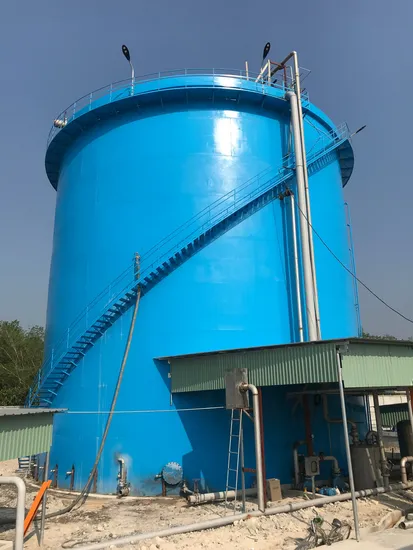
“Anaerobic Tower Uasb Micro-Electrolysis …” from m.made-in-china.com and used with no modifications.
UASB vs. CSTR: The Core Difference That Changes Everything
The fundamental difference between a UASB reactor and a CSTR digester comes down to how each system manages the relationship between wastewater and the microbial community doing the treatment work. In a UASB, wastewater flows upward through a dense, self-formed blanket of anaerobic granules. The microorganisms stay put while the water moves through them. In a CSTR, the entire tank contents — wastewater, sludge, and microorganisms — are continuously mixed together by a mechanical impeller, creating a uniform environment throughout the vessel.
That single design difference drives everything else: hydraulic retention time, organic loading rate, suspended solids tolerance, energy consumption, footprint, and failure modes. Getting this choice right from the start determines whether your anaerobic system performs as designed or becomes a permanent operational headache. For instance, understanding the local opposition to biogas plants can be crucial in planning and executing an effective system.
How a UASB Reactor Works
The UASB — Upflow Anaerobic Sludge Blanket — was developed by Professor Gatze Lettinga in the Netherlands during the 1970s and has since become one of the most widely adopted high-rate anaerobic reactor designs in the world. Its core operating principle is elegant: wastewater enters from the bottom of the reactor and flows upward at a controlled velocity through a dense blanket of granular anaerobic sludge. As the water passes through, organic matter is broken down by the microbial community embedded in those granules, producing biogas and treated effluent simultaneously.
Upflow Movement Through the Sludge Blanket
The upflow velocity is not incidental — it is a critical design parameter. Too slow, and the sludge bed compacts and loses efficiency. Too fast, and granules wash out of the system before they can do their work. Typical upflow velocities in UASB reactors range from 0.5 to 1.0 meters per hour for standard applications, though this varies with wastewater characteristics and granule density.
At the top of the reactor sits the gas-liquid-solid separator, commonly called the three-phase separator or settler. This component captures biogas rising from the sludge bed, allows treated effluent to overflow into collection channels, and returns any suspended sludge back down into the blanket. It is one of the most important pieces of engineering in the entire system — and one of the most sensitive to design errors.
Granular Sludge Formation and Why It Matters
Granular sludge is what makes a UASB reactor perform. These dense, roughly spherical aggregates of anaerobic microorganisms — typically 1 to 5 mm in diameter — settle rapidly, resist washout, and concentrate biological activity in a compact zone. Granule formation is not guaranteed. It requires the right wastewater chemistry, stable operating conditions, and enough startup time for the microbial community to self-organise. When granulation succeeds, the result is a sludge with excellent settleability and very high specific methanogenic activity. When it fails, UASB performance collapses.
Where UASB Reactors Perform Best
UASB reactors are purpose-built for soluble, high-COD wastewater with low suspended solids content. They are not well-suited to streams carrying significant concentrations of fats, oils, grease, or fibrous solids — all of which interfere with granule formation and can disrupt the sludge bed.
The hydraulic retention time in a UASB is typically around 4 to 10 hours, far shorter than the 15 to 30 days common in CSTR systems. That shorter HRT means a smaller reactor volume for the same flow rate, which directly translates to lower capital cost when the wastewater characteristics are compatible.
The industries where UASB reactors consistently deliver strong results share a common profile: high-strength, relatively clean wastewater with predictable composition.
- Brewery and beverage processing effluent
- Starch and sugar production wastewater
- Pharmaceutical fermentation streams
- Paper and pulp mill effluent (low-solids fractions)
- Food processing wastewater with controlled fat and solids content
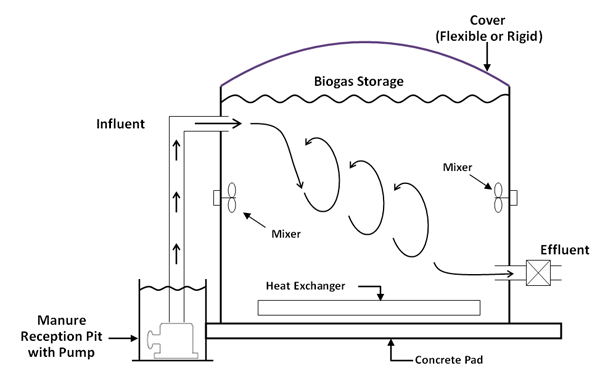
“Continuous Stirred Tank Reactor” from www.epa.gov and used with no modifications.
How a CSTR Digester Works
The Continuously Stirred Tank Reactor — CSTR — takes a fundamentally different approach. Rather than relying on the physical structure of a sludge bed to retain biomass, the CSTR keeps its entire contents in constant motion. A mechanical impeller, typically connected to a variable-speed motor, maintains uniform mixing throughout the tank, preventing stratification, scum formation, and dead zones where treatment efficiency drops off.
Mechanical Mixing and What It Achieves
Mixing in a CSTR does more than prevent settling. It continuously brings fresh substrate into contact with active microorganisms, distributes temperature evenly throughout the reactor volume, and prevents the accumulation of inhibitory compounds in localised zones. For wastewater streams with variable composition or high concentrations of substances that could inhibit methanogenesis, that mixing function is genuinely protective — it dilutes inhibitory peaks before they can crash the microbial population.
The trade-off is energy. Mechanical mixing is a continuous energy input that UASB systems do not require in the same way. For large-volume, low-strength wastewater, this energy cost becomes significant. For high-solids streams where CSTR is the only viable option, it is simply the cost of treating difficult wastewater reliably.
How CSTR Handles High-Solids and Complex Wastewater
This is where CSTR earns its place. Wastewater streams carrying high total suspended solids, fibrous materials, animal manure, food waste, or significant fat and oil content will disable a UASB reactor through granule disruption, clogging, and sludge bed flotation. A CSTR does not depend on granular sludge structure, so none of those mechanisms applies. The mixed environment handles heterogeneous, difficult feedstocks with a robustness that high-rate reactors simply cannot match, making it a viable solution when considering digestate disposal costs.
UASB vs. CSTR: Head-to-Head Performance Comparison
Comparing these two reactor types requires looking at specific performance dimensions rather than making broad generalizations. Each technology wins in different categories, and the weight you assign to each category depends entirely on your wastewater characteristics and operational priorities.
The table below summarizes the key performance differences across the most decision-relevant factors.
| Selection Factor | UASB Reactor | CSTR Digester |
|---|---|---|
| Suspended Solids Tolerance | Low — requires low TSS influent | High — handles sludge, fibers, and mixed organics |
| Hydraulic Retention Time | 4–10 hours (typical) | 15–30 days (typical) |
| Organic Loading Rate | High — up to 15–30 kg COD/m³/day | Moderate — typically 1–5 kg COD/m³/day |
| Reactor Footprint | Compact | Larger volume required |
| Clogging Risk | Higher — influent tubes and separator vulnerable | Low — mixing prevents blockages |
| Startup Time | Longer — granule formation required | Shorter — no granulation needed |
| Energy Input | Lower | Higher — continuous mechanical mixing |
Suspended Solids Tolerance
Suspended solids are the single most important screening criterion when choosing between UASB and CSTR. A UASB reactor depends on the integrity of its granular sludge bed, and high TSS in the influent physically disrupts that bed over time. Fibrous solids clog influent distribution tubes. Fats and oils coat granule surfaces and inhibit mass transfer. Even moderate TSS concentrations can progressively degrade UASB performance in ways that are difficult to reverse without a full system restart.
CSTR digesters face none of these constraints. Mechanical mixing handles heterogeneous solids without the risk of bed disruption, making CSTR the default choice for any wastewater stream where TSS control upstream is impractical or cost-prohibitive.
COD Removal Efficiency
On a per-volume basis, UASB reactors achieve impressive COD removal — typically 70 to 90% for suitable wastewater — in a fraction of the reactor volume required by a CSTR. The high concentration of active biomass in the granular sludge bed drives treatment intensity that CSTR systems, with their lower biomass concentrations, cannot replicate at equivalent volumes.
However, for complex or high-solids wastewater, the CSTR's COD removal efficiency is more stable over time. A UASB operating outside its design envelope will see COD removal efficiency deteriorate as the sludge bed degrades. A well-operated CSTR running on high-solids feedstock maintains consistent performance because it is designed for exactly that condition.
Clogging Risk and Process Stability
Clogging is a real operational risk in UASB systems, particularly at the influent distribution points and within the three-phase separator. Research published in the comparison of CSTR and UASB performance at the Cerestar starch production facility specifically noted disruptions caused by clogging of influent tubes — a failure mode that does not exist in mechanically mixed systems. For facilities with wastewater streams that vary in composition or carry episodic solids loads, this vulnerability in UASB design requires careful management through upstream screening, flow equalization, and regular maintenance protocols.
Footprint and Space Requirements
UASB reactors win decisively on footprint. Because the granular sludge bed concentrates biological activity in a compact zone and hydraulic retention times run as low as 4 to 10 hours, the reactor vessel itself is significantly smaller than a CSTR treating the same flow rate. For industrial facilities where land is at a premium — urban food processing plants, brewery expansions built into existing infrastructure, pharmaceutical sites with constrained site boundaries — that compact footprint is a genuine competitive advantage.
CSTR digesters require substantially larger vessel volumes to achieve equivalent treatment, driven directly by their longer hydraulic retention times. A CSTR operating at a 20-day HRT treating the same daily flow as a UASB running at 8 hours needs roughly 60 times the reactor volume. That difference has direct implications for civil construction costs, land acquisition, and the feasibility of retrofitting anaerobic treatment into an existing facility layout.
Biogas Production Potential
Both reactor types produce biogas as a byproduct of anaerobic digestion, but the quantity and consistency of biogas generation differ based on feedstock and operating conditions. UASB reactors treating high-COD, soluble wastewater can generate substantial biogas yields per unit volume due to their high organic loading rates. CSTR digesters processing high-solids feedstocks — food waste, animal manure, municipal sludge — often produce biogas at lower volumetric rates but with more consistent composition, since the mixed environment stabilizes methanogenic activity across the entire reactor volume. For facilities where biogas-to-energy recovery is a primary project driver, the choice of reactor type must be evaluated against the specific COD and VS content of the feedstock, not just the reactor design in isolation.
What Research Says About pH and Reactor Performance
One of the most technically revealing comparisons between UASB and CSTR performance comes from published research studying both reactor configurations under acidifying conditions, specifically using wastewater from a full-scale starch production operation at Cerestar in the Netherlands. The study evaluated both reactor types at an organic loading rate of 5 gCOD per liter of reactor per day, at a COD to sulfate ratio of 4, across two pH conditions — pH 6 and pH 5. The findings exposed meaningful differences in how each reactor configuration responds to pH stress, with direct implications for industrial facilities treating sulfate-rich or acidic wastewater streams.
Sulphate Reduction Efficiency at Low pH
At pH 6, both the CSTR and the UASB reactor demonstrated strong sulfate reduction performance. The UASB achieved 95% sulfate reduction efficiency, while the CSTR reached 43% — a significant gap already, driven by the higher biomass retention and better substrate-to-microorganism contact in the granular sludge bed.
When pH dropped to 5, performance declined in both systems, but the magnitude of decline tells the more important story. Sulfate reduction efficiency in the CSTR fell from 43% to 25%. In the UASB reactor, it dropped from 95% to 34% — a steeper absolute decline, but still a higher absolute performance level at the lower pH. Critically, when the HRT of the UASB reactor was extended to 24 hours at pH 5, acidification efficiency recovered to 94% and sulfate reduction climbed back to 67%. This demonstrates that UASB performance at low pH is recoverable through HRT adjustment in a way that CSTR performance under the same conditions is not.
Acidification Efficiency in CSTR vs. UASB
Acidification efficiency — the conversion of complex organics to volatile fatty acids — was essentially complete in both reactors at pH 6. As pH decreased to 5, the CSTR maintained relatively stable acidification while the UASB saw its acidification efficiency drop to 72% before recovering with HRT extension. Both reactors showed increased effluent concentrations of butyrate and ethanol at lower pH, consistent with shifts in fermentation pathway under acidic conditions. For two-phase anaerobic systems where the acidification reactor is intentionally operated at low pH to suppress methanogenesis, reactor configuration selection at this stage carries consequences for downstream methane reactor performance.
Which Industries Use Each Reactor Type
Industrial adoption of UASB and CSTR technology largely follows wastewater characteristics, but operational culture, capital budget, and regulatory environment also shape which technology dominates in specific sectors. For instance, the cost of digestate disposal can be a significant factor in choosing the appropriate reactor technology.
UASB reactors have found their strongest market in industries producing large volumes of high-strength, relatively clean effluent — wastewater where COD concentrations are high but suspended solids are low and composition is reasonably predictable. These are conditions where the compact footprint and high volumetric treatment capacity of UASB technology deliver clear economic returns, especially when considering local opposition to biogas plants.
CSTR digesters dominate wherever the wastewater or feedstock contains substantial solids, fibrous materials, or variable organic composition. Agricultural biogas plants across Europe almost universally use CSTR configuration, processing combinations of animal manure, crop residues, and food waste that would be incompatible with granular sludge systems. Municipal wastewater treatment plants use CSTR digesters to stabilise primary and secondary sludge — a high-solids application where no high-rate reactor technology is a practical alternative.
The pattern is consistent enough that wastewater characteristics alone can predict reactor selection in the majority of industrial cases.
Industry Reactor Selection at a Glance:
UASB Preferred: Breweries, beverage manufacturing, starch and sugar processing, pharmaceutical fermentation, soft drink production, and paper mill effluent (low-solids fractions).
CSTR Preferred: Dairy farming and animal manure digestion, food waste processing, municipal sludge stabilization, slaughterhouse and rendering wastewater, and mixed agricultural feedstocks.
Either May Apply: Fruit and vegetable processing, distillery stillage, and industrial food manufacturing — depending on upstream solids removal and fat/oil content.
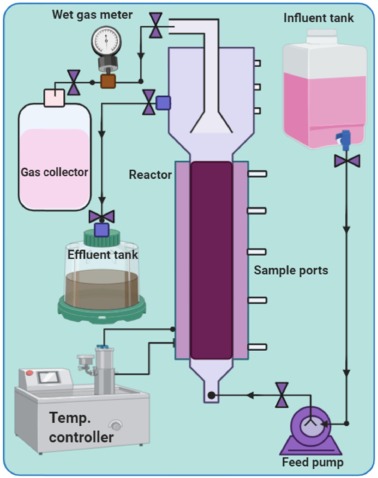
“Upflow Anaerobic Sludge Blanket Reactor …” from www.sciencedirect.com and used with no modifications.
UASB in Brewery, Beverage, and Food Processing
Brewery wastewater is one of the most naturally compatible feedstocks for UASB technology. It is high in soluble COD from sugars, ethanol, and organic acids, low in suspended solids when screened properly, and produced at relatively stable flow rates and compositions. UASB reactors treating brewery effluent regularly achieve COD removal efficiencies above 80%, generate recoverable biogas, and do so in reactor footprints that fit within existing plant infrastructure. The same profile applies to beverage bottling, soft drink manufacturing, and the liquid effluent fractions from starch and sugar processing — which is precisely why the Cerestar starch facility research used both UASB and CSTR in direct comparison.
CSTR in Agriculture, Food Waste, and High-Solids Streams
Agricultural biogas plants represent the largest installed base of CSTR anaerobic digesters globally. Cattle and pig manure, chicken litter, silage leachate, and crop residues are all high-solids, heterogeneous feedstocks that require the robust mixing environment a CSTR provides.
Co-digestion of multiple feedstock types — a common practice in agricultural biogas to optimise gas yield and nutrient balance — is far easier to manage in a CSTR than in any high-rate reactor configuration. For food waste processing facilities, where incoming material composition varies daily, and fat content can spike unpredictably, CSTR's tolerance for variability is not a convenience — it is a necessity.
How to Choose Between UASB and CSTR for Your Facility
The selection process comes down to five concrete evaluation steps. Work through each one systematically and the right reactor configuration will become clear without needing to rely on local opposition or vendor recommendations alone.
1. Assess Your Wastewater's Suspended Solids Content
Run a full characterization of your wastewater or feedstock before any other evaluation step. Total suspended solids, volatile suspended solids, settleable solids, and particle size distribution all matter.
As a practical threshold, wastewater with TSS consistently below 500 mg/L and without significant fibrous or lipid content is a reasonable candidate for UASB technology. Above that threshold, or with any meaningful fat, oil, and grease content, CSTR becomes the more defensible choice.
Do not rely on average TSS values alone. Peak concentrations during production shifts, cleaning-in-place events, or seasonal raw material changes can exceed the UASB's tolerance even when the daily average looks acceptable. If your process generates periodic high-solids slugs, you need either robust upstream equalisation and screening or a reactor design that tolerates solids variability — which means CSTR.
2. Measure Your Organic Load and COD Levels
COD concentration and organic loading rate determine how much biological treatment capacity your reactor needs to deliver. High COD, low-solids wastewater is the ideal condition for UASB technology, where high organic loading rates — up to 15 to 30 kg COD per cubic meter per day in well-operated systems — justify the compact reactor volume. Lower COD streams or streams where solids carry a significant fraction of the total organic load push the selection toward CSTR.
COD-Based Selection Guide:
• COD > 2,000 mg/L, low TSS: Strong UASB candidate — high-rate treatment delivers best return on reactor volume.
• COD 1,000–2,000 mg/L, variable solids: Evaluate upstream pretreatment options; UASB possible with screening and equalization.
• COD < 1,000 mg/L or high particulate COD fraction: CSTR or alternative treatment pathway — UASB economics and performance deteriorate at low COD with high solids.
• Mixed feedstock with high VS content: CSTR — volatile solids in heterogeneous feedstocks require the retention time and mixing environment that only a CSTR delivers reliably.
The ratio of soluble COD to total COD is particularly informative. If soluble COD represents less than 50% of total COD, the granular sludge bed in a UASB will struggle to access the organic load efficiently, and treatment performance will be inconsistent.
Organic loading rate fluctuations also matter. UASB reactors are more sensitive to sudden OLR increases than CSTR systems because the granular sludge bed cannot immediately adapt to step changes in substrate concentration.
If your production schedule creates large swings in wastewater strength — a common situation in batch processing operations — flow equalisation becomes a mandatory upstream component for any UASB installation, adding cost and complexity that must be factored into the total system evaluation.
3. Consider Fats, Oils, and Grease Concentrations
Fats, oils, and grease are uniquely damaging to UASB performance. Long-chain fatty acids generated during lipid hydrolysis are directly toxic to the acetoclastic methanogens responsible for methane production and adsorb onto granule surfaces, progressively reducing mass transfer efficiency and granule integrity.
A general design threshold of 50 to 100 mg/L total FOG in the UASB influent is commonly cited, though this varies with the specific fatty acid profile. Any wastewater stream from meat processing, dairy operations, edible oil production, or food manufacturing with significant lipid content requires either upstream DAF treatment to reduce FOG below acceptable limits or CSTR configuration where FOG tolerance is substantially higher.
4. Evaluate Your Space and Infrastructure Constraints
If land area is severely constrained and your wastewater profile is compatible, UASB's compact footprint can be the deciding factor. A UASB reactor treating 1,000 m³ per day of brewery wastewater at an 8-hour HRT requires approximately 333 m³ of reactor volume. A CSTR treating the same flow at a 20-day HRT would require around 20,000 m³ of reactor volume — a civil construction scale that changes the entire project economics.
Infrastructure considerations go beyond reactor volume. CSTR digesters operating at mesophilic temperatures (35°C) or thermophilic temperatures (55°C) require heating systems, insulation, and in cold climates, significant thermal energy input to maintain operating temperature. UASB reactors, particularly in warm climates or treating wastewater already close to optimal temperature, may operate without active heating — reducing both capital and operating costs for suitable applications.
Existing site infrastructure — civil foundations, utility connections, control systems, and operator staffing — should all be factored into the technology selection. A CSTR digester handling complex feedstocks requires more robust process monitoring and control than a well-operated UASB on a consistent wastewater stream, and that operational complexity has real implications for staffing requirements and long-term reliability at facilities without dedicated biological treatment expertise.
5. Factor in Process Stability and Operator Expertise
Process stability requirements and the operational expertise available at your facility are often underweighted in reactor selection decisions — and they should not be. UASB reactors demand more precise influent control, more consistent operating conditions, and faster operator response to process upsets than CSTR systems.
The granular sludge bed, once destabilised, can take weeks or months to recover. A CSTR running on high-solids feedstock is more forgiving of operational variability, temperature fluctuations, and temporary overloading — which makes it a more pragmatic choice for facilities without dedicated biological treatment specialists on staff around the clock.
Other Anaerobic Technologies Worth Knowing
UASB and CSTR represent the two most widely deployed anaerobic reactor configurations in industrial wastewater treatment, but they are not the only options. Several other technologies occupy specific niches where neither standard UASB nor CSTR delivers optimal performance, and understanding them gives a more complete picture of the anaerobic treatment landscape.
Each alternative technology is essentially an evolution of one of the two core designs — either pushing the high-rate granular sludge concept further, or adapting the mixed reactor approach for specific feedstock or footprint constraints. Knowing where they fit prevents the mistake of forcing a standard solution onto a problem that requires something more specialized. For example, considering digestate disposal costs can be crucial in selecting the right technology.
EGSB Reactors: When You Need More Than a UASB
The Expanded Granular Sludge Bed reactor is a direct evolution of UASB technology, operating at significantly higher upflow velocities — typically 4 to 10 m/h compared to the 0.5 to 1.0 m/h of a standard UASB. That higher velocity expands the granular sludge bed rather than compacting it, improving contact between wastewater and active biomass and allowing treatment of more dilute wastewater streams or streams with moderate inhibitory compounds.
EGSB reactors are particularly effective for low-temperature applications and for treating wastewater with volatile fatty acids or toxic compounds that would suppress activity in a standard UASB sludge bed.
IC Reactors: Maximum Loading in Minimum Space
The Internal Circulation reactor takes the granular sludge concept to its logical extreme, using a two-stage internal recirculation system driven entirely by biogas production to achieve organic loading rates of 25 to 35 kg COD per cubic meter per day — among the highest of any commercial anaerobic reactor design.
IC reactors are tall, narrow vessels, typically 16 to 25 meters in height, which makes them unsuitable for sites with height restrictions but extraordinarily compact on a footprint basis. They are used extensively in the brewing, soft drink, and food processing industries where wastewater COD is high, solids are low, and reactor volume must be minimised.
Anaerobic Lagoons: The Low-Cost Option for Large Land Areas
At the opposite end of the technology spectrum, anaerobic lagoons offer the lowest capital cost per unit volume of any anaerobic treatment approach — but at the expense of performance, control, and land efficiency.
Lagoons operate without mechanical mixing or temperature control, relying entirely on natural biological activity and long hydraulic retention times, often measured in weeks or months, to achieve COD reduction. Treatment efficiency is sensitive to ambient temperature and highly variable with seasonal changes.
For large agricultural operations, remote food processing facilities, or developing markets where land is abundant, and capital is constrained, lagoons remain a practical first step in wastewater management. They are not a competitive option for industrial sites with significant COD loads, regulatory discharge requirements, or biogas recovery objectives — conditions where engineered reactor systems deliver far superior outcomes.
For Most Industrial Sites, CSTR Wins on Reliability
When wastewater characteristics are compatible with both technologies, the UASB reactor's compact footprint and higher volumetric treatment efficiency make a compelling case.
But across the full range of industrial wastewater streams — with their suspended solids, variable composition, lipid content, and operational variability — the CSTR digester's robustness, tolerance for complex feedstocks, and lower sensitivity to process upsets make it the more defensible default choice for facilities where treatment reliability is non-negotiable.
The right answer is always site-specific, but the CSTR's ability to handle what the real world throws at an anaerobic system is a form of engineering insurance that has genuine operational value. For more insights on biogas systems, consider reading about biogas plant local opposition.
Frequently Asked Questions About UASB Reactors vs. CSTR Digesters
The questions below address the most common decision points for engineers and plant managers evaluating anaerobic digestion technology for industrial wastewater treatment.
What is the main difference between a UASB reactor and a CSTR digester?
A UASB reactor is a high-rate anaerobic system where wastewater flows upward through a dense bed of granular sludge. The biomass stays stationary while the water moves through it, allowing short hydraulic retention times — typically 4 to 10 hours — and compact reactor volumes. Treatment depends entirely on the integrity of the granular sludge bed, which requires low suspended solids and controlled influent conditions to function correctly.
A CSTR digester uses continuous mechanical mixing to keep wastewater, sludge, and microorganisms uniformly distributed throughout the reactor vessel. It operates at much longer hydraulic retention times — typically 15 to 30 days — and handles high-solids, complex, and variable feedstocks that would destabilise a UASB sludge bed. The core trade-off is reactor volume and energy consumption in exchange for operational robustness and feedstock flexibility.
Can a UASB reactor handle wastewater with high suspended solids?
Not reliably. High suspended solids — particularly fibrous materials, fats, and oils — physically disrupt the granular sludge bed that UASB performance depends on. Suspended solids can clog influent distribution tubes, coat granule surfaces, and cause bed flotation, all of which degrade treatment efficiency progressively. If upstream screening, dissolved air flotation, or other pretreatment can consistently reduce TSS below acceptable thresholds, a UASB may remain viable — but for wastewater streams where high solids are inherent to the process, CSTR is the appropriate technology.
Which digester produces more biogas, UASB or CSTR?
Biogas yield is primarily a function of the organic matter being degraded, not the reactor type itself. However, the two systems generate biogas under different conditions that affect practical recoverable output. For instance, exploring the biogas and hydrogen production methods can provide insights into optimising these conditions.
- UASB reactors treating high-COD, soluble wastewater produce biogas at high volumetric rates due to elevated organic loading capacity.
- CSTR digesters processing high-VS feedstocks like food waste or manure generate biogas at lower volumetric rates but from feedstocks with high total energy content.
- Biogas composition — typically 60 to 70% methane in optimally designed, well-operated systems — is comparable between the two reactor types when operating within their design parameters.
- For energy recovery projects, the feedstock's volatile solids content and biodegradability are more important than reactor selection for predicting total biogas output.
In practice, CSTR digesters at agricultural biogas plants and food waste facilities often generate larger absolute volumes of biogas per installation simply because they process higher-volume, higher-VS feedstocks. UASB installations in brewing and beverage applications generate substantial biogas per unit reactor volume due to high COD loading rates. For more information, you can explore food waste biogas applications.
The decision about which system produces more biogas for your specific application requires site-specific mass balance calculations based on your actual wastewater or feedstock COD, VS content, and biodegradability — not a generalised comparison between reactor types.
What industries are best suited for UASB reactors?
UASB reactors perform best in industries that generate high-strength, relatively clean wastewater — high in soluble COD, low in suspended solids, and produced at reasonably consistent flow rates and compositions. These conditions allow the granular sludge bed to form, stabilize, and maintain high biological activity without disruption. For industries interested in renewable energy, exploring the potential of biogas and hydrogen production may also be beneficial.
- Brewery and malting operations
- Soft drink and beverage manufacturing
- Starch and glucose syrup production
- Sugar refining and processing
- Pharmaceutical fermentation effluent
- Yeast production facilities
- Paper and pulp mills (low-solids liquid fractions)
- Citric acid and organic acid manufacturing
These industries share a wastewater profile where UASB technology delivers strong COD removal, recoverable biogas, and compact system design at competitive capital cost relative to other anaerobic options.
Industries with variable production schedules, multiple product lines, or seasonal raw material changes should invest in robust upstream flow equalisation and wastewater characterisation programs before committing to UASB technology — process variability that seems manageable during design can become a persistent operational challenge once the system is running.
How does pH affect the performance of UASB and CSTR systems?
pH has a significant effect on both reactor types, but the mechanisms and magnitudes of impact differ in ways that matter for facility design. Both UASB and CSTR systems perform optimally in the neutral to slightly alkaline range — pH 6.8 to 7.4 — which supports methanogenic archaea activity. Below pH 6.5, methanogenesis is progressively inhibited while acidogenic fermentation continues, causing volatile fatty acid accumulation and further pH depression in a self-reinforcing cycle. For more information on the role of biomethane in energy production, you can read about biomethane as a natural gas replacement.
Research directly comparing CSTR and UASB performance under acidifying conditions at a starch production facility demonstrated that reactor configuration determines the degree of sulfate reduction achievable at low pH. At pH 6, the UASB achieved 95% sulfate reduction efficiency while the CSTR reached 43%. When pH dropped to 5, both reactors lost performance — the CSTR fell to 25% sulfate reduction, the UASB to 34% — but the UASB retained higher absolute performance. Extending the UASB hydraulic retention time to 24 hours at pH 5 recovered acidification efficiency to 94% and sulfate reduction to 67%, demonstrating that HRT adjustment is a viable compensation strategy for UASB systems operating under pH stress.
For two-phase anaerobic systems specifically designed with a low-pH acidification reactor followed by a methane reactor, these findings have direct design implications. The UASB configuration outperforms CSTR in the acidification phase at low pH when HRT can be adjusted, making it the better choice for the first stage of a two-phase system treating sulfate-rich wastewater — provided influent quality is compatible with granular sludge operation.
| pH Condition | CSTR Sulfate Reduction | UASB Sulfate Reduction | UASB at Extended HRT (24h) |
|---|---|---|---|
| pH 6 | 43% | 95% | N/A |
| pH 5 | 25% | 34% | 67% |
| Acidification efficiency at pH 5 | Stable but lower | 72% (recoverable) | 94% |
| Source: Comparison of CSTR and UASB reactor configuration for the treatment of sulphate-rich wastewater under acidifying conditions — Lopes et al., based on Cerestar starch production facility data. |
For facilities treating sulfate-rich wastewater or operating intentional acidification stages, this performance gap between reactor types at low pH is a design-critical finding that should be built into reactor selection criteria from the earliest project stages.
UASB reactors and CSTR digesters are two common technologies used in industrial wastewater treatment. While both systems have their advantages, the choice between them often depends on specific operational requirements and the nature of the wastewater.
For instance, anaerobic digestion is a key process in UASB reactors, making them highly efficient for treating high-strength wastewater. On the other hand, CSTR digesters are known for their ability to handle a wide variety of waste streams, offering flexibility in treatment processes. Understanding the differences between these systems is crucial for optimising wastewater treatment strategies in industrial settings.