



Stainless steel wastewater tanks are large storage or treatment vessels used in wastewater treatment plants, anaerobic digestion systems, and industrial effluent facilities. They are typically fabricated from corrosion-resistant grades of stainless steel and are designed to provide long service life, structural reliability, and minimal maintenance in demanding wastewater environments.
We were impressed to read the Press Release, about a German company (Stallkamp), see below, that provides large stainless steel wastewater tanks with one of the longest design-life expectancies on the market for Wastewater Treatment.
Stainless steel wastewater tanks are widely used in modern treatment plants because they provide exceptional durability, long design life, and reliable performance in demanding environments.
Key Takeaways: Stainless Steel Wastewater Tanks
Stainless steel wastewater tanks are widely used in treatment plants because they provide a very long structural design life, often exceeding 40–60 years.
Engineers select stainless steel tanks for durability and corrosion resistance, particularly in municipal wastewater treatment and anaerobic digestion facilities.
Modular stainless steel tank construction allows faster installation compared with cast-in-place concrete tanks, reducing project construction time.
Lifecycle costs can be lower than alternative tank materials, because stainless steel tanks typically require minimal structural maintenance over decades of service.
Hydrogen sulphide (H₂S) gas present in wastewater systems can cause corrosion above the liquid level, where moisture and oxygen allow sulphuric acid to form.
Proper design reduces corrosion risk, including selecting suitable stainless steel grades (such as 316L), managing tank headspace ventilation, and avoiding condensation zones.
When correctly specified and operated, stainless steel wastewater tanks remain one of the most durable tank solutions available for wastewater treatment plants and anaerobic digestion systems.
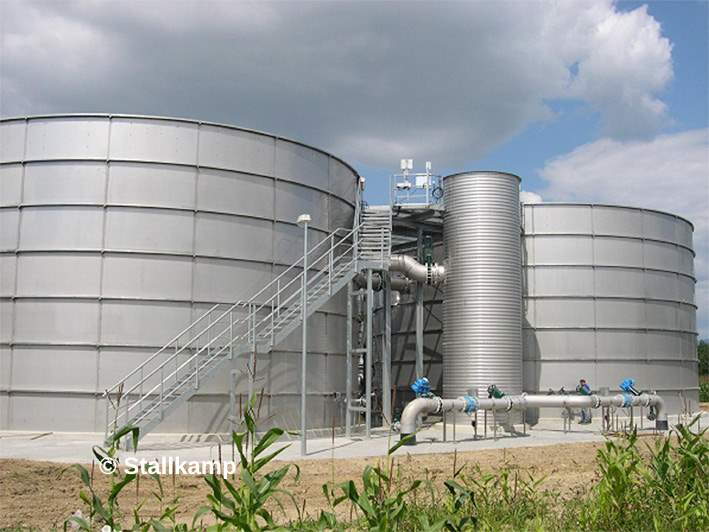
As wastewater treatment and AD systems designers in the past, we have at times found it practically impossible to reconcile client expectations for tank longevity with client-specified design-life requirements for alternative tanks, using sectional mild-steel.
As the years go by, the design-life, for the all-important functionality of tanks, has understandably been raised. This is usually beyond that which can reasonably be expected of traditional glass and epoxy-coated steel technology.
Large Stainless Steel Tanks
No matter how well mild steel tanks are specified (including with zinc coatings applied before layers of epoxy or glass), the problem of both long-term abrasion in mixed tanks and physical damage, for mild steel tanks, has been a real one. Occasional accidental tank wall impact, in particular, which can easily remove glass coatings in the area of impact, has ultimately been seen to be a major life-shortening concern for all mild-steel tanks. Worst of all is when an external impact on a mild-steel tank causes an undetected delamination of the coating on the internal face of such tanks. This may be concealed until corrosion takes place, and it becomes too late to prevent leakage.
Stainless steel has, for a long while, been used for small tanks, and very successfully, especially in the food industry. Now, might be the time to use stainless steel for all large tanks, including the largest.
Stainless steel may be a more expensive material than mild steel, and a substantial cost for large stainless steel tanks.
But, the price premium, in this case, is not so high that it significantly exceeds the combined costs of the necessary protective coatings, which must be applied, inspected regularly and maintained for mild steel tank alternatives.
As explained by Stallkamp in the PR below, stainless steel does not, in general (in wastewater applications), need any corrosion protection coating. This is due to the passive layer provided by the unique chemical properties of stainless steel.
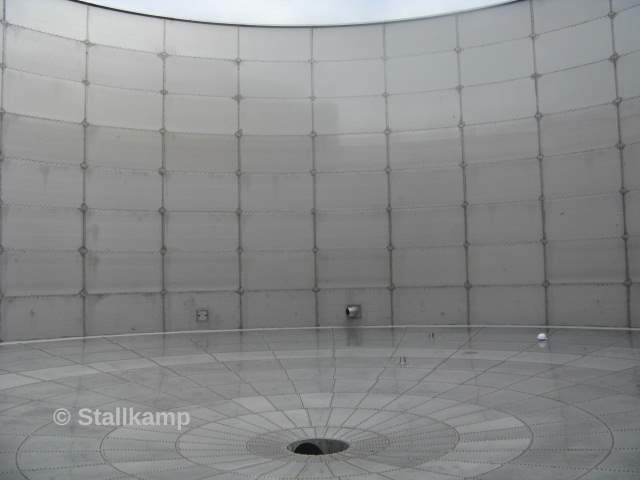
A further advantage of stainless steel tanks in the Stallkamp range is (we understand), the ability to install a matching roof and floor structure, also manufactured from stainless steel. This must tick another very important box for tank designers, where increasingly wastewater treatment facility tanks must be covered in order to minimise odours.
Press Relase Starts:
Stallkamp Supports Wastewater Businesses with Reliable Stainless Steel Tanks
Press Release:
Dinklage 14.03.2018 – In the past, Stallkamp has repeatedly implemented projects for sewage treatment plants, the wastewater industry and anaerobic digestion plants. In addition to various sludge tanks, this also included complex wastewater treatment plants, such as a stainless steel tank with a stainless steel floor or a funnel-shaped secondary clarifier.
Many projects successfully implemented
The fact that Erich Stallkamp ESTA GmbH has the necessary know-how is proven by various projects from the last 25 years. For example, an extensive wastewater treatment plant with two steel tanks (Ø15.52m, h=8.78m) was designed and installed in Bavaria as a wastewater collection tank. In addition, a corrugated steel tank (Ø2.75m, h=8.78m) serves as an equalising tank for the paper industry.
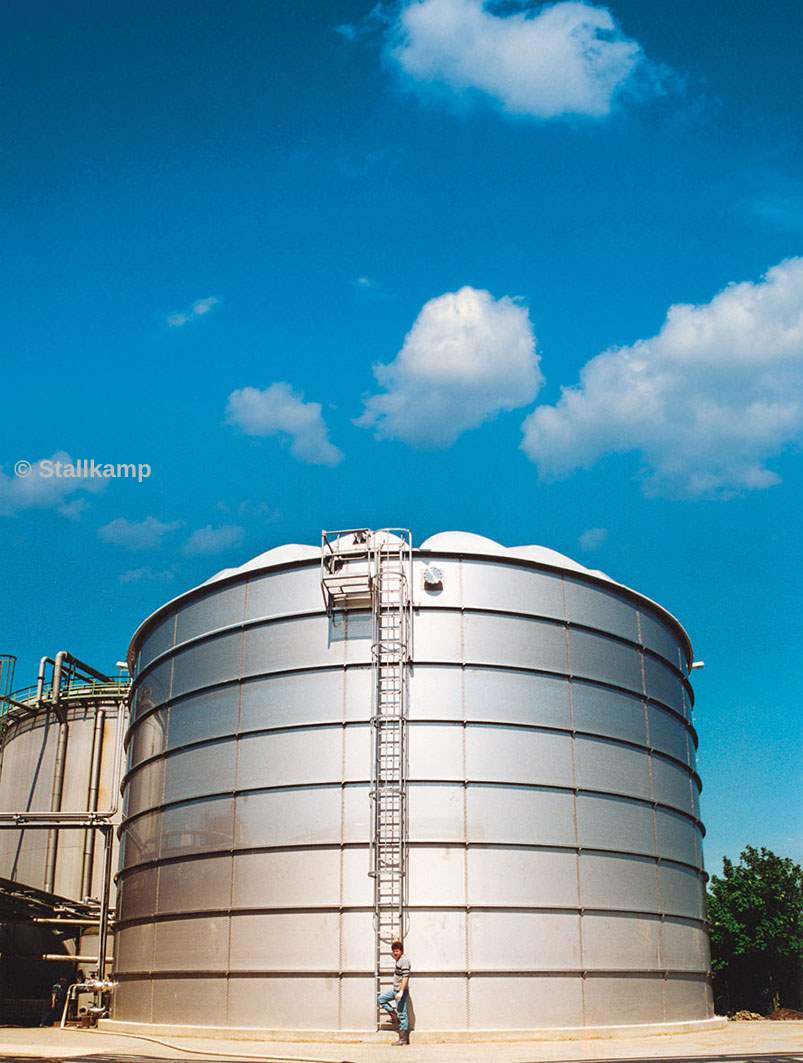
Larger wastewater pre-treatment plants have also been installed for the food industry, as a reference plant in North Rhine-Westphalia shows. A stainless tank (Ø16.29m, h=10.03m) with a self-supporting ribbed dome roof and various add-on parts was realised.
Experience with special designs
Stallkamp has also proved to be a reliable partner for special designs. In Herzebrock, for example, a sewage treatment plant with several clarifiers (Ø outside 24.00m, Ø inside 3.88m, h=4.18m) was developed, which is controlled by means of overflow heights. Also, the funnel-shaped secondary clarifiers (Ø top 7.65m, Ø bottom 1.40m, h=5.00m) with a toothed gutter for a private brewery were convinced by their stability and longevity.
Currently, a wastewater project with three stainless steel tanks for an automobile manufacturer in Ingolstadt is being implemented. One of the tanks is a sludge storage tank for flocculated sludge (180 m3), which is equipped with many attachments and agitator technology. In addition, two clean water tanks (each 120 m3) are supplied. All three tanks are constructed with a self-supporting stainless steel roof.
Stainless steel is worthwhile
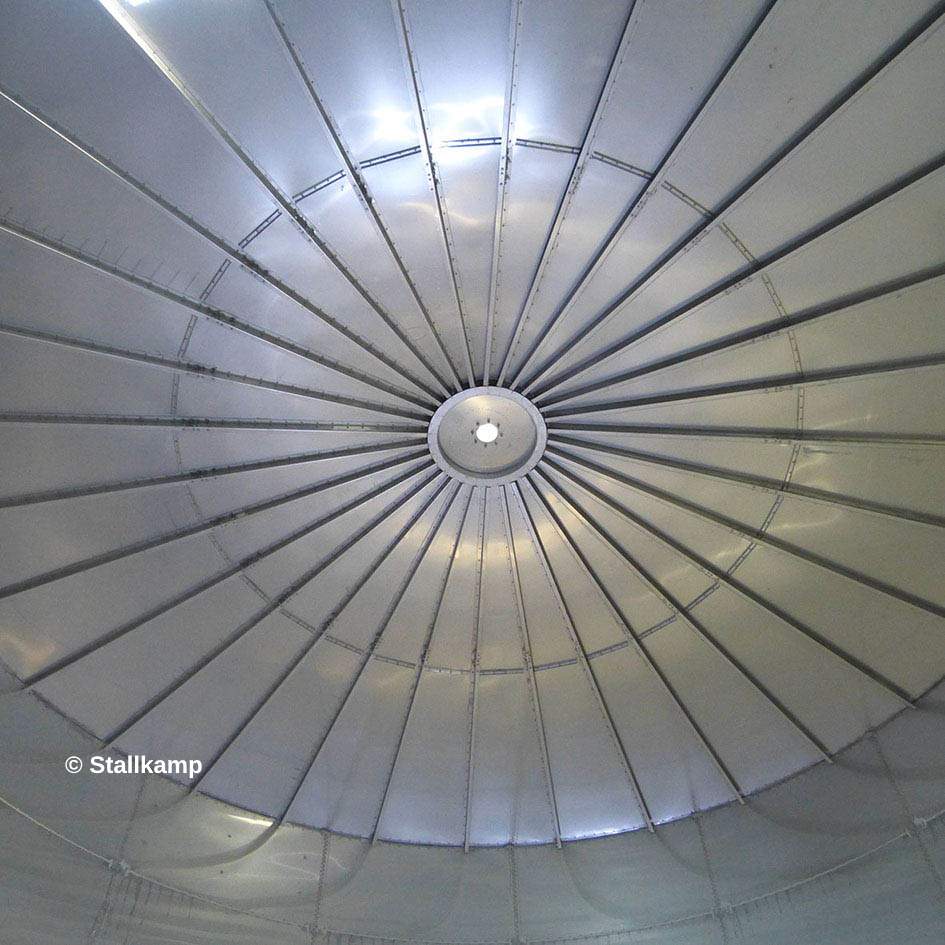
The decision for stainless steel is always worthwhile: the follow-up costs for maintenance and repair are reduced to a minimum. At the same time, the lifespan of the Stallkamp stainless steel tanks is almost unrivalled. Stainless steel owes its resistance to corrosion to a simple chemical reaction:
- Due to its chromium content,
- An ultra-thin chemically resistant passive layer forms on the surface in conjunction with oxygen in the air or water.
If the passive layer is damaged by external influences, it will form a new layer from the matrix of the stainless steel. Unlike other materials or material combinations, stainless steel can be completely and easily recycled after use.
Stainless steel tanks are an alloy; the addition of chromium to the steel greatly increases the metal's corrosion resistance.
Stainless steel tanks will generally retain their appearance over their lifetime.
A high-quality stainless steel tank may last at least 50 years.
Everything from one source
In addition to high-quality stainless steel tanks, Stallkamp also offers the associated pump and agitator technology. For special use in waste and clarification tanks, a full stainless steel mixer is recommended, which is designed for stirring liquids with a variable pH value, generally from pH 5.3 to pH 8.1 at a room temperature of 20°C. The Stallkamp portfolio also includes separation technology, which is produced for a wide variety of applications and dry matter contents.
Stallkamp will be exhibiting at IFAT in Munich – the world's leading trade fair for water, sewage, waste and raw materials management – to promote the wastewater business. Exhibition devices and references will be presented, and qualified consulting services will be offered.
Learn more about Stallkamp products in the wastewater treatment sector.
Notes:
- Stainless steel tanks may not be resistant to sulphur generated during anaerobic digestion plant operation. This has reportedly resulted in concerns in the past, and in respect of stainless steel tanks, which may need special anti-corrosion treatment above the water-line of the substrate, in anaerobic digestion plant digester tanks.
- Concrete tanks may be available for wastewater and anaerobic digestion applications to extend design life beyond Glass or Epoxy Coated Mild-Steel tanks.
Article Updates:
Hydrogen Sulphide Corrosion Above the Liquid Level
One issue occasionally encountered with stainless steel tanks in wastewater treatment and anaerobic digestion plants is corrosion above the liquid level.
Hydrogen sulphide (H₂S) released from wastewater or digestate accumulates in the tank headspace. In moist conditions this gas can oxidise and form sulphuric acid, which may attack exposed metal surfaces.
This means that although stainless steel tanks can provide an exceptionally long structural life, careful design is still required to minimise corrosion risks.
Typical mitigation measures include:
selecting the correct stainless steel grade (such as 316L)
ensuring good headspace ventilation
avoiding stagnant condensation zones
applying protective coatings in aggressive environments.
When these design considerations are addressed, stainless steel tanks remain one of the most durable solutions available for wastewater and anaerobic digestion applications.
Used Tanks in Stainless Steel
In our original article, we could have also pointed to the availability of used Stainless Steel Tanks as an additional indication of just how long-lasting these tanks can be. A wide range of sizes is available, including large sectional bolted steel versions.
They are also available in single-walled or hooded, with or without agitators, vertical or horizontal.
These stainless steel tanks can be assumed to be suitable for storing liquids such as sewage and other waste. However, this tank type is the most commonly used for food and pharmaceutical company applications because of the noncorrosive nature of the steel.
Equipment holding companies have a large inventory of stainless steel tanks of various kinds, including vertical tanks, horizontal tanks, processing tanks and others. All tanks are tested for quality and are thoroughly reconditioned and ready for utilisation. Used Stainless Steel Tanks.
New Stainless Steel Tanks
Tanks can be made of a variety of stainless steel grades (typically 304 or 316/316L) with varying levels of corrosion resistance.
The available stock of these stainless steel products includes vertical and horizontal, chilled and insulated double and single-shell storage tanks. Stainless steel tank stock includes the following kinds:
- Stainless-stable storage tanks, mix tanks, bulk tanks and CPI- and COP tanks.
These are available in standard sizes and also specialised shapes.
FAQs: Stainless Steel Wastewater Tanks
How long do stainless steel wastewater tanks last?
Properly designed stainless steel tanks can last 40–60 years or more in wastewater treatment applications, depending on operating conditions, material grade, and corrosion control measures used in the tank headspace
Can hydrogen sulphide damage stainless steel tanks?
Yes. In headspace areas, H₂S can form sulphuric acid, which may cause corrosion if the tank is not correctly designed.
Are stainless steel tanks better than concrete tanks?
Steel tanks are faster to install and resistant to cracking, although concrete may be preferred for very large installations.
[Article first published March 2018. Updated February 2022 and March 2026.]



can you send us a message please?
You can save energy very easily. Place a layer of insulation around your hot water heater. You can find a hot water heater insulation kit available from your local home improvement stores. This insulation wraps around the heater keeping heat from dissipating. This, in turn, keeps your water hotter for longer, so you do not waste energy re-heating water over and over.
The stainless steel tank, not mild steel which rusts, is a neglected product. Should be more used. Top score to your writer who gets my admire.