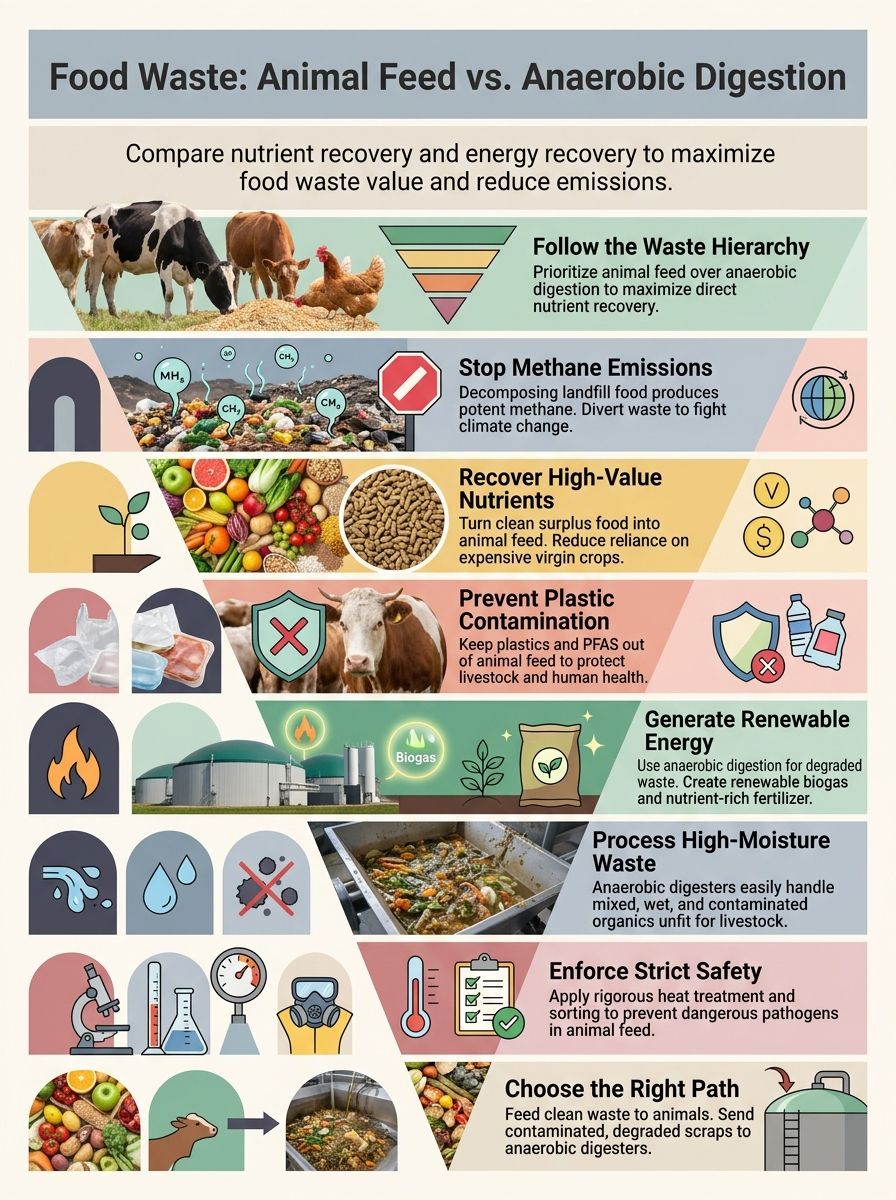
Using food waste, that's still edible, to make animal feed is generally preferred for nutrient recovery and lower environmental impact, keeping materials in the food chain longer. Conversely, anaerobic digestion (AD) is superior for managing heavily contaminated or non-edible waste, converting it into renewable energy (biogas) and fertiliser. Both methods are far superior to landfills.
This matters because there is so much food waste! A 2026 WRAP report reveals the UK wastes an astonishing 10.2 million tonnes of food every year.
Most of this organic matter rots in landfills and produces methane.
Methane is a greenhouse gas far more potent than carbon dioxide over short periods.
Finding better alternatives is the only way organisations can fight climate change and meet strict methane pledges.
Businesses face rising costs and struggle to choose the most efficient disposal method for their surplus stock. 2
Two proven methods exist to turn this problem into an opportunity: converting food waste to animal feed or using anaerobic digestion to create energy and fertiliser. 3
This guide breaks down exactly what these numbers mean.
We will show you the insider strategies to turn your waste into a sustainable advantage.
Key Takeaways in the Debate About Food Waste To Animal Feed Vs Food Waste To AD
- Clean, uncontaminated surplus food from manufacturing facilities and supermarkets converts best into animal feed, which ranks higher on the waste hierarchy than anaerobic digestion because it recovers nutrients directly and keeps food value circulating through the food chain rather than converting it to biogas.
- Plastic contamination and PFAS (per- and polyfluoroalkyl substances) pose serious health risks when mixed with food destined for livestock, according to research from Birmingham University, making proper sorting and safety protocols essential before choosing animal feed conversion as your waste management strategy.
- Anaerobic digestion excels at processing degraded, mixed, or contaminated food waste that cannot safely be fed to animals, transforming problematic materials into renewable biogas energy and nutrient-rich digestate fertiliser while preventing methane emissions that would otherwise escape from landfills.
- Food waste to animal feed reduces reliance on virgin crops like soy and corn by replacing expensive livestock feed with waste-derived alternatives, which decreases agricultural water consumption, fertiliser use, and pesticide applications while supporting biodiversity and natural habitat preservation.
- Facilities processing food waste for animal feed must follow strict heat treatment sterilisation procedures to eliminate dangerous pathogens and meet regulatory standards, while anaerobic digestion facilities handle high-moisture content and varying waste qualities without requiring the same intensive pre-treatment that animal feed production demands.
Expert Insight on Food Waste Processing
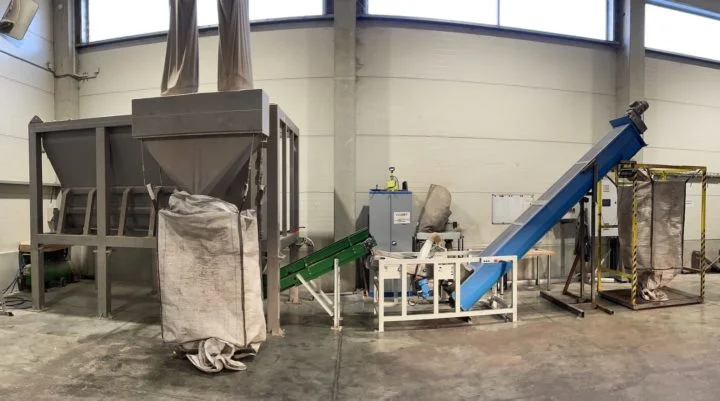
The UK's Animal and Plant Health Agency (APHA) rigorously enforces rules on what livestock can eat.
Experts apply the waste hierarchy to guide food waste processing decisions.
They rank reuse and animal feed conversion above energy recovery methods.
Applying the Waste Hierarchy to food waste
The waste hierarchy is not a suggestion; it's a roadmap for making smarter choices with our food scraps.
The waste hierarchy ranks food waste management options from best to worst. This priority system is a roadmap for making smarter environmental choices.
Redistribution for human consumption sits at the top. Next comes conversion to animal feed.
Energy recovery through methods like anaerobic digestion follows.
Landfill acts as the absolute last resort.
UK policy changes expect a rapid shift away from landfill. Food waste in landfills releases harmful methane.
Communities must capture more value from discarded food to hit net-zero targets.
Converting food waste into animal feed ranks higher because it recovers nutrients directly.
A 2023 study by Cambridge University confirmed that wet and dry pig feed from food waste scores far better environmentally than composting.
This approach keeps food value circulating.
Organisations reduce their footprint while supporting a practical circular economy.
Dangers of Plastics in Animal Feed
Plastic contamination in animal feed creates immediate health hazards for livestock and humans. Microplastics enter the food chain through careless sorting.
Livestock ingest these fragments through contaminated feed and water. This triggers oxidative stress and inflammation in their bodies. 1
Additives like Bisphenol A (BPA) migrate from packaging directly into the feed. This damages reproduction in cattle and poultry.
Soil contamination introduces even more particles into grazing areas.
These tiny plastic fragments accumulate in animal tissues over time. This process is called bioaccumulation.
Consumers then eat these microplastics through meat, milk, and eggs.
Chemical leaching directly threatens food safety. Research from Birmingham University confirms the dangers of inadequate sorting.
Food waste to biogas systems can avoid these plastic risks entirely, but only if the plastic is consistently removed during depackaging and separation of the organic content from all the other contaminants people throw into food waste collection bins.
While pre-consumer food waste, such as bakery waste, needs high separation rates to avoid livestock eating plastic. Anaerobic digestion is the only safe option for heavily packaged or degraded organic materials.
Concern about the effect of combining plastic waste with PFAS (Birmingham University)
Scientists at Birmingham University highlight severe consequences when plastic waste and PFAS mix in waste streams.
Per- and polyfluoroalkyl substances (PFAS) are toxic chemicals used in food packaging.
These synthetic chemicals repel water and grease, but they never break down naturally in the environment.
The interaction between plastic particles and PFAS ruins both animal feed safety and anaerobic digestion efficiency.
- PFAS chemicals migrate from packaging directly into the feed.
- Livestock absorb these toxins into their bloodstreams.
- High plastic volumes slow down methane production in digesters.
Food processing facilities must screen for both plastics and PFAS before choosing a disposal route.
What is Food Waste and How Much is Generated?
Every year, the UK throws away millions of tonnes of edible food.
Understanding the difference between surplus stock and actual waste changes your disposal strategy.
What is the difference between surplus food and true food waste?
Surplus food consists of perfectly edible items that exceed immediate demand. True food waste refers to items discarded due to spoilage or contamination.
This distinction dictates exactly which regulations apply. 2
The path food takes after leaving the table determines its environmental impact and recovery potential.
According to WRAP data, over 67% of all UK food waste is actually edible surplus.
Logistics shape whether this surplus food feeds animals or goes to a digester.
Clean surplus easily meets the strict safety standards for livestock.
True food waste cannot legally feed animals.
Safety standards prohibit feeding contaminated material to livestock.
How much food waste contributes to landfill waste?
Food waste makes up a massive portion of global landfill volume. The UK alone dumps 10.2 million tonnes of food waste annually.
| Key Point | What This Means |
|---|---|
| Food waste is a massive component of landfill volume across the UK | Organic matter from kitchens, restaurants, and stores fills landfills at alarming rates. This waste takes up valuable space that could serve other purposes. Local authorities are urgently work to reduce this volume. |
| Decomposing food waste produces harmful methane | When food breaks down in landfills, it creates methane gas. Methane traps heat in our atmosphere at a rate much higher than carbon dioxide does. This greenhouse gas drives climate change faster than many realise. |
| Plastic packaging creates long-term hazards | Most food waste arrives at landfills with packaging attached. Plastic containers, boxes, and wrapping do not decompose like organic matter. These materials persist in landfills for decades, creating severe environmental challenges. |
| Targeted council collections reduce landfill reliance | As cities implement targeted food waste collection programs, the amount sent to landfills drops. Many communities now offer separate bins for organic waste. This shift redirects material away from landfills toward better recovery methods. |
| Landfills still receive millions of tonnes of waste | In regions lacking robust collection systems, landfills still receive most food waste. Without alternatives like animal feed conversion or anaerobic digestion facilities, communities have limited choices. |
| Companies miss profitable recycling opportunities | Many food businesses send complete, edible produce to landfills simply because they do not know better options exist. Staff training and access to information prevent tonnes of waste annually. |
| Rising AD gate fees force difficult financial choices | Gate fees for anaerobic digestion facilities continue climbing across the UK. As these fees increase, some businesses revert to cheaper landfill disposal. Cost pressures undermine environmental progress. |
What Are the Benefits of Converting Food Waste to Animal Feed?
Transforming surplus ingredients into livestock nutrition creates a powerful recovery system.
This method captures essential proteins and minerals that disappear in a digester.
How does converting food waste to animal feed support high-value recovery?
Converting surplus food into feed captures maximum nutritional value and generates higher economic returns.
Clean bakery and supermarket surpluses are perfect for this process.
This approach extends the material's life. It maximises resource efficiency and creates direct market demand.
Producers drastically reduce their waste management costs.
Livestock farms replace expensive commercial feeds with these recovered materials.
Facilities that prioritise this strategy prove that resource recovery is profitable.
How does this reduce reliance on virgin crops?
Converting food waste into animal feed directly cuts the UK's massive demand for imported soy.
The UK feed industry currently imports 46% of its raw materials.
Most of this imported feed comes from South American soy. Using waste-derived feed shrinks the agricultural footprint needed to grow conventional crops.
Farms consume less water, fertiliser, and pesticides.
The WWF UK Soy Scorecard shows that imported feed drives deforestation.
Replacing virgin crops with local waste preserves global habitats.
Livestock producers also stabilise their feed costs against volatile international markets. This shift builds a circular system that depends less on extracting new resources.
How does it contribute to a circular economy?
Repurposing food waste as animal feed keeps nutrients flowing through the agricultural cycle. It stops valuable resources from rotting in a landfill.
Circular economy models extract maximum value from materials before disposal. Livestock operations thrive on safe, nutrient-rich food waste instead of virgin crops.
- Farms lower their carbon footprint by sourcing local ingredients.
- Businesses generate new revenue by selling clean surpluses.
- Valuable proteins remain in the food system instead of rotting.
This practice lowers the total environmental impact across the farming sector. It provides strong economic incentives for businesses to recycle.
Companies hit their waste reduction targets faster. Industries unlock new revenue streams by selling clean surplus to feed processors.
What Are the Challenges of Using Food Waste for Animal Feed?
Processing food waste for animals demands strict safety protocols.
Facilities must prevent contamination to protect national livestock herds.
What safety and sterilization regulations apply to food waste for animal feed?
The Animal and Plant Health Agency (APHA) enforces strict laws on what you can feed livestock. Heat treatment and sterilization are mandatory to prevent disease.
- Untreated scraps harbor dangerous pathogens, so processors must eliminate microorganisms before feeding livestock.
- Heat treatment is the main sterilization method facilities use to kill harmful bacteria.
- The European Union prohibits feeding any catering waste or meat scraps to farm animals to prevent African Swine Fever.
- UK businesses must complete an ABPR4 form to gain official APHA approval for feed production.
- Stringent safety standards stop disease outbreaks that could wipe out entire farms.
- Proper sterilization compliance passes rigorous government inspections.
- Processors must verify eligible materials before collection begins.
- Facilities must document their sterilization procedures for regular compliance audits.
- Operators strictly control temperatures during heat treatment to kill pathogens while saving nutrients.
- Facilities separate materials carefully because mixed sources increase contamination risks.
What logistical challenges exist in collecting food waste for animal feed?
Moving organic materials from a supermarket to a feed processor requires fast transport and careful handling. Spoilage happens quickly.
- Transportation difficulties emerge especially in dispersed regions where food waste sources spread across wide areas, making routes inefficient for collection vehicles. 4
- High moisture content in food waste streams leads to rapid spoilage, complicating storage and processing.
- Regulatory restrictions on animal by-products create barriers, preventing many facilities from sending waste streams to feed operations.
- Storage infrastructure gaps exist in most communities since few processing centres have adequate space to hold moisture-rich materials.
- Ensiling and heat treatment practices incur substantial costs for stakeholders who must invest in specialised equipment.
- Nutritional variability in food waste makes it difficult to produce consistent feed products that meet animal nutrition standards. 5
- Economic viability concerns arise due to the combined costs of collection, transport, and handling.
- Existing food waste processing systems focus heavily on energy recovery or compost instead of feed production.
- Gentle depackaging technology remains essential to preserve nutrient value, yet many available machines damage the organic materials.
- The distance between collection points and processing facilities increases operational expenses and reduces material freshness.
What Are the Benefits of Food Waste Anaerobic Digestion?
Anaerobic digestion excels at managing mixed, wet, and contaminated organics.
It turns garbage into power and fertiliser.
How does anaerobic digestion produce renewable energy and fertiliser?
Microbes digest organic matter inside oxygen-free tanks to produce methane-rich biogas. 6
This renewable energy source replaces fossil fuels.
The UK currently operates 756 anaerobic digestion plants. These facilities capture methane that would otherwise leak from landfills.
They prevent massive greenhouse gas emissions.
Co-digestion with farm slurries boosts methane output. The remaining material transforms into a nutrient-rich organic fertiliser called digestate. 7
Farmers spread this digestate on fields instead of using synthetic chemicals.
This dual benefit feeds our power grids and enriches agricultural land.
How does it handle mixed, contaminated, and high-moisture organic waste?
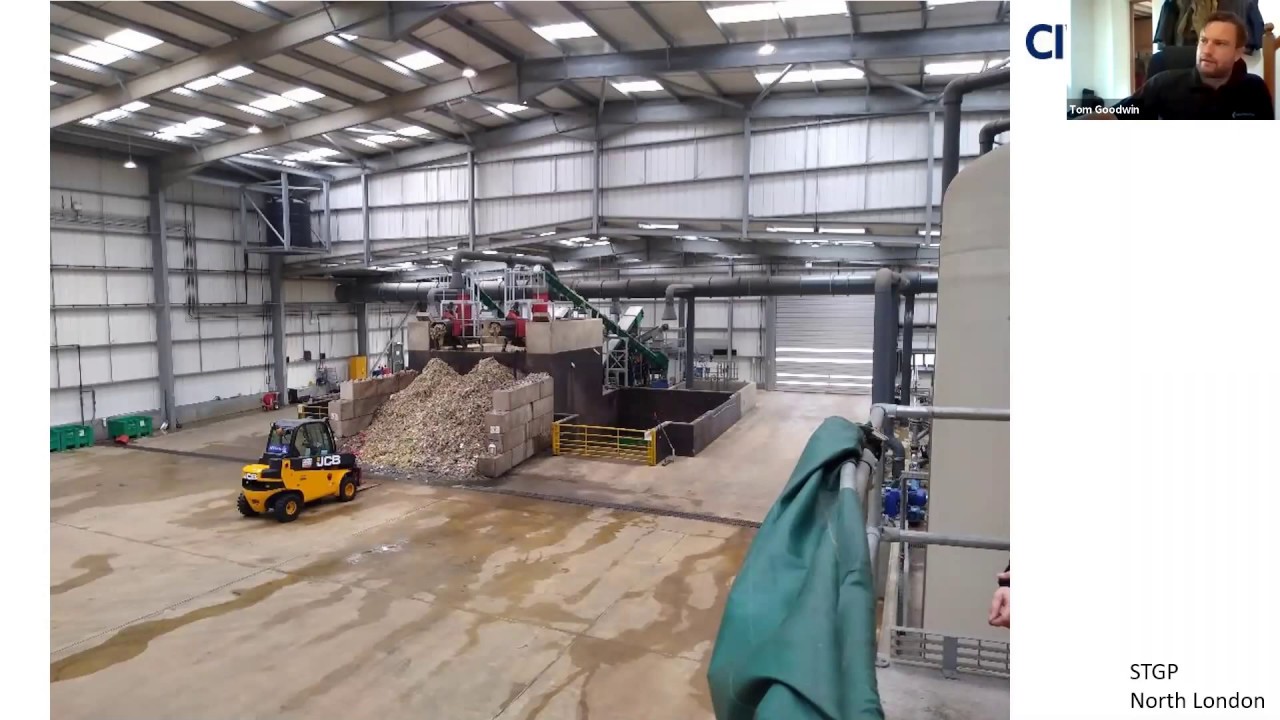
Anaerobic digesters thrive on the wet, messy waste streams that animal feed producers must reject. High moisture content speeds up the digestion process.
Anaerobic digesters thrive on the wet, complex waste streams that animal feed safety regulations must reject.
Facilities handle agricultural residues, manure, and packaged food scraps simultaneously. This flexibility suits complex urban and industrial waste. 8
Operators optimise pre-treatment to extract more methane.
The process safely breaks down batches containing minor plastic fragments or PFAS.
Instead of sending rejected batches to a landfill, digesters transform them into green energy.
What Are the Challenges of Anaerobic Digestion of Food Waste?
Energy recovery falls short of nutrient recovery.
The UK AD industry also faces severe financial and capacity hurdles.
Why is anaerobic digestion lower on the waste hierarchy?
Energy recovery destroys the original proteins and vitamins present in the food. The waste hierarchy always prioritises nutrient recovery first.
Digestion converts waste into gas, but it does not return calories directly to the food chain.
Prevention, reuse, and animal feed all rank higher for this reason.
AD is the perfect fallback solution for degraded stock. Contaminated organics or wet slurries are excellent candidates for this process.
AD plants face major financial pressure. An ADBA report warns that over 160 UK plants will lose their subsidies soon.
Rising gate fees force some businesses back toward cheaper landfill options.
How does energy recovery differ from nutrient recovery for food production?
Energy recovery generates grid power, while nutrient recovery feeds livestock and builds soil. Both paths serve distinct sustainability goals.
- Nutrient Recovery: Feeds livestock and replaces imported crops.
- Energy Recovery: Generates electricity and reduces landfill volume.
Energy recovery supplies renewable energy and cuts greenhouse gas emissions. 10
Nutrient recovery supports the food production cycles.
Both require specific infrastructure. 9
Nutrient recovery delivers huge economic savings on farm feed.
Energy recovery is the safest choice for spoiled goods.
Your specific waste composition dictates the smartest choice.
How Do Food Waste Repurposing Methods Compare?
Your daily waste profile determines the winning method.
You must sort materials carefully to maximise value.
Why is safe, nutrient-rich food waste better for animal feed?
Clean surplus contains vital proteins and minerals that take years to grow in a field. Nutrient-rich food waste slashes the need for imported crops.
Diverting clean bakery and retail surplus directly to farms protects food chain safety. Strict regulations guarantee only uncontaminated materials enter the system.
This approach conserves resources for human consumption. It keeps edible calories circulating locally.
Farms drastically reduce their water and fertiliser use.
This model creates immense value at every single step of the supply chain.
Why is degraded or contaminated waste better for anaerobic digestion?
Spoiled food harbours bacteria and mould that will sicken livestock. Anaerobic digestion safely neutralises these biological threats.
Digesters extract clean energy from hazardous organic materials that fall well below strict livestock safety standards.
Contaminated food waste cannot pass APHA inspections. Digesters break down these dangerous materials through intense biological decomposition.
Facilities capture renewable energy and create fertiliser in one cycle.
The heavy infrastructure accommodates fluctuating contamination levels easily.
This proven technology ensures hazardous organic waste never reaches a landfill.
It extracts clean energy from materials that fall below feed safety standards.
Conclusion to the Debate: Food Waste To Animal Feed Vs Food Waste To Anaerobic Digestion
The choice between food waste to animal feed and anaerobic digestion depends entirely on your feedstock.
Clean surplus shines as animal feed. It sits higher on the waste hierarchy and offsets expensive crop imports.
Spoiled or mixed waste belongs in anaerobic digestion systems. These plants turn difficult garbage into green power and soil-enriching digestate.
Matching your waste to the correct method guarantees the best environmental return.
Smart choices cut emissions and maximise the value of every single resource.
FAQs People Ask About: Food Waste To Animal Feed Vs Food Waste To Anaerobic Digestion
1. What are the main differences between turning food waste into animal feed and using it for anaerobic digestion?
Turning food scraps into livestock feed legally recycles nutrients directly into the agricultural supply chain. Anaerobic digestion processes mixed organic waste in sealed tanks to generate renewable biogas and agricultural fertiliser.
2. Which method is more environmentally friendly: converting food waste to animal feed or using anaerobic digestion?
Converting food waste to animal feed is more environmentally friendly because official UK waste hierarchy guidelines rank it higher than energy recovery. Feeding surplus commercial bakery or vegetable products to livestock preserves the embedded agricultural energy, while anaerobic digestion is reserved for materials that cannot safely be eaten.
3. Are there safety concerns with feeding animals leftover human foods?
Yes, the UK Animal and Plant Health Agency strictly bans feeding any meat or catering waste to farm animals to prevent severe disease outbreaks.
4. When should communities choose anaerobic digestion over making animal feed from surplus meals?
Communities must choose anaerobic digestion for mixed household collections or restaurant scraps since UK law prohibits feeding catering waste to livestock. Sending these unsortable organics to commercial digestion plants safely converts them into electricity and natural gas.
References
- ^ https://pmc.ncbi.nlm.nih.gov/articles/PMC10093235/
- ^ https://pmc.ncbi.nlm.nih.gov/articles/PMC5127519/
- ^ https://pmc.ncbi.nlm.nih.gov/articles/PMC10134991/
- ^ https://pmc.ncbi.nlm.nih.gov/articles/PMC8127648/
- ^ https://content.ces.ncsu.edu/challenges-of-by-product-utilization-in-animal-feeds (2023-07-26)
- ^ https://pmc.ncbi.nlm.nih.gov/articles/PMC7912667/
- ^ https://www.epa.gov/agstar/how-does-anaerobic-digestion-work (2025-12-15)
- ^ https://pmc.ncbi.nlm.nih.gov/articles/PMC11630644/
- ^ https://pmc.ncbi.nlm.nih.gov/articles/PMC5331173/
- ^ https://www.sciencedirect.com/science/article/abs/pii/S0960852417316747
Note: A link with a strikethrough usually means that the linked website will require you to prove you are human.